
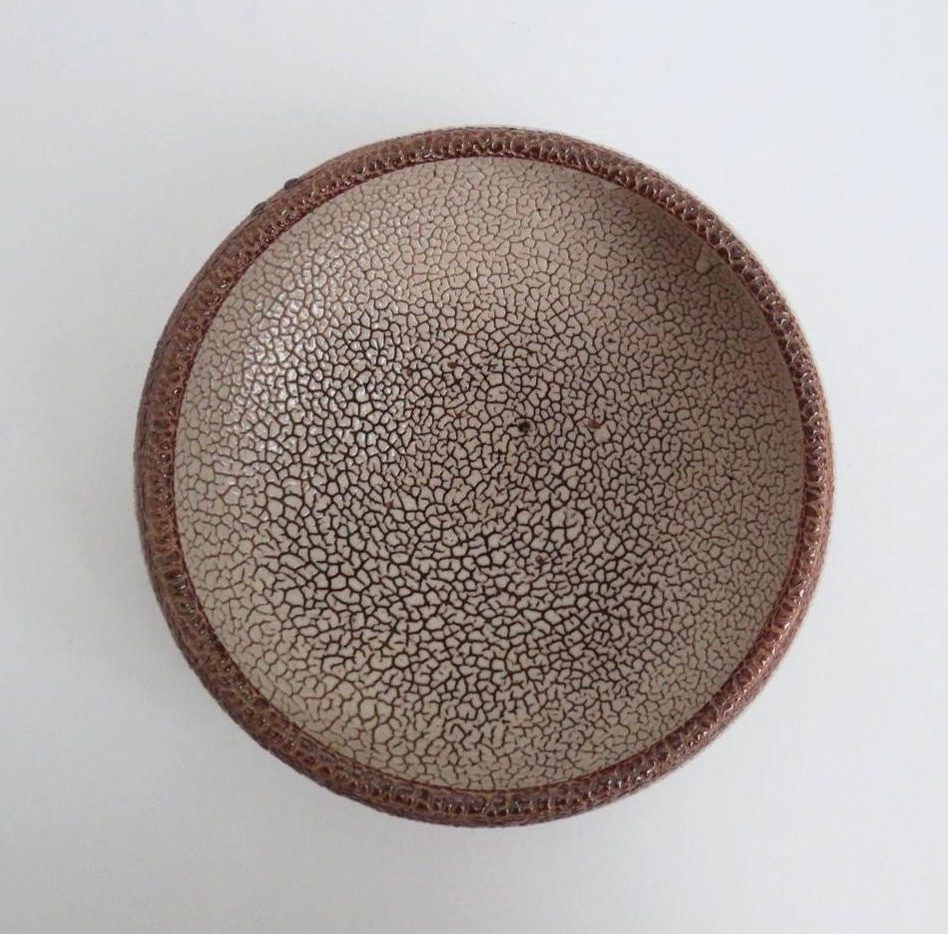

Approximate size: W7.2″ by W2.9″ by H3.4″ or 18.3 by 7.4cm
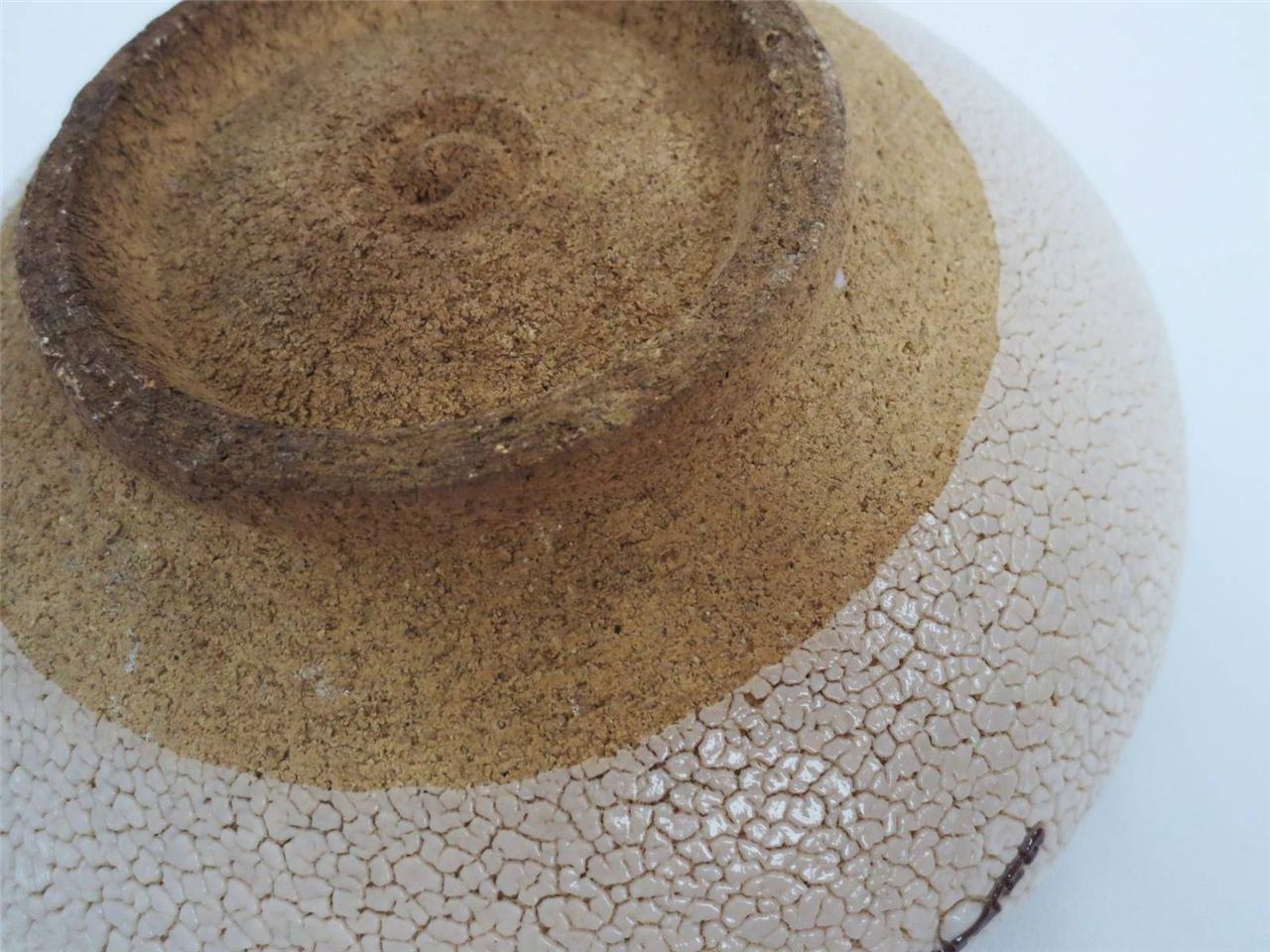
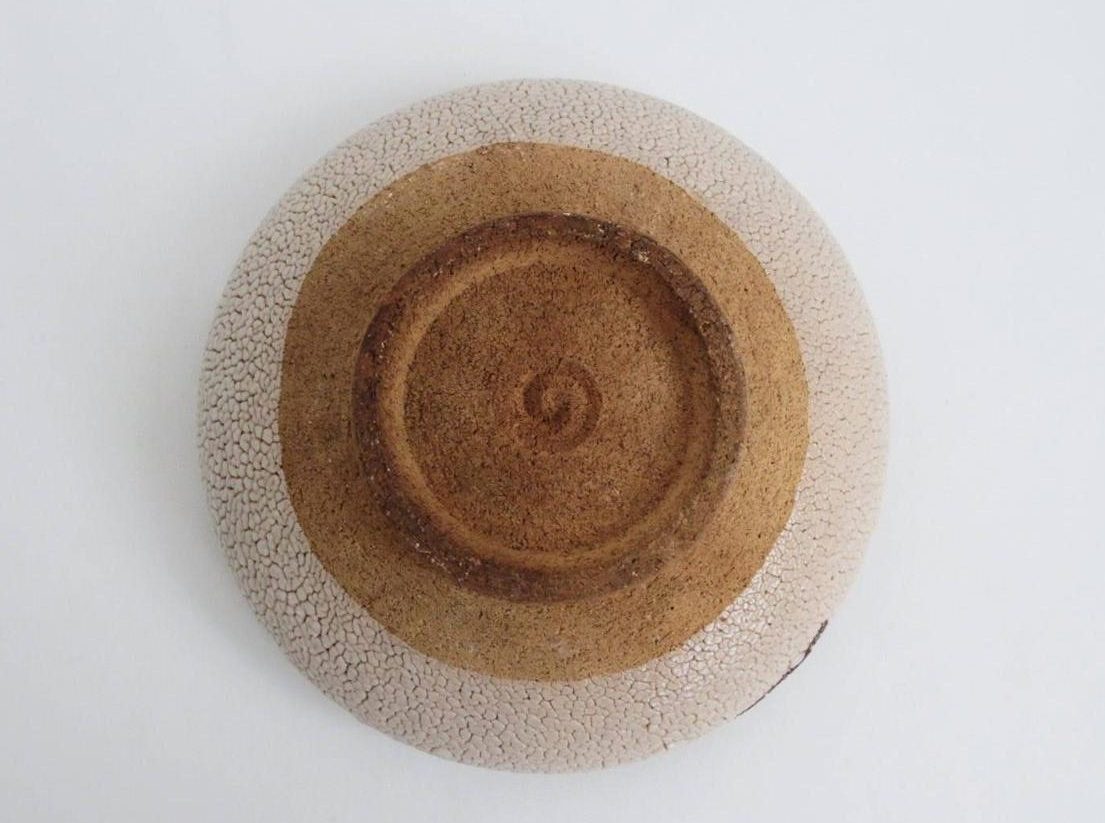
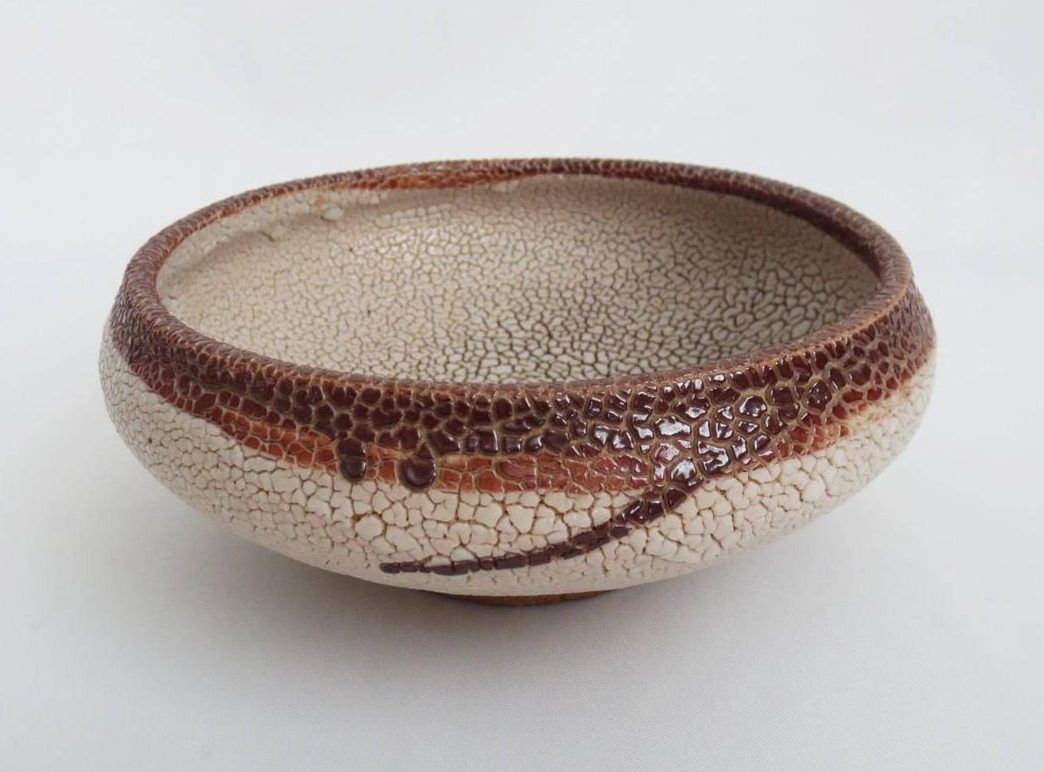
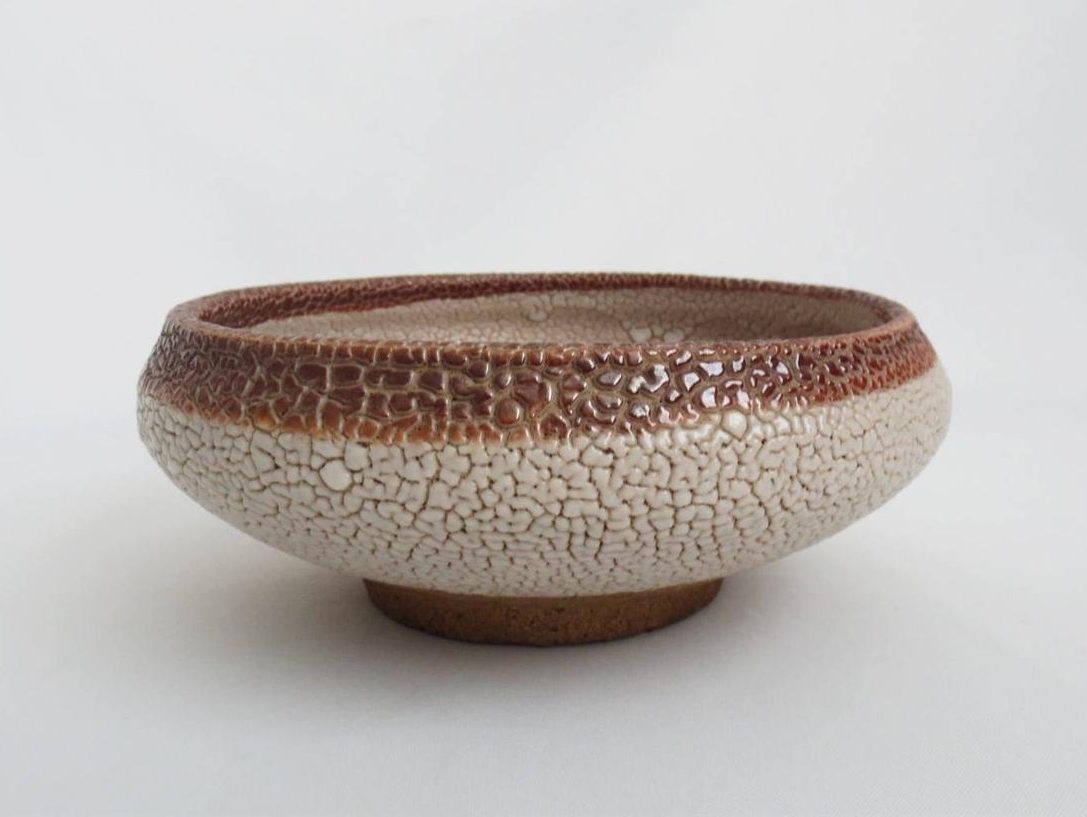
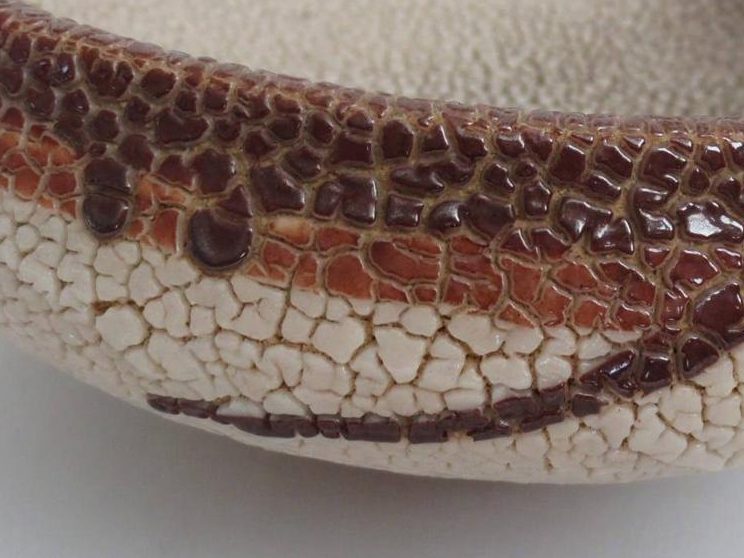
A large wheel thrown Karatsu ware bowl with a outstanding ‘samehada-yu’ glaze, commonly translated to ‘sharkskin texture’ with brushwork near the rim. In Karatsu pottery ware, one of its oldest traits or characteristics is what is commonly described as a dark band around the rim and called ‘kawa-kujira‘. Its origin inextricably linked to Karatsu history. The crawling of the glaze as you are likely well aware of is due to different cooling rates of the clay and constituents of Karatsu glazes.
Karatsu yaki is one of Japan’s oldest and most revered styles of ceramics used in daily life and later in history the development of the Tea Ceremony. Karatsu pottery originates in what is nowadays Saga prefecture which is located on the island of Kyūshū.
While there are many accounts about the origin of Karatsu ware, it is regarded to have been first created in the territory of and under the protection of Hata clan who were settled at Kishidake Castle from the end of the Muromachi era to the Momoyama era (16th & 17th century). Thereafter production of Karatsu ware increased with the influx of potters from Chōsen (nowadays better known as Korea), who were brought back to Japan after Japan’s Chōsen expedition by Hideyoshi Toyotomi during the 1590’s. These displaced potters started their own kilns and pottery in various areas across Japan and have in effect been a major influence on pottery history in Japan.
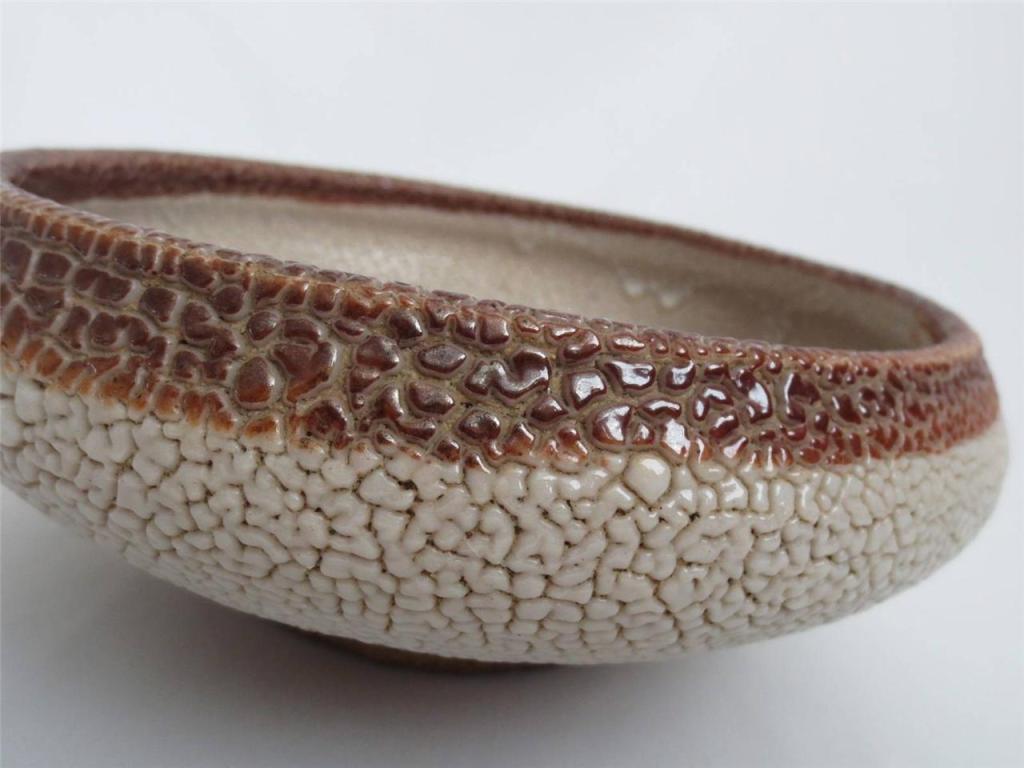
Kawa-kujira
One of the decorative techniques of Karatsu ware. The blackened rim of the vessel’s mouth is painted with iron-based pigment. The name comes from comparing the black of the rim to the skin of a whale (“kujira” is the Japanese word for “whale”, and “kawa” for “skin”), and the colour of the vessel itself to the whale’s body.
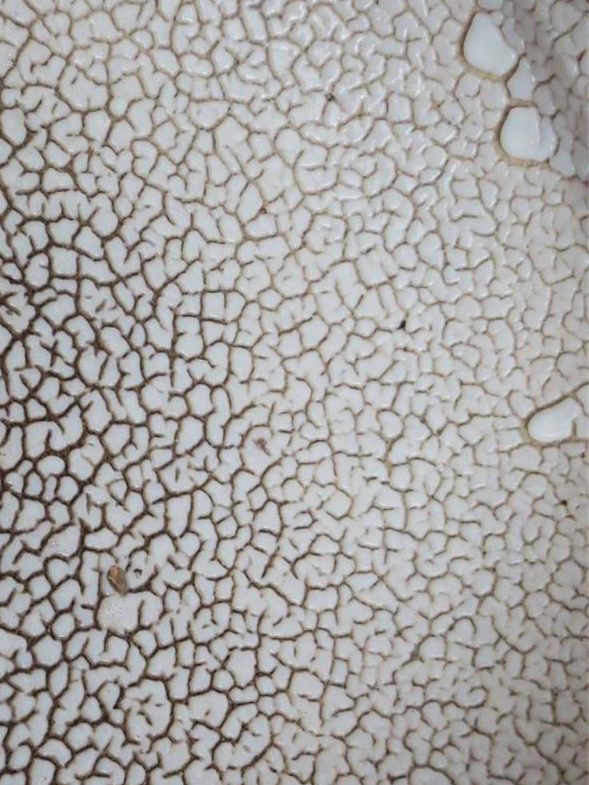
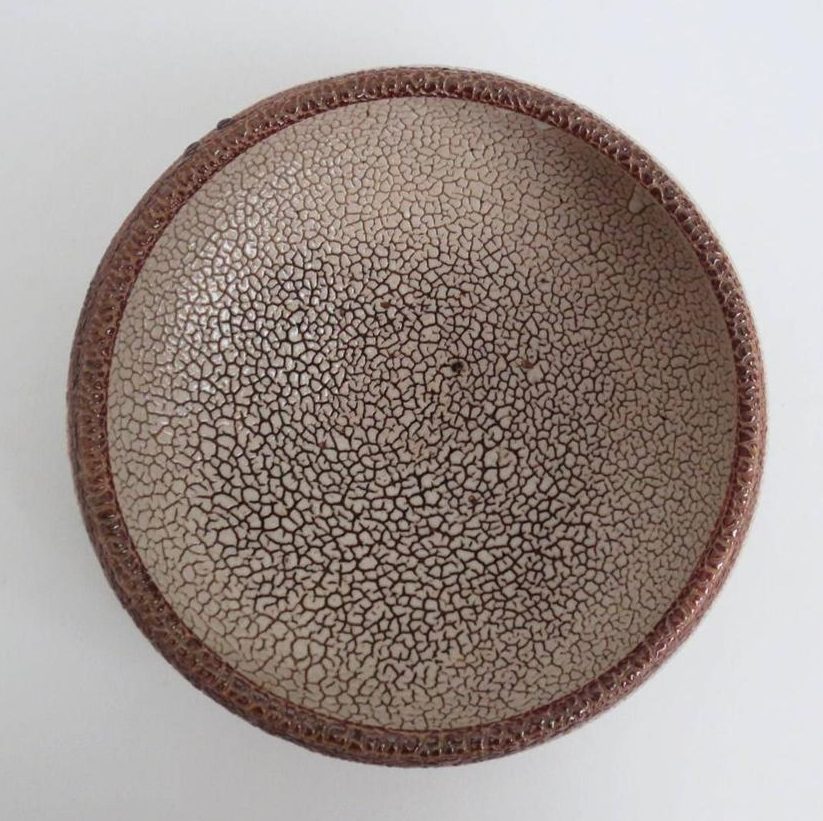
The glaze used for Karatsu yaki is “wood ash glaze”, which, as the name suggests, is made of wood ashes. It is used as the basic glaze for E-garatsu (Brush decorated Karatsu yaki), and Muji-garatsu (plain Karatsu-yaki), as well as most other types of Karatsu yaki. The second most commonly used glaze is straw ash glaze, which makes use of the cloudy nature of straw ash. It is used for Madara-garatsu (mottled Karatsu yaki), and for layering with black amber glaze when making Chōsen-garatsu (Korean-style Karatsu yaki). Apart from these types of glaze, iron glaze is also often used to make pots.
The bowl is mumei or unsigned. The glaze is intact and there are no chips or cracks. Condition is excellent. This kashiki does not come with a box.
SOLD
Thank you very much!