



Potter: Sho Kato
Approximate size: W4.4 by 4.5 by H3.2″ or 11.2 by 11.5 by 8.3 cm
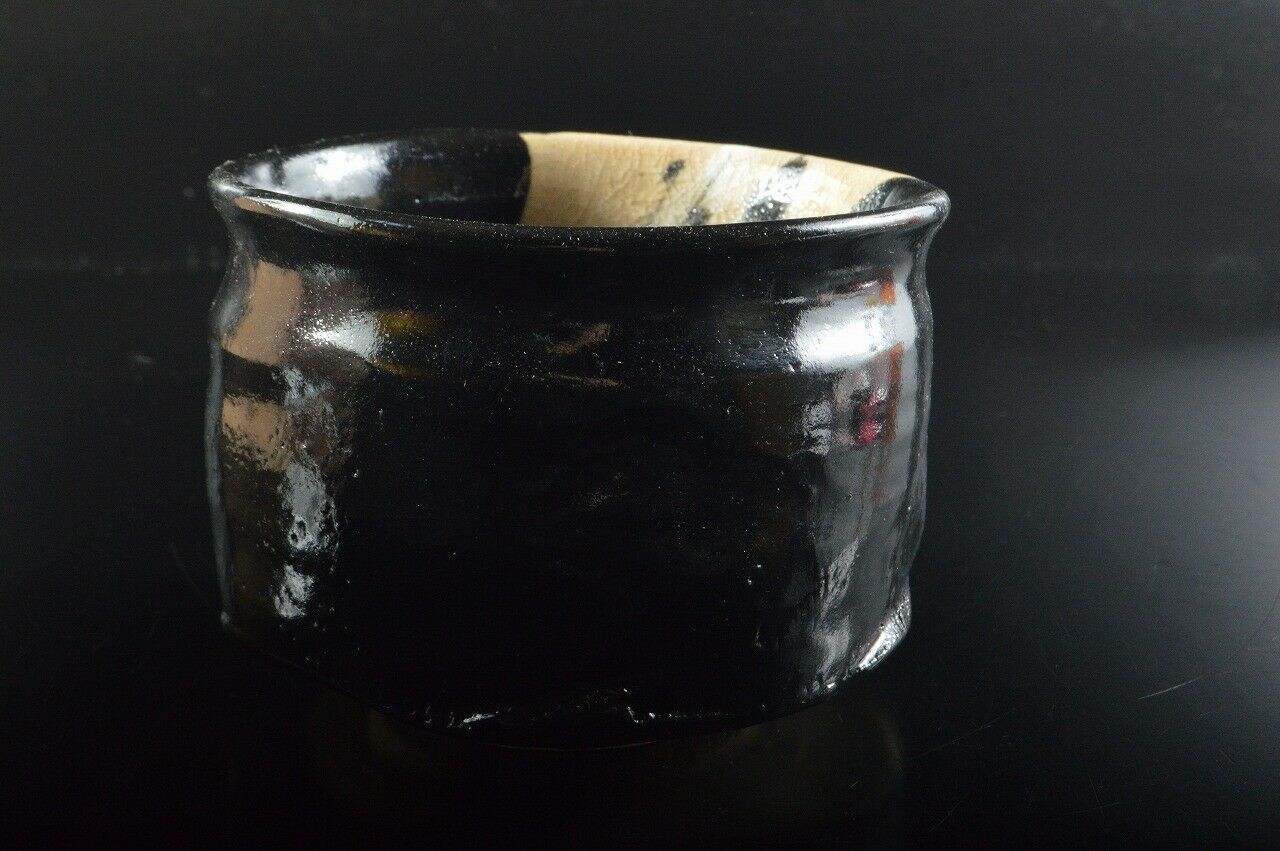
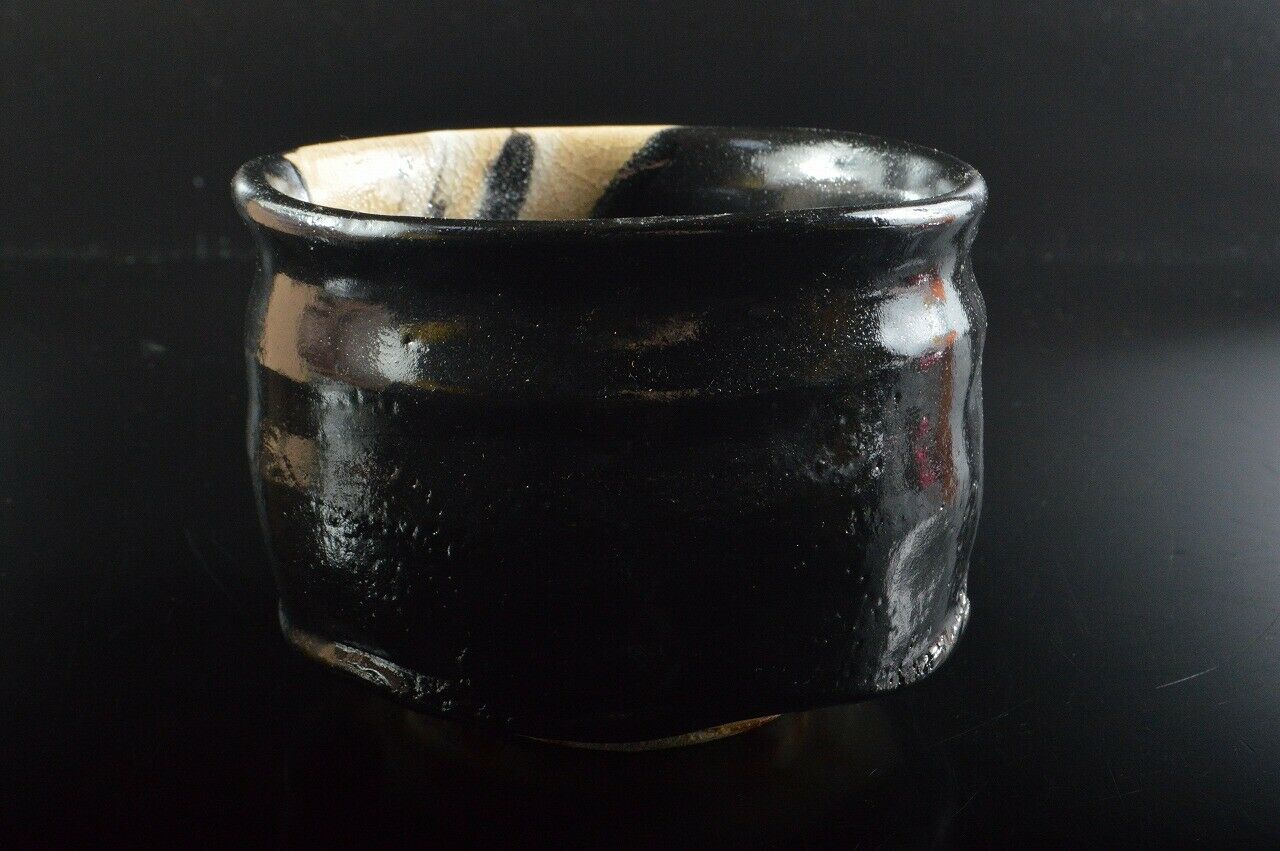
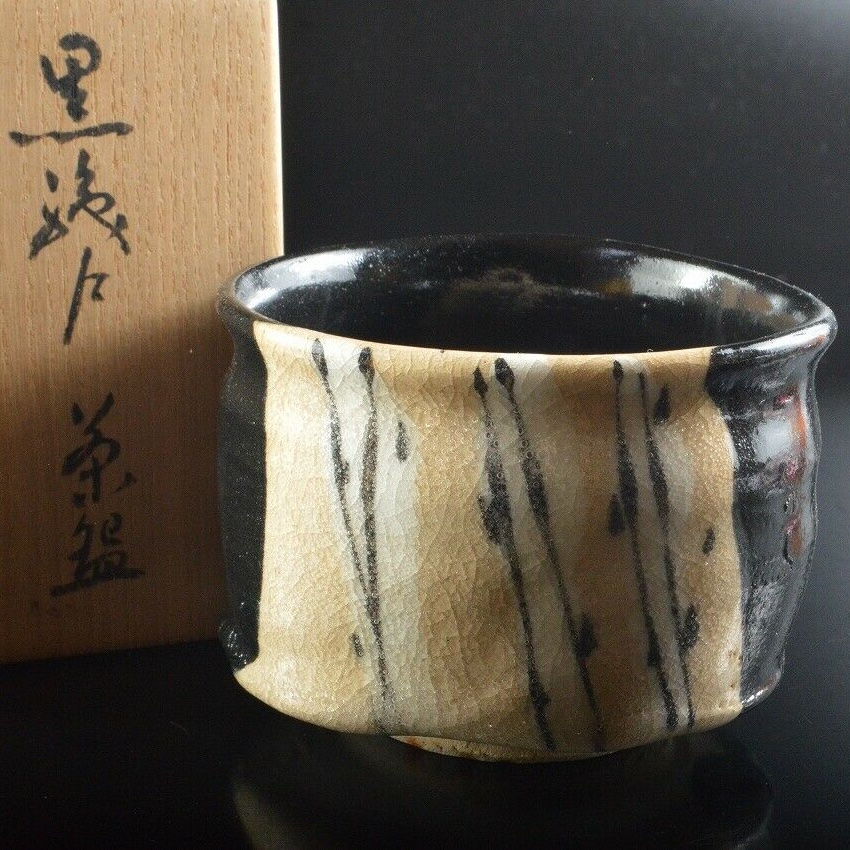
This is a fine kuro or black Oribe chawan, ceremonial tea bowl by master potter Sho Kato (1927-2001). Thrown not so wide as standard tea bowls but not as slim as to be termed tsutsu chawan. Covered with a deep black glaze which contrasts wonderfully with what forms the front of the bowl, showing what I assume to be abstract stalks of bamboo on a off-white backdrop. The glaze is well formed with much details that appear frozen in time (such as the little bubbles that can be seen in the photo above), and has a fine translucency that covers the glaze.
Oribe is a visual style named after the late 16th century tea master Furuta Oribe (1544-1615). It’s most often seen in pottery, but extends to textiles and paintings. Oribe was of the Bushi class and not a potter however he also (like many other influential figures in Japan’s art history), something akin to an art director or designer. He embodied the spirit of wabi tea so completely that he was able to give it form in a truly new and unique vision. Boldly formed, often intentionally distorted chawan, decorated with green, black and brown glazes and abstract designs, appeared on the tea ceremony scene in Kyoto.
Sho Kato graduated from Tokyo’s University of Art before becoming an independent artist. First accepted at the Nitten Exhibition in 1961 and has since displayed nationally and internationally. Recipient of the Nitten Hokuto Prize and served as a judge at this prestigious event. Much in the same fashion, he also took residence as a judge at the Asahi Togei Ten, Kofukai and Nihon Shin Kogei Ten or National Japanese New Craft Exhibition. Together with Seisei Suzuki and Goro Kawamoto – Sho Kato gave form to and is regarded a representative artist of Seto in the 20th century. As such he was designated a Human Cultural Treasure of Aichi Prefecture in the year 2000. He sadly passed just one year later.
The motifs, taken from nature or other decorative patterns such as textiles, were ground-breaking in their bold informality. Casting aside Korean and Chinese influences, they were also entirely Japanese. It must have been this recognition of a new Japanese aesthetic that caused tea devotees to cherish Oribe ware. Its ability to capture something of the artistic and spiritual soul of Japan quickly spread throughout the country, and its mass popularity continues to this day.

1960 Japan Fine Arts Exhibition Special Hokuto Award
1964 Awarded the Blue-Ribbon Award at the famous Nitten Exhibition
1990 Awarded the Prime Minister’s Award at the Japan New Crafts Exhibition
1991 Awarded the Prime Minister’s Award at the Japan Fine Arts Exhibition in
1994 Aichi Prefecture recognises Sho Kato with the honorary title of Intangible Cultural Property for his ash glaze technique
2003 Art Directory Evaluation 4 million Seto Dragon Kiln
Sho Kato’s biography includes a long list of prizes – including the National Ceramic Art Exhibition’s most coveted Minister of Education Award, the Silver Cup Craft Award and the Kofukai Jade Award. Formally recognized by the government and given Seto City’s Achievement Award and given the Order of the Sacred Treasure.
Throughout the late Momoyama (1573–1615), and early Edo periods (1615–1868), in Japan, the art of the Japanese tea ceremony underwent new developments. Great tea masters such as Takeno Jōō (1502-1555), Sen no Rikyū (1522-1591), and Furuta Oribe (1544–1615), revolutionized the utensils, rituals and ceramics used in tea ceremonies. As time passed, technology improved and kilns advanced; improved firing conditions allowed the creation of Oribe ware, a new kind of ceramic used in these tea ceremonies.
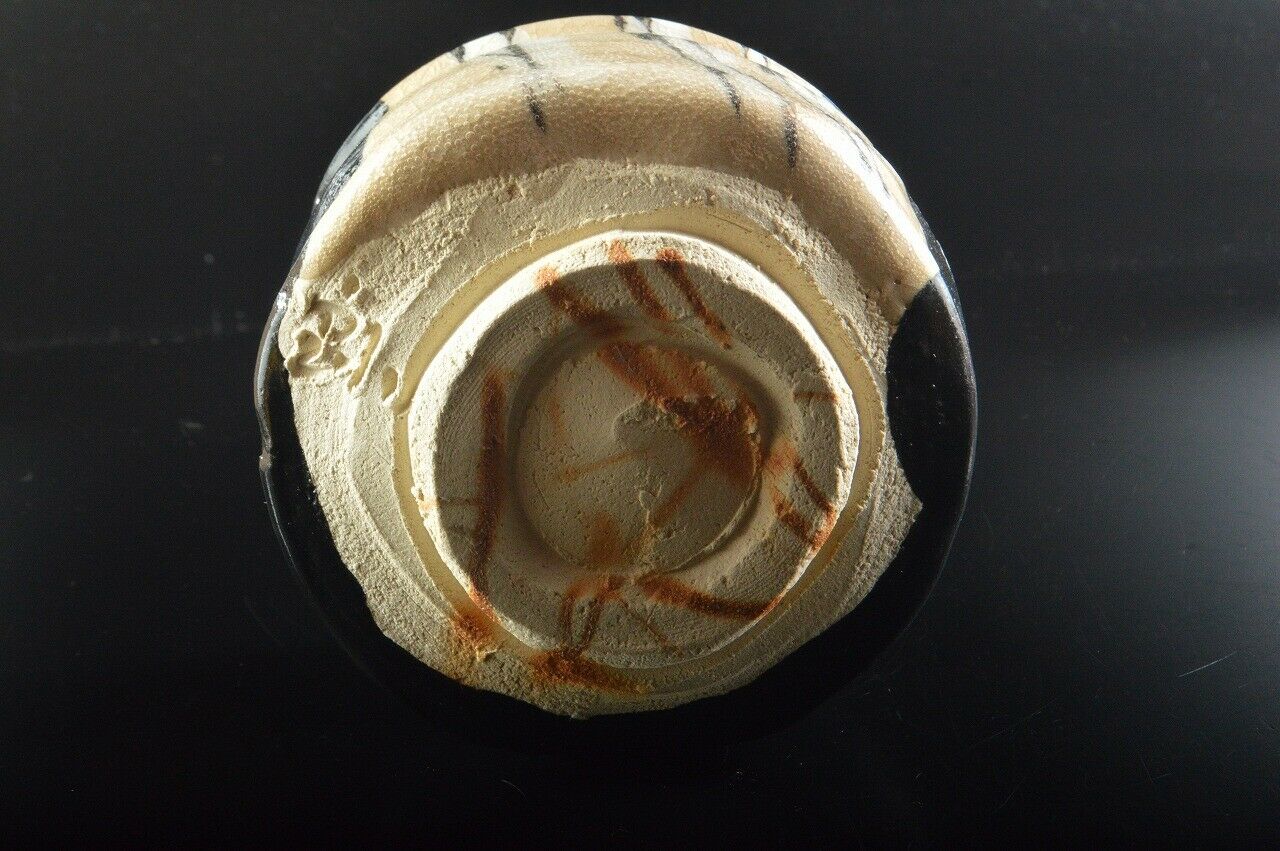
The chawan is unused and condition is mint. As seen on the right, the chawan is signed ‘Sho saku’ next to the koudai or foot-ring. Comes complete with the original high quality paulownia tomobako or wooden storage box of which the lid bears calligraphy and the artist’s seal and a dedicated tomonunu or tea cloth.
SOLD
Thank you very much!


Seto ware is the pottery made in Seto City and nearby areas of modern Aichi prefecture. The Seto area was the centre of pottery manufacture in the Kamakura period; ko-Seto (old-Seto), designates pieces made at this time. At the end of the Muromachi period the centre of the pottery manufacture moved to nearby Mino. At that time wares made in the area from Seto to Mino were called Seto-yaki.
In the early Edo period, some pottery manufacture moved back to Seto. In 1822, Kato Tamikichi (1722-1824), introduced sometsuke jiki (blue-and-white porcelain; sometsuke), from Arita in modern Saga prefecture, and this porcelain, called shinsei or new production rather than the original Seto ware pottery, Hongyou became standard. The Japanese term Setomono is also used as a generic term for all pottery. Seto was the location of one of the Six Ancient Kilns of Japan.
