



Potter: Shimizu Kosho
Approximate size: W12.9″ by W10.5″ by H2.9″ or by 33.0 by 27.0 by 7.5 cm
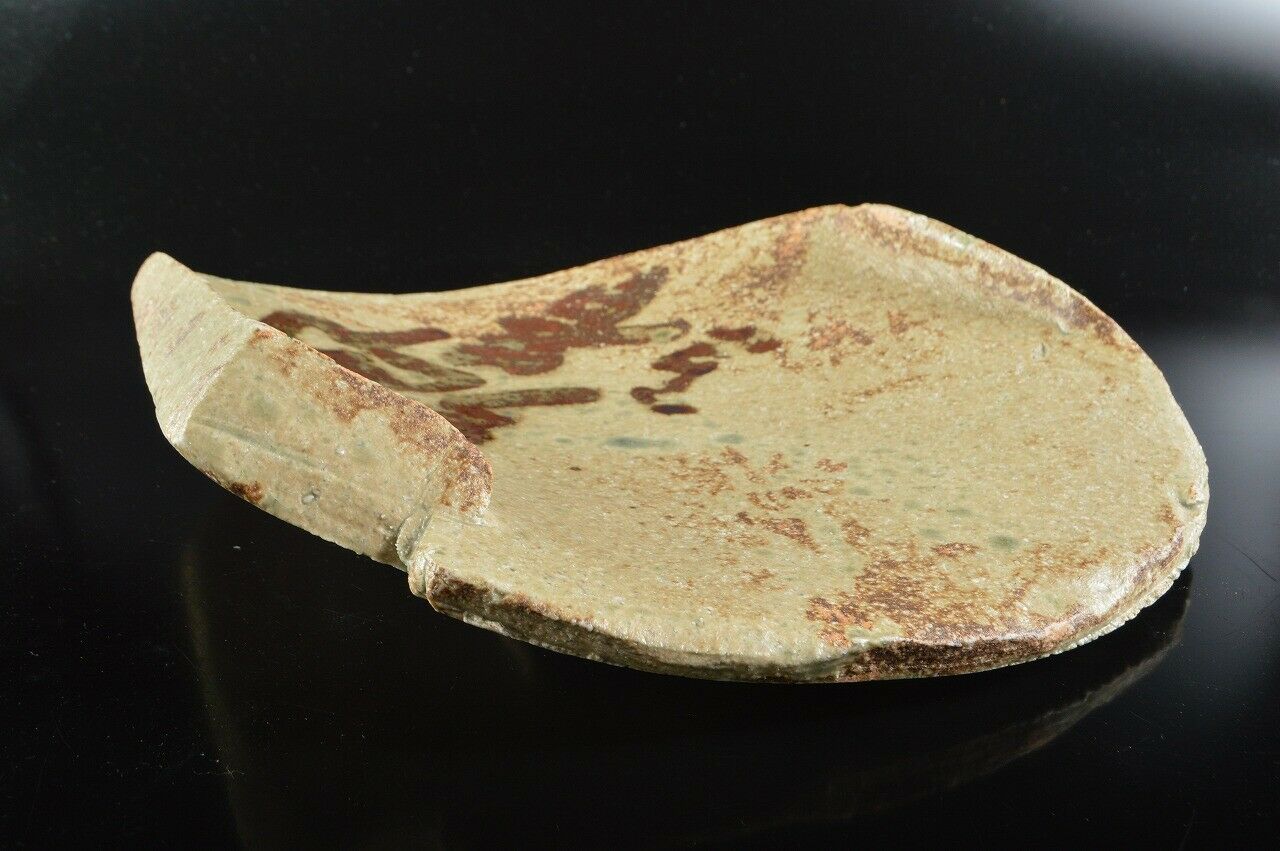
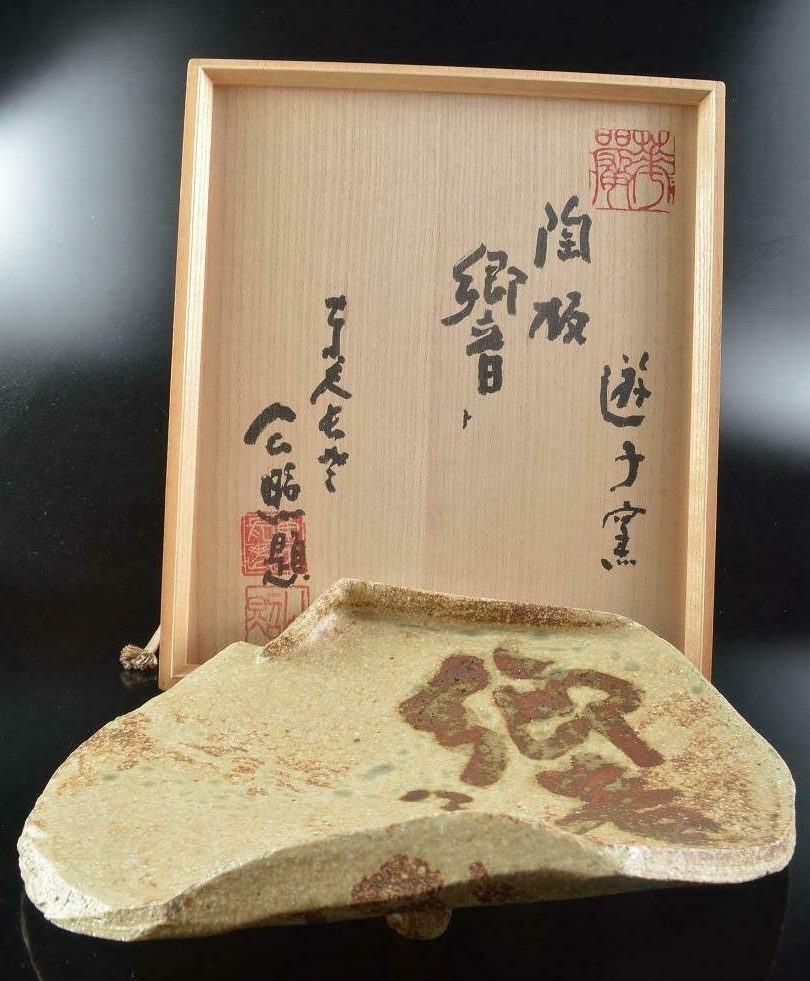
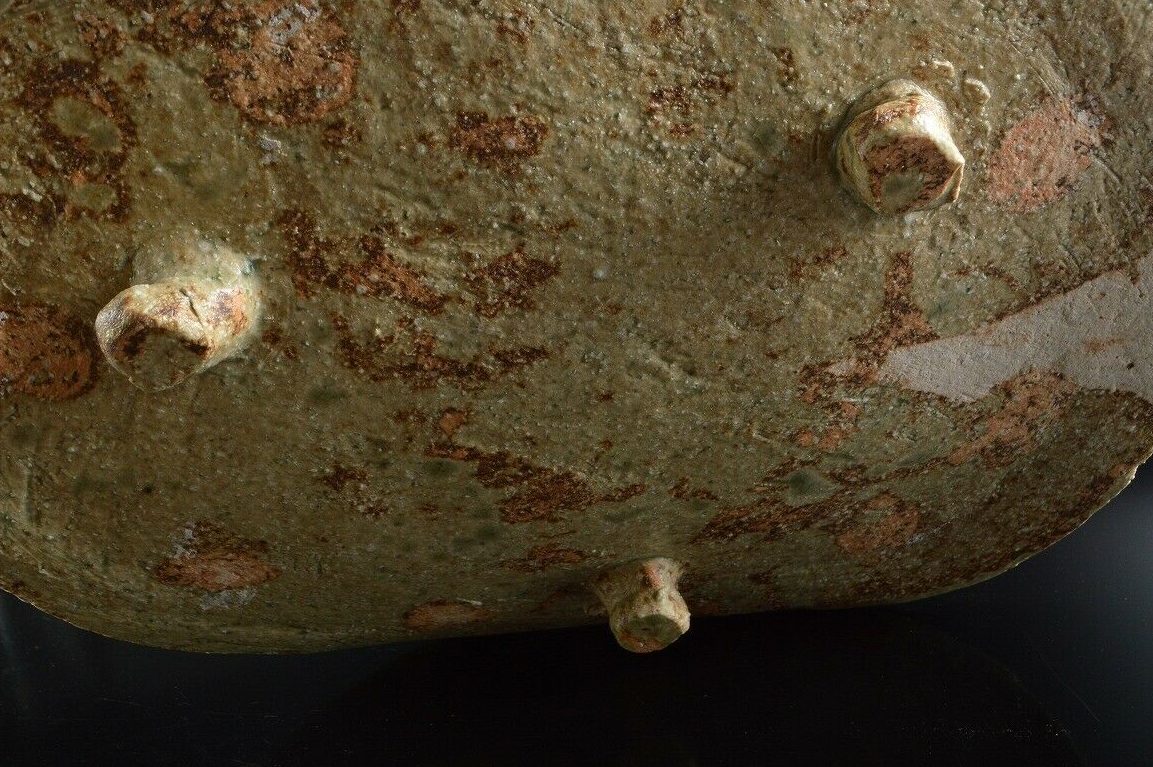
This is a large porcelain slab plate in Shigaraki style by the great Buddhist monk and Tōdai-ji senior Kosho Shimizu (1911-1999), who’s frequently referred to as the most famous monk of Japan. With raised edges on 2 of the 4 sides of what is reminiscent of a rectangular shaped slab, sitting on 3 feet. The surface of the slab is covered with wood ashes accumulated during firing on which green glass like beads have formed and on close examination this green glass like substance is covering almost all exterior faces, filling pores and markings in the plate, creating a texture that is soft to the touch. There appear to be 2 kanji painted on the upside which require more research for a possible meaning. An extensive description on the lid of the tomobako, the wooden storage box for this kashiki mentions his title “Senior of the Tōdai(ji)”, dating the work to late in his period of artistic creativity.
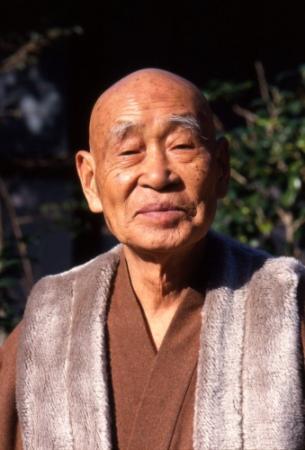
Remembered for his efforts in building and advancing the Tōdai-ji Temple’s educational institutions and also for serving two consecutive terms there as abbot. He became a monk at the young age of 16 but as far as his artworks are concerned – it was only during what were approximately the last 20 years of his life that he became a prolific creator of calligraphy, paintings, pottery and other endeavours. He’s remembered as having been a eccentric and highly unique artist. His artworks are highly acclaimed and sought after.

Joining Hogo-in at Todai-ji Temple in 1927, he trained under Shimizu Kimitoshi to become a formal Buddhist monk. Before eventually becoming the head Priest he was sent to China during the war from which he returned in 1946. After serving two consecutive terms he retired and became the senior monk at Todai-ji Temple and was awarded the Buddhist Missionary Culture Award.
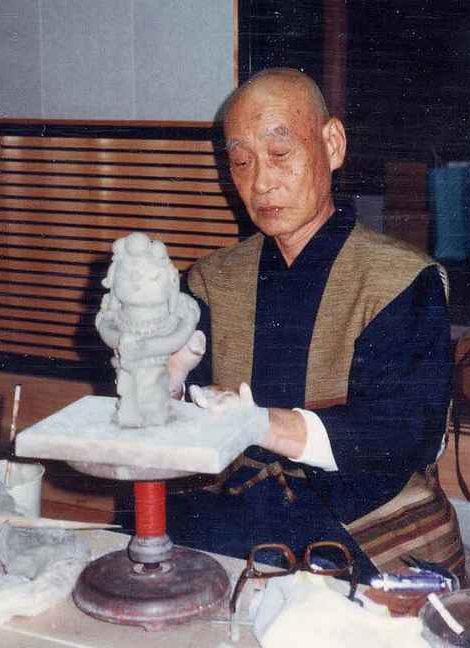
1911, January 3rd Shimizu Kosho (清水公焦), is born in the castle-town of Himeji
1927 Enters Tōdai-ji-Temple in Nara
1933 Graduates in Buddhist studies from the Literary Department at Ryokoku University and takes residence at the Tenryu-ji Temple for four years to study and practice Zen Buddhism under the guidance of the Abbot Seki Seisetsu (1877-1945)
1937 Appointed as Chief Priest of Tōdai-ji Temple, Ryuzoin and Joshoin
1946 Appointed as Chief Priest of Hogon-in Temple, the head of Tōdai-ji Temple
1947 Founded Seisei Junior High School (now called Tōdai-ji Gakuen), and becomes principal (and teaches Calligraphy)
1959 Appointed Director of the Tōdai-ji Kogakuin
1963 Appointed Directed of the Tōdai-ji Gakuen Kindergarten and Joshigakuin
It is around this time he created his famous Buddha statue called “Mud Buddha”
1969 Appointed as the head of the Huayan Sect, Head of Religious Affairs of the Kegon Tradition, president of Tōdai-ji Gakuen High School and assigned as deacon of Tōdai-ji Temple
1971 Begins organizing a massive repair project surrounding the Great Buddha Hall at Showa University
Also interesting to note is that because of his heavy involvement of the repairs of the Great Buddha Hall, he served a double term as abbot of the Tōdai-ji Temple, which is not common practice
1975 Appointed as a Buddhist Priest and he succeeds the 206th Abbot Kamitsukasa Kaiun (1907-1975), as the 207th Abbot of Tōdai-ji
1978 Reappointed as Abbot of Tōdai-ji
1980 Repairs of the Great Buddha Hall at the Showa University are completed and he held a memorial service for Ochikei Daisho
1981 Appointed Elder of the Tadai-ji Temple’s and resigning from position of Abbot of Tōdai-ji
1993 Received the Himeji City Arts and Culture Award
1994 Became Honorary Director of the newly opened Shosha Handicraft Museum in Himeji City for his donation of a large number of his artworks
1999 Passes on May 6th
Condition is mint without any chips or cracks. The plate is mumei or unsigned. Comes complete with the original high quality paulownia shiho-san tomobako or storage box with kiln stamp, additional seals and calligraphy on the lid (translation below).
SOLD
Thank you very much!
Starting seal,
華厳 Kegon
Inscription,
遊于窯 - Hanging out at the kiln
陶板 - Porcelain plate
郷音 - Country accent
東大長老 - Senior of the Tōdai(ji)
公照 - Kōshō
Upper seal,
東大長老 - Senior of the Tōdai(ji)
Lower seal,
公照題 - Inscription by Kōshō
