
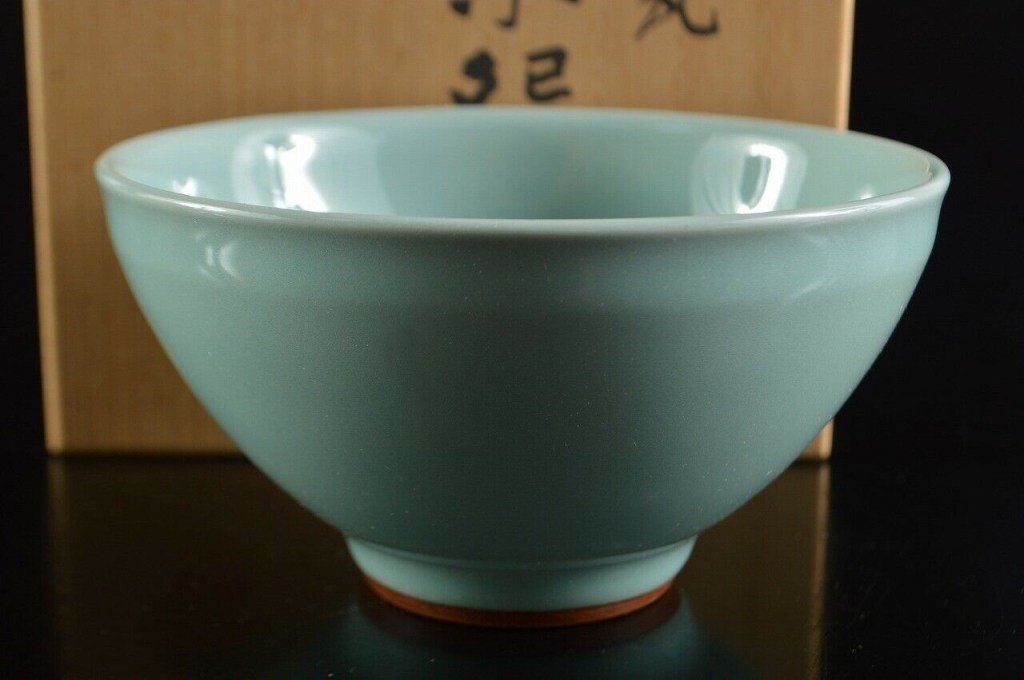

Potter: Yonezawa Hisashi, 3rd Suwa Sozan
Approximate size mizusashi: W5.9″ by H6.8″ or 15.0 by 17.3 cm
Approximate size chawan: W5.0″ by H2.7″ or 12.7 by 6.9 cm
This is a flawless set of celadon pottery by celadon specialist and master potter Yonezawa Hisashi (1932-1994). The set consists of a chawan – ceremonial tea bowl and a bamboo form mizusashi or fresh water pot. The pair has the same type and near identical shade of celadon glaze and matching accessories. The tomobako or storage boxes even have the same colour cord. Keeping these items together is preferred though offers will be taken into consideration. Yonezawa Hisashi was born as the second son of Yonezawa Soho (1907-1968), one of the greats when it comes to celadon pottery. He graduated from Meiji University’s faculty of Law and learned at the Kouzan-in gama in Kasama City (Ibaragi prefecture).
For a large portion of Yonezawa Hisashi’s life he worked under the Imperial Artist Title: Suwa Sozan sandai or third generation. Build in 1983, his kiln is called Gakuryu-gama and is located in Yanashi prefecture. Graduated from the Japanese painting department at Kyoto University of the Arts (Tokyo University of the Arts). Learned pottery under his father and further studied with great artists like Kusube Yaichi and Living National Treasures Tomimoto Kenkichi and Yuzo Kondo. In 1960, at the direction of the Imperial Household Agency he was requested to start studying under the shodai or first generation Suwa Sozan as one of the imperial household artisans. Ten years later in 1970, he assumed the title as the third generation Suwa Sosan!


Seiji or celadon is a glaze that usually turns to a jade green colour. The firing of the iron in the glaze produces its beautiful colour, which is brought out by reduction firings in a kiln at temperatures exceeding 1200°C. The origin of celadon stoneware lies in China where during the Tang Dynasty (±618 till ±907), production started and found a willing and wealthy client base amongst the elite and intellectuals. A little later during the Sung Dynasty (±960 till ±1279), the supply lines for the resources used in celadon wares became stable which caused export of celadon ceramics all through out eastern Asia and eventually to Japan around the 11th century.
Heavily influenced by the works of Kenzan Ogata made during the Edo period and also by Jishu kilns in China, which worked veraciously during the Sou period. Originally from Ishikawa prefecture he moved to Kyoto and its no surprise that learning from his father gave him all the opportunity to build on his father’s experience. Amongst others he has been been given awards at famous competitions such as the Traditional Handicraft and the Japan Traditional Arts & Crafts Exhibition.

Due to the difficulties celadon production it has since its earliest appearance a highly valued type of ceramic. The ware was immensely popular because of its beauty; the Chinese also valued it because it resembled jade.
He was awarded the Kofukai Award or Kofu Member Prize. Commissioned as a juror for the Kyoto City Exhibition and recipient of the Yomiuri and Mayor’s Prize. Founding member of the Japan Shin-Koren. Associate member of the great Nitten Exhibition and Kyoto City Exhibition – where at the latter he also served as judge. He won innumerable prizes at the Nitten Exhibitions, the Traditional Arts & Crafts Exhibition and the Traditional Hand & Crafts New Works Exhibition – amongst many others.
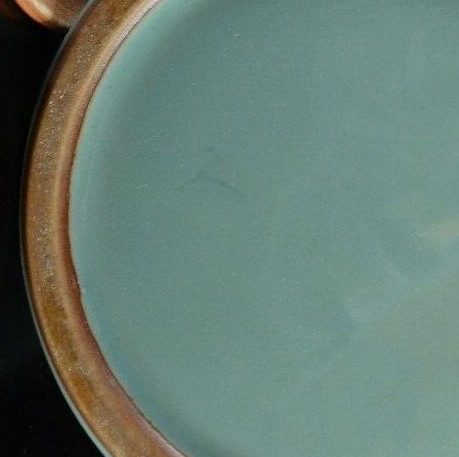
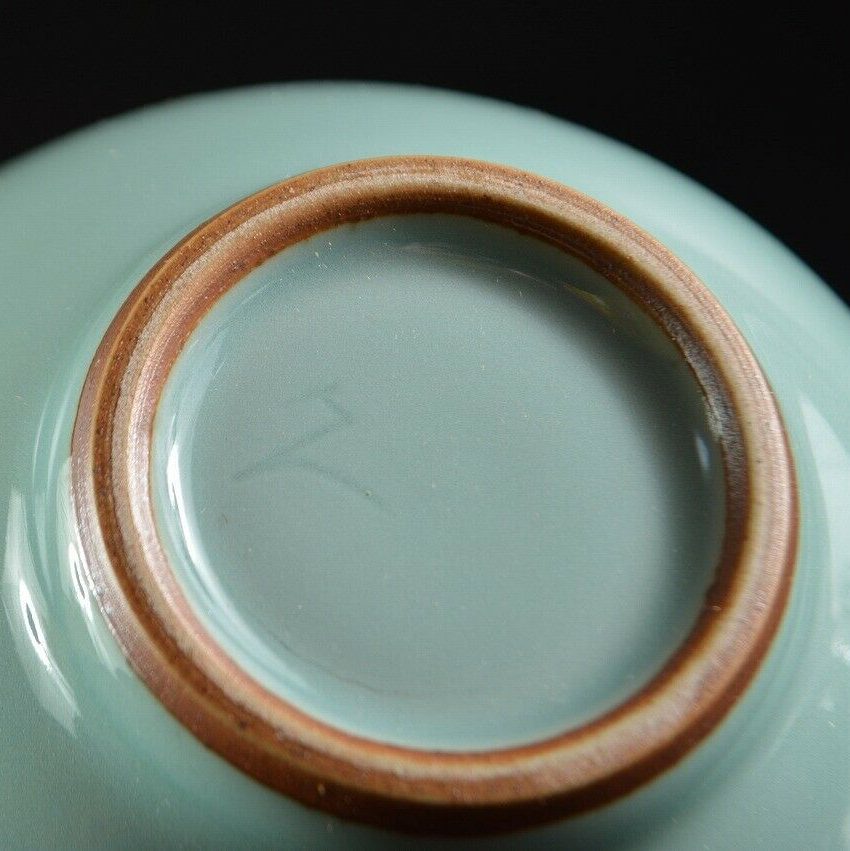
Both items are unused and condition is mint. There are no chips or cracks to mention and both items bear the potter’s signature on the bottom.
The chawan and the mizusashi both come accompanied with the original high quality paulownia tomobako or storage boxes. The tomobako even come with matching colour cords and the pair both have calligraphy on the lid and bear the potter’s seal of authenticity.
SOLD
Thank you very much!
Additional photos are available on request
