Takéichi (Buíchi, Takekazu) Kawai Mingei Henko Hanaire IV
Potter: Takéichi Kawai also known as Takekazu (and by his nickname Buichi)
Approximate size: W2.6″ by 4.1″ by H5.9″ or 6.6 by 10.4 by 15.2 cm
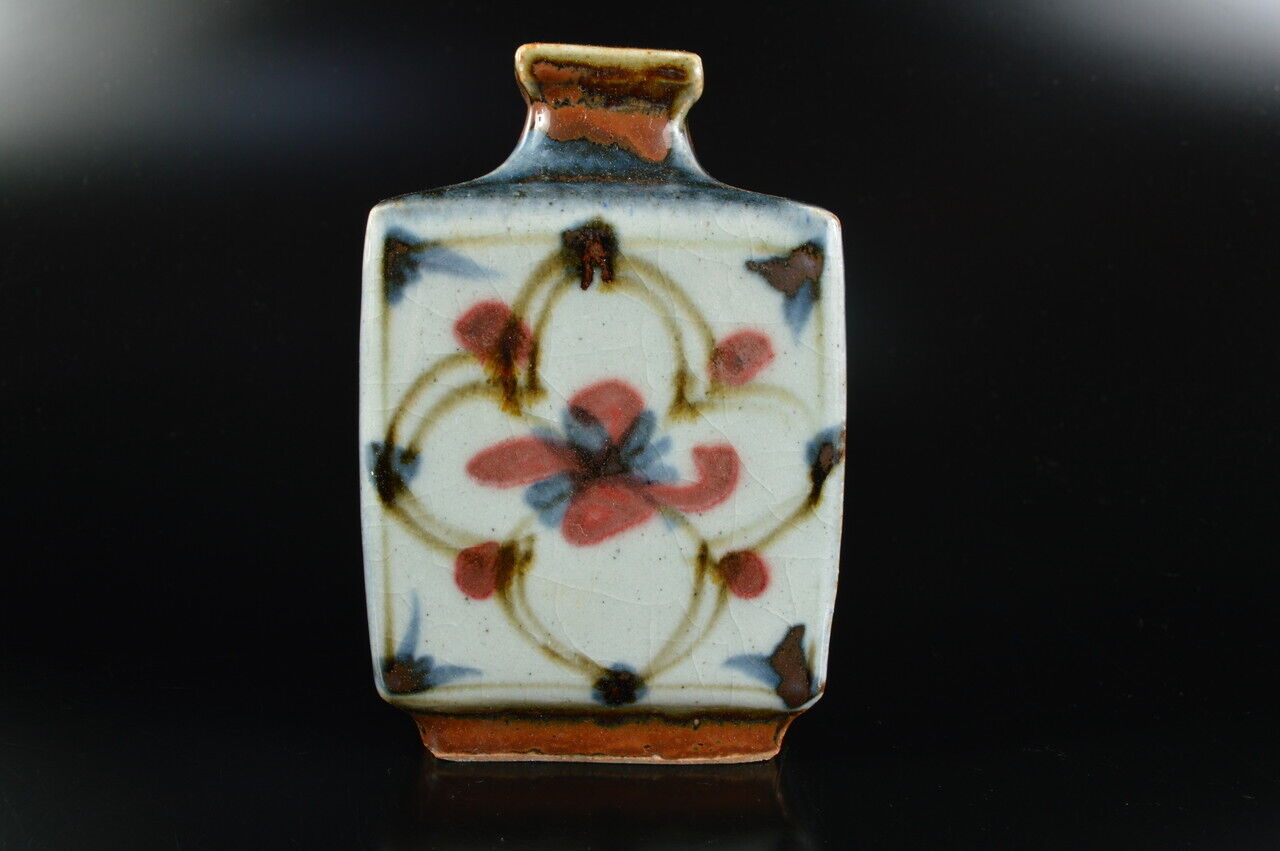
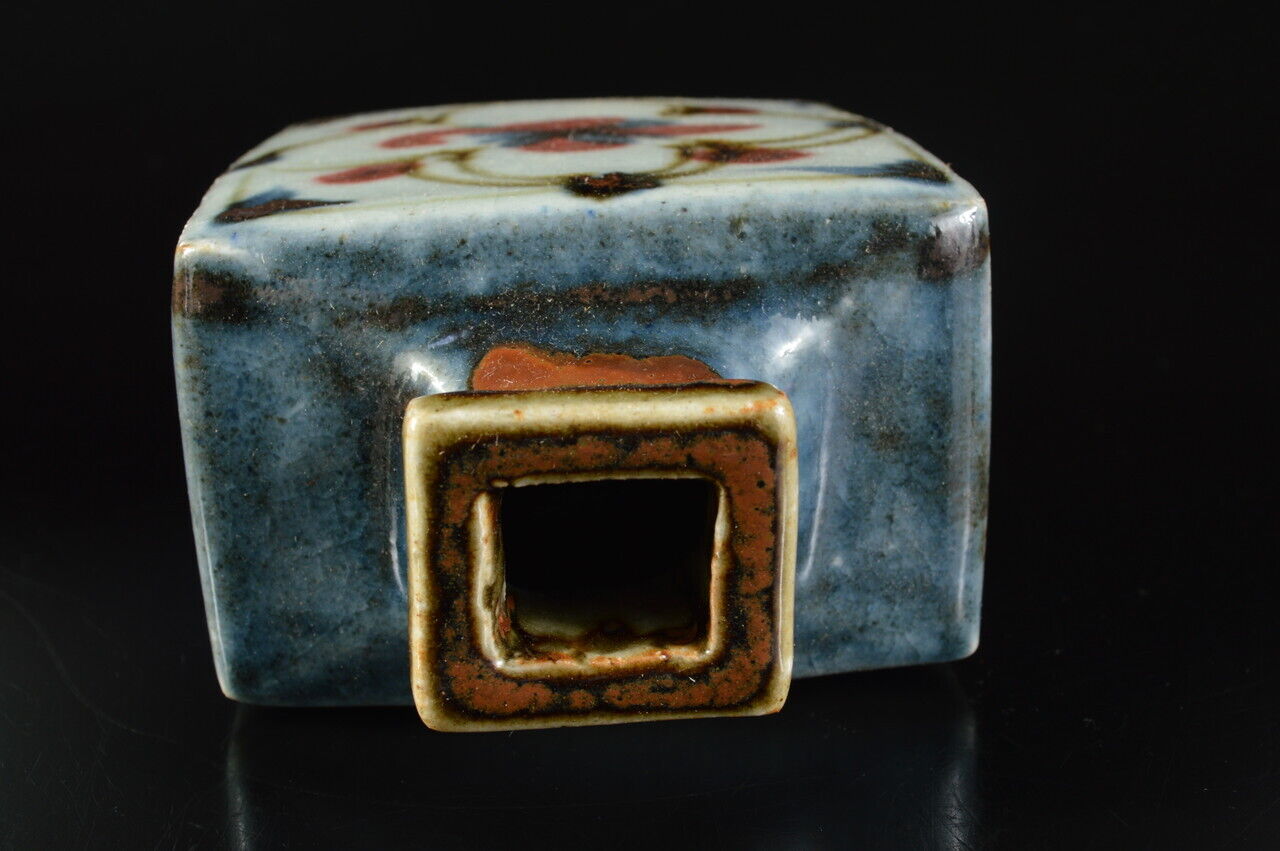
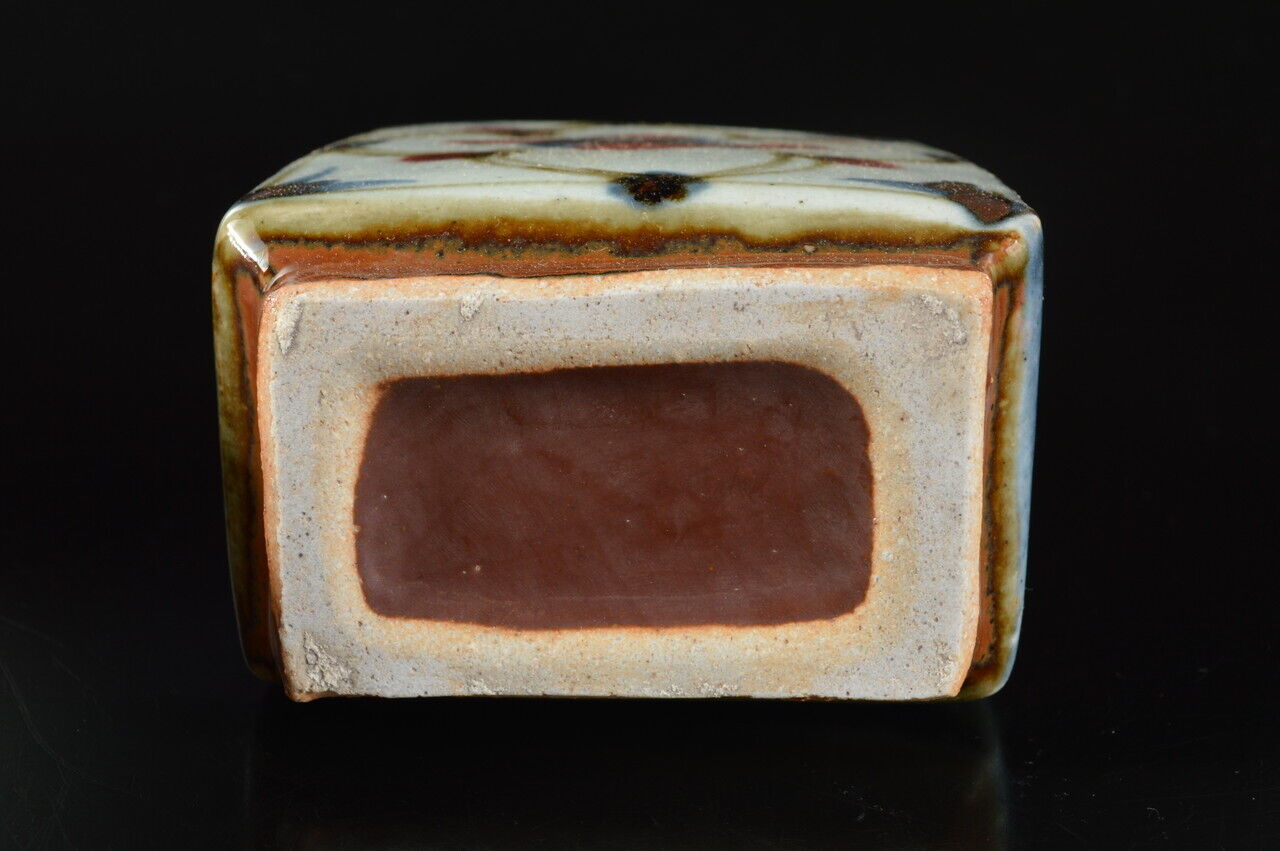
This charming square vase was made by Kawai Takéichi (1908-1989), who’s nickname was ‘Buichi‘. Buichi was a nephew of the legendary Mingei giant Kanjirõ Kawai, who was one of thé initiators of the Mingei movement. Takéichi apprenticed himself to his uncle and their collaborations lasted for more than 40 years. This is a square vase for ikebana but is also a excellent display piece on its own. These types of flower containers tend to be described as ‘henko’ vases. On the front and backside are loosely rendered, hand painted floral motifs in the classic Kawai gosu – cobalt blue and red under-glazes on a white backdrop. Works from the later period of Kawai Takéichi’s career were wood-fired in a four-chambered noborigama – climbing kiln which he established with his son in 1978 in a rural area of Kaméoka City, Kyoto prefecture.
It was only until I held my first Kawai ceramic that I understood what the charm of Mingei is, what it is that attracts people to it and why it became highly appreciated by the Japanese. I am confident this little treasure will only grow on the new owner as it is an archetypal piece for which the Kawai potters are famous.
1908 Born in Yasugi, Shimané Prefecture 1926 Begins apprenticing under Kawai Kanjirō in Kyoto 1935 Serves as assistant to Bernard Leach at Kawai Kiln, Gojōzaka, Kyoto 1942 Studies ceramic making in China for one year 1949 Joins the National Creative Painting Association 1953 Becomes an independent artist 1964 Kanjirō-Hirotsugu-Takéichi Trio Exhibition held in Kyoto Travelled to Australia and New Zealand Held private exhibition and pottery classes in Wellington 1978 Holds 50th year memorial exhibitions at Takashimaya Galleries in Tokyo, Osaka & Kyoto 1989 Dies at the age of 82
Buichi or Takéichi Kawai was a leading disciple and nephew of the celebrated Kawai Kanjirõ (1890–1966), Japan’s most famous potter of the 20th century. He began his training as a potter under his uncle in 1928 in Kyoto. During the 2nd WW he was drafted and served with the army in North China for one year in 1942. In 1949 he joined the National Painter’s Association.
In 1953 he started his own ceramics studio and has since then participated in many exhibitions both in Japan and abroad. His works are stylistically close to those of his famous uncle and like him he does not sign his pieces. Buichi is also well known as a painter.
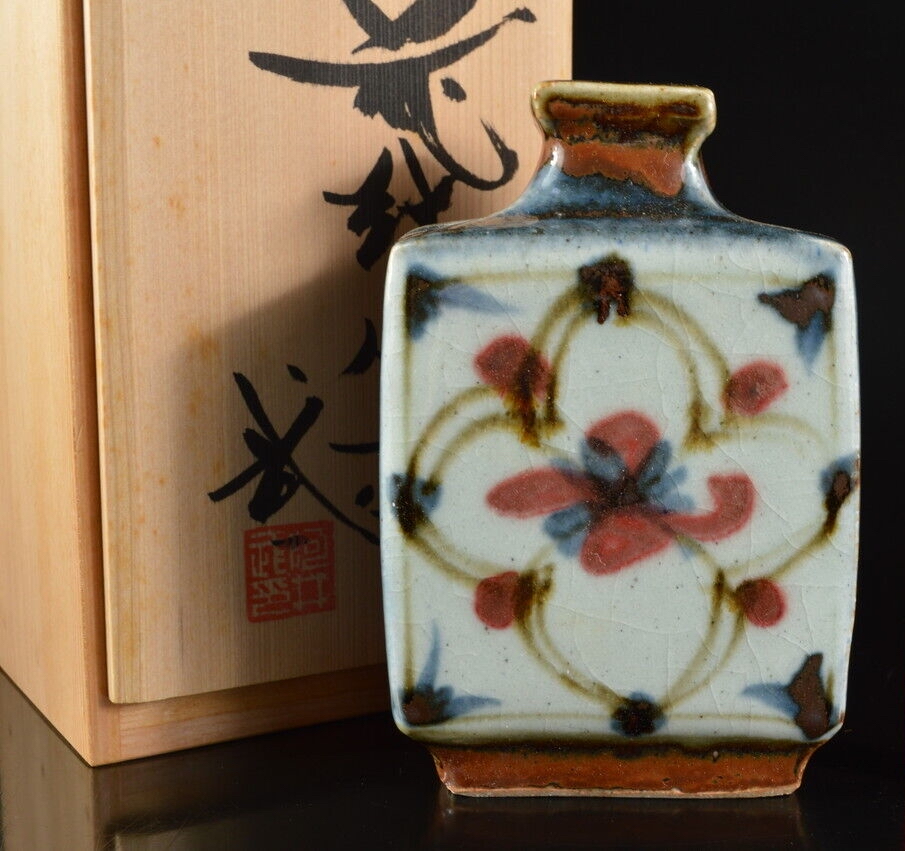
This vase is unsigned following Mingei tradition. Comes with the original high quality paulownia tomobako or storage box. The inside of the lid bears the artists seal and calligraphy. A exemplary work by one of the most experienced potters in the Kawai family.
€420 320 + shipping cost
Related
Discover more from Quality Chanoyu Articles
Subscribe now to keep reading and get access to the full archive.