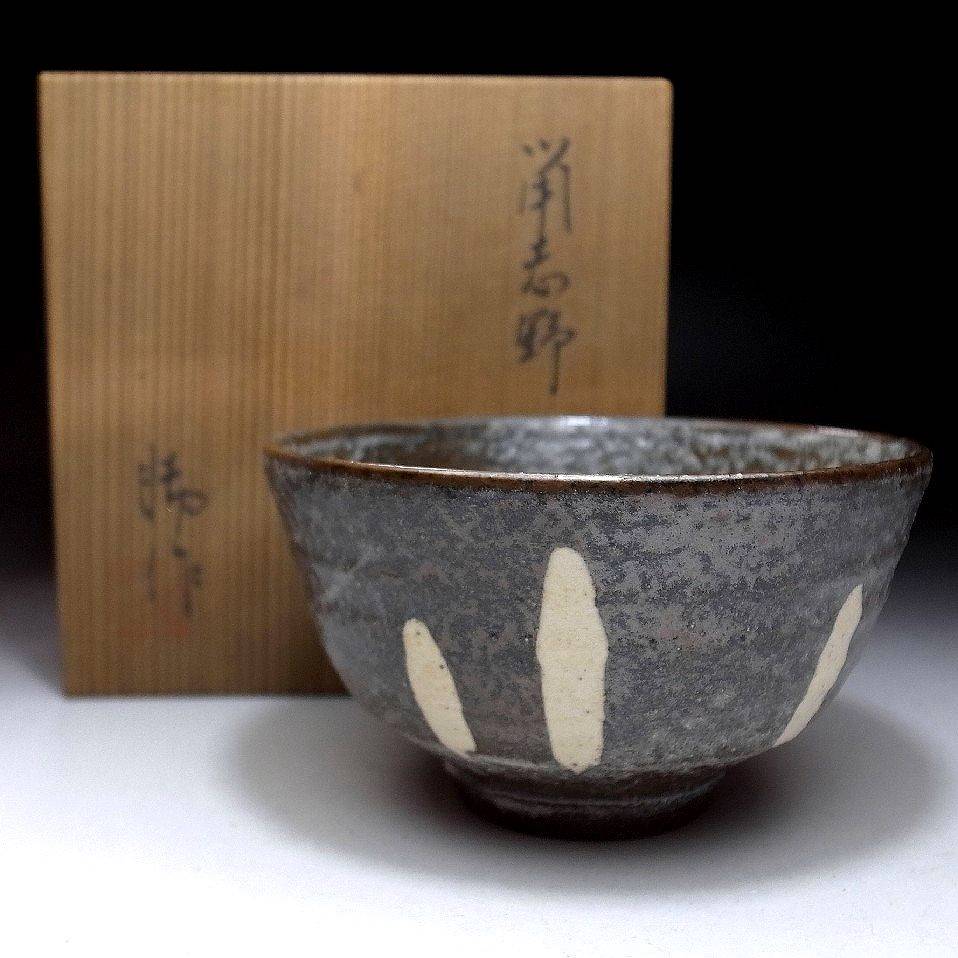





Potter: Kamei Masaru
Approximate size: W4.7 by H2.8″ or 12.5 by 12.0 by 7.0 cm
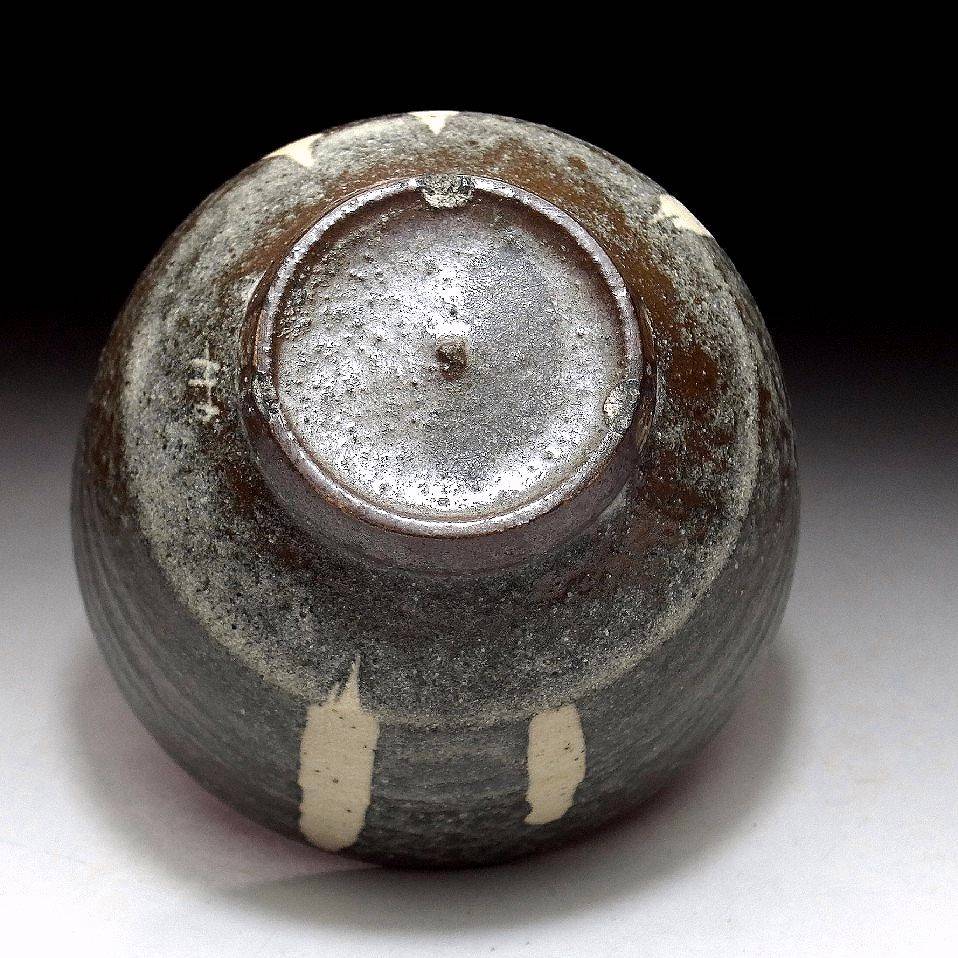
This is a unique chawan by famed Nitten judge and frequent participant, and personal favourite Masaru Kamei (1933-). Masaru Kamei is a potter working in the Seto style. Masaru Kamei graduated from Aichi Prefectural Seto Pottery Senior High School, then refined his skills under his father. He won his first prize at the Nitten Exhibition in 1953 to be the youngest winner. After receiving his first prize he quit to exhibit his works at any exhibitions for several years to concentrate on creating his original pottery style. Then he established his original style of artworks that is metallic abstract artworks made of black pottery. This tea bowl is exceptionally well designed, from the glaze, interior and koudai or foot of the bowl. I suspect this chawan to be from the same firing as a near identical work that was listed in the past.
1967 Contemporary Crafts & Arts Exhibition, received the Contemporary Crafts Award 1972 The Foreign Minister’s Award at Japan Modern Art Crafts Exhibition
1973 The Chun-ichi International Ceramic Exhibition Grand Prize
1974 & 1976 Nitten Exhibition Special Award
1992 Aichi Prefecture Arts and Culture Award, Culture Award, Frankfurt City, Germany
1993 Tradition and Avant-garde Crafts Exhibition in Japan Today, Bremen, Germany
1994 The Japan Modern Art Crafts Exhibition Prime Minister Prize
1996 Contemporary Crafts Japan’s New Arts and Crafts Exhibition
Received Aichi prefecture’s Education Award (Culture)
2000 The Japan Modern Art Crafts Exhibition Minister for Education Prize
Received Seto Province’s Public Merit Award
2012 The 44th Nitten Exhibition Minister of Education Prize
Received Minister of Science’s Commendation at the 44th Fine Arts Exhibition of Education, Culture & Sports
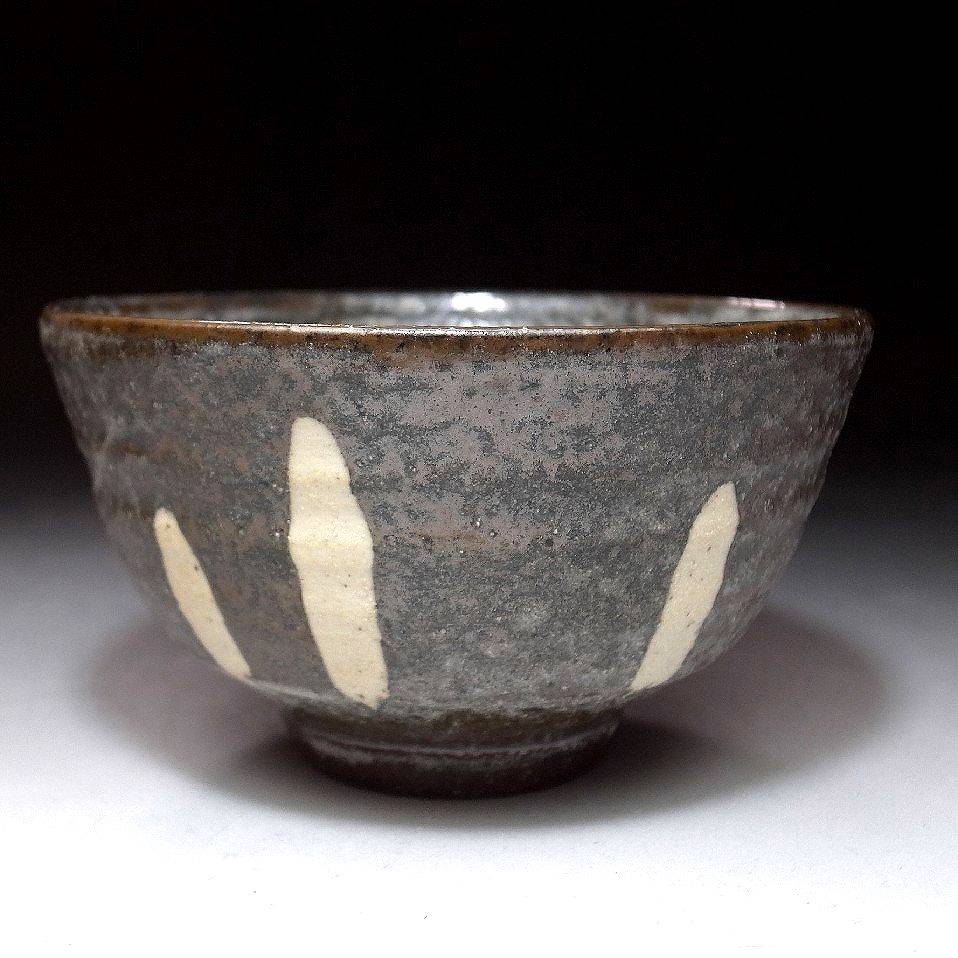
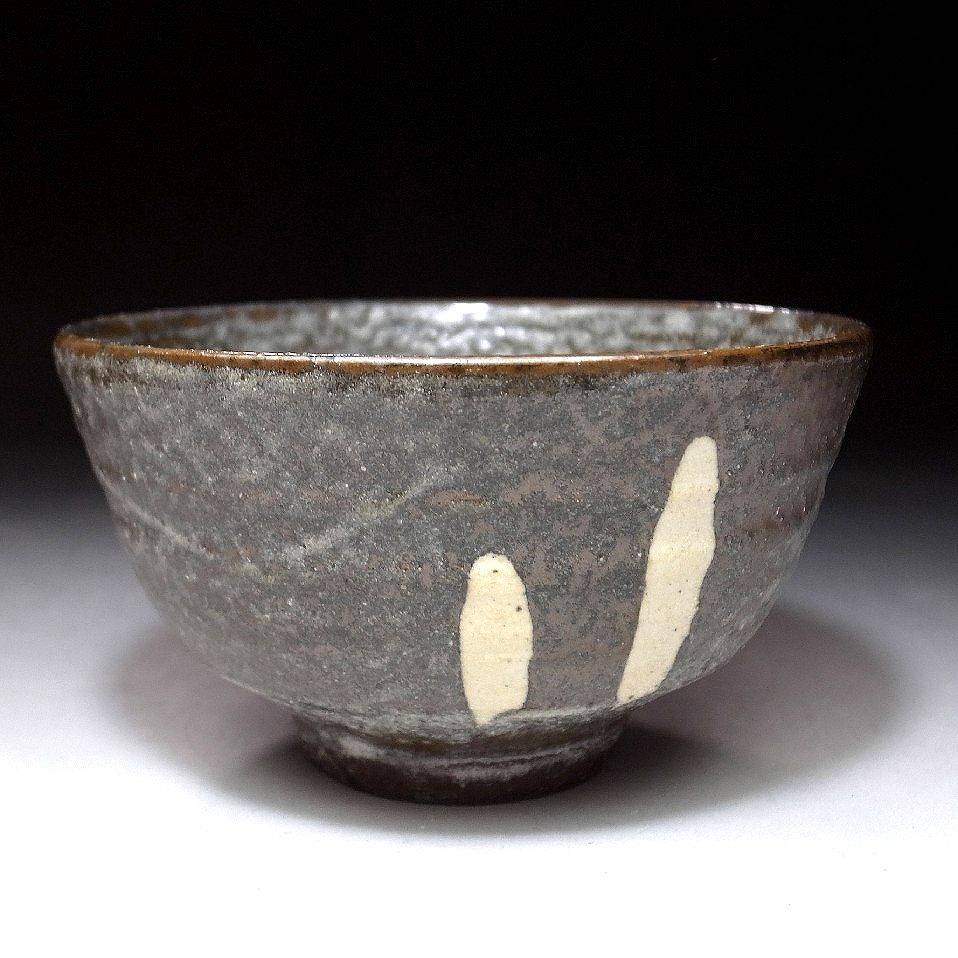
This work has a unique glaze, a type of e-Shino feldspar based glaze with decorations in white. Abstractly simplified trees? Splashes of water going up? It has the signature and partly the texture of the ancient irabo style tea bowls. Masaru Kamei got to be famous as an avant-garde potter in Japan and his outstanding works received many prizes. He also held many trainings abroad and his works has received high evaluation both in and out of the country.
In a nutshell, Bunten and Teiten were official, state-controlled, juried art exhibitions. Nitten replaced them after the war. The meaning of these official exhibition societies for the world of Japanese arts was pretty comparable to the French Salon in the second half of the nineteenth century. The conservative Salon was the institution most hated by the French impressionists – their works were regularly rejected by the jury. And without a representation by the Salon, an artist had hardly any chance to sell anything to private collectors.
Masaru Kamei won the Blue-ribbon award at the great Nitten Exhibition in 1974 and in 1976. This is the highest award for potters entering this famously career-making competition.
After the end of the Pacific war the attribute Imperial was no longer trendy. Everything was reorganized and renamed. In 1946 the Imperial Art Academy became The Japan Fine Arts Exhibition, abbreviated as Nitten. The Nitten has developed into a large organization. Today the Nitten has five art faculties, Japanese Style Painting, Western Style Painting, Sculpture, Craft as Art and Calligraphy.
The chawan has no chips or cracks and is in excellent condition. Comes with the original quality paulownia wooden box with kiln stamp and calligraphy on the lid. Also comes with an informational pamphlet about the potter.
SOLD
Thank you very much!

On a side note; this has long been a personal favourite. The glaze, unique carved form and delicately created koudai makes this bowl characteristic of the potter.