


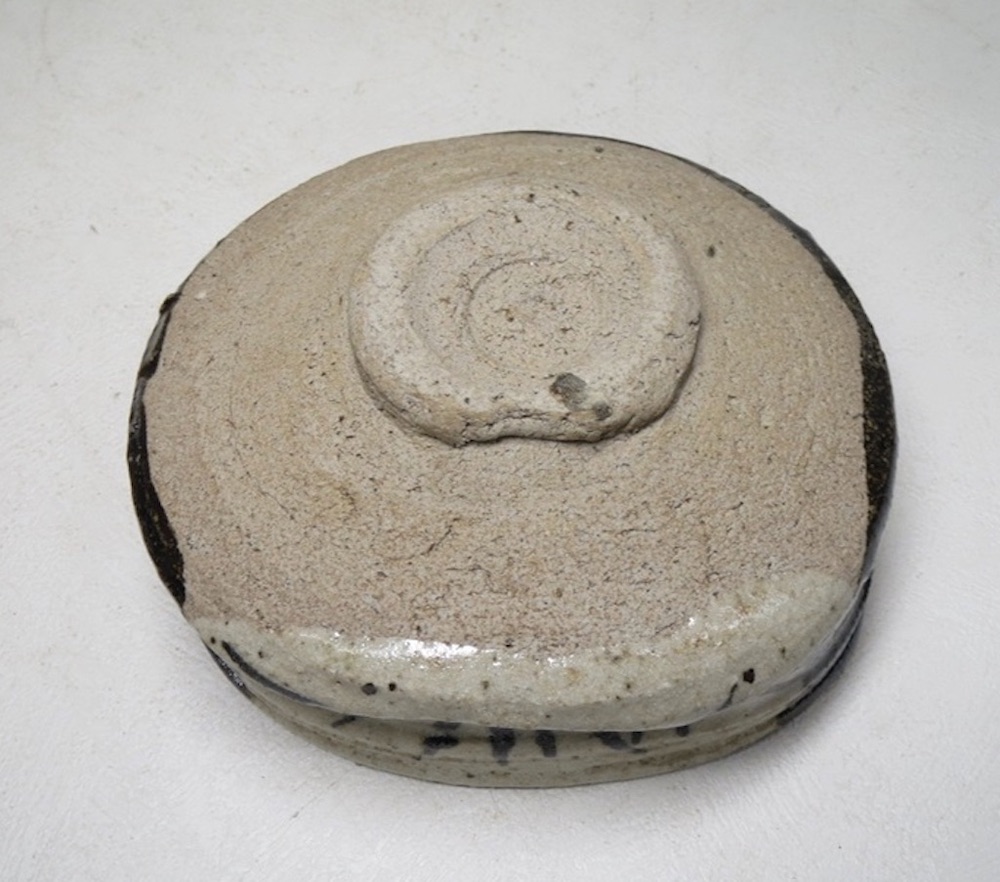

Approximate size: W5.3″ by W4.5″ by H2.8″ or 13.5 by 12.7 by 7.1 cm
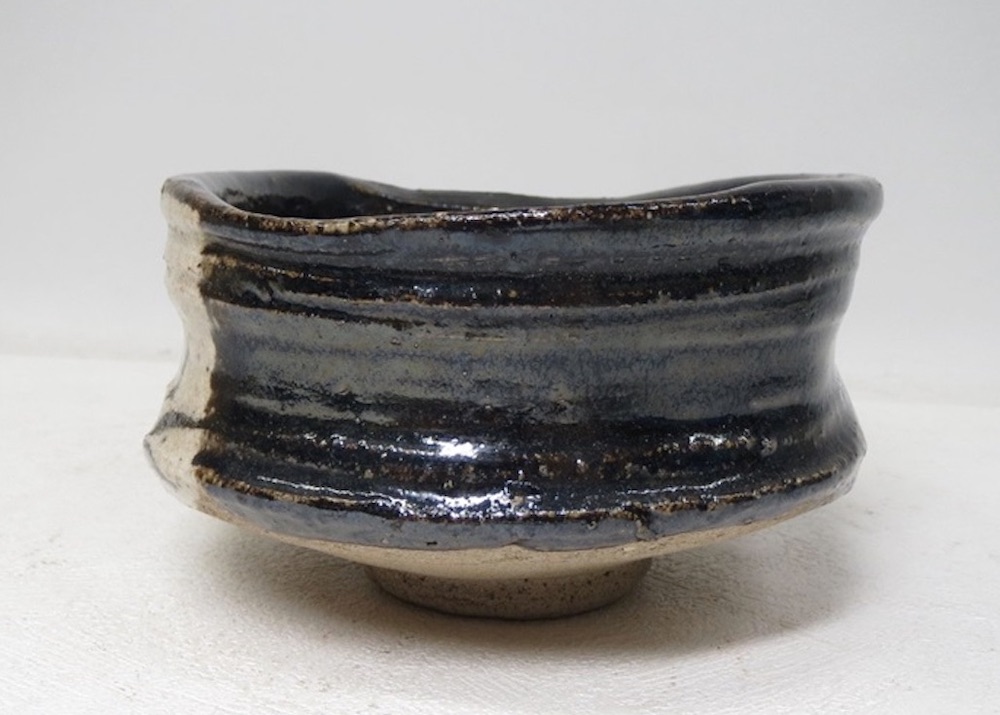
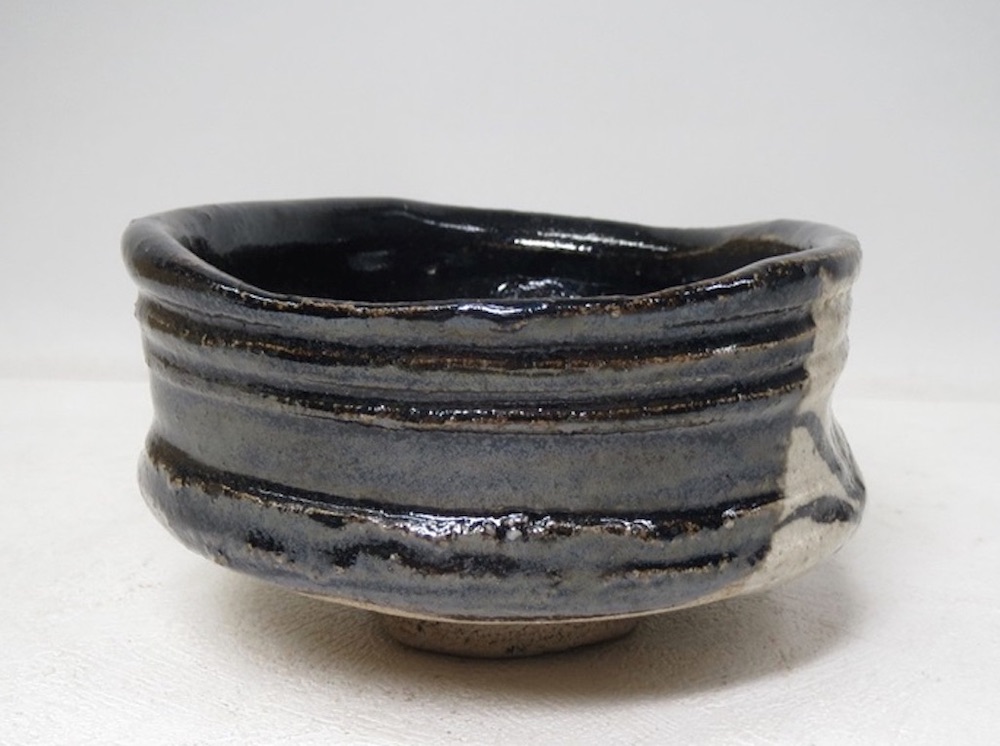
This is an antique kuro Oribe meaning black Oribe style chawan or ceremonial tea bowl. This particular chawan is one of my favourite works and for me is a timeless piece that has been with me for well over a decade.
Loosely thrown and then deformed by hand, a type of shape of tea bowl the Japanese termed ‘kutsu’. Strongly carved to have grooves in the wall, forming ridges and what can be interpreted as a landscape of its own. The chawan has a definite front side, where upon a white square is drawn a simple decoration in black of assumedly, autumn grasses.
Oribe is a visual style named after the late 16th century tea master Furuta Oribe (1544-1615). It’s most often seen in pottery, but extends to textiles and paintings. Oribe was of the Bushi class and not a potter however, he also (like many other influential figures in Japan’s art history), was something akin to an art director or designer. He embodied the spirit of wabi tea so completely that he was able to give it form in a truly new and unique vision. Boldly formed, often intentionally distorted chawan, decorated with green, black and brown glazes and abstract designs appeared on the Tea ceremony scene in Kyoto.
The motifs, taken from nature or other decorative patterns such as textiles, were ground-breaking in their bold informality. Casting aside Korean and Chinese influences, they were also entirely Japanese. It must have been this recognition of a new Japanese aesthetic that caused tea devotees to cherish Oribe ware. Its ability to capture something of the artistic and spiritual soul of Japan quickly spread throughout the country, and its mass popularity continues to this day.


This chawan is unsigned, as it used to be considered a bad trait to impress ones ego on objects like tea utensils. There are no chips or cracks and condition is excellent. Stored in a high quality unsigned paulownia shiho-san tomobako or storage box.
listed for reference purposes only

Throughout the late Momoyama (1573–1615), and early Edo periods (1615–1868), in Japan, the art of the Japanese tea ceremony underwent new developments. Great tea masters such as Takeno Jōō (1502-1555), Sen no Rikyū (1522-1591), and Furuta Oribe (1544–1615), revolutionized the utensils, rituals and ceramics used in tea ceremonies. As time passed, technology improved and kilns advanced; improved firing conditions allowed the creation of Oribe ware, a new kind of ceramic used in these tea ceremonies.
