


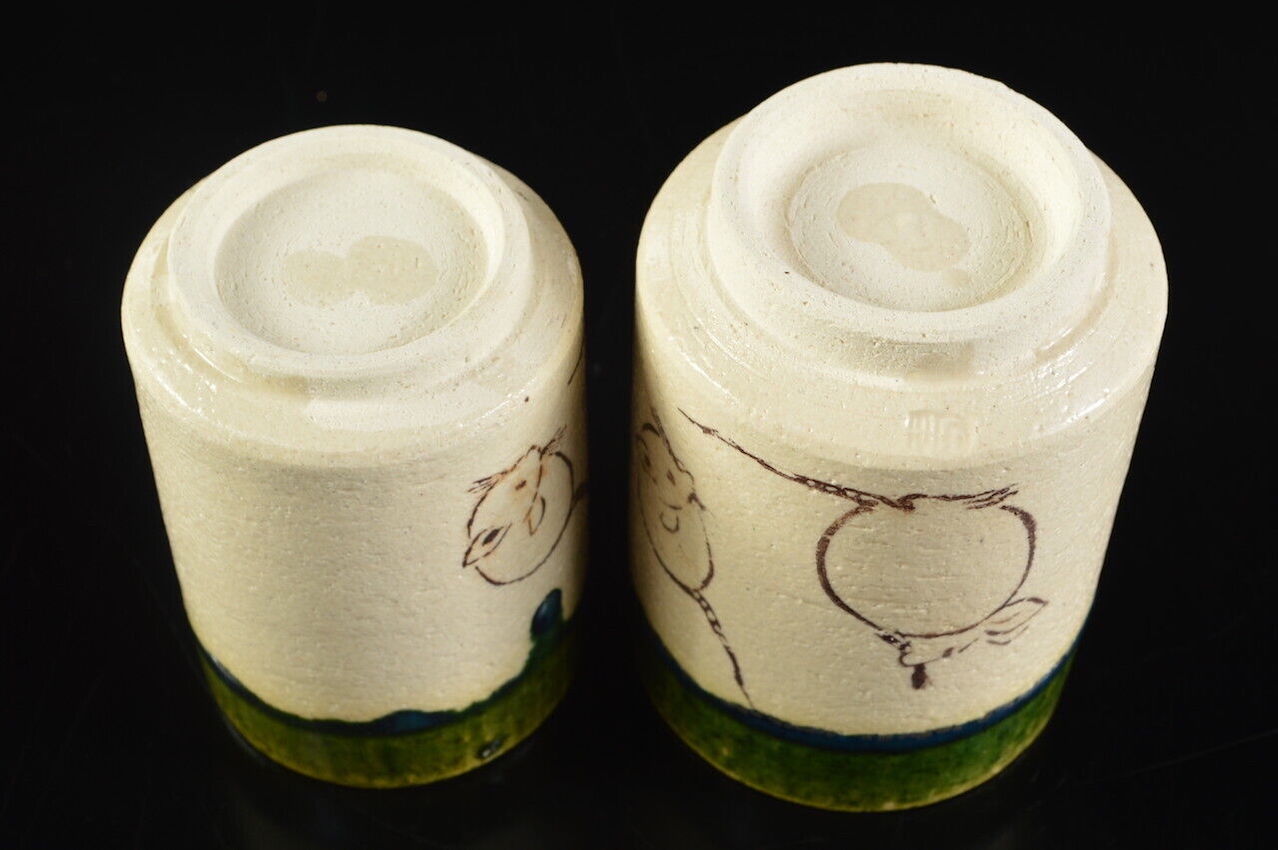


Potter: unknown, potter’s stamp on the bottom
Approximate size large: W2.7″ by H3.7″ or 13.5 by 7.0 by 9.5 cm
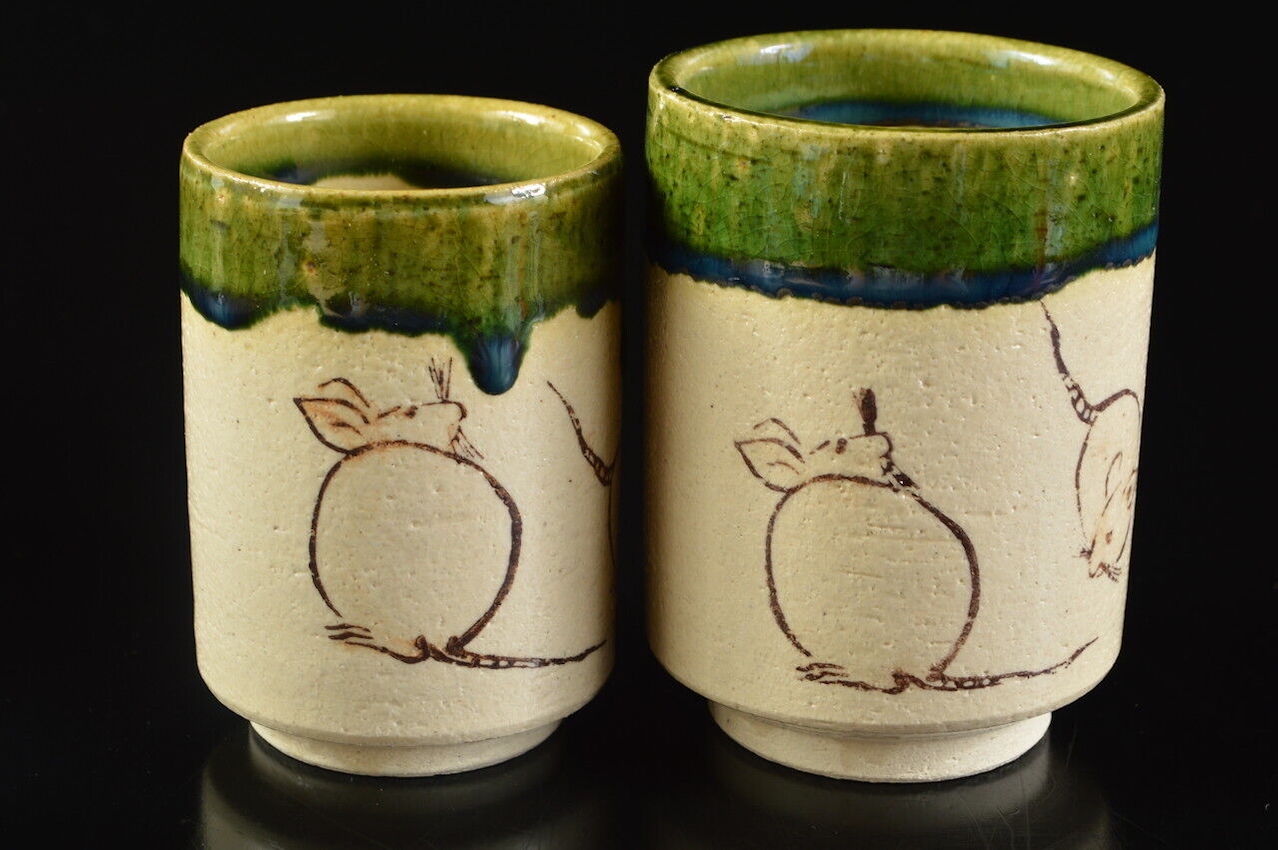
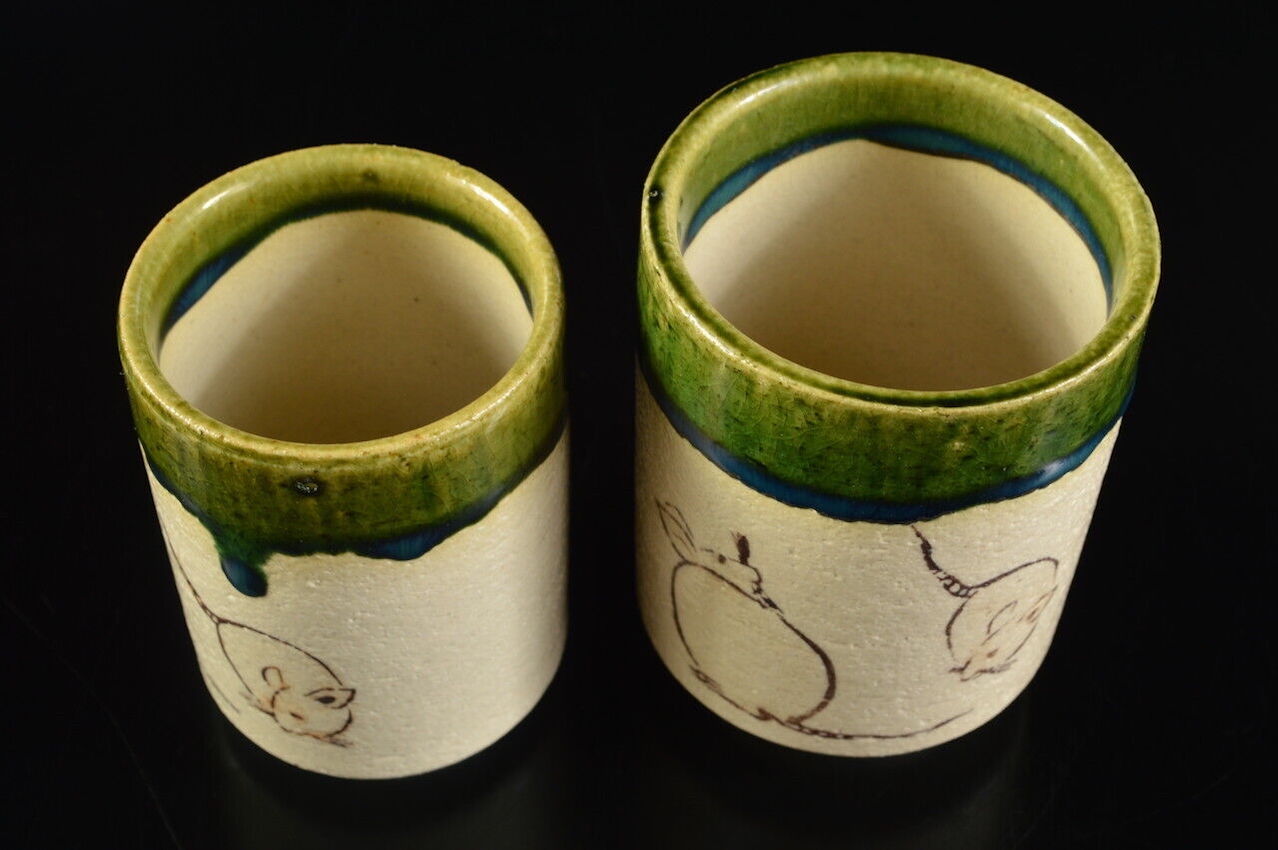
This is a set of two yunomi or tea cups. In Oribe style this pair feature a cheerful motive of mice scurrying about. The decorations are hand painted in a way that has a flair or charm of its own which leads me to believe the maker must be either experienced in the way of the brush or has had a lot of practice. Details such as the potter’s (art), name and kiln are as of yet unknown and require further attention.
Oribe is a visual style named after the late 16th century tea master Furuta Oribe (1544-1615). It’s most often seen in pottery, but extends to textiles and paintings. Oribe was of the Bushi class and not a potter however, he also (like many other influential figures in Japan’s art history), was something akin to an art director or designer.
He embodied the spirit of wabi tea so completely that he was able to give it form in a truly new and unique vision. Boldly formed, often intentionally distorted chawan, decorated with green, black and brown glazes and abstract designs appeared on the Tea ceremony scene in Kyoto.

Some cultures hold a benevolent (healthy), superstition regarding the way mice are seen, holding symbolism that goes deeper than simple animals or mere rodents. Symbolism allocated to them during time, representations in historic and modern art. In Japan mice are a symbol of innocence and are said to bring wealth and good fortune where other places link it to black magic and the dark, medieval times where Europe was suffering under the plague. In a welcome, lighter theme these yunomi convey a homey atmosphere and represent the mouse as a symbol of fertility, longevity and relationships.
The Japanese language does not generally distinguish between mice and rats. Both are commonly called nezumi. If a distinction is needed the adjectives 大きい (ōkii, “large”), or 小さい (chīsai, “small”), are often used to further distinguish the intended meaning.
Note that although the Japanese term 子年 (nezumidoshi, nedoshi), for The Year of the Rat in the Chinese zodiac derives from this same ‘nezumi’ term it is not written with this 鼠 kanji.

The motifs, taken from nature or other decorative patterns such as textiles, were ground-breaking in their bold informality. Casting aside Korean and Chinese influences, they were also entirely Japanese. It must have been this recognition of a new Japanese aesthetic that caused tea devotees to cherish Oribe ware. Its ability to capture something of the artistic and spiritual soul of Japan quickly spread throughout the country and its mass popularity continues to this day.
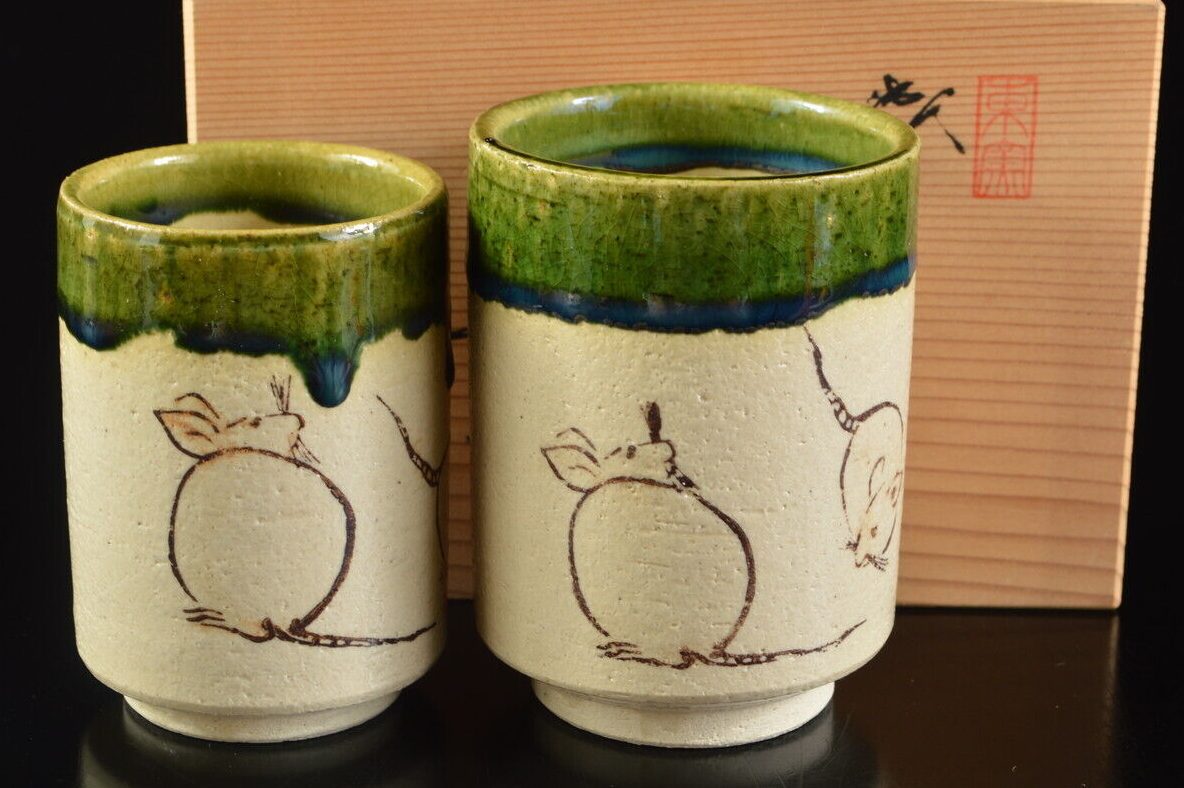
Both pieces are stamped near the koudai or foot ring with the potter’s mark There are no chips or cracks and condition of both pieces is mint. Stored in the original quality paulownia tomobako or wooden storage box of which the lid bears the potter’s calligraphy and seal.
€125 + shipping cost

Throughout the late Momoyama (1573–1615), and early Edo periods (1615–1868), in Japan, the art of the Japanese tea ceremony underwent new developments. Great tea masters such as Takeno Jōō (1502-1555), Sen no Rikyū (1522-1591), and Furuta Oribe (1544–1615), revolutionized the utensils, rituals and ceramics used in tea ceremonies. As time passed, technology improved and kilns advanced; improved firing conditions allowed the creation of Oribe ware, a new kind of ceramic used in these tea ceremonies.
