

Potter: Atarashi Manabu
Approximate size: W3.9″ by H3.5″ or 10.0 by 9.0cm
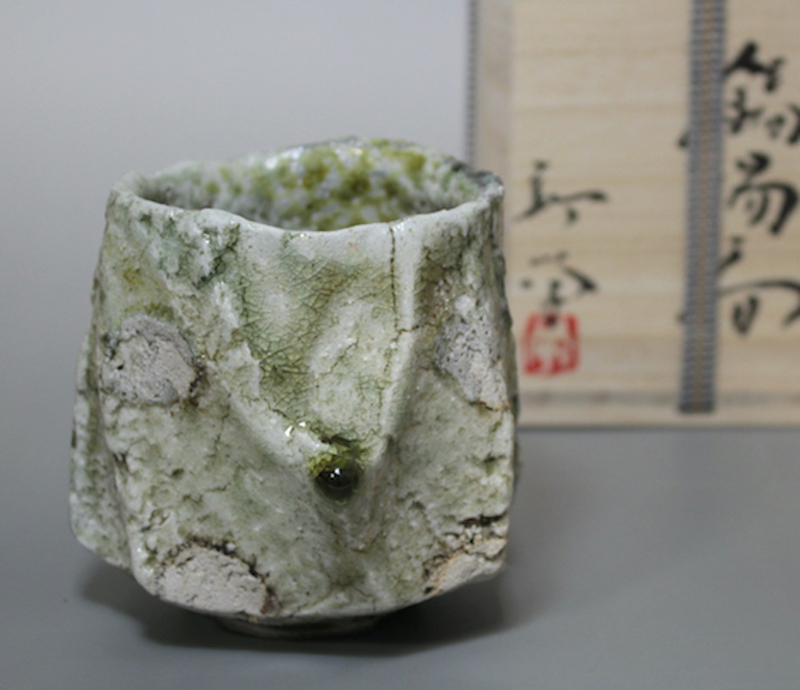
This is a yunomi or teacup by the famous Iga potter Atarashi Manabu (1973-). He was born in Osaka in 1973, as the son of the renowned potter Atarashi Kanji. After graduating from the Literature Department of Kansai University in 1995 he returned home and started a potter’s apprenticeship under his father. In 2002 he build an anagama kiln and started exhibiting and in 2008, started work on a second kiln more suited to his ambitions. Atarashi Kanji is a second generation potter and credited for reviving the Iga tradition following the war. Atarashi Manabu has been growing in popularity as one of the leaders of Iga ware.
Iga yaki or Iga ware is a localised type of pottery which is defined by its province, in this case Iga pottery originated near Iga, Mie prefecture (the province – now prefecture, was formerly called Iga). Iga ware’s origin are believed to date to the second half of the 7th century and 8th century CE.
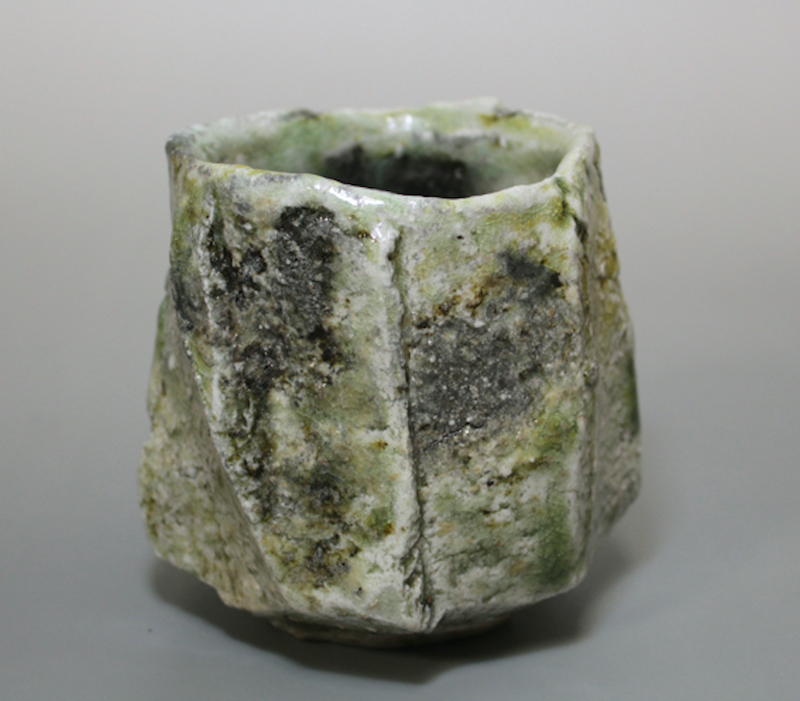
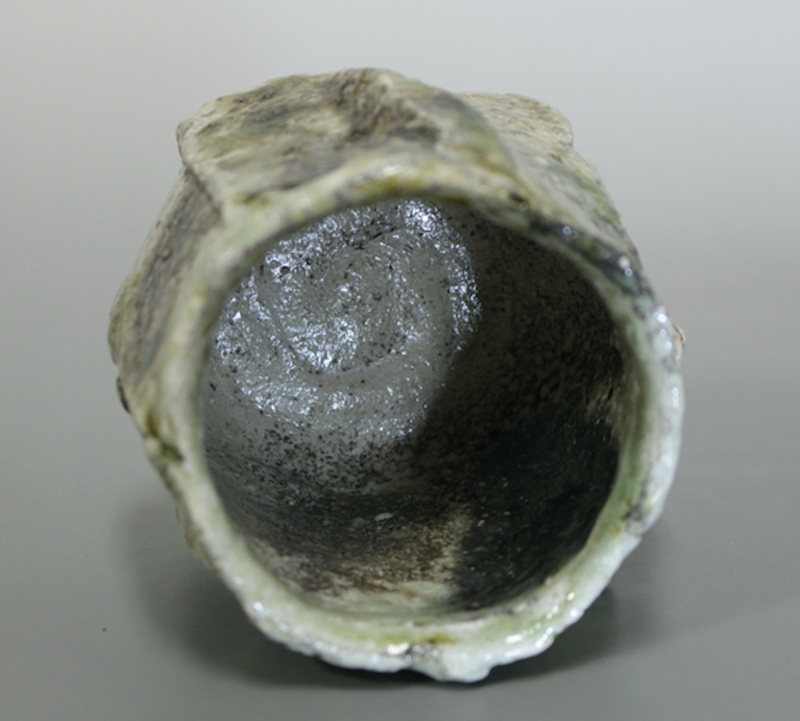
This yunomi’s ridged, rugged exterior is entirely covered by a green glassy glaze which is entirely due to the manner of firing. During numerous firings in his self-build anagama kiln, this yunomi was blasted with ash, coating it in a rich green ash glaze while also letting through the details of the clay. The accumulated ashes of the baking become a form of art, for which the Japanese have developed an unique appreciation for – known as ‘tsuchi-aji’. On one of the sides there is a large crystallised droplet which are called ‘bidoro’ or ‘biidoro’. Droplets or bidoro are especially coveted and sought-after by collectors.
1973 Born in Osaka, Japan
1995 Graduated from the literature department of Kansai University
1999 Apprenticed himself to his father Atarashi Kanji
2002 Built his own Anagama (cave kiln)
Held the first exhibition of his career in Kobe
2003 Began exhibiting regularly both individually and as part of a group
2008 Built his second Anagama (cave kiln)
The area around Iga has long produced a quality clay that is known for its high resistance to fire. In the early phase it did not differ much, if at all from nearby Shigaraki ware (which are near one another). Iga ware uses local clay which is extremely resistant to heat, reacts well to repeated firing and is (typically), fired over three days in a kiln dug into the ground. The clay tends to have a high level of hardness and is created on a pottery wheel. Furthermore, tiny pebbles in the clay give it additional surface texture. The potter delicately uses a spatula to give curvature. This distinctive curve lets the flames lick over the round edge.
This yunomi is unused and in mint condition. Comes with the original high quality – shiho san paulownia tomobako or storage box of which the front bears the potter’s calligraphy and personal seal. Also includes a dedicated tomonunu or tea cloth and a pamphlet with information about the potter and work.
SOLD
Thank you very much!