




Potter: Taisuke Ikeda
Approximate size: W4.4″ by H3.5″ or 11.3 by 8.7cm
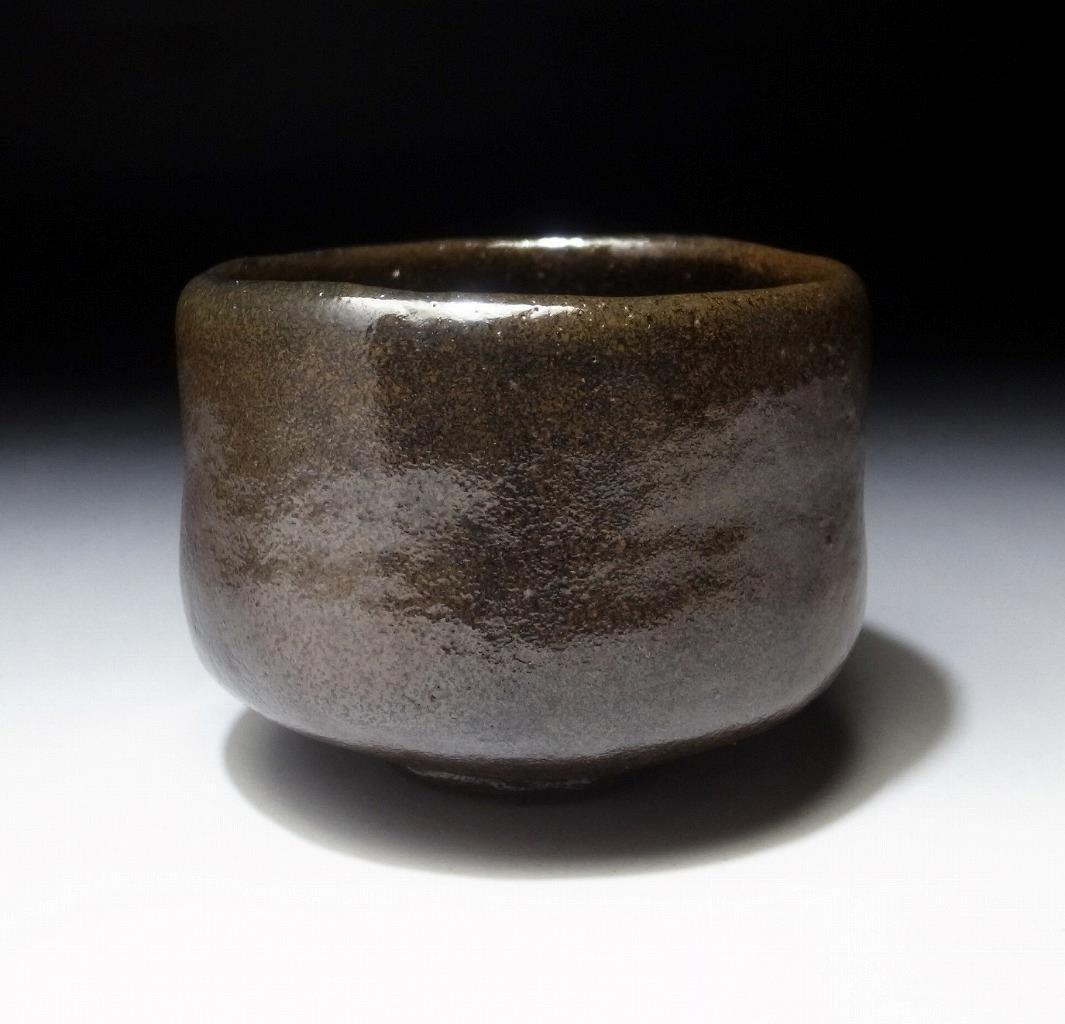
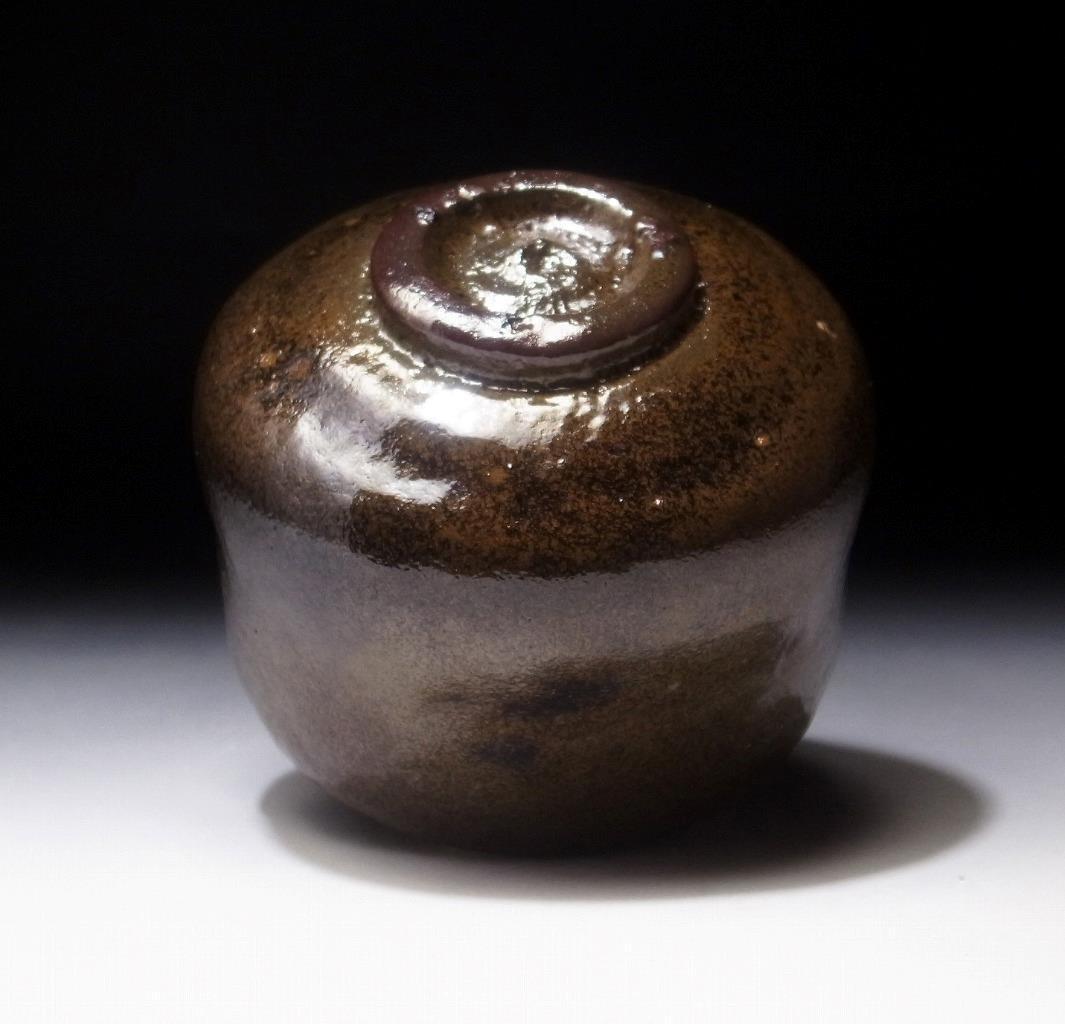
This is a Honma ware, Raku fired chawan or ceremonial tea bowl by master potter Taisuke Ikeda (1923-). Taisuke Ikeda was born in Yamagata prefecture and is known for having established a kiln in the gardens of the Museum of Art in Honma in 1956, establishing Honma yaki or Honma Ware. It was here that, with guidance from Miura Koheiji and Asano Akiro he created pottery of his own. Chawan by this artist are rare and he’s known to have created mostly tea cups. While I couldn’t confirm in what year, he is known to have later studied under the watchful eye of master potter Murase Jihei and famous researcher of ceramics; Koyama Fujio (more on him below). This chawan is likely based on one of the earliest Raku works called ‘Kamuro‘, which was made by the founder of Raku ware (a tile maker by trade), named Chojiro. It was Chojiro, who at the request of Tea master Sen no Rikyu, made a number of revolutionary tea bowls embracing and emphasizing Sen no Rikyu’s concept of wabi sabi.
In the creation of the first Raku bowls Chojiro used the same materials and technique that were used for roof tile production, sandy clay – and removing the pottery from the kiln as soon as the glaze had reached the red-heat stage. The thermal shock provoked by the cooling process gave the pottery an aged look. Arguably the most critical moment when making Raku pottery is the moment of removal of work from the kiln which also leaves a tong mark.
The title “Kamiya” is said to have come from a merchant called Sotan Kamiya, who made the tea bowl for the famous samurai and one of Oda Nobunaga’s generals called Hideyoshi Toyotomi. However this was actually an utsushi or ‘faithful replica’ of the tea bowl originally made by Chojiro which was kept by and became famous because it was one of Sen no Rikyu favourite items. The original is currently maintained in the Shizukado-bunko Museum in Tokyo.

Taisuke Ikeda held personal exhibitions starting in 1940. He exhibited in a large range of locations and galleries including but not limited to: Nihonbashi, Sendai, Niigata, Nagoya, Mitsukoshi in Hiroshima, Osaka Takashimaya and Ginza Matsuzakaya.
Koyama Fujio (1900-1975), is best known for being the committee chairman of the Japan Society of Oriental Ceramic Studies and board chairman of the Japan Kogei Association. At the age of 25 he left university mid term to devote himself to the study of ceramics at Seto and Kyoto. It was a little later that he established himself as a potter (in 1925). It was 5 years later – in 1930 he started working at Oriental Ceramics Research Institute, suspending his pottery work to devote himself to ceramics and porcelain research. In 1941 he served at the Tokyo Imperial Household Museum, joining in with the work of selecting Designated Cultural Properties. After retiring from the museum in 1961, he restarted working as a potter again from 1964 on. In 1972 he build a kiln in Toki City (Tochigi prefecture), where he produced various works based on existing research into ancient ceramics such as Karatsu, Bizen, Aoji and Akae wares. He left behind numerous achievements in modern ceramics research as board chairman of the Japan Kogei Association established due to the success of his name and while working as a committee member for the Japan Society of Oriental Ceramic Studies (amongst others).
This chawan is devoid of any chips or cracks and condition is mint. Comes with the original and of the highest quality shiho-san paulownia tomobako or wooden storage box with calligraphy and kiln-stamp on the lid. Additionally there is calligraphy on the interior of the lid and the bottom of the box (likely an appraisal). Also includes a tomonunu or tea cloth and a pamphlet with background information on the potter. An exemplary work of art.
€400 350 + shipping cost


Raku wares are intimate with the world of contemplative tea ceremony in which the drinking experience becomes a transcending one. Many Raku chawan are either red or black, but there are many variations. Depending on the firing length, temperature and factors in the glaze among innumerable variables turns out black, red, pink or as shown here deep matte brown which is known as kasé Raku.
A tradition dating from the mid-16th century, Raku tea bowls are made by hand, without the use of a potter’s wheel; giving them a distinctly human feel. In the process of shaping the bowls, potters handle the tea bowls in much the same manner that users will hold them as they drink from them. In this way, we can imagine a connection is formed between the creator of the tea bowl and the participants in the tea ceremony. For this and other reasons stemming from historical circumstances, Raku bowls are considered a favourite of tea practitioners across Japan.
