Approximate size: W4.9″ by H2.7″ or 12.5 by 7.0 cm
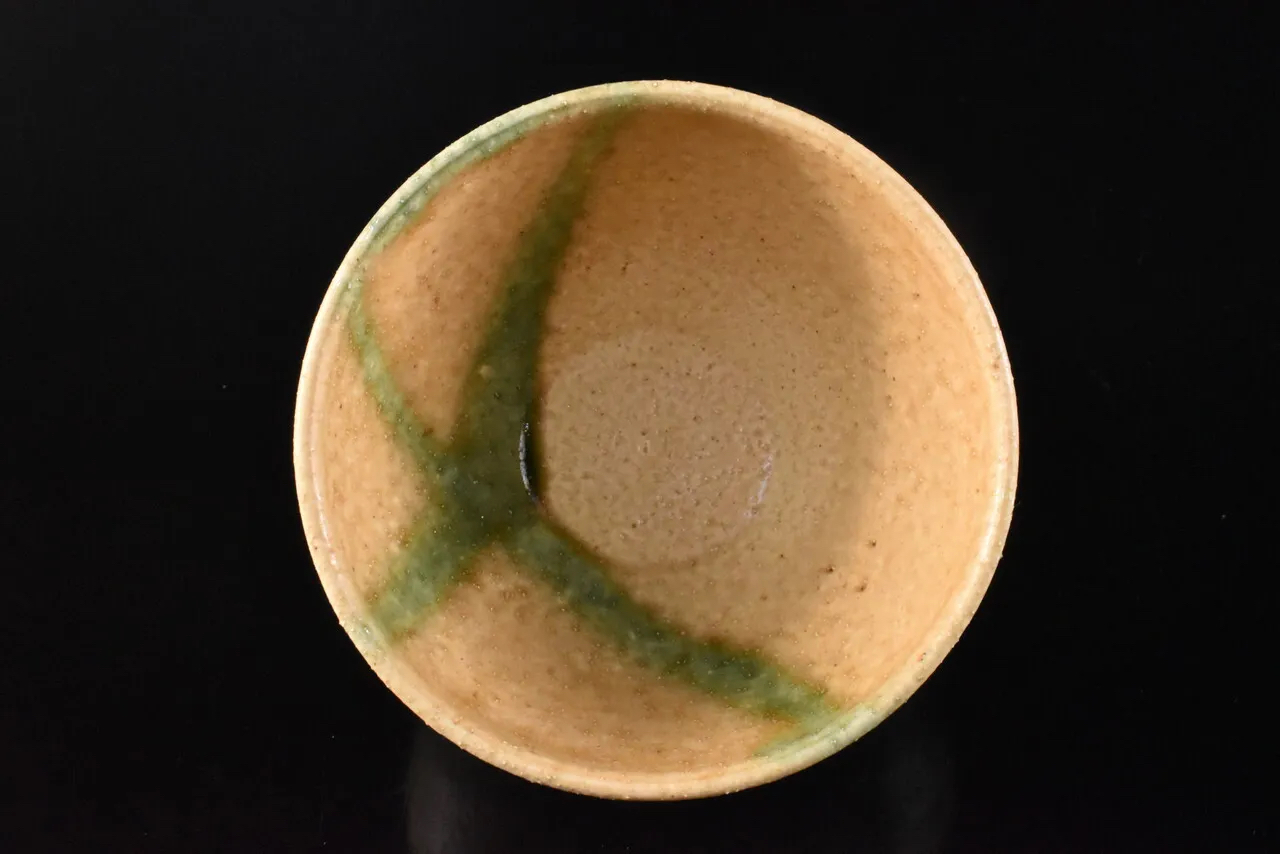
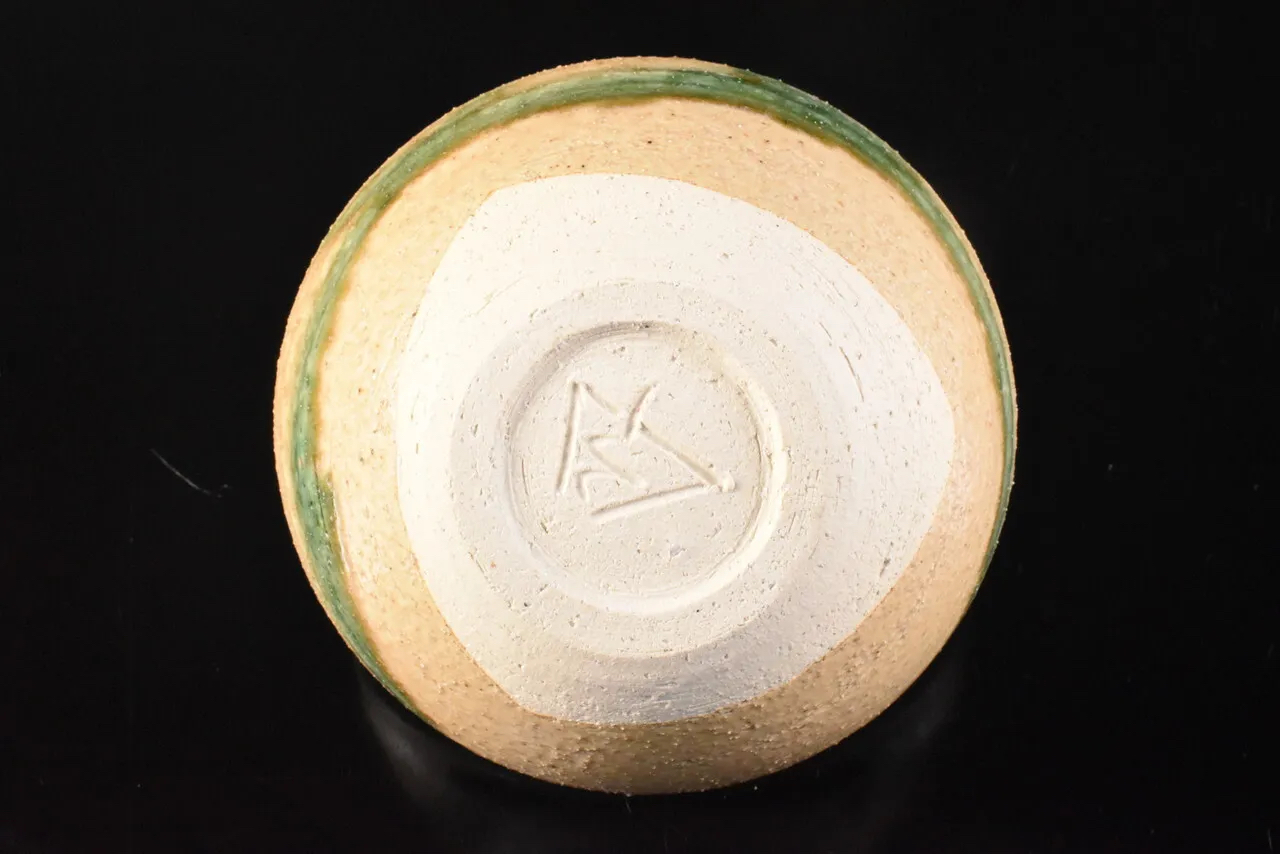
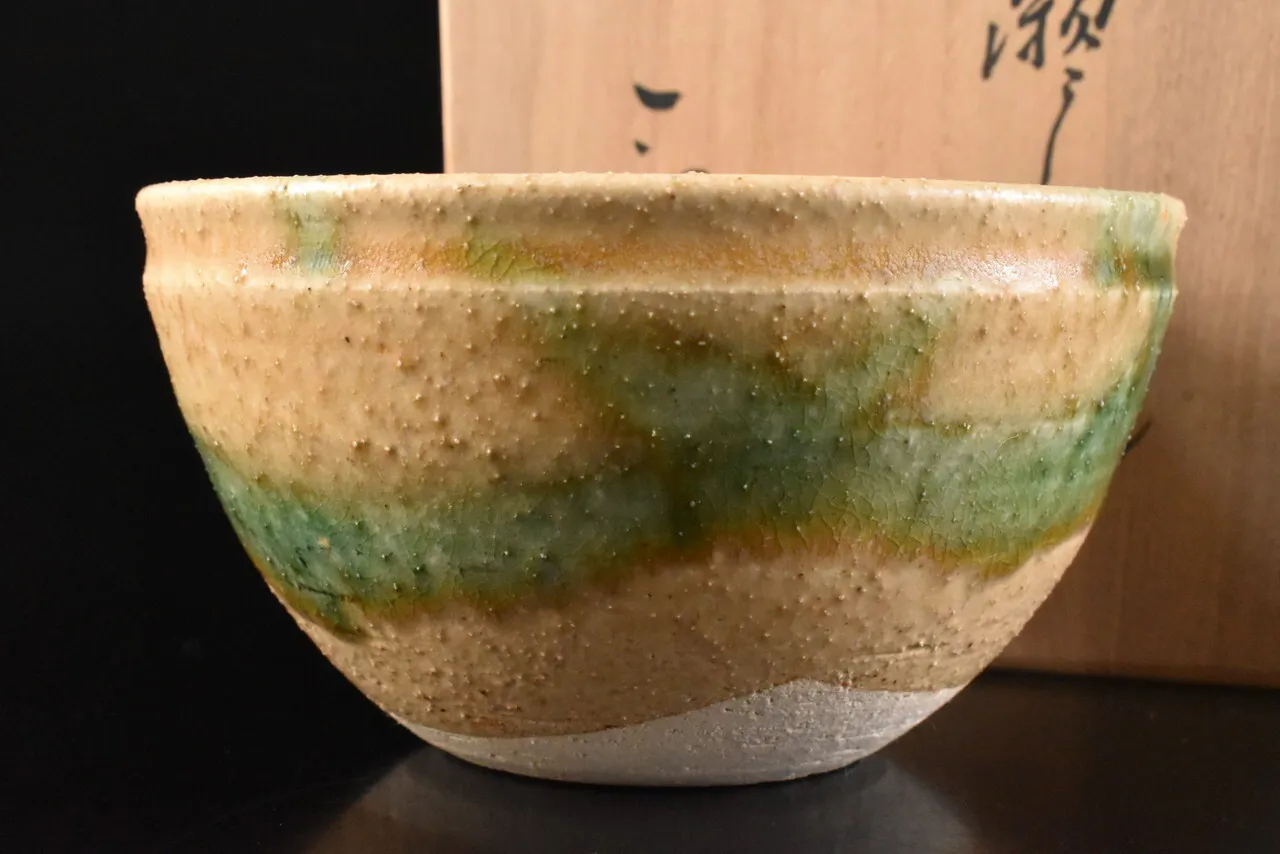
This is a ki-Seto or yellow Seto chawan by the famous Seto potter Kato Reikichi (1953-). Chawan are ceremonial tea bowls that are intended for use in the Japanese Tea ceremony and this appears to be a modernistic interpretation of ki-Seto, mainly because of the exhibited control of the green glaze. More on how such effects are created below. Reikichi was born into a famous Akazu pottery lineage as the son of the highly acclaimed potter and glass worker Sho Kato (1927-2001). He graduated from Tamagawa University before focussing on pottery. Reikichi Kato’s work tends to be centred around the use a purple glaze (of his own devising), kuro-gesho and mishima-de (a from origin Korean, slip inlay technique). His grandfather Josuke, a potter also and was notably involved in the advancement of the craft. This is a lineage that passes on techniques and knowledge and continually hones the craft from generation to generation. Reikichi Kato is also a long time member of the Japan New Craft Art Association.
Seto ware is the pottery made in Seto City and nearby areas of modern Aichi prefecture. The Seto area was the centre of pottery manufacture in the Kamakura period; ko-Seto (old-Seto), designates pieces made at this time. At the end of the Muromachi period the centre of the pottery manufacture moved to nearby Mino. At that time wares made in the area from Seto to Mino were called Seto-yaki.
In the early Edo period, some pottery manufacture moved back to Seto. In 1822, Kato Tamikichi (1722-1824), introduced sometsuke jiki (blue-and-white porcelain; sometsuke), from Arita in modern Saga prefecture, and this porcelain, called shinsei or new production rather than the original Seto ware pottery, Hongyou became standard. The Japanese term Setomono is also used as a generic term for all pottery. Seto was the location of one of the Six Ancient Kilns of Japan.
The deepest pools of green flux to blue
During the Meiji period, Seto ware adapted Western techniques, gaining great popularity. In addition to plain Seto, the Mino kilns also produced several types of Seto wares from the mid-16th century, including Seto-guro (black Seto), and ki-Seto (yellow Seto). Ki-Seto fired at the same kilns as Shino and Seto-guro wares during the Momoyama period, featured “fried bean-curd” glaze, Aburagede (油揚げ abura-age or aburage), developed in emulation of Chinese celadon’s. It utilizes an iron-rich wood-ash glaze and is reduction fired at a high temperature to produce a celadon-like texture and bone colour; in an oxygen-rich kiln, the minerals in the clay and glaze create a distinctive opaque yellow glaze.
Reikichi Kato is a successful potter with a number of awards to his name such as the Special Selection at the Japan Fine Arts Exhibition, the Japan New Craft Art Award and recipient of the Minister of Education’s Award at the Chunichi International Exhibition of Ceramic Arts and numerous other awards.
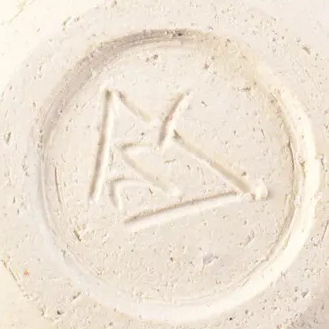
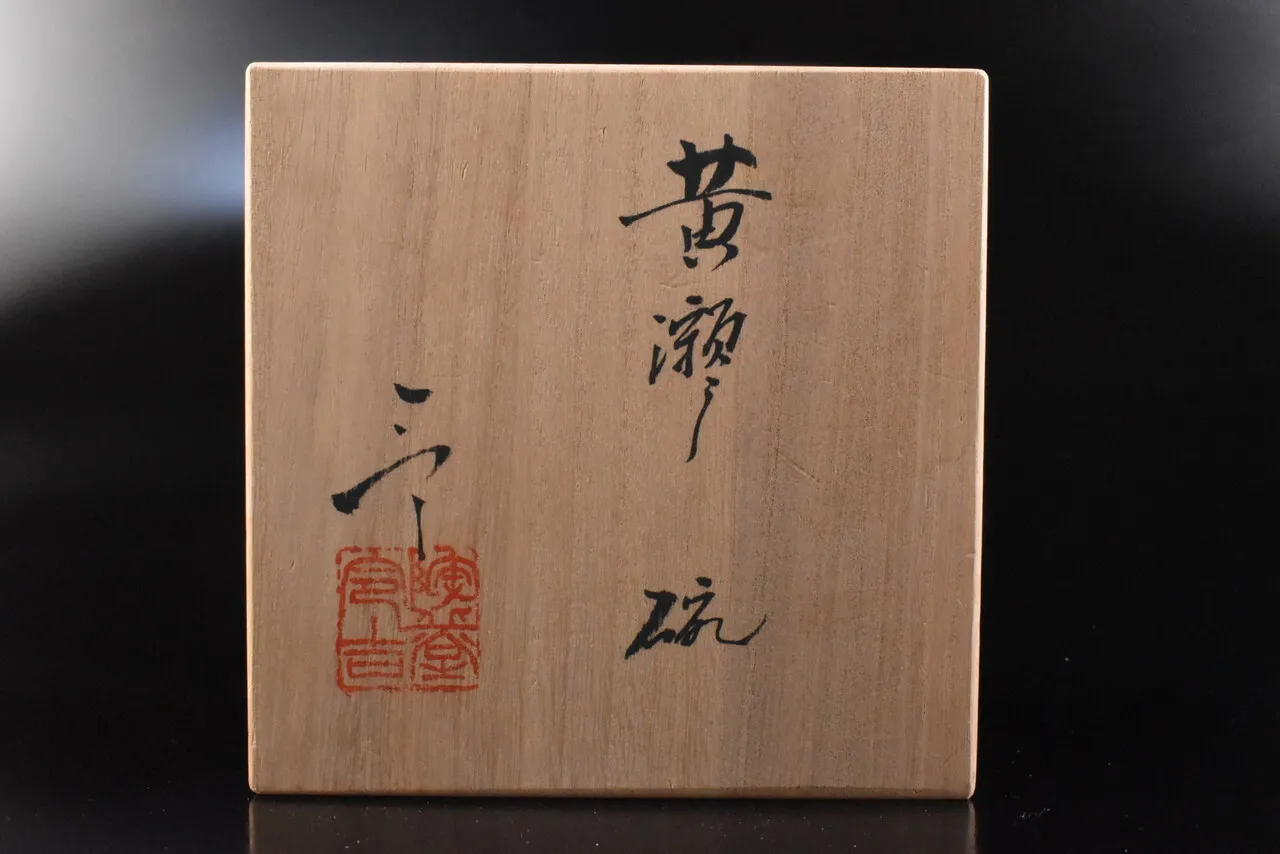
There are no chips or cracks and condition is mint. Comes with the original high quality, shiho-san paulownia tomobako or storage box with the artist’s stamp and calligraphy on the lid.
€225 150 + shipping cost
Sho Kato (1927-2001), was born in Himeji, Hyogo Prefecture. In Kyoto he studied ceramics with the goal of reproducing the ancient Chinese “Yohen Tenmoku,” glaze. A Chinese ceramic technique that dates back all the way back to the 5th century. Internationally acclaimed and exhibited, he has won awards in France, Italy and Belgium. Sho Kato creates functional wares as well as more conceptually oriented objects. It’s noted that he has has donated approximately 190 of his pieces to Himeji city.
Josuke (1927-2001), was adopted by the 18th generation of the Akatsu-gama family. Currently headed by the 21st generation. He graduated from Tokyo Institute of Technology. Recipient of the much coveted Nitten Special Prize and a member of the judging panel at the Nitten. Awarded the Minister of International Trade and Industry’s Prize at the Asahi Ceramic Art Exhibition. Subsequently served as a member of the jury of the Asahi Ceramic Art and Nippon-Genken Exhibition. To top it off he served as a judge at the Kofukai and Chunichi International Exhibition! Another finishing touch this already impressive resumé, he received the Prefectural Art Award.
Related
Discover more from Quality Chanoyu Articles
Subscribe now to keep reading and get access to the full archive.