

Potter: Soshu Yamamoto
Approximate size: W4.7″ by H3.0″ or 12.0 by 7.5 cm
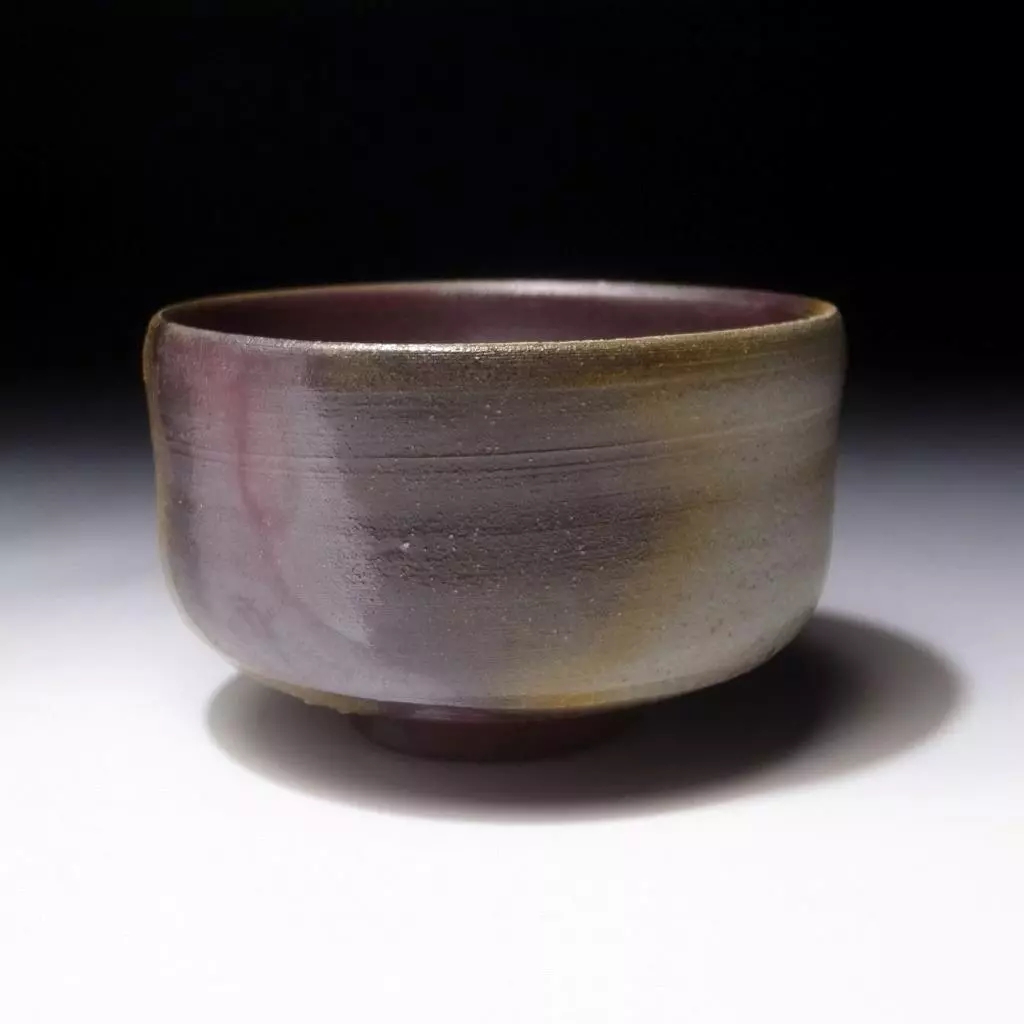
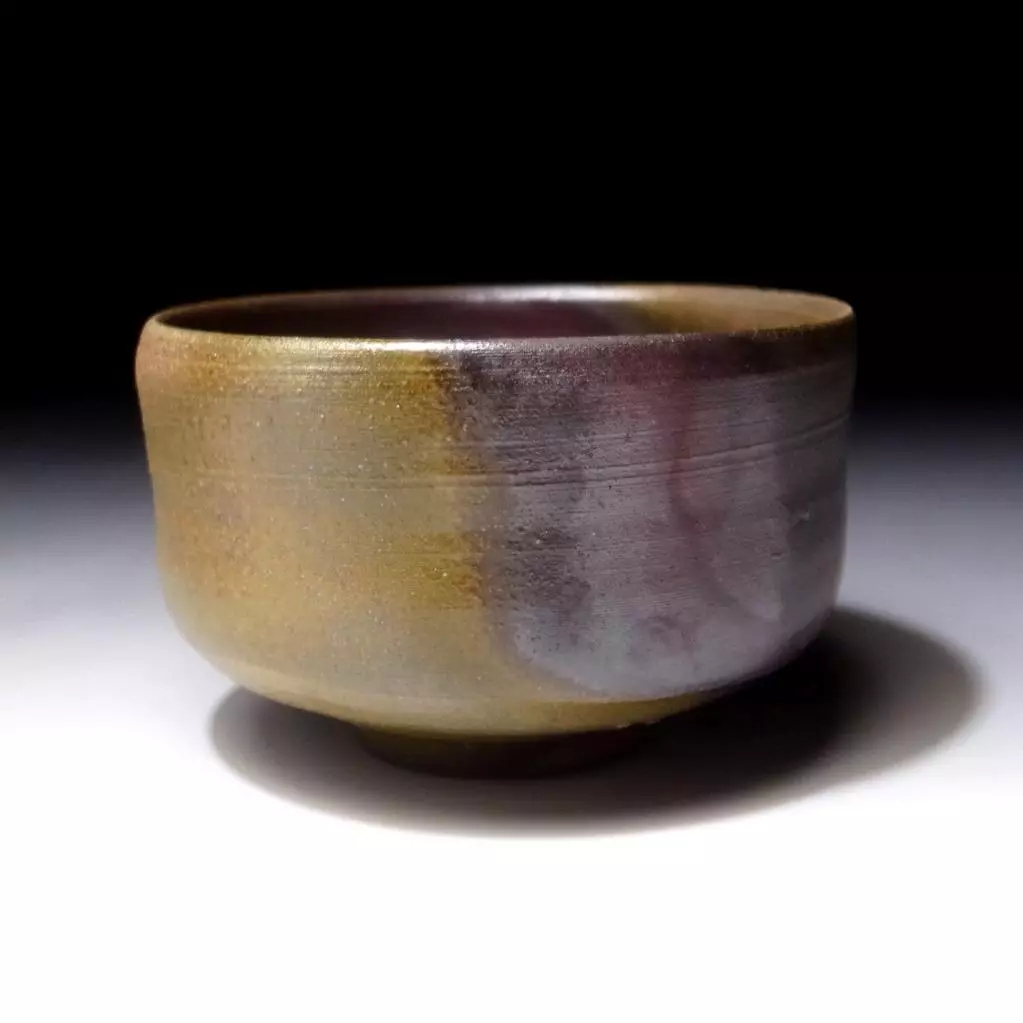
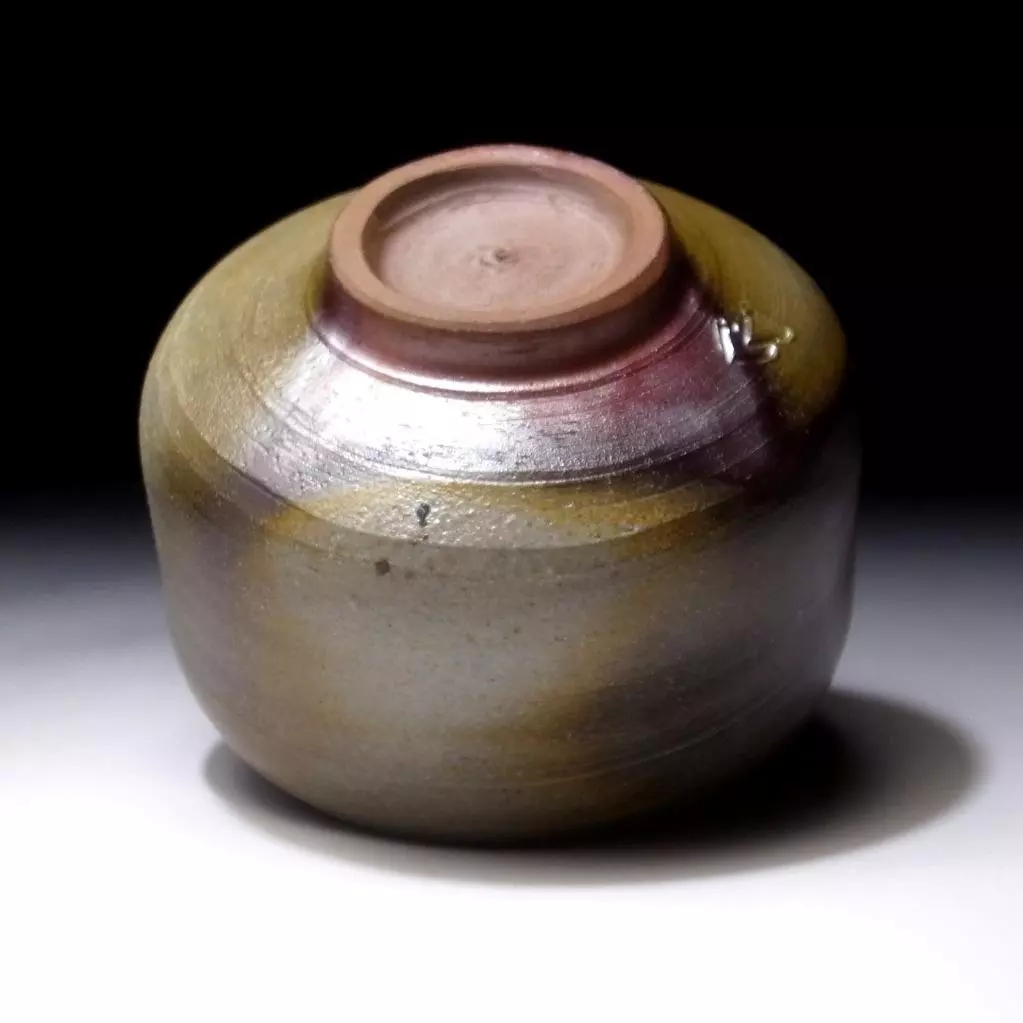
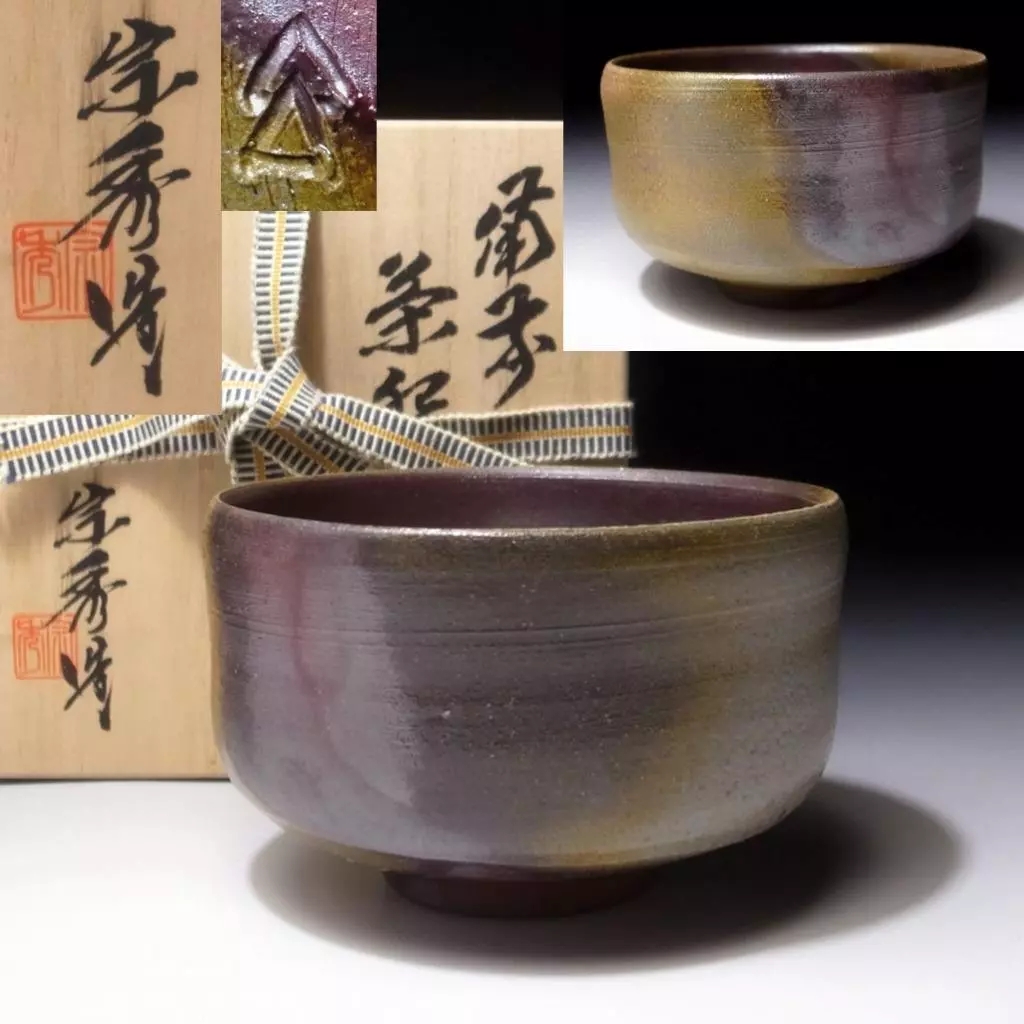
This is a very fine, first class Bizen chawan or ceremonial tea bowl made by the female potter Soshu Yamamoto, who is the wife of Toshu Yamamoto eldest son. Together they work from the Bishuu-gama or Bishuu-gama or kiln in Bizen. The kiln and workshop were founded in 1974 at the suggestion of the famous Living National Treasure Toshu Yamamoto by his eldest son, Yuichi and his wife. A great Bizen piece.
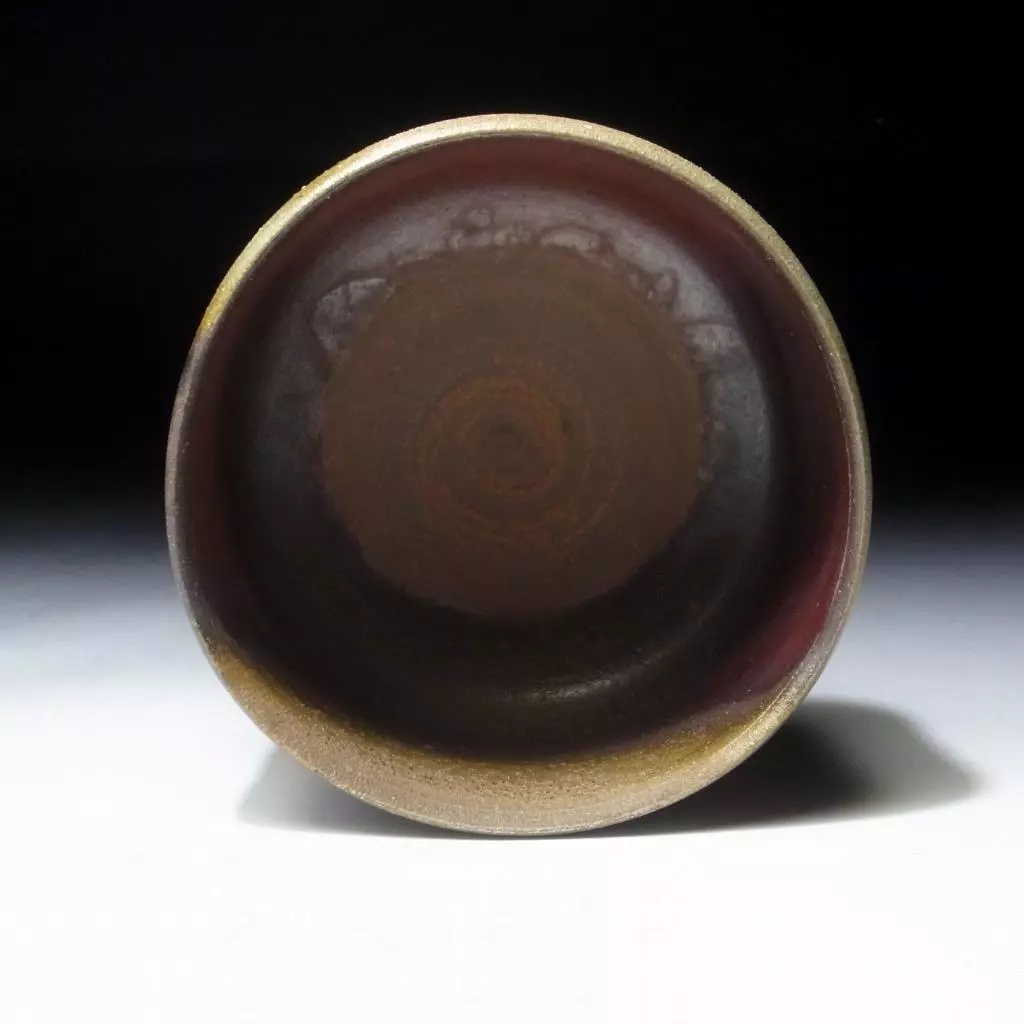
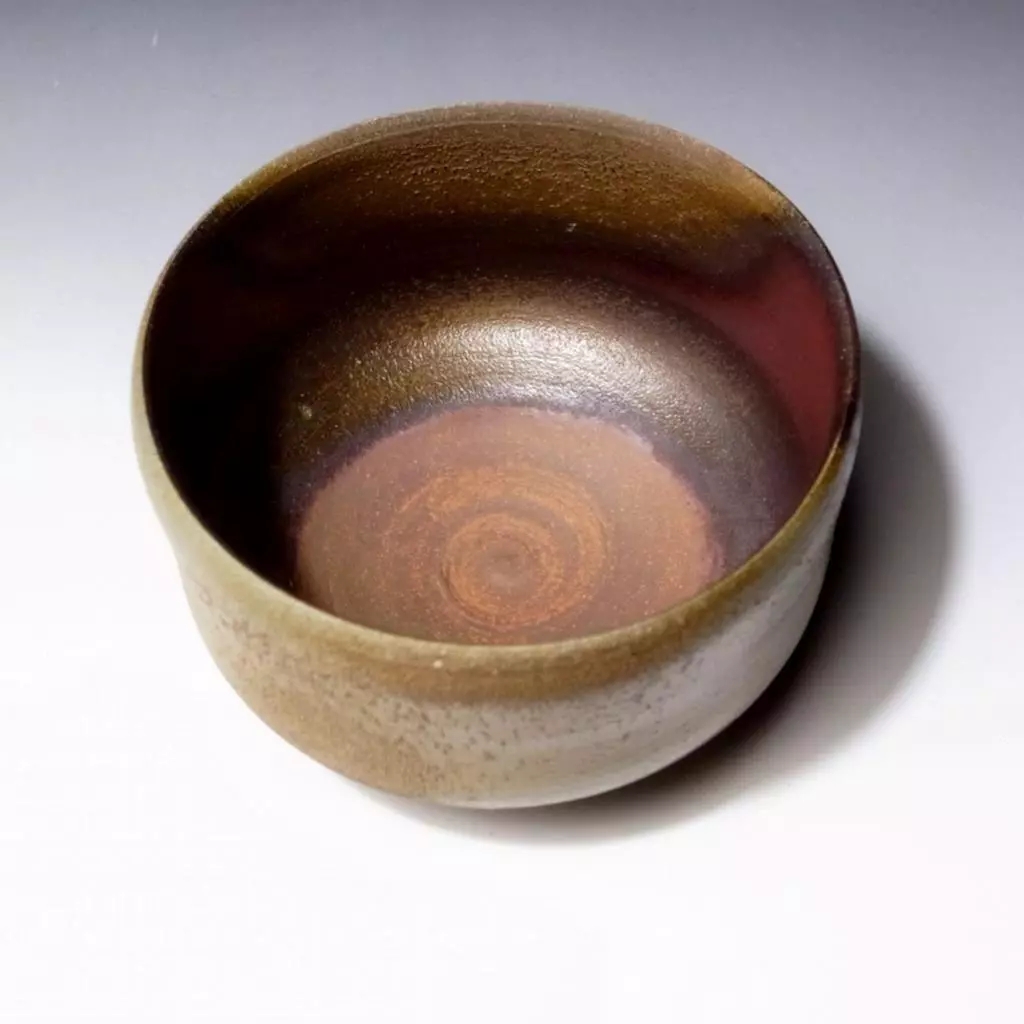
In half cylinder shape, the entire bowl is thickly coated with a fine wood-ash glaze and the interior valley has what is known as a circular fire mark called bota-mochi. It refers to the shape of a dumpling and is created by covering the clay surface during firing with another work or for instance a dumpling shaped piece of clay. After firing when the pieces are separated a circular firing mark, a so called bota-mochi is left. While it may appear not so, the glaze is very fine and thick on this bowl and I’m sure it would be a fine addition to any collection missing a tinge of Bizen.
Main styles of Bizen pottery
Botamochi 牡丹餅 (rice ball)
round, often red spots created through surface masking, kiln placement and wood firing
Goma 胡麻 (sesame seed)
glaze produced by kiln placement and ashes melting in the heat of the kiln
Hidasuki 緋襷
a rice straw wrapping, containing salt, typically producing bands of red colour
Ao Bizen 青備前
acquires various blue hues due to wrapping with rice straw, kiln placement and reduction during wood firing
Sangiri 桟切り
shiny metallic blue sheen acquired, often randomly through reduction during wood firing
Kuro Bizen 黒備前 (black Bizen)
black colours achieved through use of clay and kiln placement, typically associated with ancient Bizen ware made in Imbe village during the 12th century
Bizen ware is a type of Japanese pottery most identifiable by its iron-like hardness, reddish brown colour, absence of glaze and markings resulting from wood-burning kiln firing. Bizen clay has a high iron content and traditionally a lot of organic matter in it that is unreceptive to glazing. The clay can take many forms while retaining its strength. The surface treatments of Bizen wares are entirely dependent on yohen or kiln effects produced by the firing. Pine ash produces goma, or “sesame seed” glaze and rice straw wrapped around pieces creates red and brown scorch marks called hidasuki. The placement of pieces in a kiln causes them to be fired under different conditions, with a variety of different results. Considering that one clay body and type of firing is used, the variety of results is remarkable.
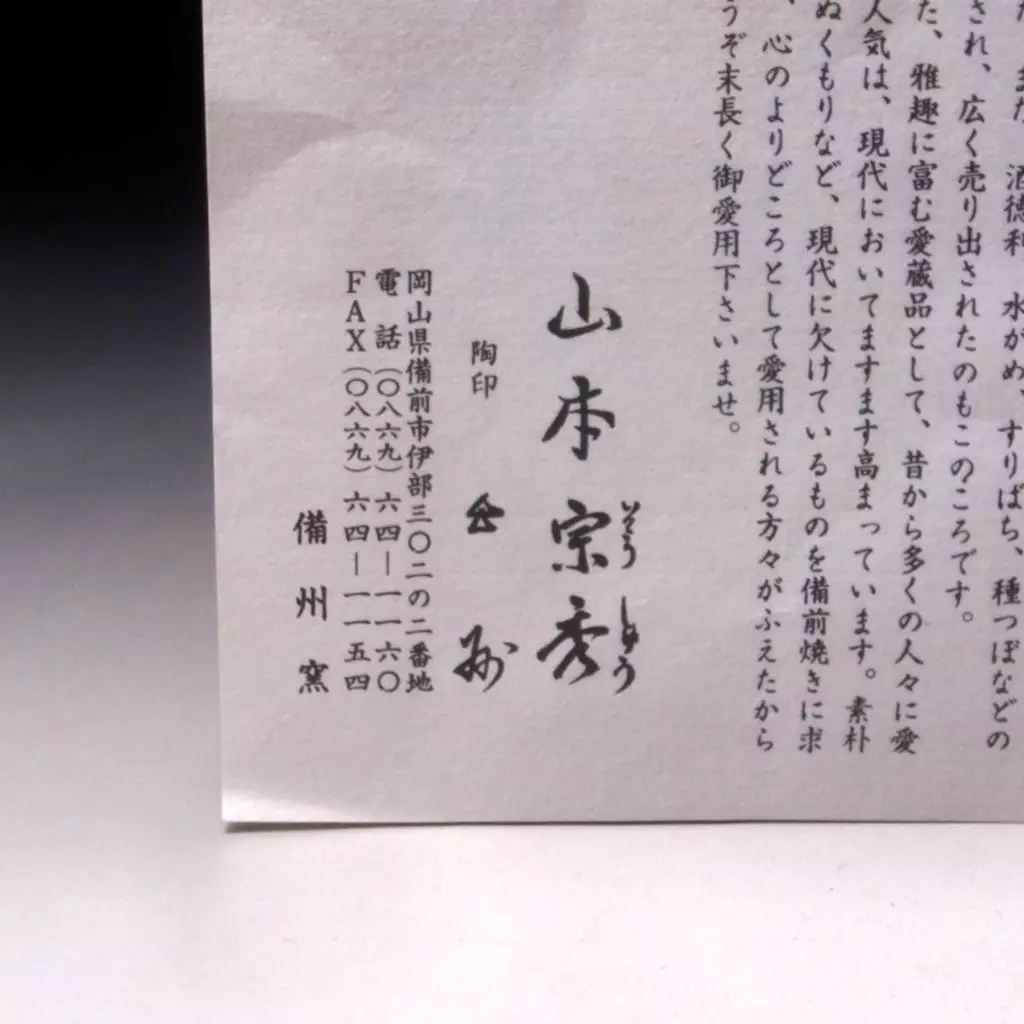
The chawan is signed near the koudai or foot ring. There are no chips or cracks and condition is mint. Comes with the original quality paulownia tomobako with kiln stamp and calligraphy on the lid. Also includes two pamphlets with information on the kiln and Soshu & Toshu Yamamoto and a dedicated tomonunu or tea cloth. I can only say this work is truly refined and represents perfectly what made Bizen last for well over a thousand years.
€250 + shipping cost