



Potter: Kano Mitsuo
Approximate size: W6.2″ by H1.9″ or 15.8 by 4.8 cm
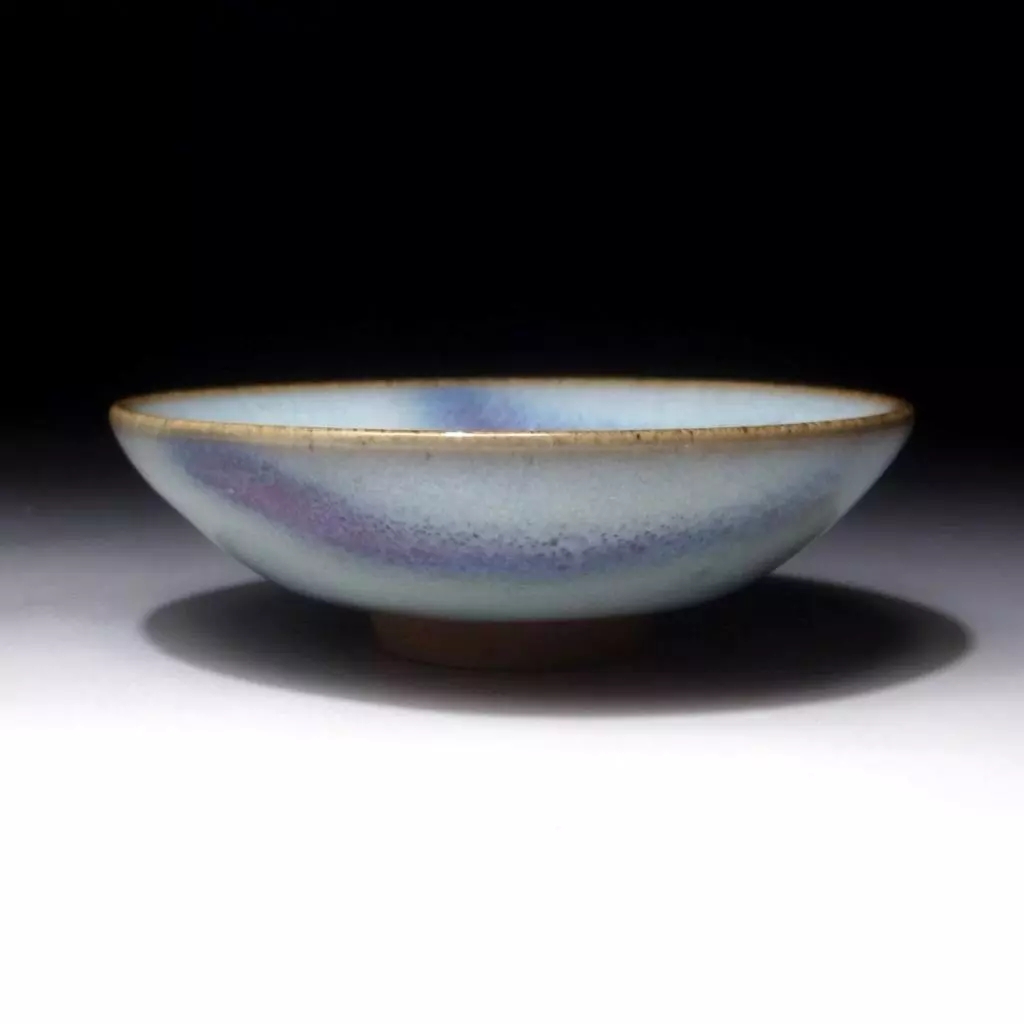
This is a summer chawan or ceremonial tea bowl made by the celebrated potter Mitsuo Kano (1903-1970). Art seems to have ran in the family as his brother became a noted artist as well. Born as the younger brother of Kano Matsutani its no surprise they encouraged each-other. Although their work is different from one another, being that Kano Mitsuo had an interest for a wide range of techniques and methods used in the making of pottery. His brother’s artistic influence had been more specific and he focused fully on a select number of techniques for his entire career. Mitsuo having experienced a more diverse curriculum in his formative years, the work he left shows several styles.
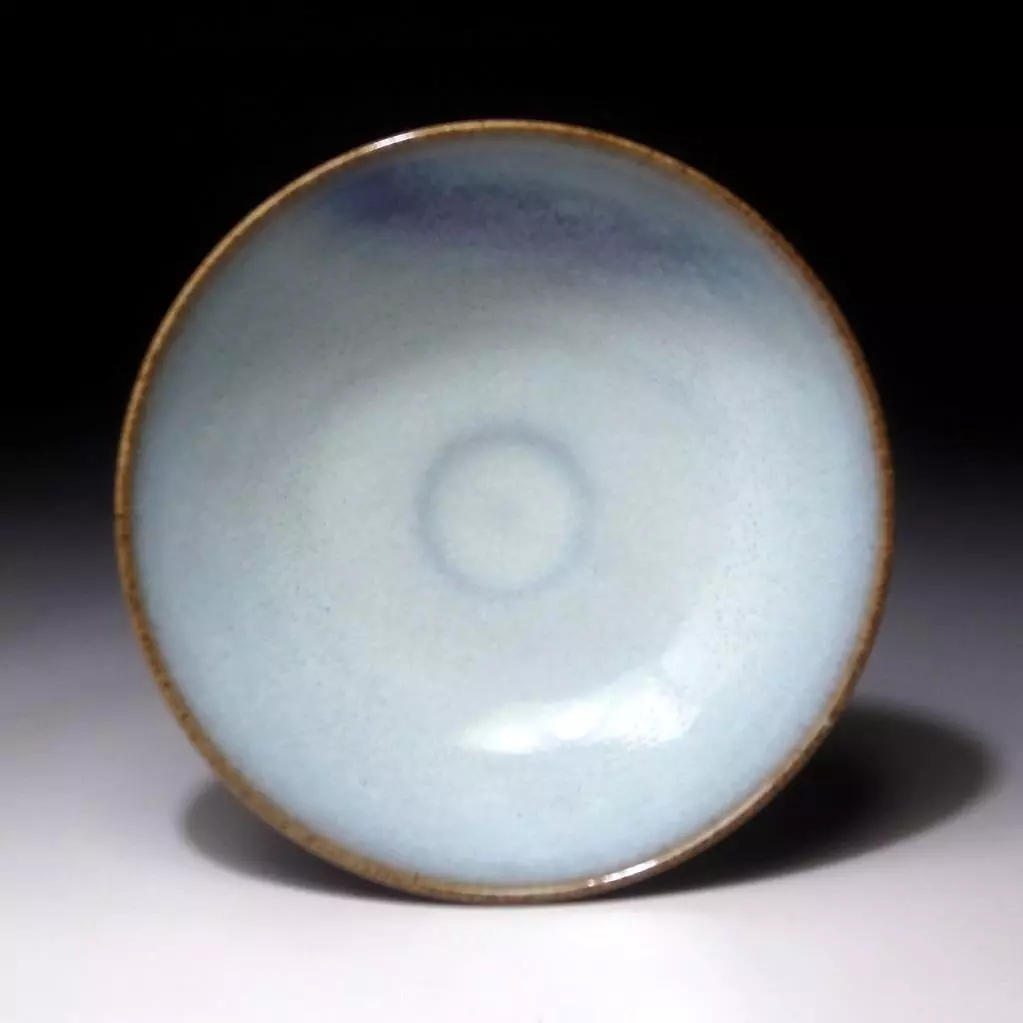
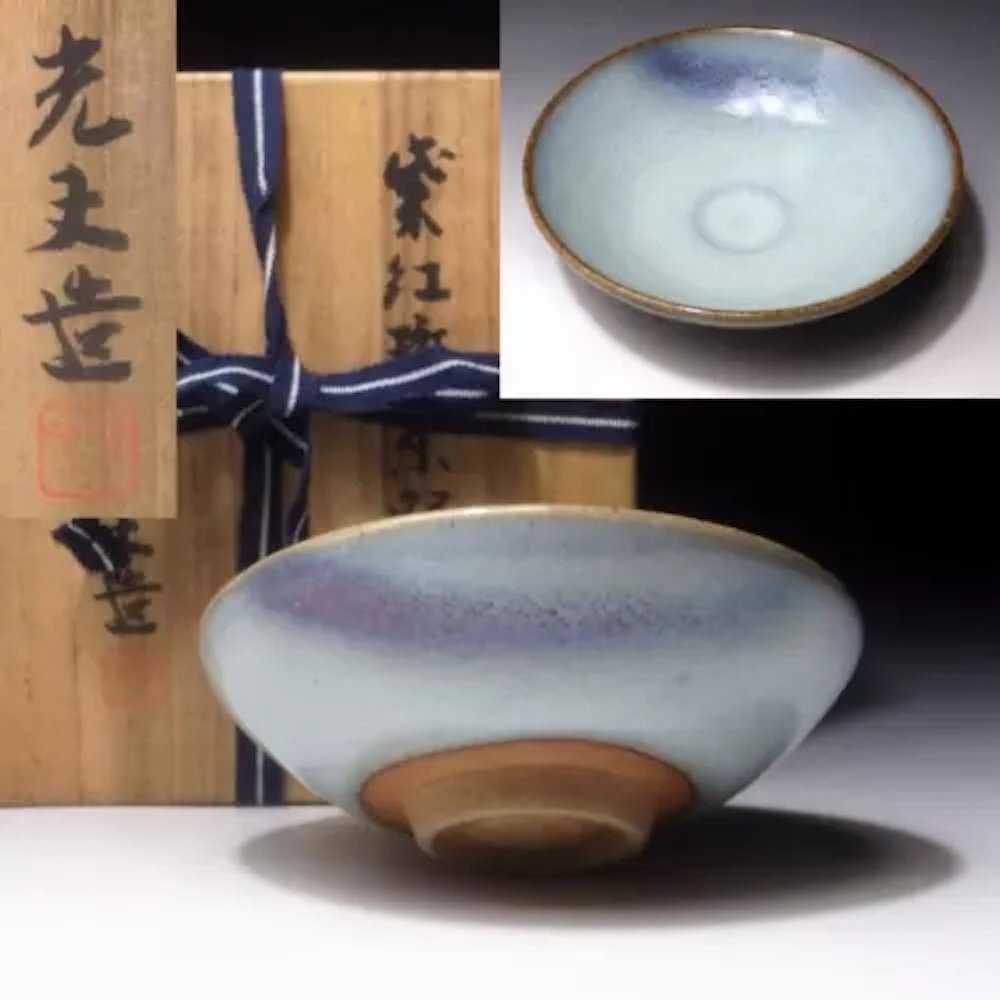
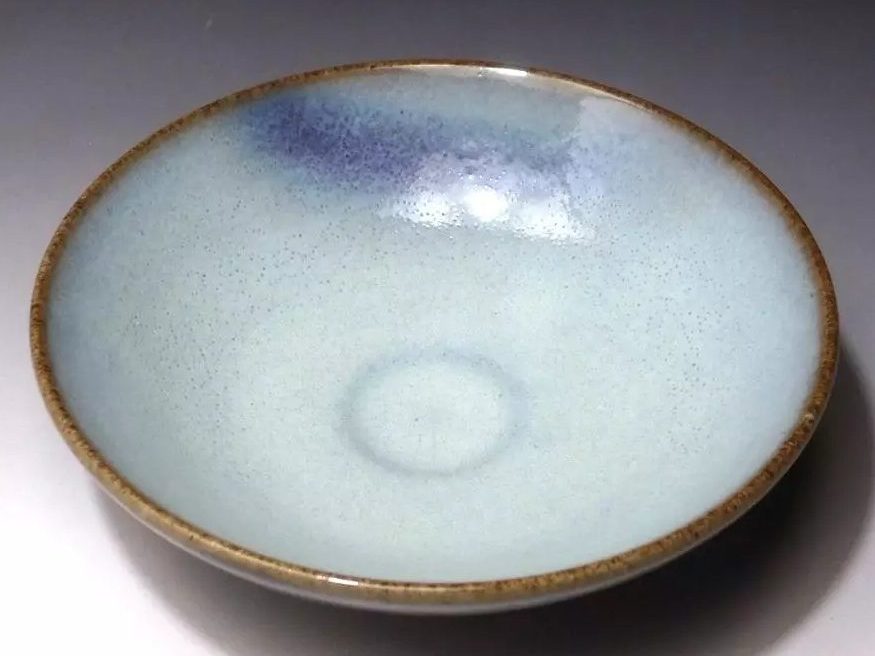
This chawan was created by wheel throwing. It has a large open body and a low height. This shape is usually reserved for use during the hotter months of the year, where its open form allows for quicker cooling of matcha (powered green tea), used in a Tea ceremony. One might call this a transition from formal Korean to what we now recognize as a summer type chawan. The glaze is what is known as a tenmoku or oil-spot glaze, more specifically this type of colouration is termed ‘Kinyobachi‘ (styled after Korean ‘Jun’ ware). The thick glaze contains large quantities of silica giving the chawan a milky lavender colour. The reddish-purple flux is caused by the presence of copper which is added to the recipe.
Kano Mitsuo studied under Komori Shinobu (1889-1962) and at the Kyoto City Pottery Research School. His work is represented in the collections of the National Museum of Modern Art, Kyoto and the Museum of Fine Arts, Boston, among others. He received the Ministry of Education Grand Prize in 1998.

After the end of the Pacific war the attribute Imperial was no longer trendy. Everything was reorganised and renamed. In 1946 the Imperial Art Academy became The Japan Fine Arts Exhibition, abbreviated as Nitten. The Nitten has developed into a large organization. Today the Nitten has five art faculties, Japanese Style Painting, Western Style Painting, Sculpture, Craft as Art and Calligraphy.
Mitsuo Kano won the Blue-ribbon award at the great Nitten Exhibition in 1974 and in 1976. The highest award for potters entering this famously career-making competition.
Prior to the war when the Nitten was still the Imperial Exhibition, he submitted his work with success and shorty after, in the years 1948 through 1952 he participated in the formation of the famed Sodeisha group (led by Yagi Kazu). Which concluded in the formation of the Hakuhokai Association, which included many famed potters including Kusube Yaichi, Miyashita Yoshitoshi, the sandai or third generation Toyama Ito, Asami Ryuzo and a number of other artists. In 1967, he won the 10th Nitten Exhibitions Minister of Education Award, one of the most coveted prizes. For decades this artist dominated the competitive scene.
With this item and storage box came something extra that I have not encountered before. Namely a kind of quality control paper that states information specifying the object to have been made to order or custom made and of a particularly high grade

Top Right (Vertical): 特製 – (tokusei) – Specially made or made to order
Bottom Right (Vertical): 優等 – (yūtō) – Superior grade or first class.
Top Left (Vertical):茶碗 (chawan) – Tea bowl
Bottom Left (Vertical): 美 (bi or mi) – Beautiful or fine.
In a Japanese context, the paper conveys the item is a “made to order tea bowl that is of a superior grade” or refers to a high-quality article
The chawan is in mint condition and comes complete with the original high quality tomobako or storage box that bears the potter’s stamp and calligraphy on the lid. The bowl itself is stamped on the inside of the koudai or foot ring and comes wrapped in a dedicated tomonunu or tea cloth.
Of note is that this chawan bears a different stamp when compared to a number of other chawan by this artist.
€350 + shipping cost


Famous works sold for high prices at auction houses such as Christie’s both before and after his passing. He won the Blue-Ribbon award of one of the most famous Japanese Art Exhibitions, Nitten Exhibition in 1949.
