

Potter: Inoue Haruo
Approximate size: W4.9″ by H2.7″ or 12.5 by 6.8 cm
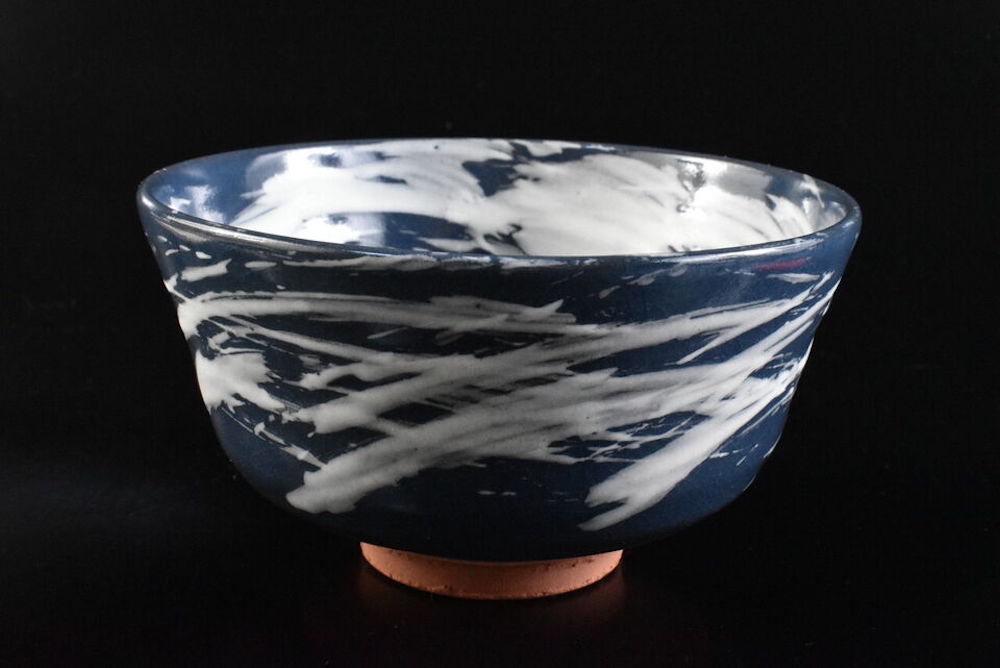
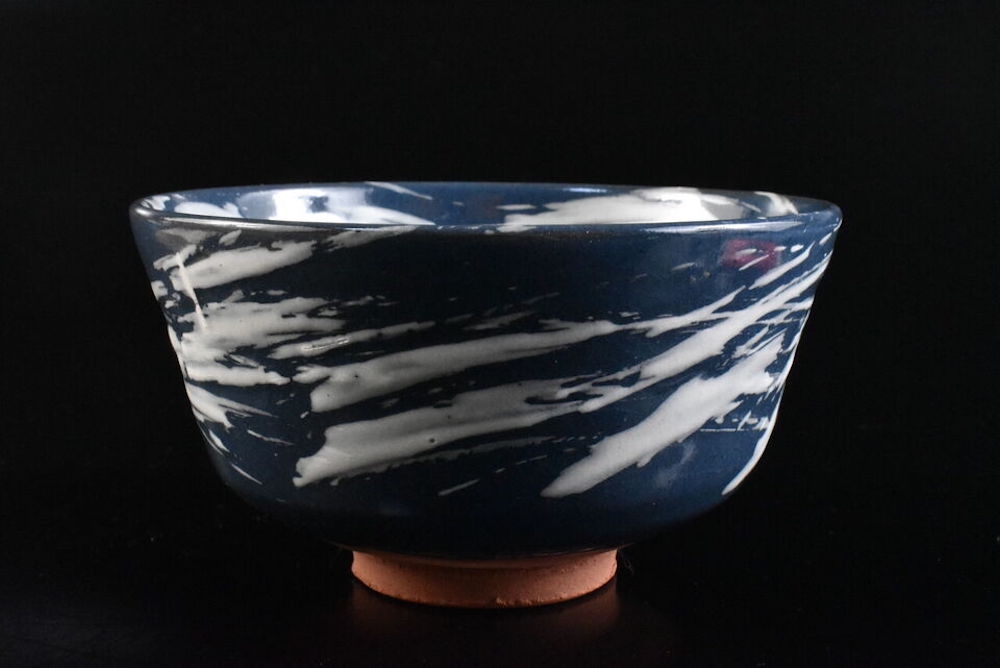
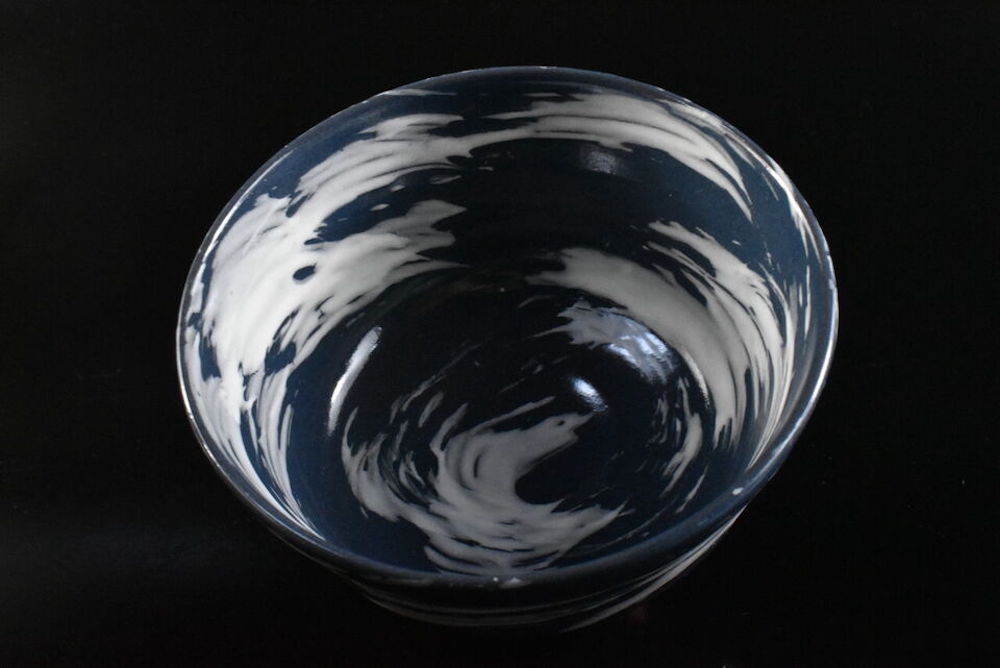
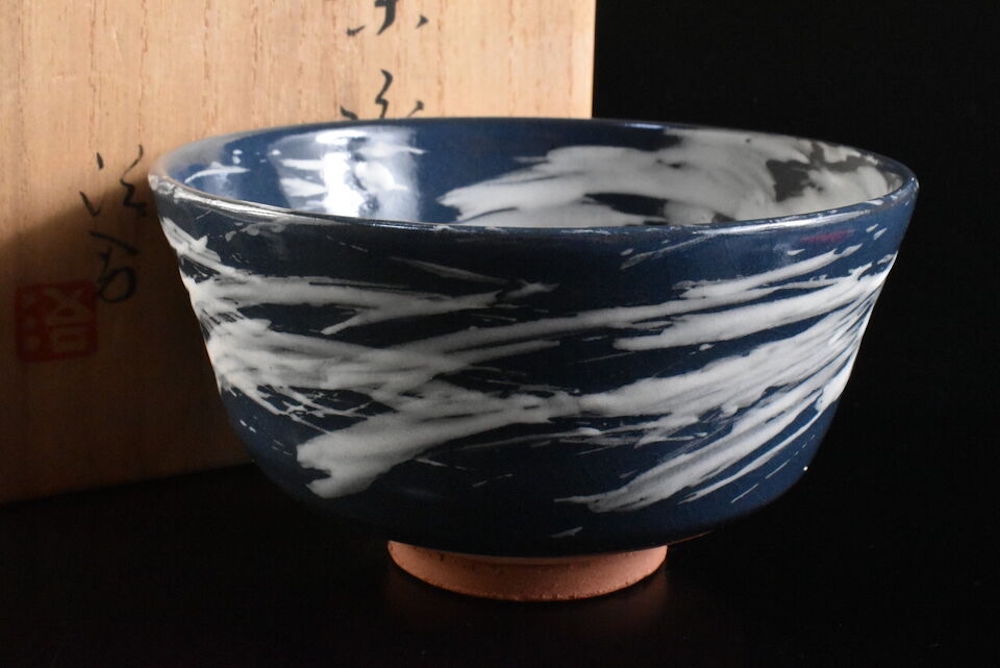
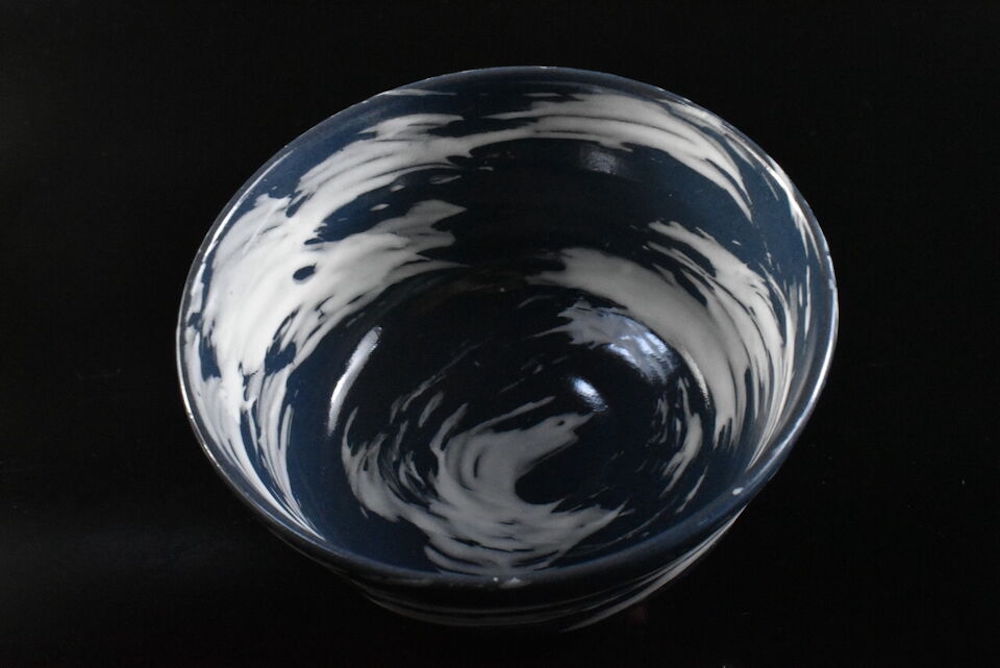
This is a Kyo ware chawan or ceremonial tea bowl with a hakeme – brush stroke design by master potter Inoue Haruo (1910-1975). Wheel thrown in half cylinder from fine red clay consisting of small particles. The bowl was given a glaze in a navy blue, though the colour is a tiny bit darker. On top of the glaze is what is known as ‘hakeme’ or brush stroke design in white painted by hand. In this particular case the design is painted with flair and emits an atmosphere of movement. It is clear that this is a work by a master of his craft. Inoue Haruo graduated from Kyoto Municipal Ceramic Training Institute and exhibited at the Kanten & Nitten Exhibition after the second world war. An individualistic artist with a definite defined style that is known for innovative forms & colours. This chawan is a testament to that.
In a nutshell, Bunten and Teiten were official, state-controlled, juried art exhibitions. Nitten replaced them after the war. The meaning of these official exhibition societies for the world of Japanese arts was pretty comparable to the French Salon in the second half of the nineteenth century. The conservative Salon was the institution most hated by the French impressionists – their works were regularly rejected by the jury. And without a representation by the Salon, an artist had hardly any chance to sell anything to private collectors.
After the end of the Pacific war the attribute Imperial was no longer trendy. Everything was reorganized and renamed. In 1946 the Imperial Art Academy became The Japan Fine Arts Exhibition, abbreviated as Nitten. The Nitten developed into a larger organization that features multiple departments. Today the Nitten has five art faculties, Japanese Style Painting, Western Style Painting, Sculpture, Craft as Art and Calligraphy.
Kyo yaki or Kyo ware refers to a style of ceramics that spread from the Higashiyama area in Kyoto during the early Edo period of the Tokugawa rule (henceforth this family line continually ruled Japan for more than 250 years). It was around this time that the art of Chanoyu or the Tea ceremony became popular and widespread in Japan. By contrast, the pottery produced along Gojo-zaka, a street leading to Kiyomizu Temple, was called Kiyomizu yaki. Nowadays all pottery produced in Kyoto is commonly referred to as Kyo or Kiyomizu ware.
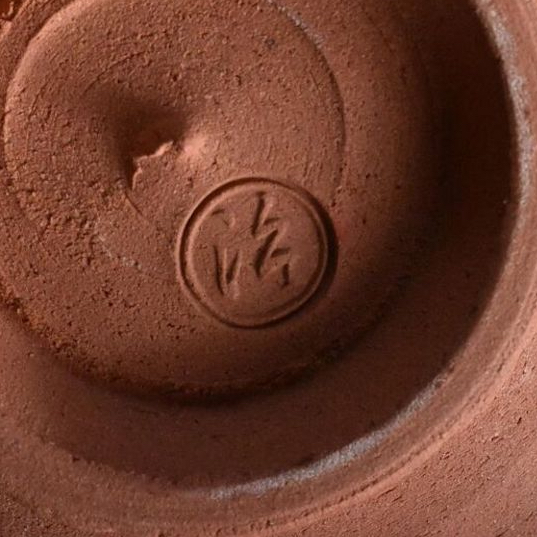
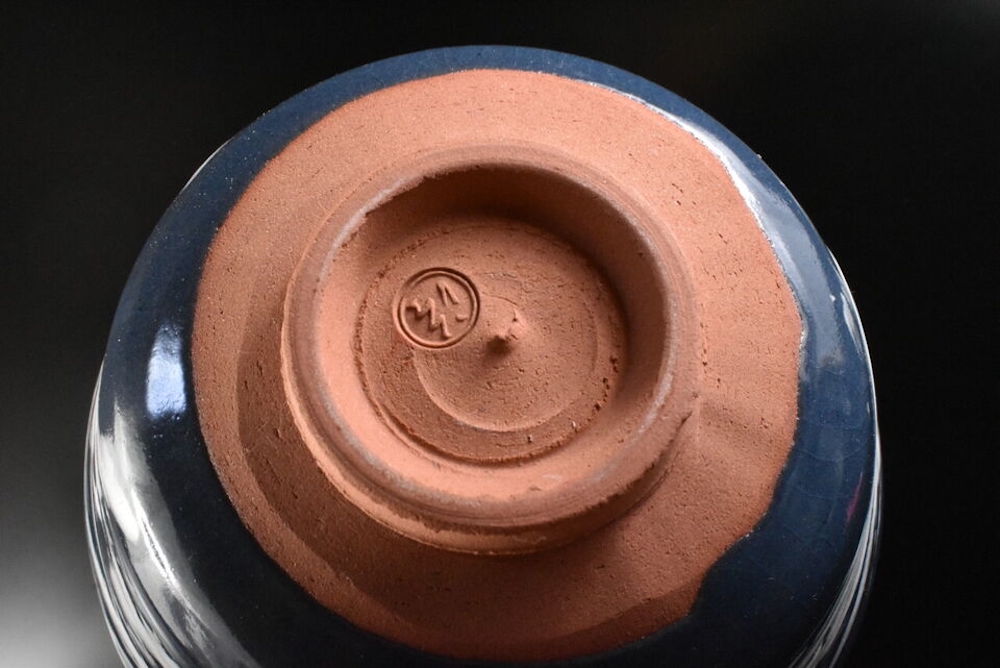
The chawan is stamped by the potter on the foot of the bowl. There are no chips or cracks and condition is mint. Comes packed in the original paulownia tomobako or storage box which bears the potter’s calligraphy and seal on the lid. If I recall correctly it has a shiho-san tomobako and a dedicated tomonunu or tea cloth.
€200 + shipping cost