




Potter: Shunko Nishimura
Approximate size: W 5.0″ by H 3.0″ or 12.7 by 7.7 cm
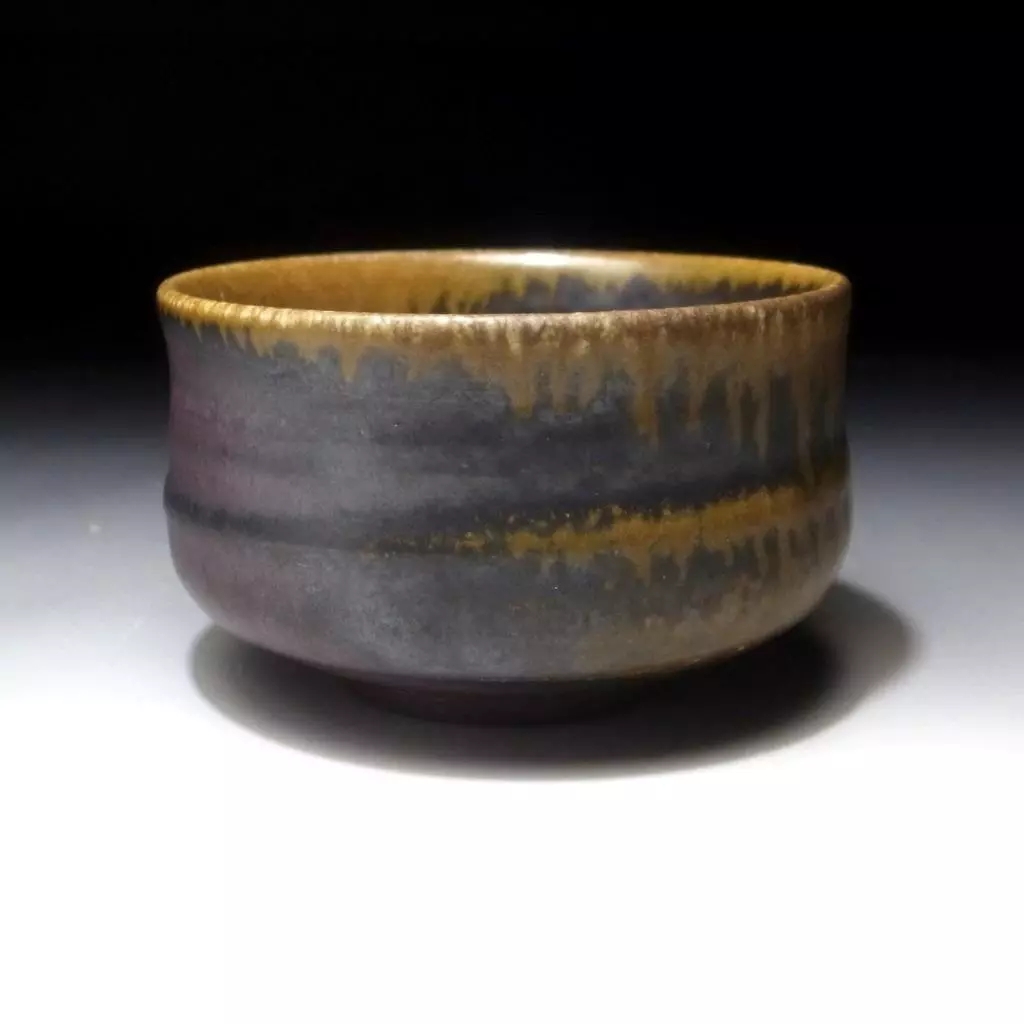
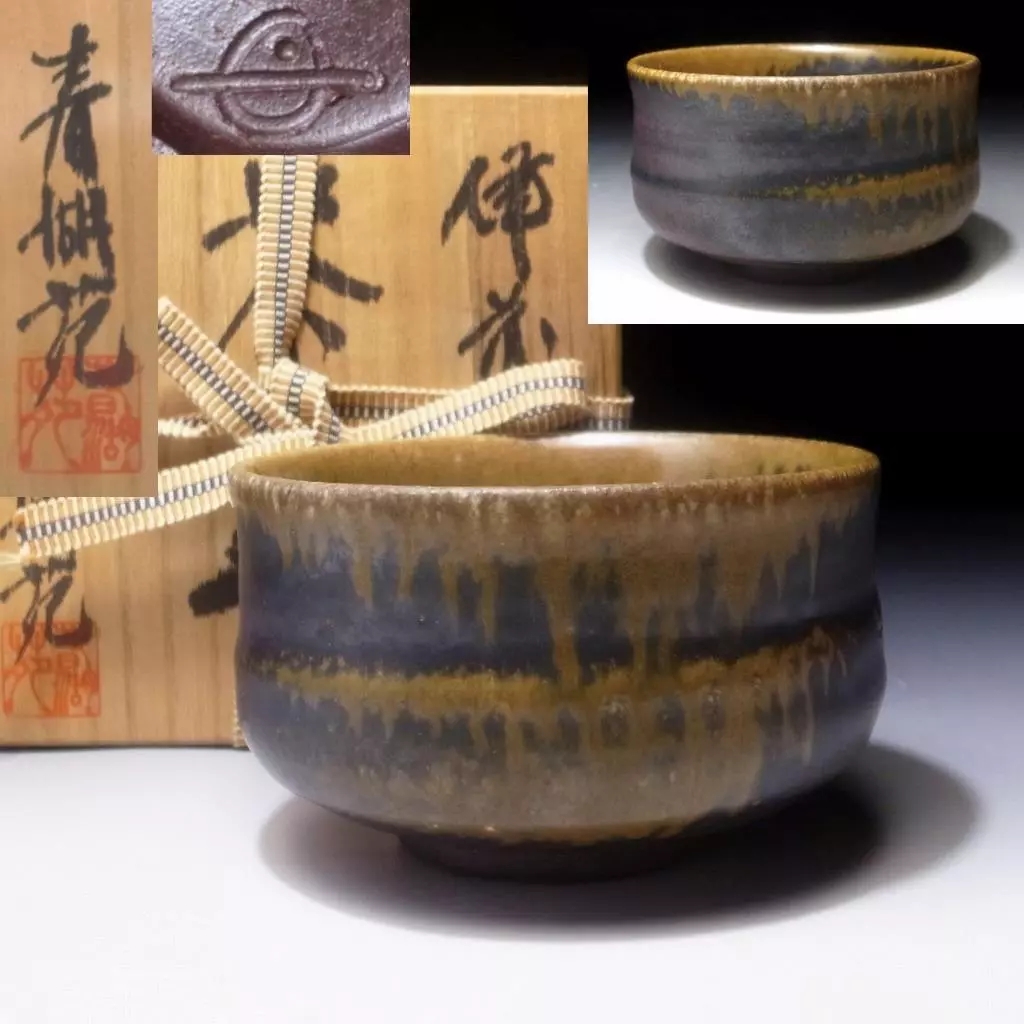
This is a rare Bizen chawan or ceremonial tea bowl by Shunko Nishimura (1886-1953), who’s real name was Yasujiro. Known and instantly recognisable by his double mountain mark. Shunko Nishimura, together with Kaneshige Toyo and Mimura Tokei are the 3 three pillars of Bizen pottery during the first half of the 20th century and are credited with saving it from fading into extinction. It is no exaggeration to say he is one of the greatest Bizen artists. His style is traditional and shows great energy and passion as well as a very high level of craftsmanship. His signature is included in the Bizen Toko (1927), one of the guiding books on the foremost artists of Bizen pottery.
Born in Kyoto, he studied Japanese Painting before moving to study Awata pottery techniques under Aoyama Shunko from whom he received the name. Then he went to study with the first Suwa Sozan. He moved to Inbe in 1909, which lies in Okayama Prefecture which is the home of Bizen ware where he established a kiln. He became known for his saiku-mono or ceramic sculptures. His genius was quickly recognized, and his works were collected by the Imperial family and given as gifts to foreign dignitaries. He served as a ceramics instructor for two years in Korea during the Taisho period. He also taught potters like Urakami Zenji (1914-2006). He was named a bearer of intangible cultural properties for his life’s work in 1942. Today several works by him are held in the Museum of Art in Okayama Prefecture amongst others.
Bizen is one of the six oldest remaining Japanese pottery traditions. In that town, for more than one thousand years, potters have been producing a sober yet strong looking wood fired ceramic. This rustic pottery whose age gives it a noble air is still popular today in Japanese homes and restaurants alike.
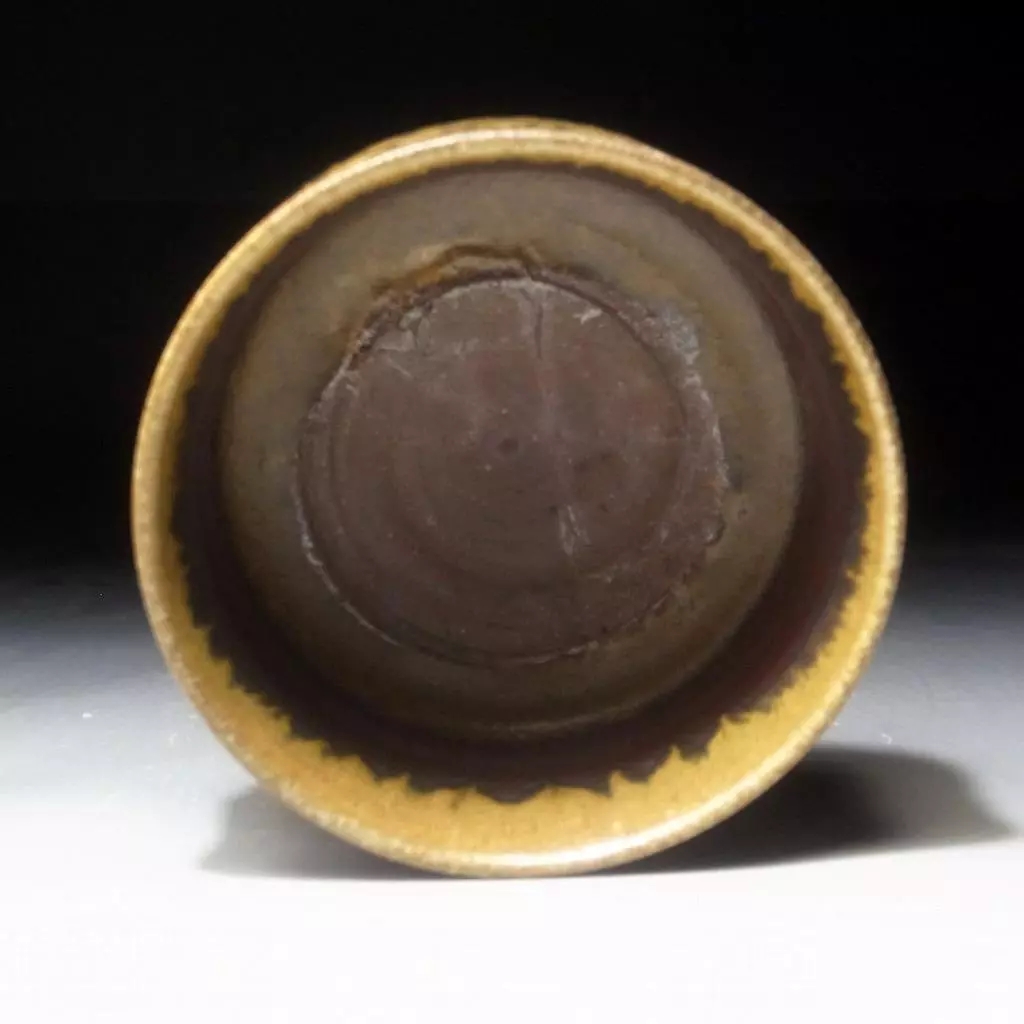
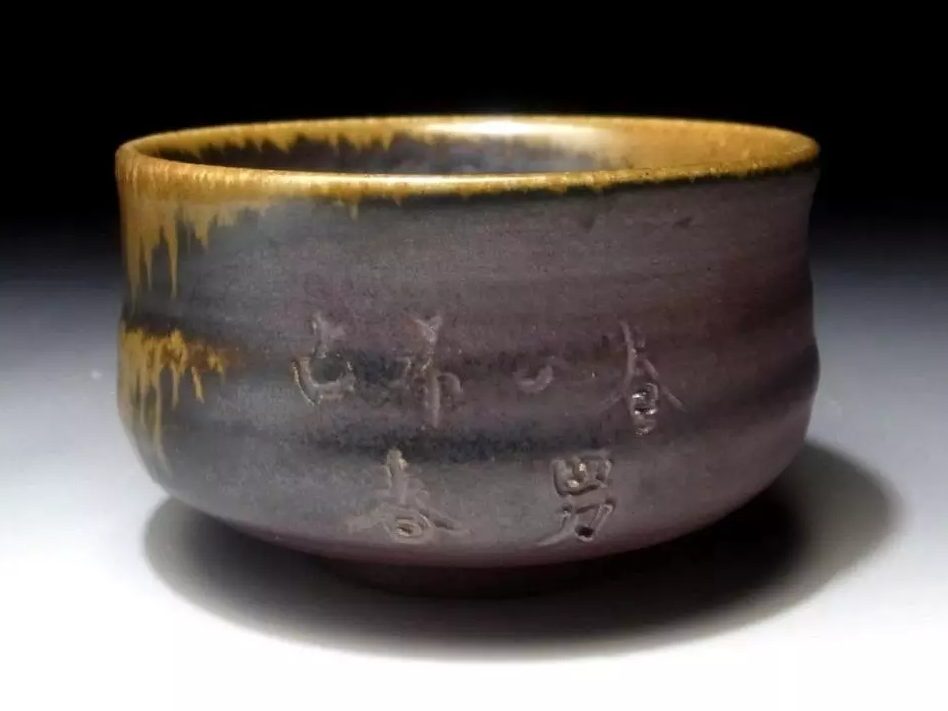
There are seldom works by this master available and as such this is rare opportunity to own a chawan by one of the greatest names in Bizen pottery. In han tsutsu-gata or half cylinder shape it is coated with a thick wood-ash glaze produced by excessive wood-firing. This bowl features an interior valley that is slightly raised (instead of sunken or indented). This is one of the few times I’ve encountered this feature and a first for a Bizen piece. On the exterior there is a carved poem (presumably).

Another potter famous for his saiku-mono and collaborations with Shunko Nishimura is Kanei Shunzan (1902-1982). Kanei studied with Shunko and the two created works of myths and legends (oni or demons, shishi lions, statues of Fudo etc.). Both potters are represented in the book ‘Masterpieces of Showa Bizen‘. A potter who’s memory now falls in one of the niches where his standing approaches legendary status.
Bizen ware is a type of Japanese pottery most identifiable by its iron-like hardness, reddish brown colour, absence of glaze and markings resulting from wood-burning kiln firing. Bizen clay has a high iron content and traditionally a lot of organic matter in it that is unreceptive to glazing. The clay can take many forms while retaining its strength. The surface treatments of Bizen wares are entirely dependent on yohen or kiln effects produced by the firing. Pine ash produces goma, or “sesame seed” glaze and rice straw wrapped around pieces creates red and brown scorch marks called hidasuki. The placement of pieces in a kiln causes them to be fired under different conditions, with a variety of different results. Considering that one clay body and type of firing is used, the variety of results is remarkable.
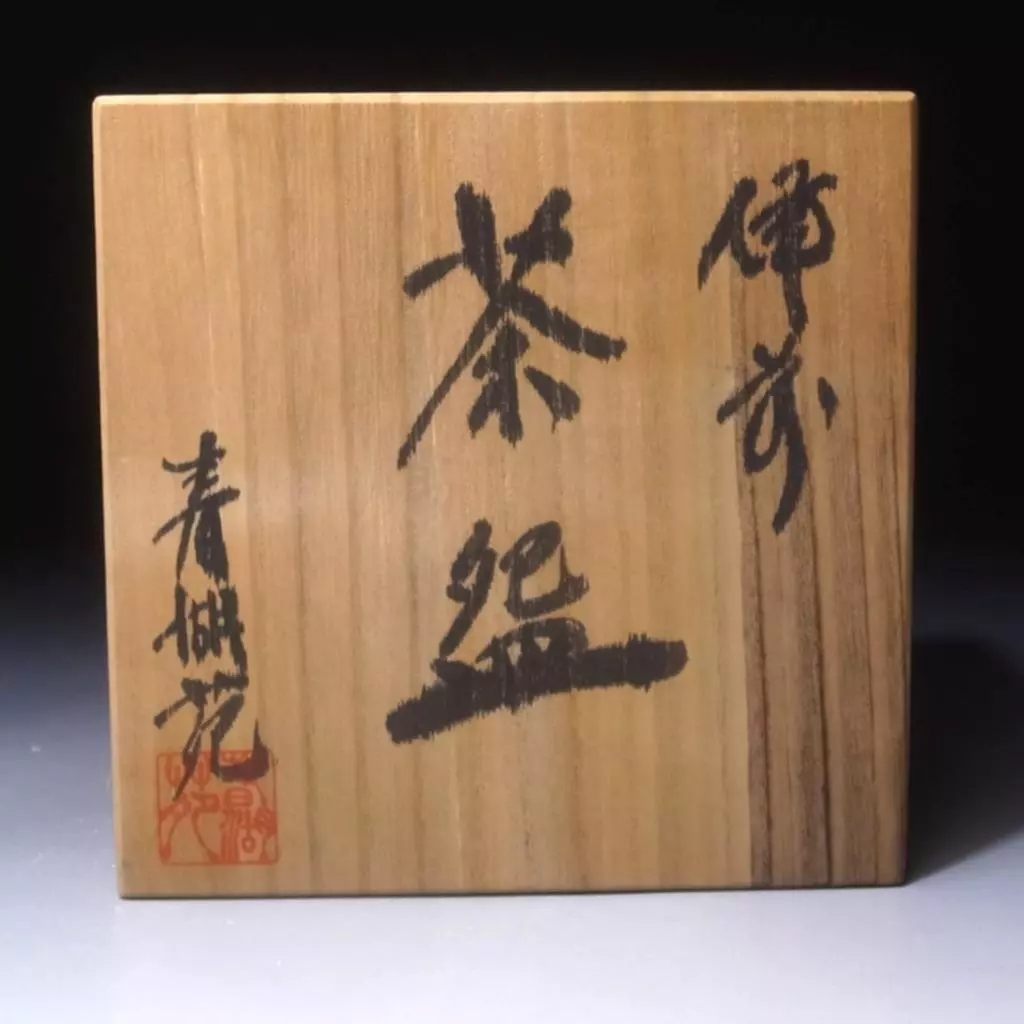
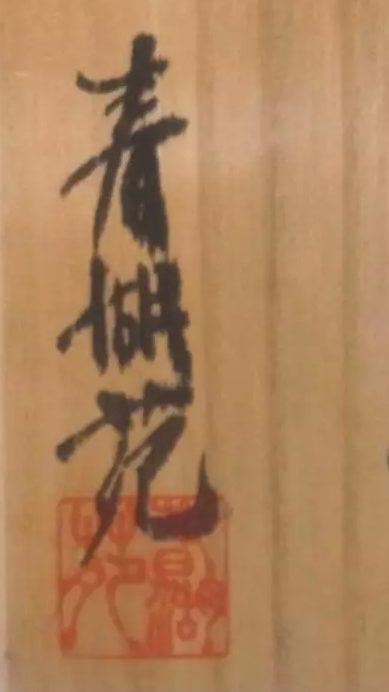
The chawan bears the potter’s signature and has no chips or cracks. Condition is excellent. Comes with the original quality paulownia tomobako, storage box with kiln stamp and calligraphy on the lid. There is also an informational pamphlet and cloth included.
€450 350 + shipping cost

Bizen wares are fired slowly over a long period of time. Firings take place only once or twice a year. They require the kiln fire to be kept lit and burning for approximately 10 to 14 days involving long hours and literally tons of wood.
