



Potter: Iwai Jun
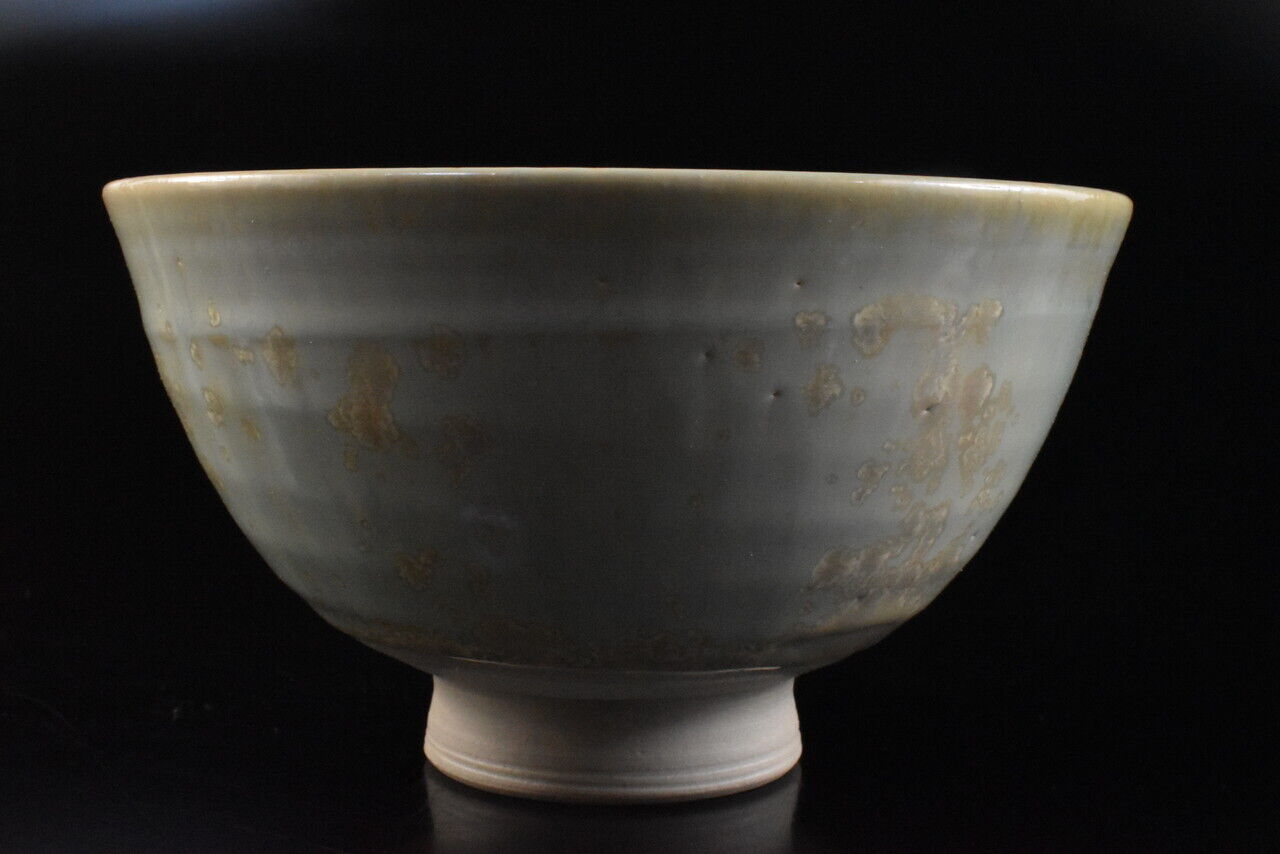
Approximate size: W5.0″ by H2.9″ or 13.0 by 7.5 cm
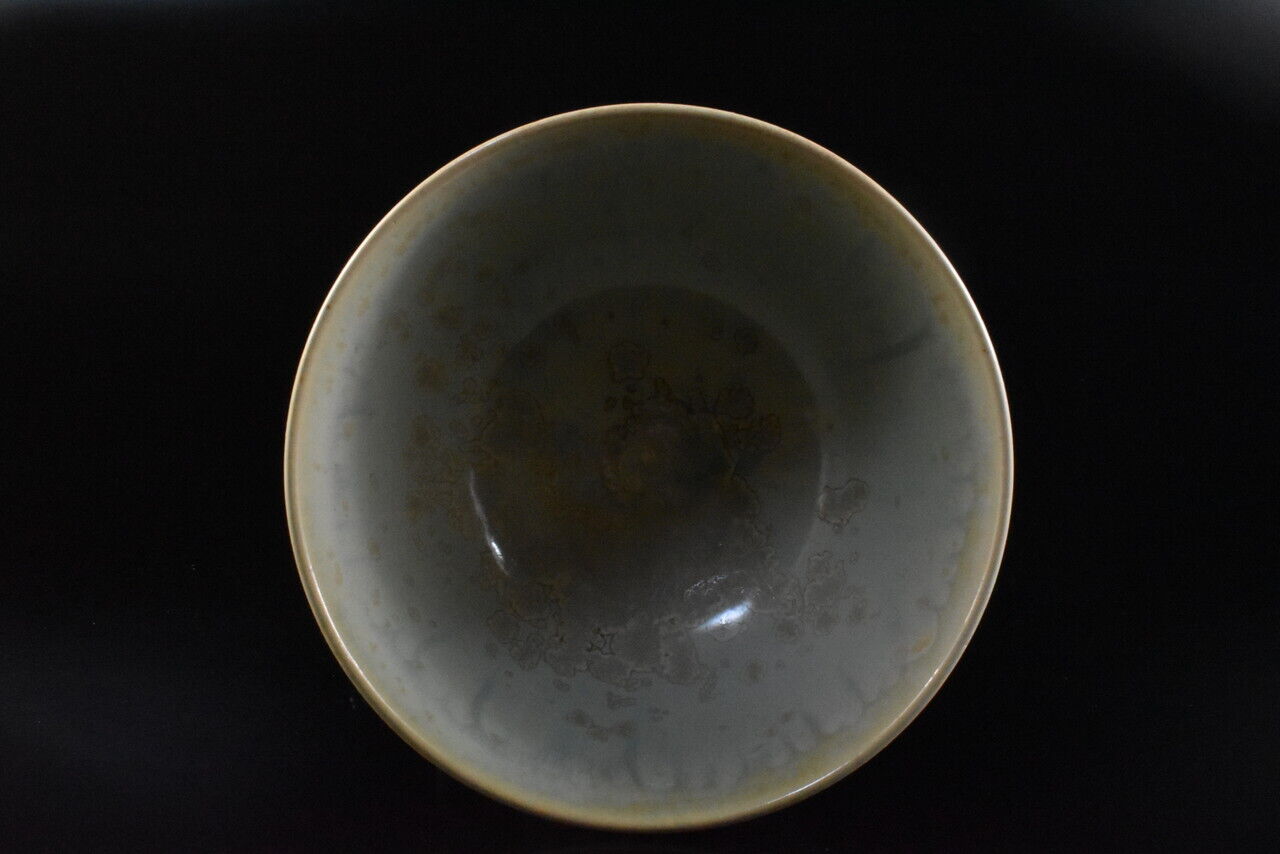
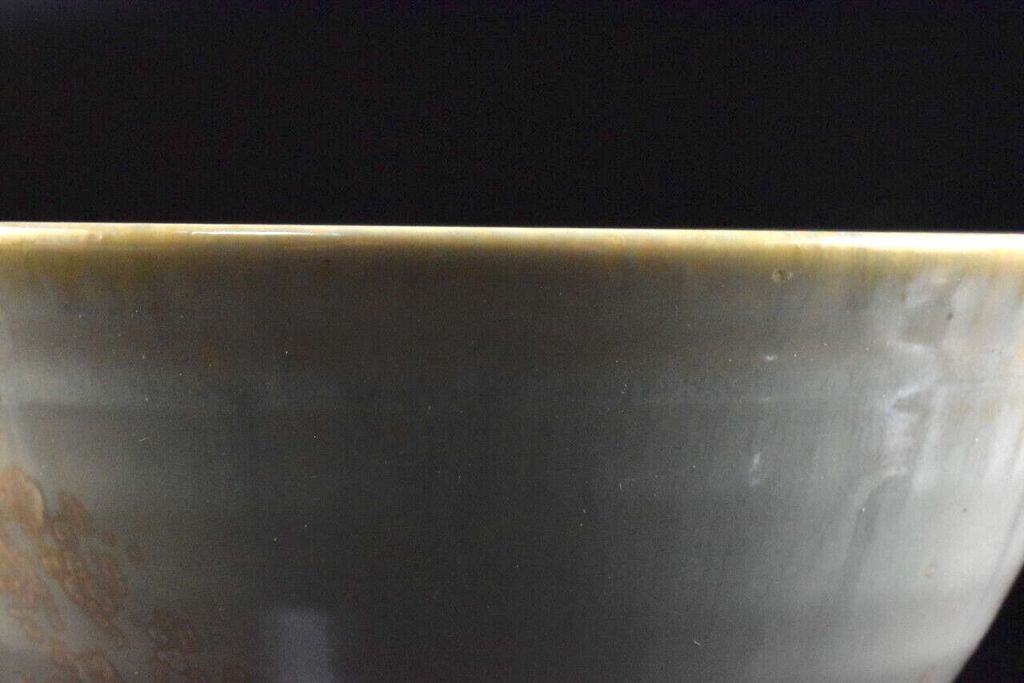
This is a chawan or ceremonial tea bowl by ceramic artist Jun Iwai. Jun Iwai is a ceramic artist who has a kiln called Rikka-gama in the suburb of Sendai-shi. His work is a unique adaptation of Rikka tenmoku-yu chawan. He studied crystal and tenmoku oil-spot glazes and he creates pieces that are breathtakingly beautiful. The standout characteristic of his pieces is the pattern that shines likes stars on the plates. Currently, he is working on a new technique to produce crystal glaze by controlling temperature. His flexibility and desire to pursue new things may be a result of his many experiences.
”For example, the colour gold is very difficult to handle. You can easily overdo it, and the elegance will be lost“. So he felt uncomfortable about using gold in his work. However, through his encounter with European culture and interactions with many people, that discomfort gradually faded away and he now often uses gold foils in his work.
Apart from the exhibition in Rome in 2007, Iwai held many exhibitions overseas as ”ANTINOO Series”. They were held in America, Italy, Korea and other places. In his words these experiences contributed to broadening his style.
When he held an exhibition in Rome in 2007, Laura Monachesi of the Antinoo Foundation was so impressed by the beauty that it reminded her of stars in heaven, and she called it ”the Star of Antinous”. Antinous was a youth with striking beauty who was loved by the Roman Emperor Hadrianus, 2000 years ago. He died a tragic death by throwing himself in the Nile. The Emperor mourned his death so deeply, that he deified the beautiful Antinous as the constellation Antinous. Iwai’s works were highly praised that this deified beauty seemingly appeared on his plates.
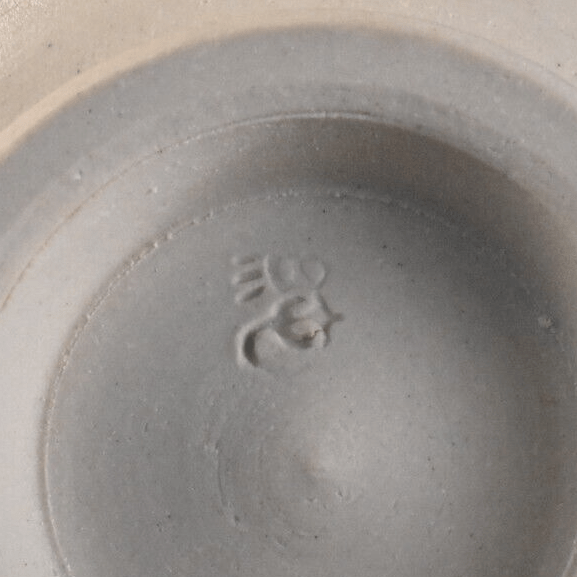
The bowl is stamped with Jun Iwai’s personal stamp inside the koudai or foot ring. There are no chips or cracks and condition is mint. Comes with the original quality paulownia tomobako, wooden storage box with calligraphy on the lid.
€200 + shipping cost

Kyo yaki or Kyo ware refers to a style of ceramics that spread from the Higashiyama area in Kyoto during the early Edo period of the Tokugawa rule (henceforth this family line continually ruled Japan for more than 250 years). It was around this time that the art of Chanoyu or the Tea ceremony became popular and widespread in Japan. By contrast, the pottery produced along Gojo-zaka, a street leading to Kiyomizu Temple, was called Kiyomizu yaki. Nowadays all pottery produced in Kyoto is commonly referred to as Kyo or Kiyomizu ware.
