

Potter: Hyōdō Saburo
Approximate size: W2.2″ by H3.6″ or 5.5 by 9.2 cm
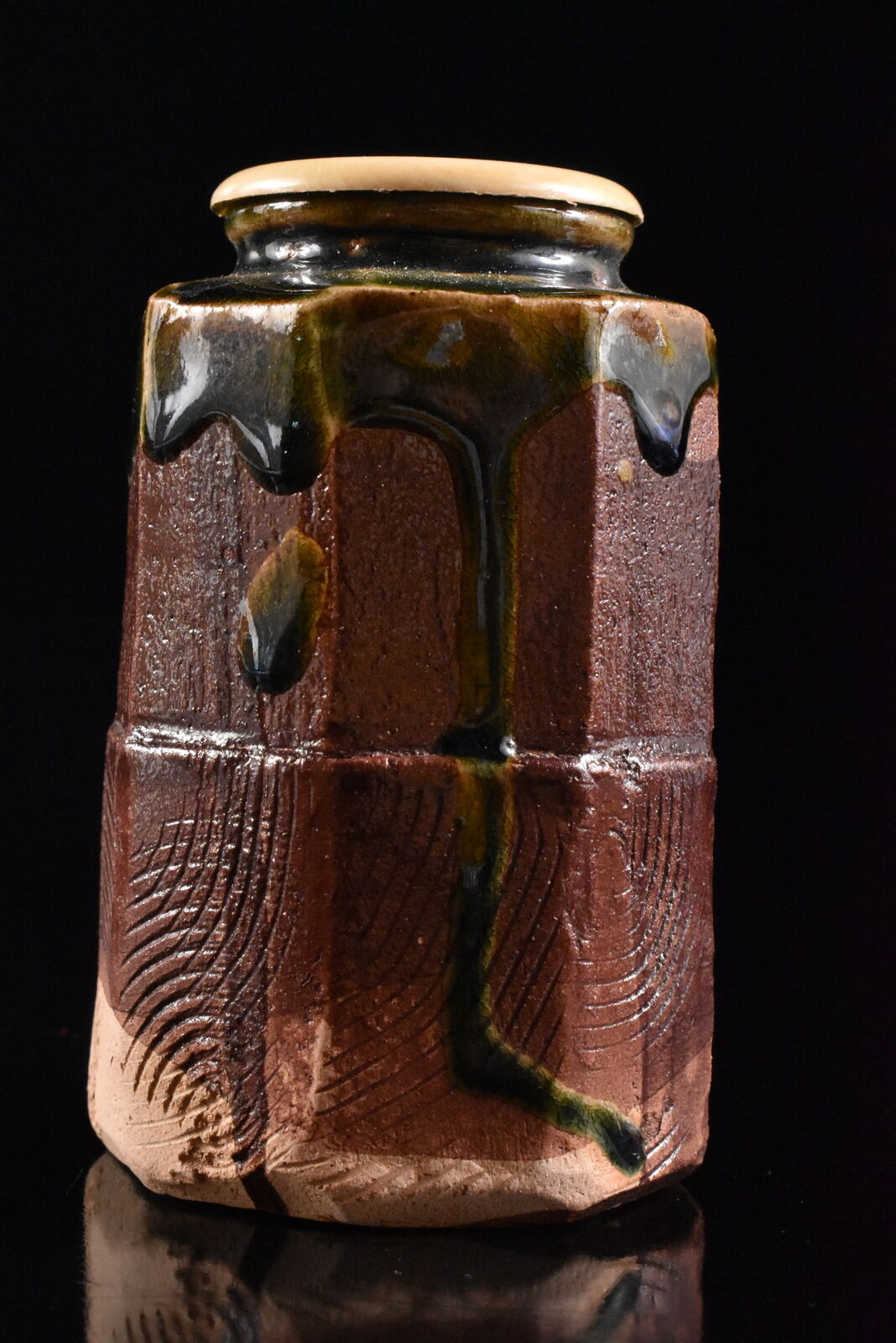
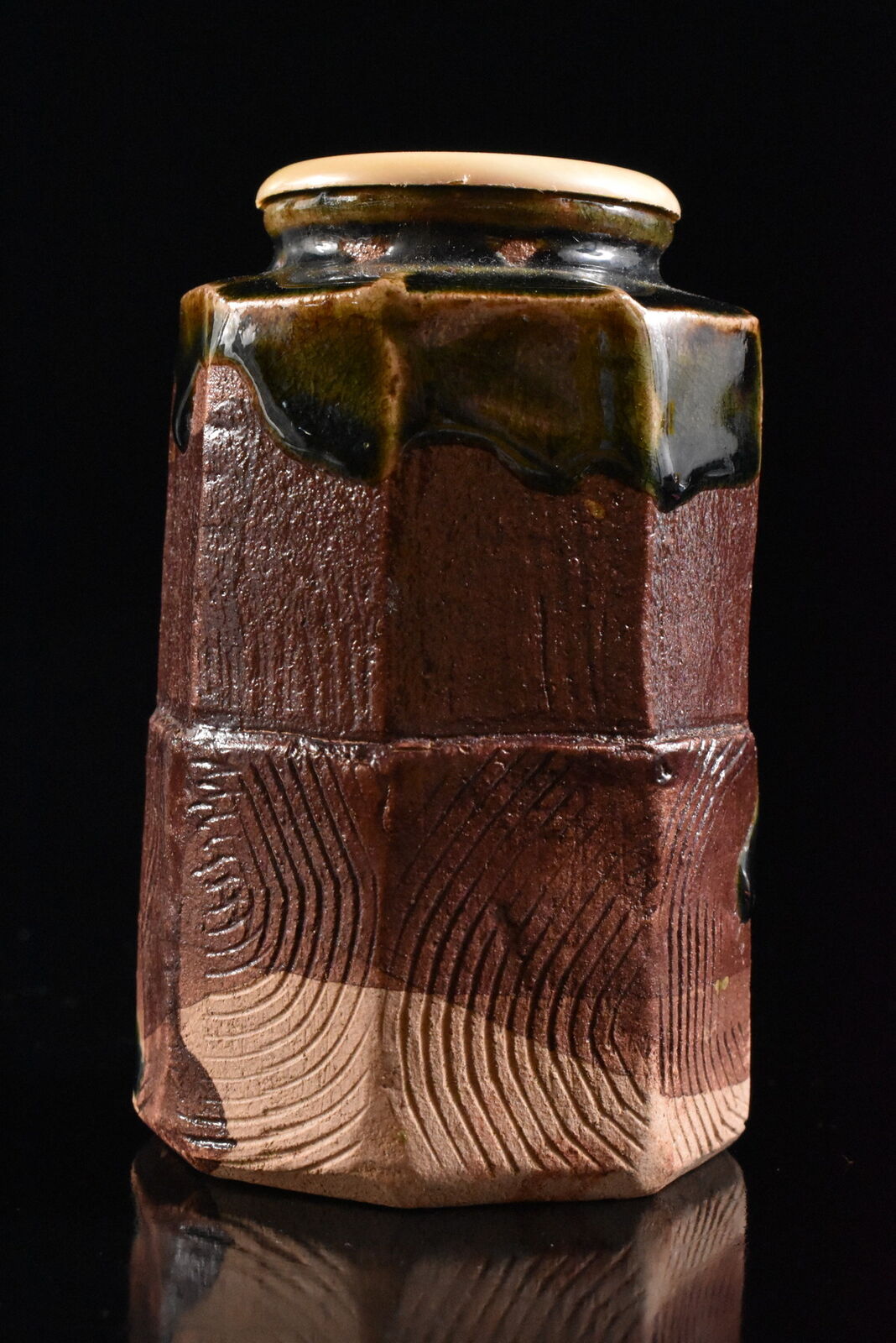
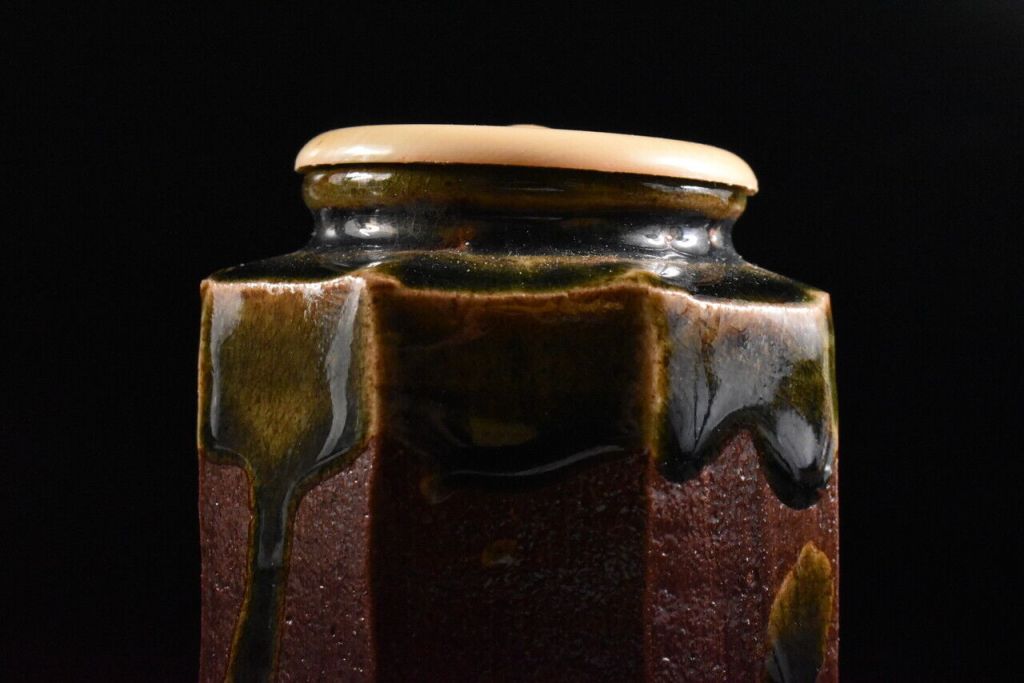
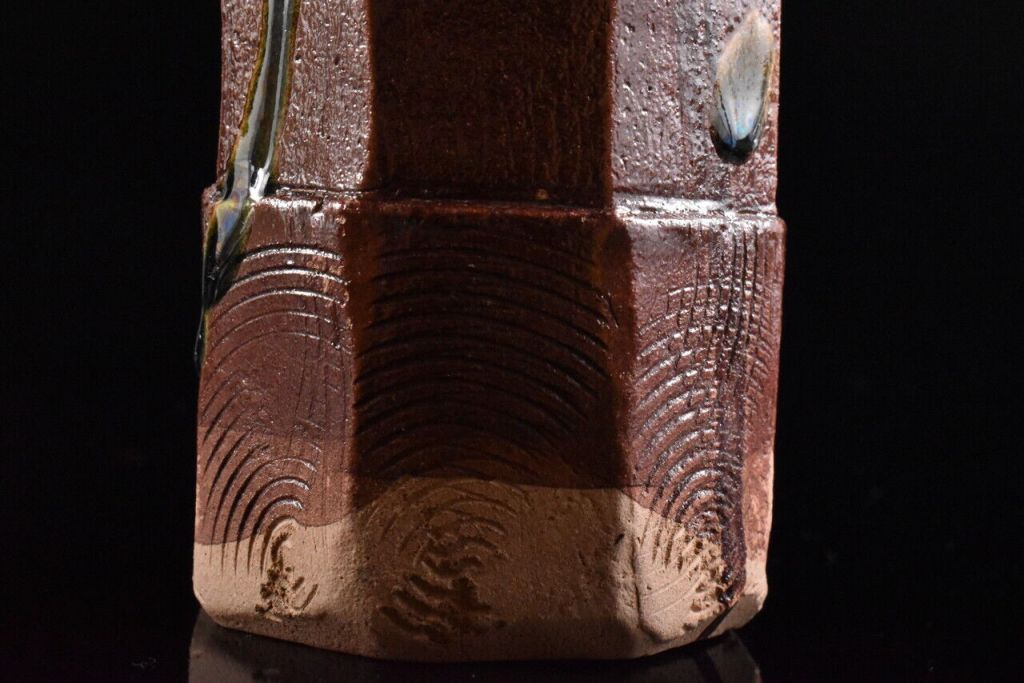
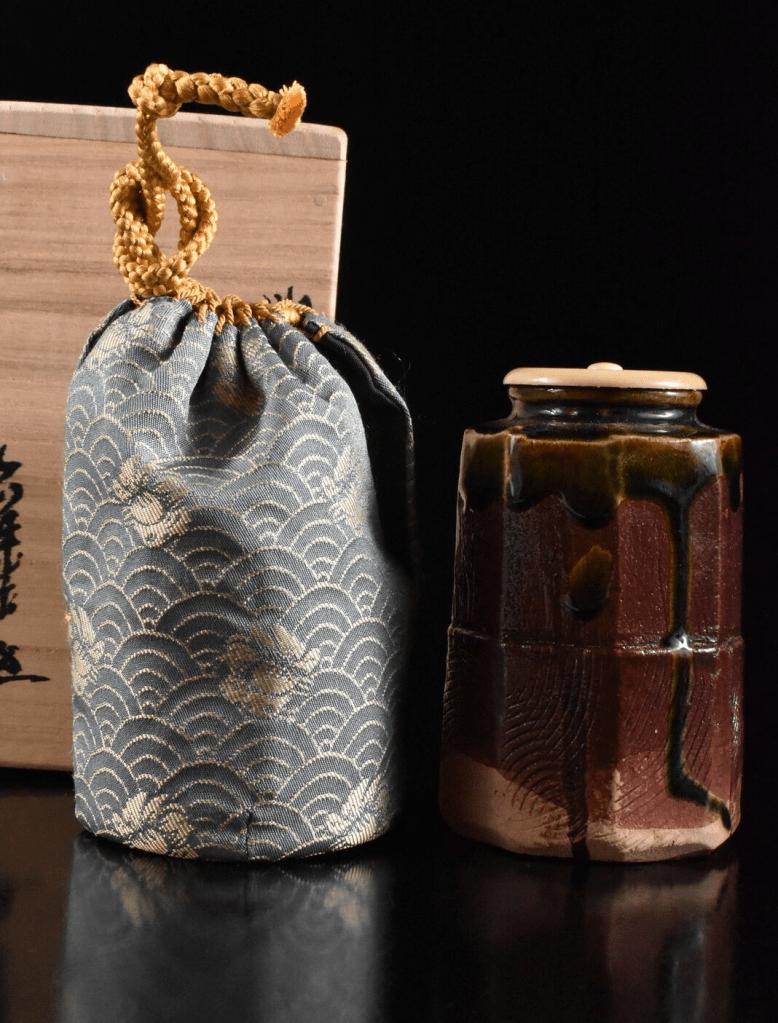
This is a magnificent Oribe tea caddy by master potter Hyōdō Saburo. Octagonal in shape, created by means of slicing of clay (known as mentori), this tea caddy is finely formed. The sides are further divided by half the height on which it’s lower half is carved with spiral forms (or whirlpools), intersecting one another in places. The faces that are created through the mentori style slicing of the clay create fine surfaces that allowed the glaze to run down. This tea caddy’s exudes a definite air of sophistication. An exemplary chaire in all regards is all I can say.
Oribe is a visual style named after the late 16th century tea master Furuta Oribe (1544-1615). It’s most often seen in pottery, but extends to textiles and paintings. Oribe was of the Bushi class and not a potter however, he also (like many other influential figures in Japan’s art history), was something akin to an art director or designer. He embodied the spirit of wabi tea so completely that he was able to give it form in a truly new and unique vision. Boldly formed, often intentionally distorted chawan, decorated with green, black and brown glazes and abstract designs appeared on the Tea ceremony scene in Kyoto.
The motifs, taken from nature or other decorative patterns such as textiles, were ground-breaking in their bold informality. Casting aside Korean and Chinese influences, they were also entirely Japanese. It must have been this recognition of a new Japanese aesthetic that caused tea devotees to cherish Oribe ware. Its ability to capture something of the artistic and spiritual soul of Japan quickly spread throughout the country, and its mass popularity continues to this day.
Throughout the late Momoyama (1573–1615), and early Edo periods (1615–1868), in Japan, the art of the Japanese tea ceremony underwent new developments. Great tea masters such as Takeno Jōō (1502-1555), Sen no Rikyū (1522-1591), and Furuta Oribe (1544–1615), revolutionised the utensils, rituals and ceramics used in tea ceremonies. As time passed, technology improved and kilns advanced; improved firing conditions allowed the creation of Oribe ware, a new kind of ceramic used in these tea ceremonies.


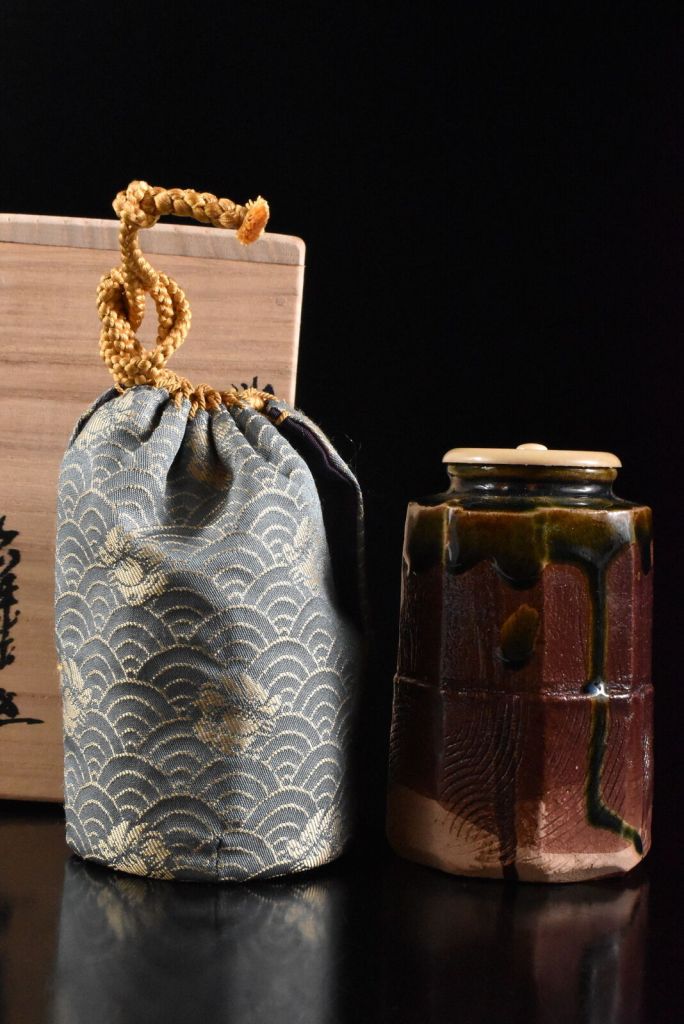
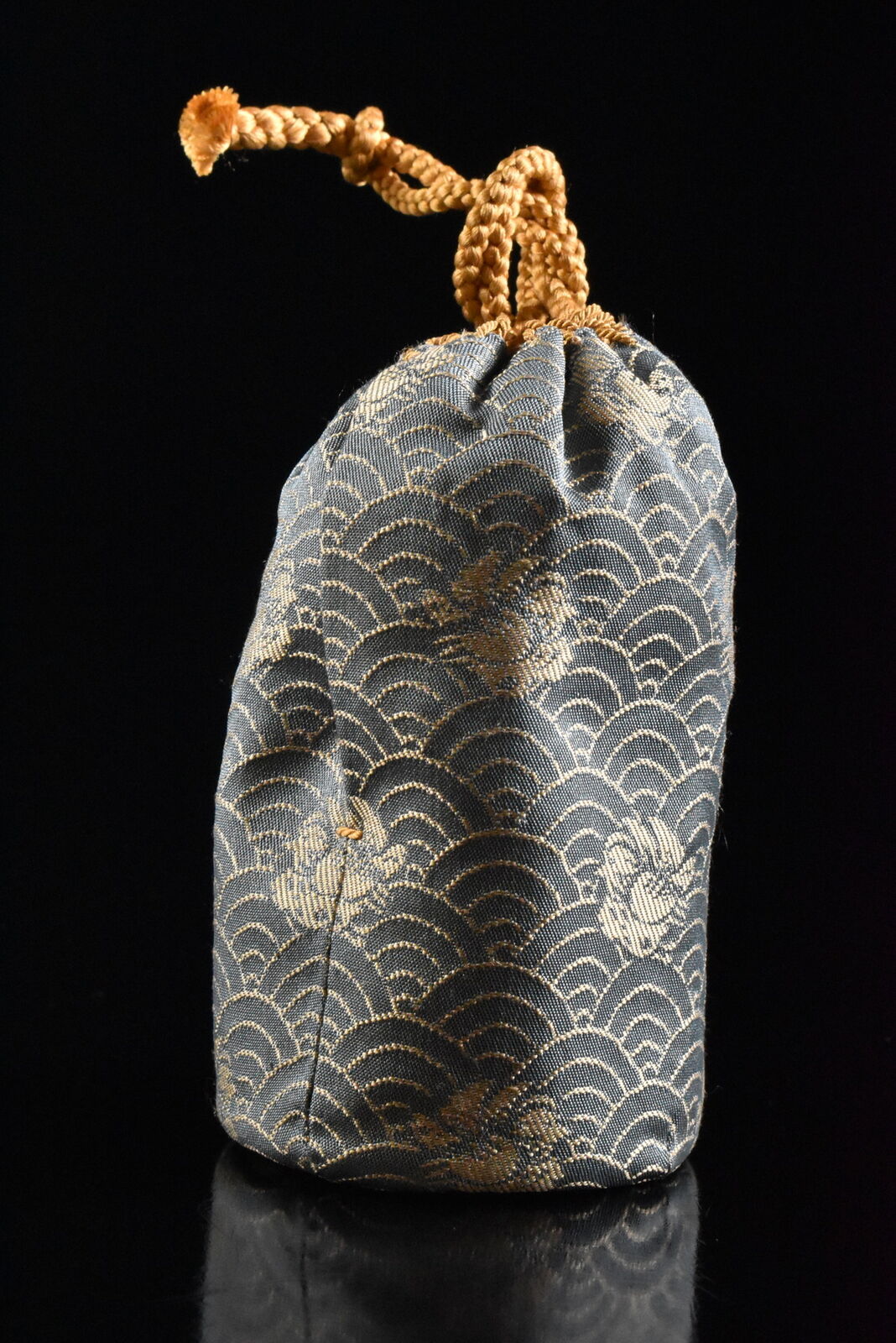
This tea caddy is free of chips and cracks and comes with the original high quality signed paulownia tomobako or wooden storage box. The box bears calligraphy on the side. Additionally included is a informational pamphlet about the potter and a a high quality shikufu or cloth pouch. Condition is mint.
SOLD
Thank you very much!
Following below, a rough translation of the pamphlet.
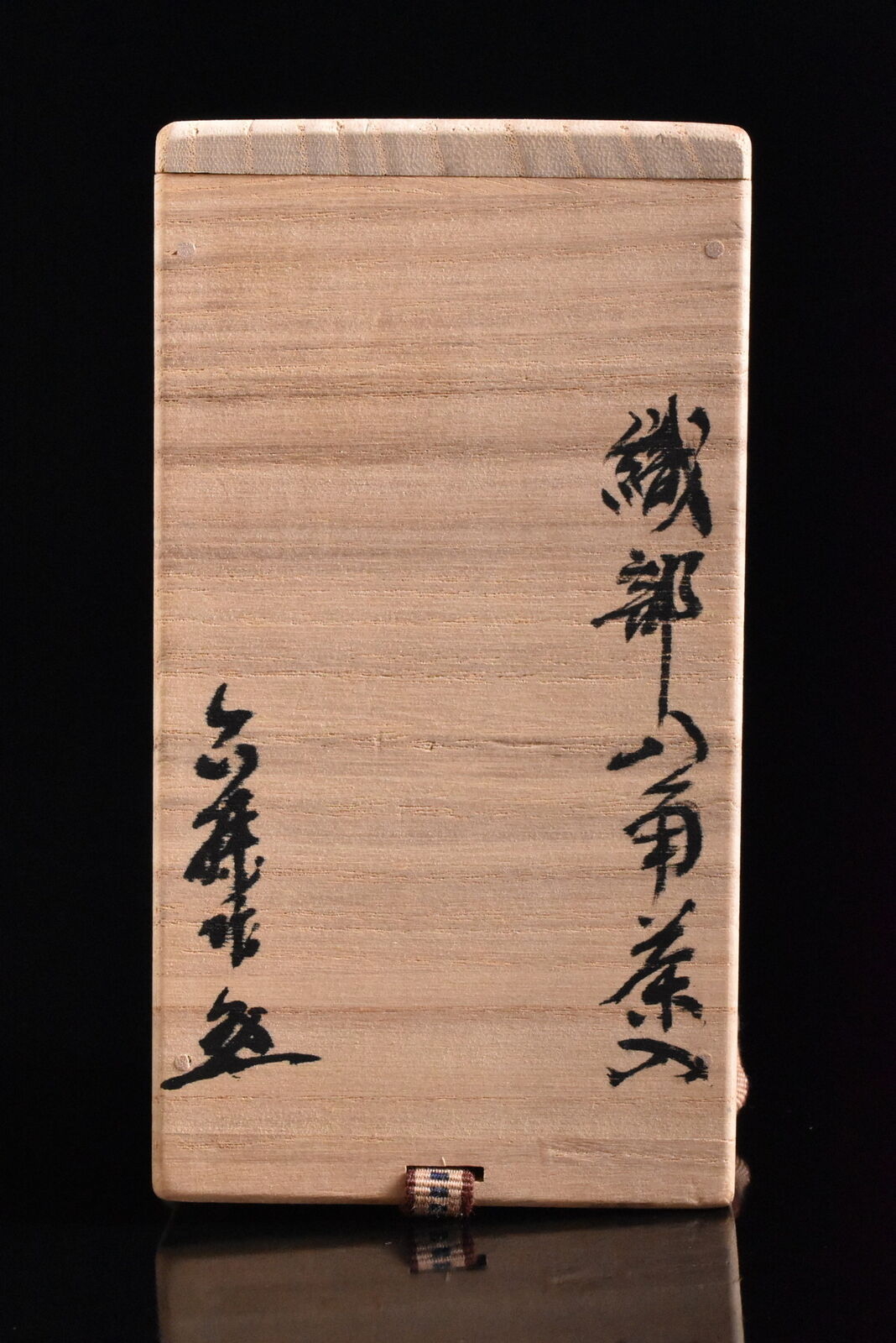

織部八角茶入
X松浦銀一? … 土岐市妻木町に 窯を築き大正の頃より陶器製造 をなし、九州松浦郡(日本の陶祖)の流 れをくみたる縁により、後学三郎 若き頃より陶芸に心をよせ たまたま伊勢の皇学館大学に 出講の歸路三重の千歳山に 川喜多半泥子を尋ね 氏の銀行の頭取を始め幾多実 業界に君臨し人生の最后を日本 陶芸の王者として名を千歳に残 せる半泥子の生き方に 感銘し 氏の後をついで陶芸に専念致 したく思えども、未それを許されず 只未熟なるを恥ずる者也
兵藤三郎 識
Oribe octagon tea caddy
I have been into ceramics since my young age. Matsuura area in Kyushu, where the origins of Japanese pottery kiln, gave me connection and chance to meet to great Kawakita Handeishi, who built kiln at Tsumaki town Toki city, in Meiji era. I visited him when he was in a way back to Chitose-yama (Mie prefecture), from a lecture at the Kougakukan university in Ise. I was so impressed by his way of life, such as becoming the president of the bank, managing business over multiple industries until the end of his life in Japan. These activities left his name as the king of ceramics in Chitose area. I devote myself into pottery ceramics to follow his footsteps. My experience is not enough to reach his level, I am spending all my soul to achieve that, Even now I feel ashamed of my inexperience which the distance between me and him is still so far yet.
— Hyōdō Saburo
