
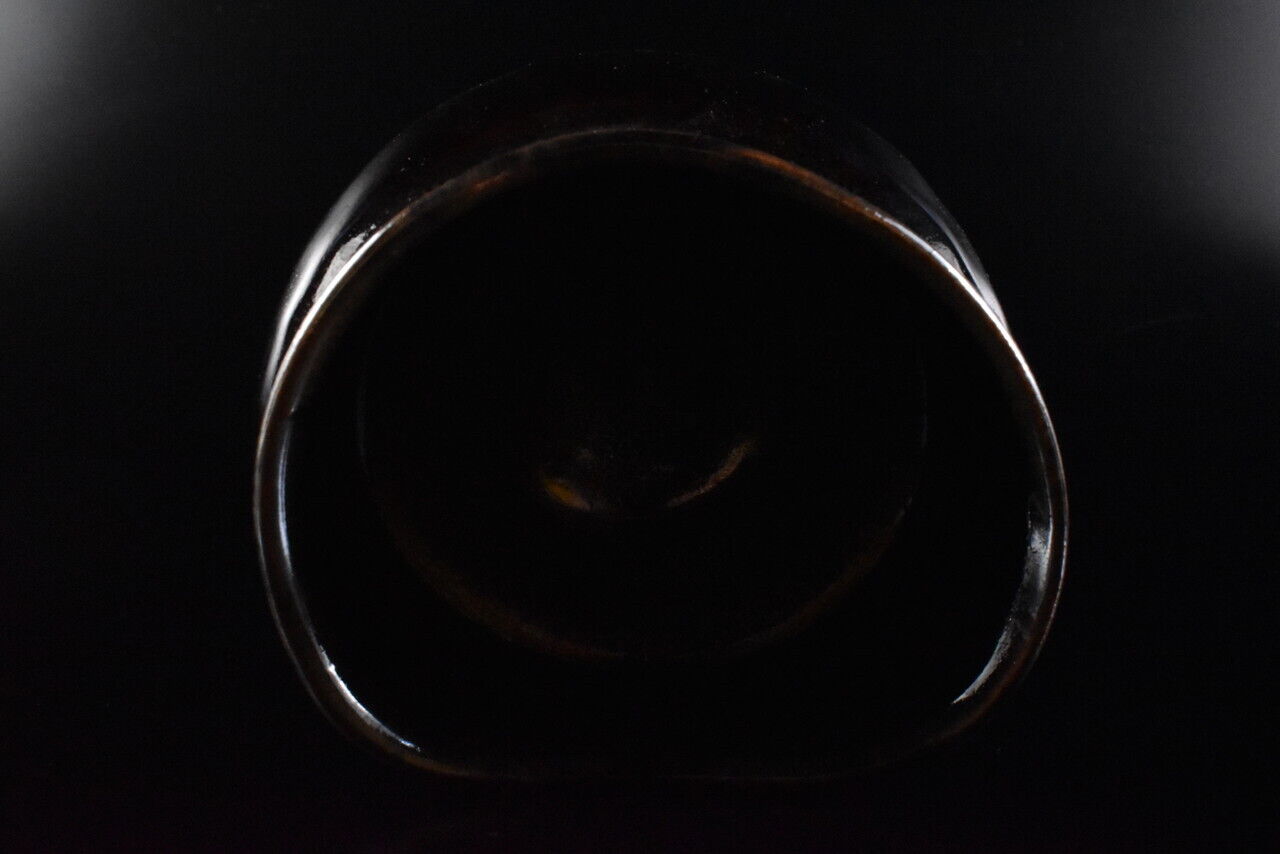

Potter: Masanobu, 27th generation Kato Kagemasa
Approximate size: W4.7″ by W4.9 by H3.2″ or 12.0 by 12.5 by 8.3 cm
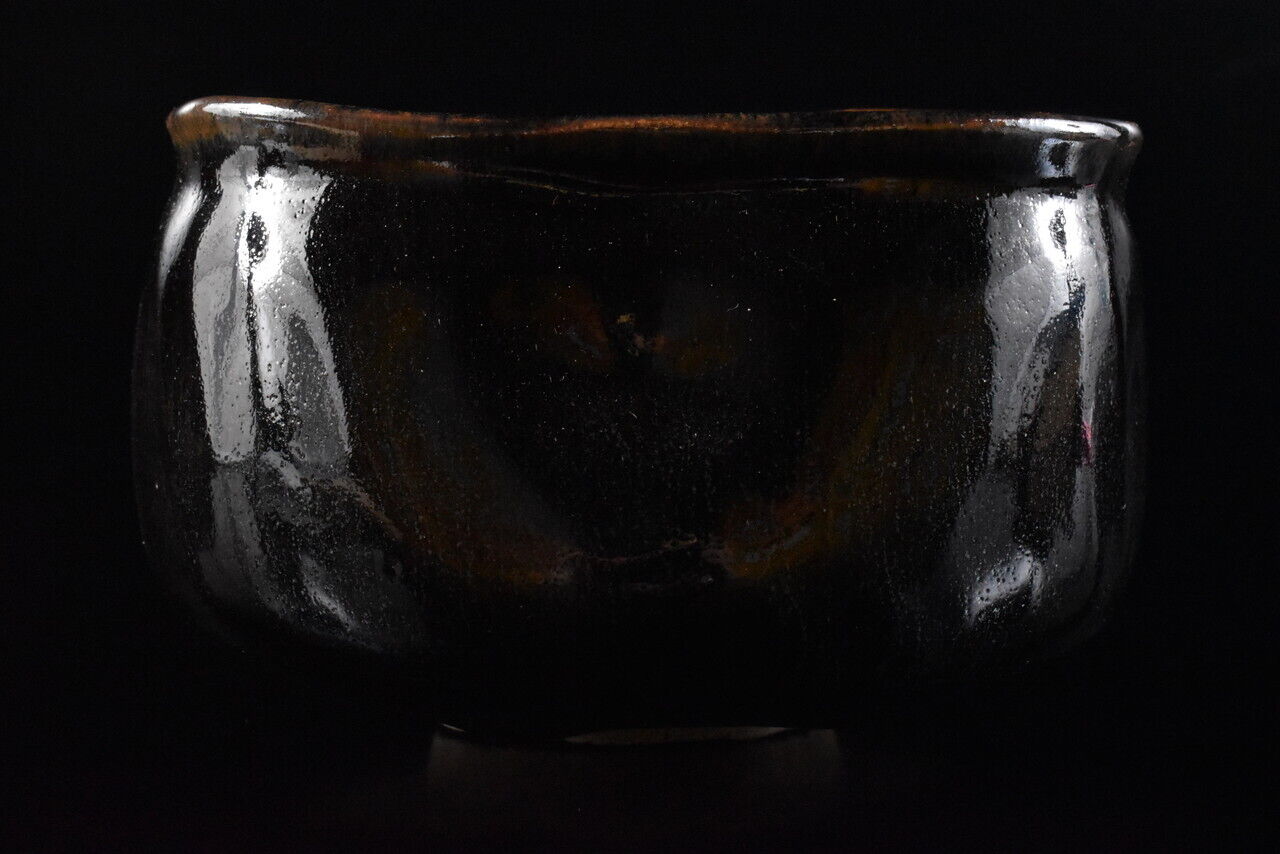
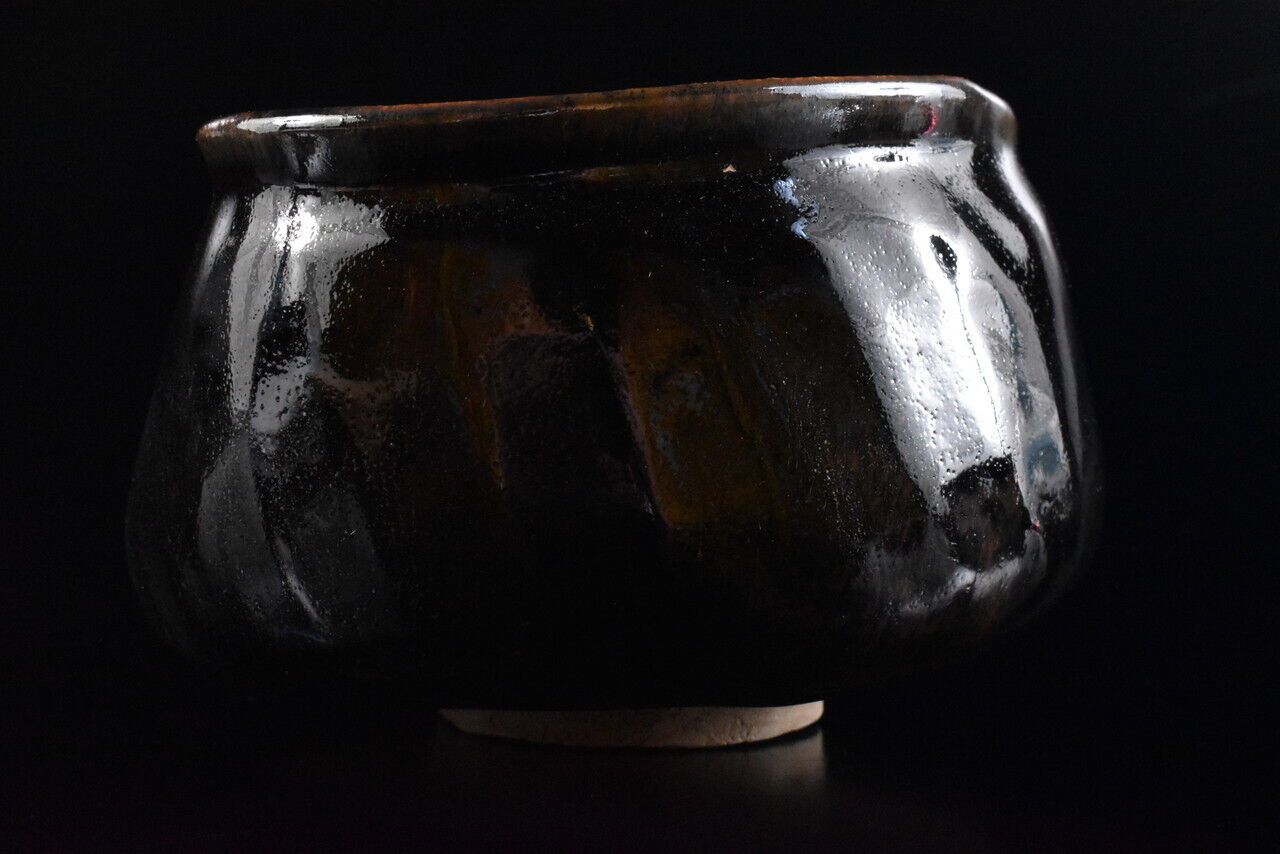
Thrown on the wheel and then shaped by hand, this antique ko-Seto style chawan or ceremonial tea bowl was made by 27th generation potter (Kato Kagemasa) Masanobu. Slightly deformed, something called kutsu-gata this bowl sits low on the koudai. The bowl is finished with a fine tenmoku glaze. The texture of the glaze is smooth to the touch. A exemplary bowl that feels great in the hand and isn’t too hefty.
According to the written records of Seto, Kato Shirozaemon Kagemasa (1168 – 1249), known as Toshiro, went to China with the Zen monk Dogen to study pottery. Upon returning to Japan, he embarked on a trip across the country to find the perfect soil for pottery making. During his journey, he discovered high-quality clay in the Seto region, along with the abundant natural resources needed for crafting earthenware and porcelain. He established the first Seto kiln and began making glazed wares in the style of Chinese celadon.
In the early Edo period, some pottery manufacture moved back to Seto. In 1822, Kato Tamikichi (1722-1824), introduced sometsuke jiki (blue-and-white porcelain; sometsuke), from Arita in modern Saga prefecture, and this porcelain, called shinsei or new production rather than the original Seto ware pottery, Hongyou became standard. The Japanese term Setomono is also used as a generic term for all pottery. Seto was the location of one of the Six Ancient Kilns of Japan.
Seto ware is the pottery made in Seto City and nearby areas of modern Aichi prefecture. The Seto area was the centre of pottery manufacture in the Kamakura period; ko-Seto (old-Seto), designates pieces made at this time. At the end of the Muromachi period the centre of the pottery manufacture moved to nearby Mino. At that time wares made in the area from Seto to Mino were called Seto-yaki.
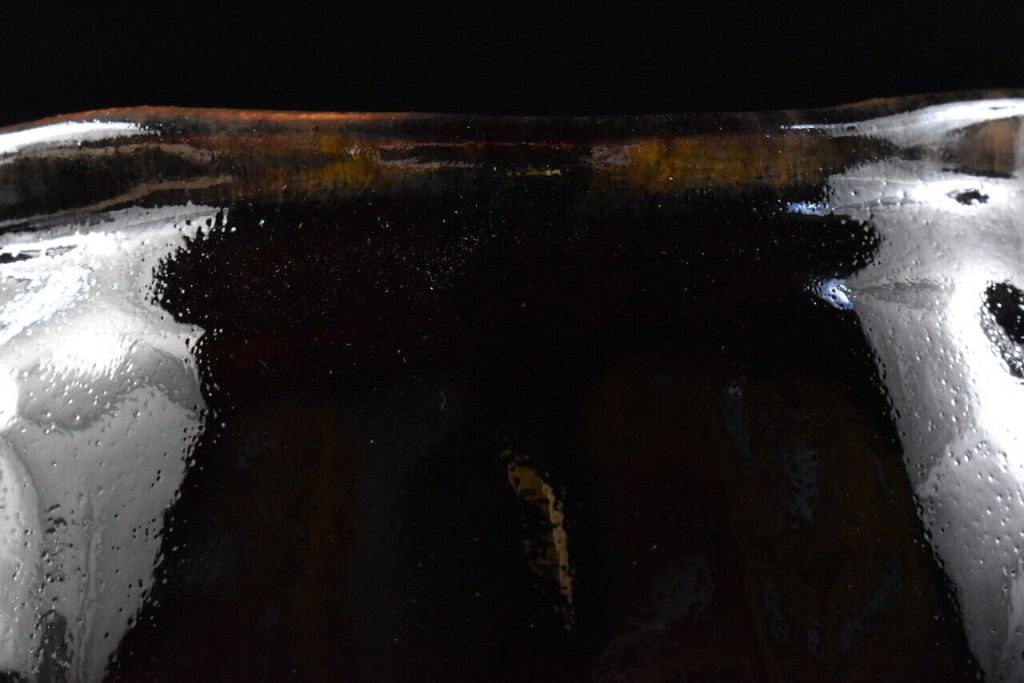
During the Meiji period, Seto ware adapted Western techniques, gaining great popularity. In addition to plain Seto, the Mino kilns also produced several types of Seto wares from the mid-16th century, including Seto-guro (black Seto), and ki-Seto (yellow Seto). Ki-Seto fired at the same kilns as Shino and Seto-guro wares during the Momoyama period, featured “fried bean-curd” glaze, Aburagede (油揚げ abura-age or aburage), developed in emulation of Chinese celadon’s. It utilises an iron-rich wood-ash glaze and is reduction fired at a high temperature to produce a celadon-like texture and bone colour; in an oxygen-rich kiln, the minerals in the clay and glaze create a distinctive opaque yellow glaze.
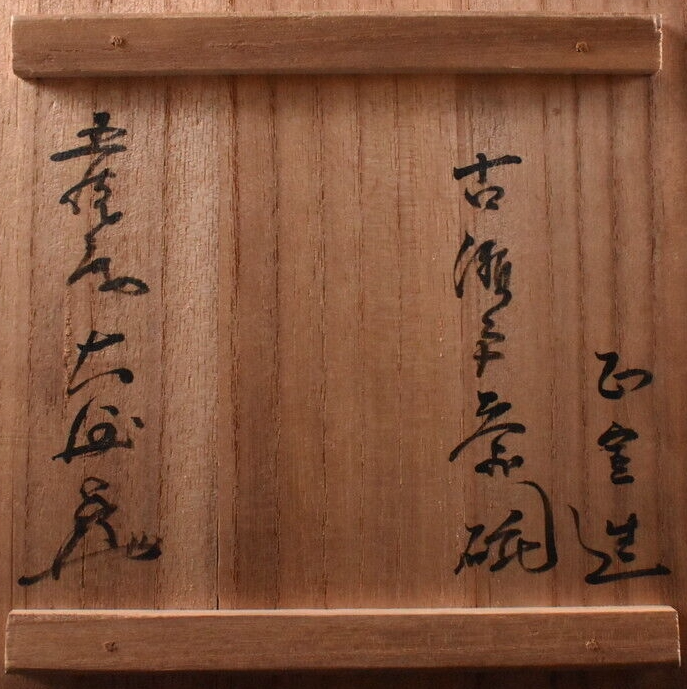
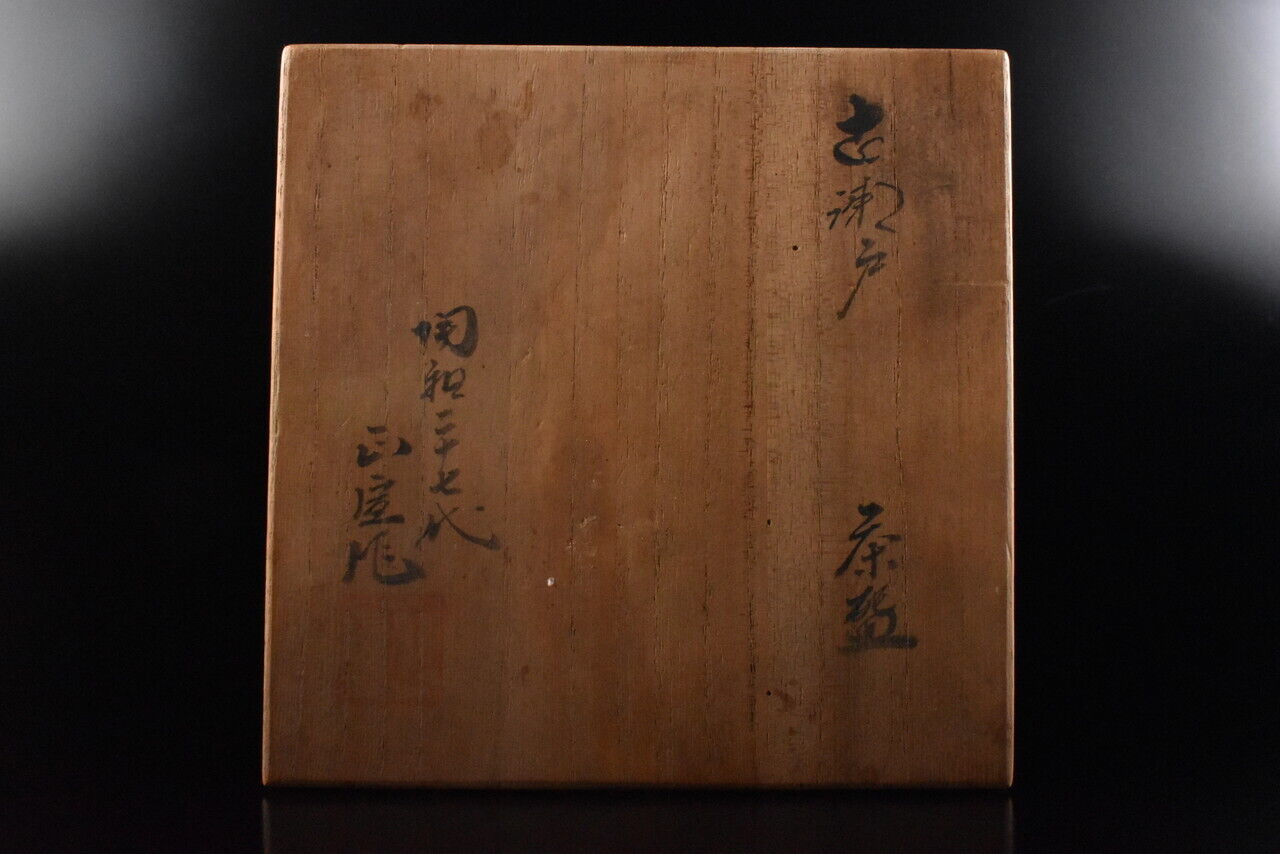
陶祖二十七代 27th Generation of the Ancestor of Potters (referring to Kato Kagemasa)
正宣作 By Masanobu
古瀬戸茶盌 Ko-Seto style tea bowl
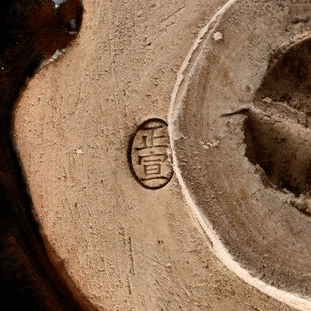
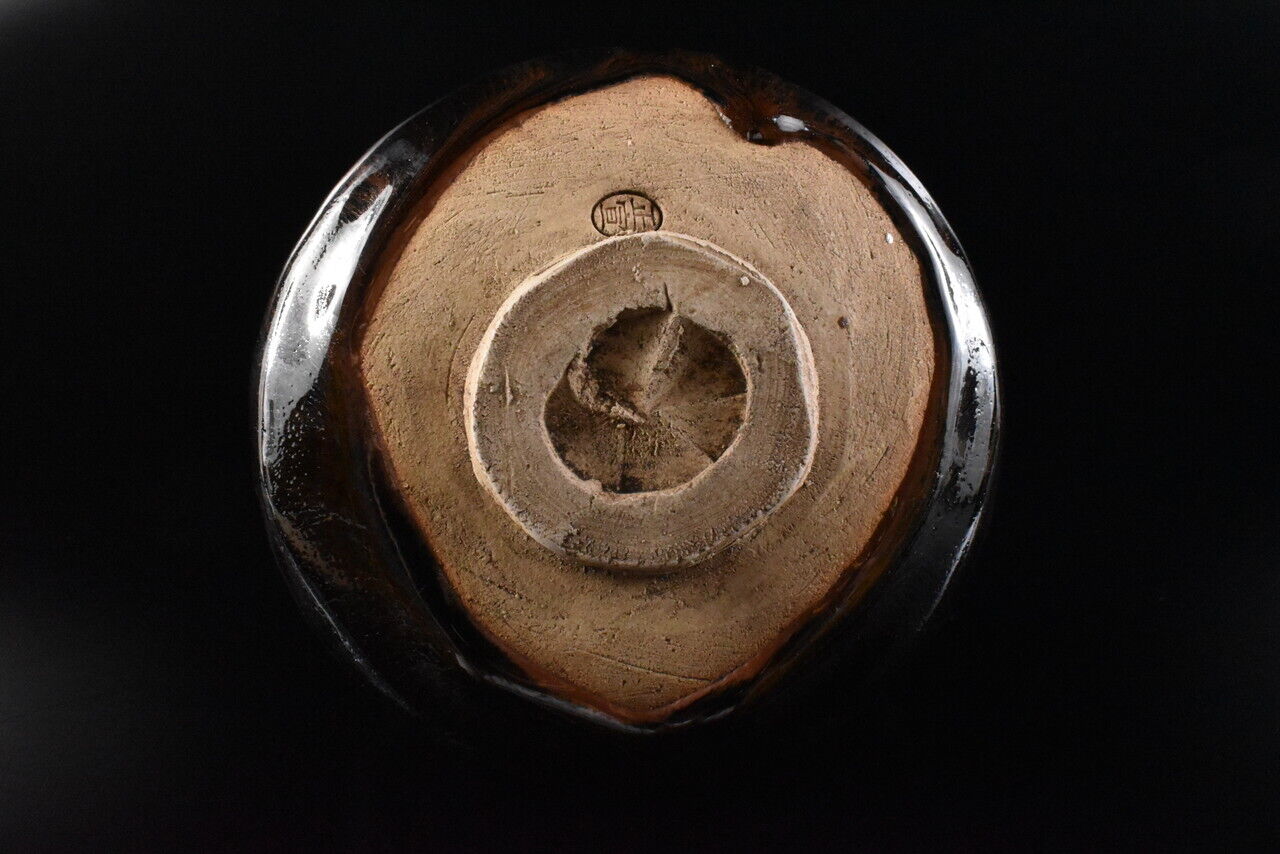
This chawan has no chips or cracks and condition is very good for such an old work. The potter’s seal is visible clearly next to the koudai. Comes with the original quality shiho-san paulownia tomobako or storage box, aged by time.
€550 + shipping cost