


Potter: Kaizo Hashigata
Approximate size: W4.3″ by H2.9″ or 12.0 by 11.0 by 7.3cm
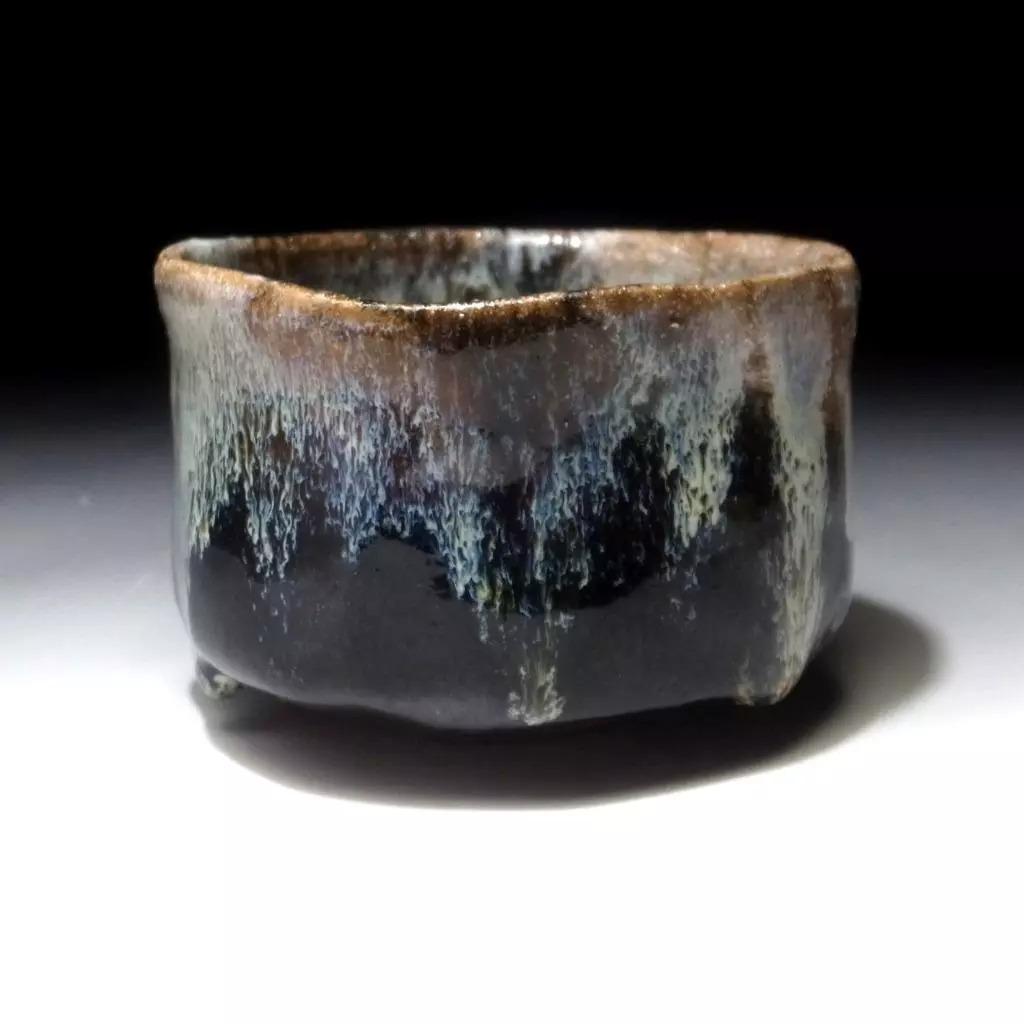
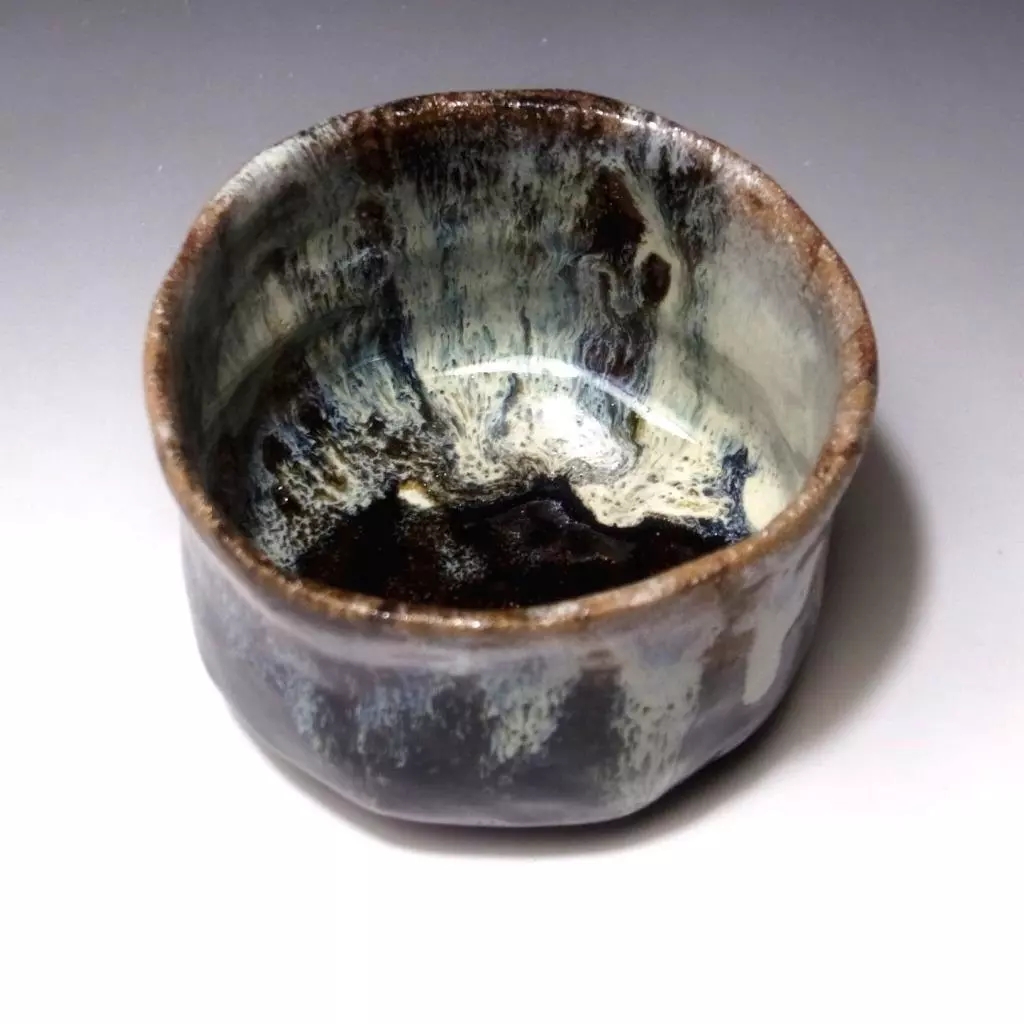
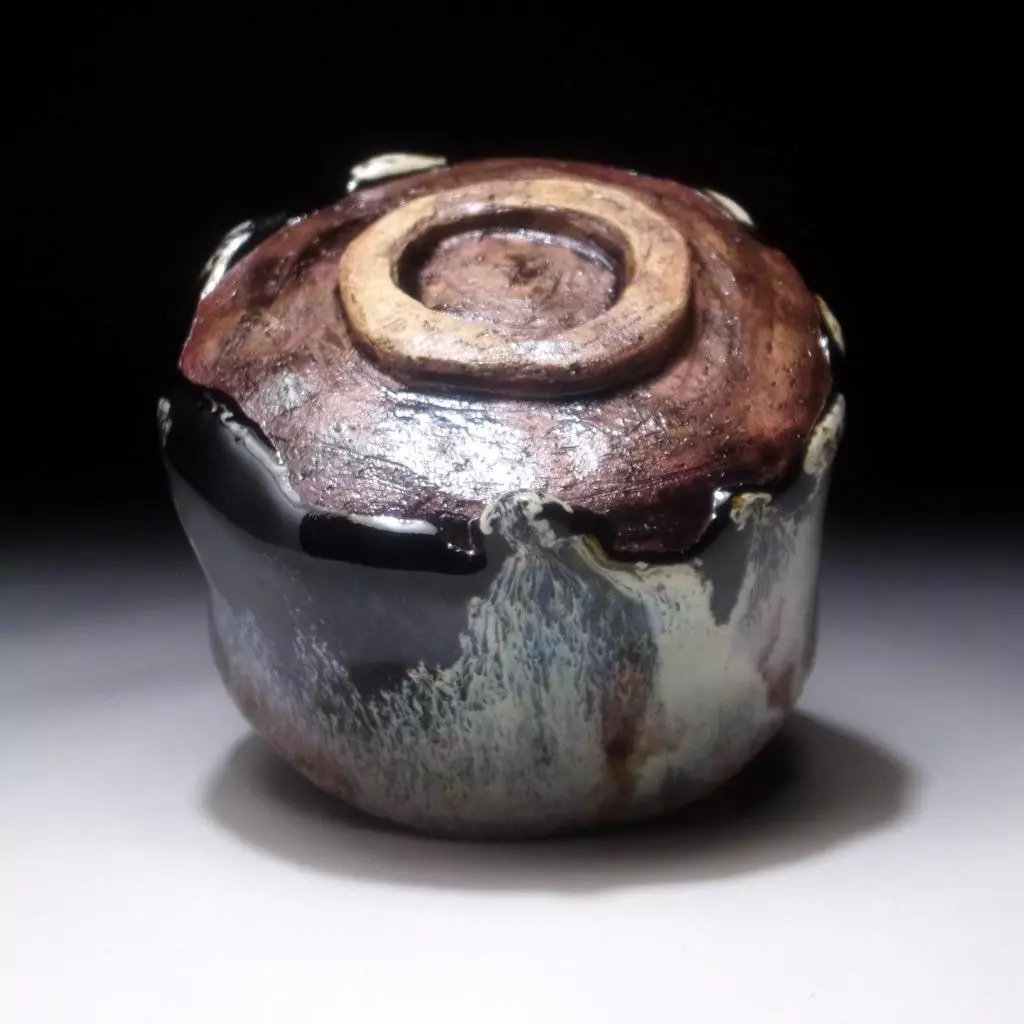
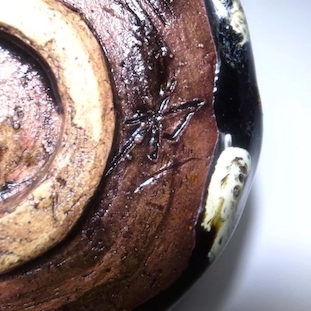
Another exemplary Karatsu chawan made by the independent Karatsu potter Kaizo Hashigata. He was born in 1933 in Kobe, Japan. He studied under Honami Mitsutaka, Urasenke teacher Yama Soho and professor Ino of Toukokai. He eventually opened his own kiln called Guangsi. Wheel thrown in a han tsutsu-gata or half cylinder shape and given a carved koudai. When it was glazed a thick straw ash glaze was poured over iron glaze. The bordering reaction created streams of beautiful hues in the glaze.
1993 Shigaraki water jar was selected for the Seikokai National Ceramic Art Exhibition
1994 Aka-Raku kiln-changed tea bowl was selected for the Seikokai National Ceramic Art Exhibition
1995 Selected for the same exhibition with his Yaki-nuki Katatsuki tea caddy (supported by a member of the association)
1996 Aka-Raku tea bowl was selected for the Seikokai National Ceramic Art Exhibition
the aforementioned aka-Raku tea bowl was selected for the Japan-China Ceramic Art Exhibition held in Jingdezhen
Exhibited at the “All Japan Ceramic Exhibition Selected Exhibition” at Ueno Matsuzakaya
Selected for the Saitama Ceramic Art Exhibition with his kiln-fired aka-Raku tea bowl
1997 Solo exhibition “Rokusanwan” at Kyobashi Modern Art Club
While there are many accounts about the origin of Karatsu ware, it is regarded to have been first created in the territory of and under the protection of Hata clan. This clan was located at Kishidake Castle from the end of the Muromachi to the Momoyama era (approximately 16th, 17 century). Thereafter, the production of Karatsu ware increased with the influx of potters from Chōsen (today’s Korea) who were brought back to Japan after Japan’s Chōsen expedition by Hideyoshi Toyotomi (in 1590’s). These potters started their own potteries in various areas across Japan.

Chōsen-garatsu (Korean-style Karatsu Ware)
Two types of glaze – iron glaze and straw ash glaze are used. Iron glaze is poured over the raw clay first, followed by straw ash glaze (spot glaze), which is poured above the layer of iron glaze. The artwork created from the fusion between the two different types of glaze is Chōsen-garatsu. The style where the iron glazes are put over the straw ash glazes on the clay can also be seen in other Chōsen-garatsu works. For some Chōsen-garatsu, the order in which the two types of glaze are poured over the raw clay is reversed, i.e. straw ash glaze followed by iron glaze.
The glaze used for Karatsu yaki is “wood ash glaze”, which, as the name suggests, is made of wood ashes. It is used as the basic glaze for E-garatsu (Brush decorated Karatsu ware), and Muji-garatsu (plain Karatsu ware), as well as most other types of Karatsu ware). The second most commonly used glaze is straw ash glaze, which makes use of the cloudy nature of straw ash. It is used for Madara-garatsu (mottled Karatsu ware), and for layering with black amber glaze when making Chōsen-garatsu (Korean-style Karatsu ware). Apart from these types of glaze, iron glaze is also often used to make pots.
Karats ware is one of Japan’s oldest and most revered styles of ceramics used in daily life and later in history the development of the Tea Ceremony. Karatsu pottery originates in what is nowadays Saga prefecture. Among the many different aesthetic characteristics that developed this is an exemplary Chōsen-garatsu chawan.
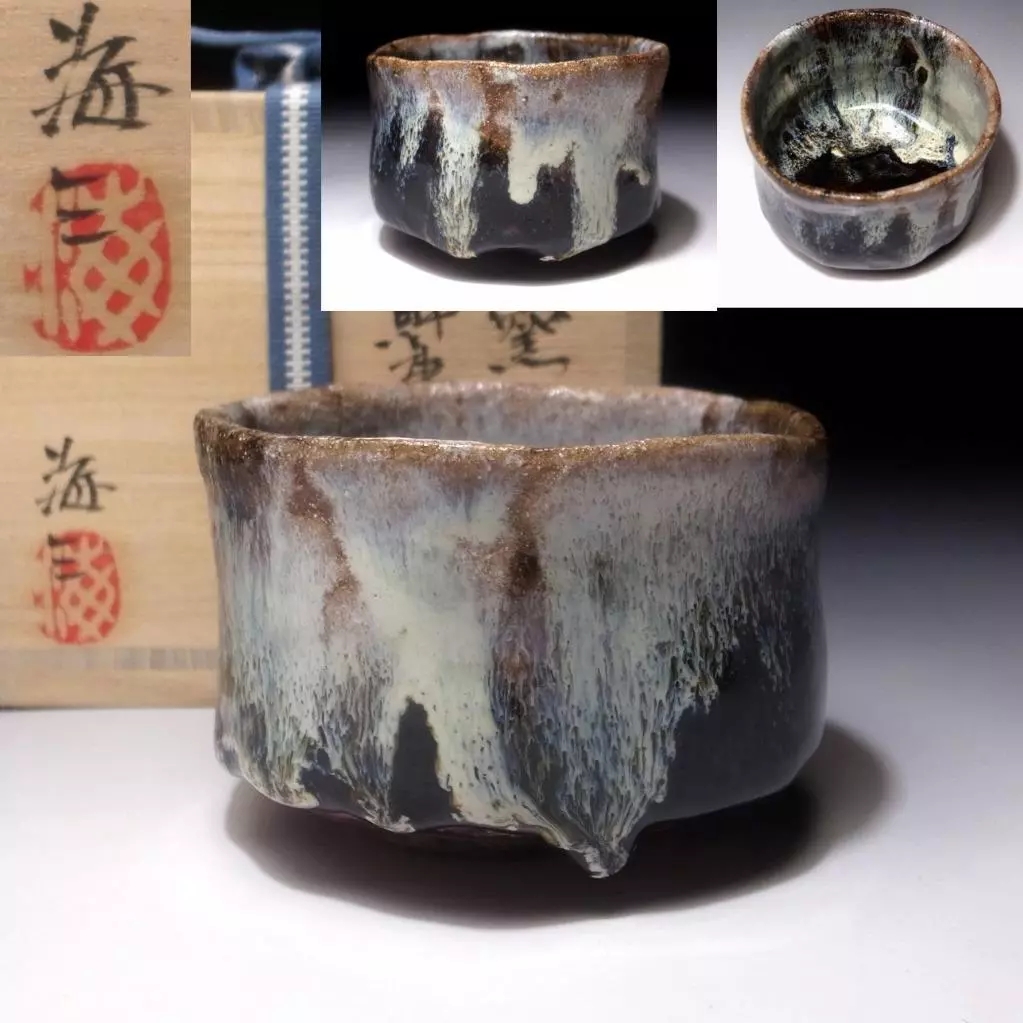
The bowl is signed next to the koudai, has no chips or cracks and is in mint condition. Comes with the original high quality paulownia tomobako or storage box with the potter’s stamp and calligraphy on the side and interior of the lid. Also includes a pamphlet with additional information about the potter.
€225 + shipping cost


There is a saying attributed to several tea masters (including Sen no Rikyu), regarding the ranking of tea ware. “First Ido, Second Raku, Third Karatsu —when referring to ceramic ware used for the Japanese tea ceremony. It is considered one of the top styles of pottery for use in tea ceremonies in Japan. Ido referring to Ido style chawan from Korea.
A variation of the above can be seen in the Japanese proverb on topic of wares used in the Tea ceremony. “Ichi-Raku, Ni-Hagi, San-Karatsu.” Loosely translated, here the saying ranks Raku first, followed by Hagi and thirdly Karatsu utensils.
