



Potter: Sensa Kuroi
Approximate size: W 5.0″ by H2.7″ or 12.8 by 6.8 cm
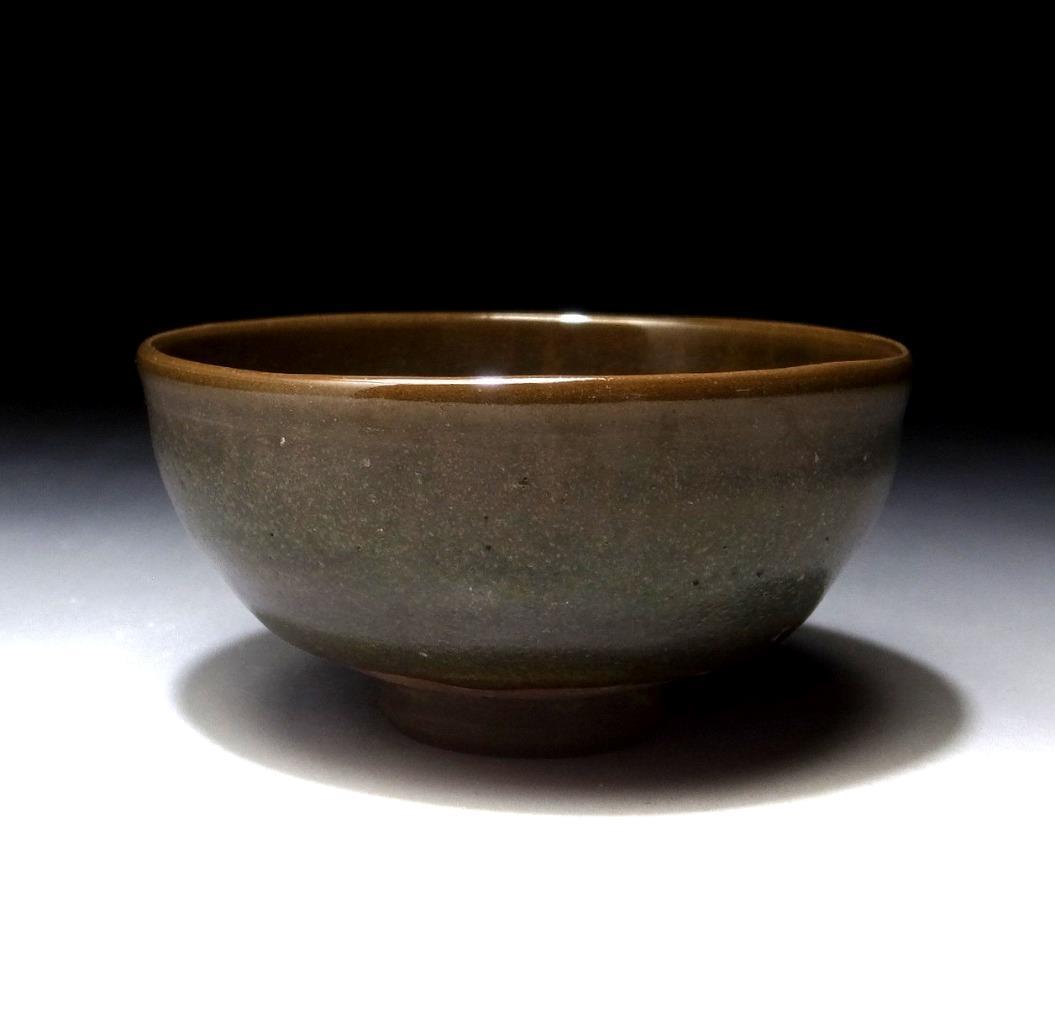
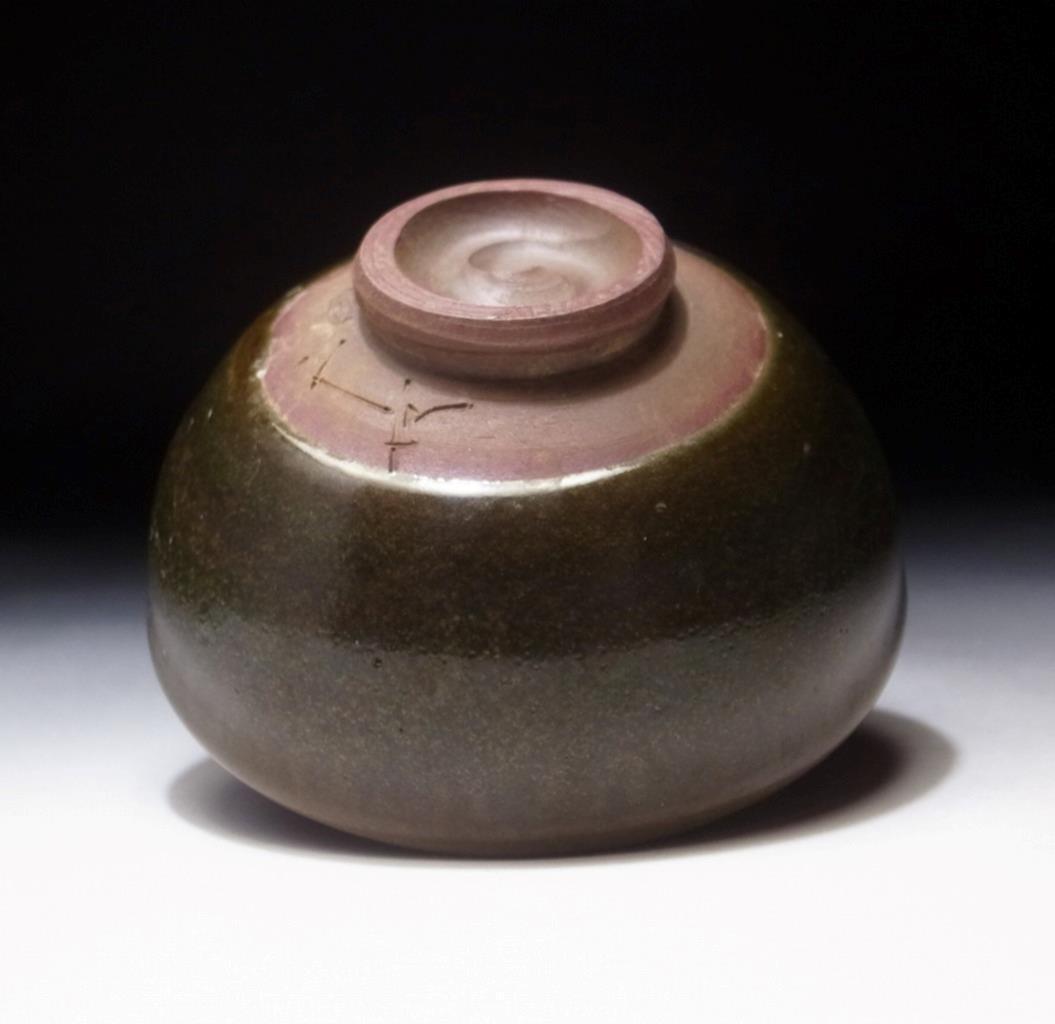
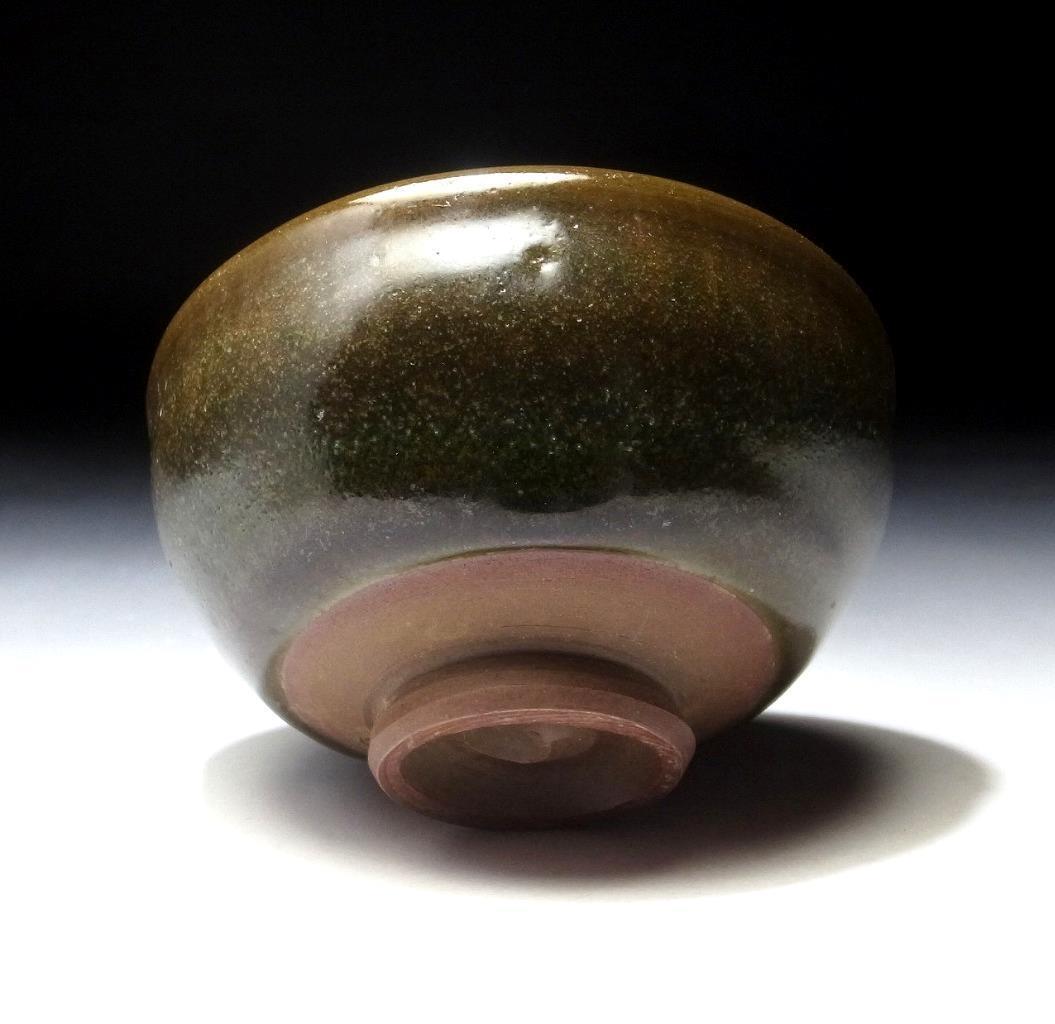
This is a first class Mushiake chawan or ceremonial tea bowl of Mushiake ware made by a great potter – Sensa Kuroi (1967-). Sensa Kuroi (born 1945) is the second son of Ichiraku Kuroi and continues the family tradition of creating Mushiake pottery, He initially studied under his father, Human Intangible Cultural Asset Ichiraku Kuroi (1914-1996). He specialises in inlaid pieces and kai-yu or ash glazes and is primarily focused on tea ware. The name ‘Kuroi’ refers to the family lineage of potters who are closely associated with this specific style, which originated around 300 years ago. Sensa is noted for shaving the surface of the base to create gradations via inlaid clay. This chawan demonstrates his skill on the wheel and the glaze is exquisitely detailed. The lineage continues with Sensa Kuroi’s son, Hiroshi Kuroi, who currently makes ceramics under his father’s guidance.
1945 Born as the second son of Ichiraku Kuroi (Important Intangible Cultural Property of Okayama Prefecture)
1966 Completed course at the Kyoto Municipal Kogei Training Center (current Kyoto Municipal Institute of Industrial Technology and Culture), Started making ceramics under his father, Ichiraku Kuroi, Important Intangible Cultural Property of Okayama Prefecture
1980 Selected for the Japan Traditional Kōgei Exhibition
1981 Selected for the Japan Ceramic Art Exhibition
1982 First Solo Exhibition at Tenmaya Okayama
2002 Collaboration Exhibition with the late Toshio Matsuo (recipient of the Order of Culture) at Tenmaya Okayama and received the Okayama Prefecture Cultural Encouragement Award
2007 Received the Sanyo Shimbun (Cultural Merits), Award
2011 Important Intangible Cultural Properties of Okayama Anniversary Exhibition 2011-2013 in Okayama, Tokyo
2014 Primary Judge at the 57th Chūgoku Traditional Kōgei Exhibition (also in 2019, 2020 and 2022)
2018 50th Anniversary Exhibition at Tenmaya Okayama
Invited to submit to and hold a lecture at the Miyagawa Kozan Retrospective Exhibition
Held solo Exhibitions at various art museums and department stores Mitsukoshi, Daimaru, Sogo, Takashimaya nationwide, Tenmaya in Hiroshima, Fukuyama, Yonago and Takamatsu, Keio Department Store and Sanyo Department Store
2019 Received the Marusen Special Cultural Award
2021 Received the Toyo Kaneshige Award (Grand Award), at the 64th Chūgoku Traditional Kōgei Exhibition
Mushiake ware greatest appeal is its quiet character and subdued colours that come from the use of ash glazes in combination with mountain clay. The transparent glaze which gives distinctive taste to Mushiake ware is made from refined natural pine tree ash. Potters take great care in choosing clay and ash because quality of the clay is determinant of the colour of the ware and the glaze is also dependent on the final quality in chawan or other utensil. Mushiake yaki goes well with any kind of pottery, particularly at tea ceremonies and this is one of its great strengths.
There are various theories on the origin of Mushiake yaki but there is no widely accepted consensus on the specifics. Accepted theory is that it started approximately 300 years ago, when Mushiake district was governed by the Iki family. The patriarch of the family was the head of the retainers in Okayama Province and received a stipend of 33,000 koku (which equals an area of about a thousand inhabitants).
It is said to have started under the name “Oniwa yaki”, which was due to a habit of a number of feudal lords in the area to invite potters to create works of their liking. During that time the 14th Iki Tadasumi, a tea master in his own right invited many potters of great skill from Kyoto (Seifu Yohei, Raku Chozo and Miyagawa Kouzan to name a few). From then on acted as a supervisor of the newly created Mushiake yaki which from then on was heavily influenced by the delicate style characteristic of Kyoto pottery. His active participation in the Tea ceremony as a master meant that Mushiake yaki was intended for ceremonial use and was not available to the general public. Which is why Mushiake ware was never produced in large numbers.
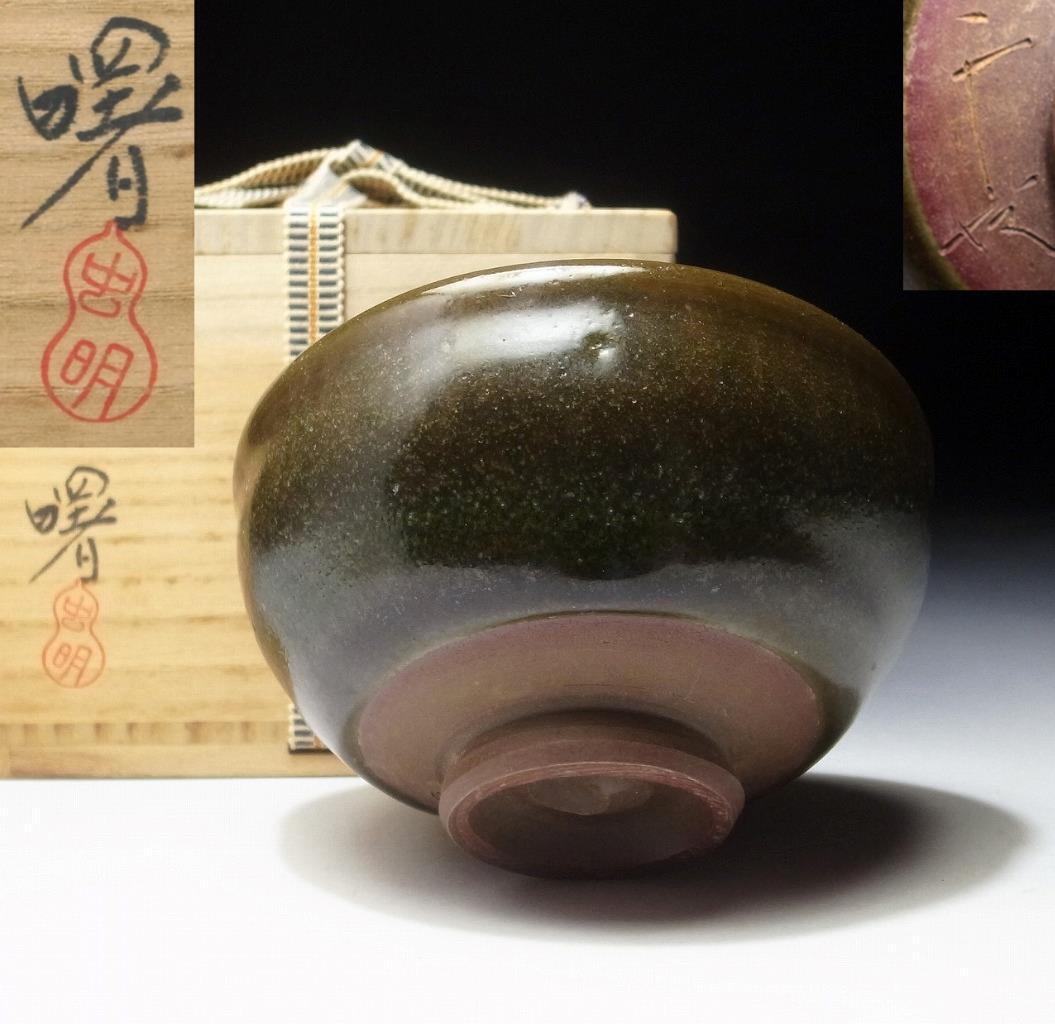
The chawan is hand signed by the potter with the seal of Mushiake ware and his signature. There are no chips or cracks and is in mint condition. Comes with the original high quality paulownia tomobako or wooden storage box with kiln stamp and calligraphy on the side and on the lid. Includes a pamphlet with information on the potter.
€250 + shipping cost


