
Potter: Matsubayashi Hosai, 14th generation
Approximate size: W5.3″ by H3.1″ or 13.5 by 8.0 cm
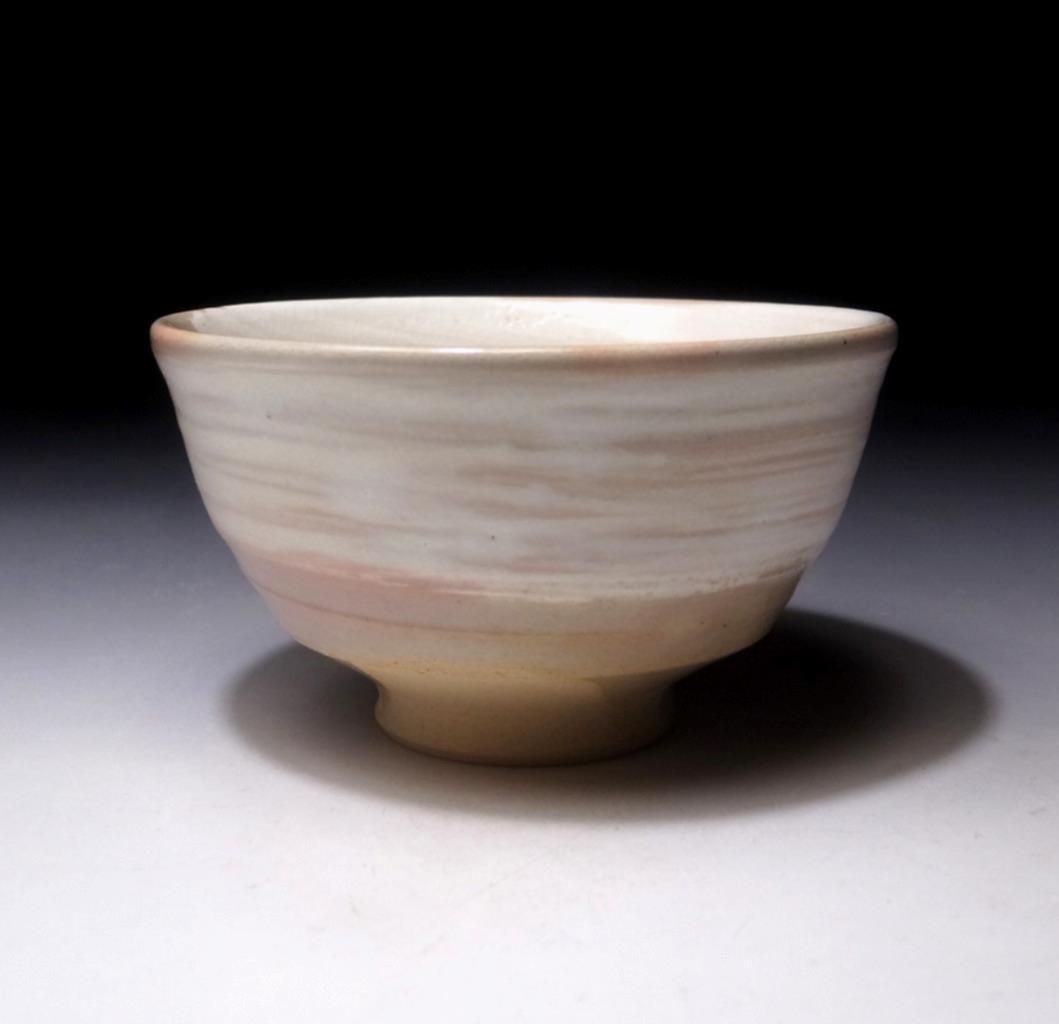
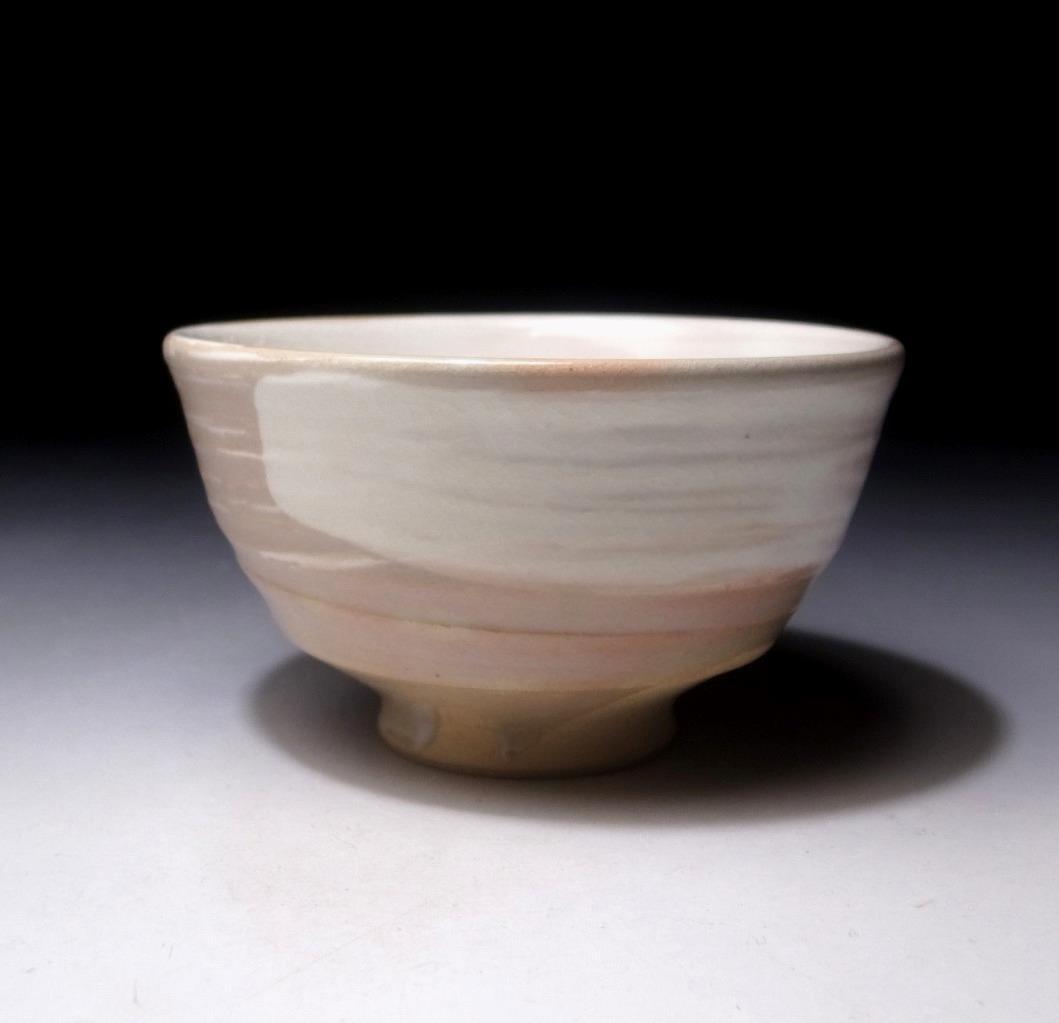
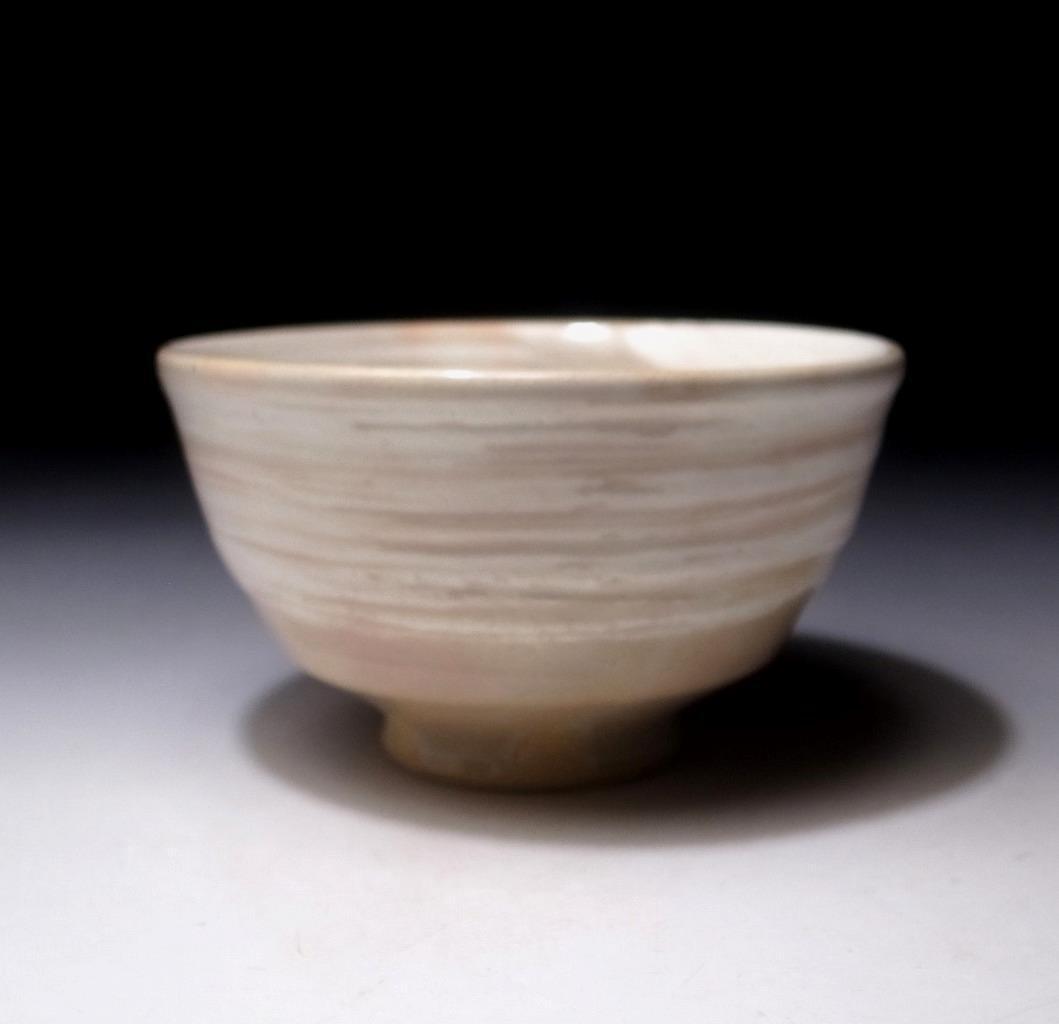
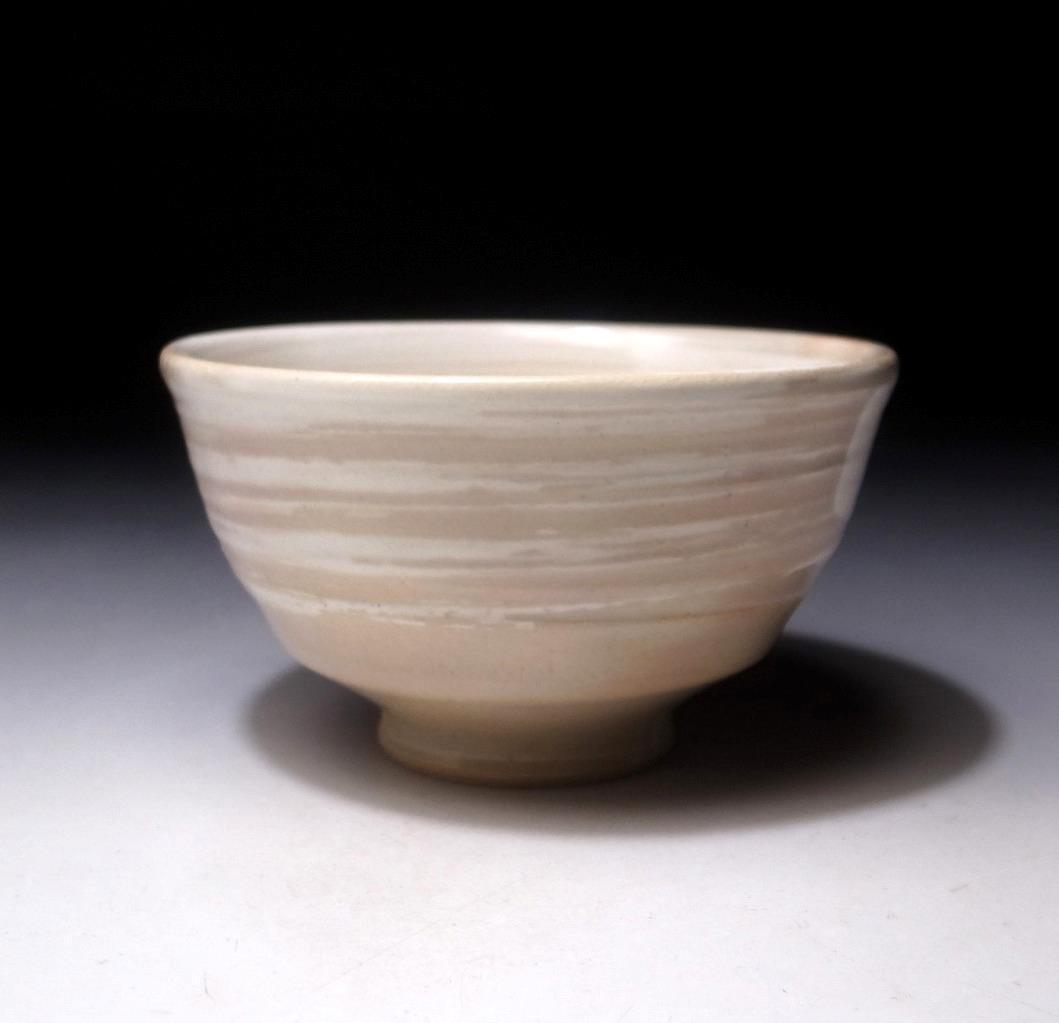
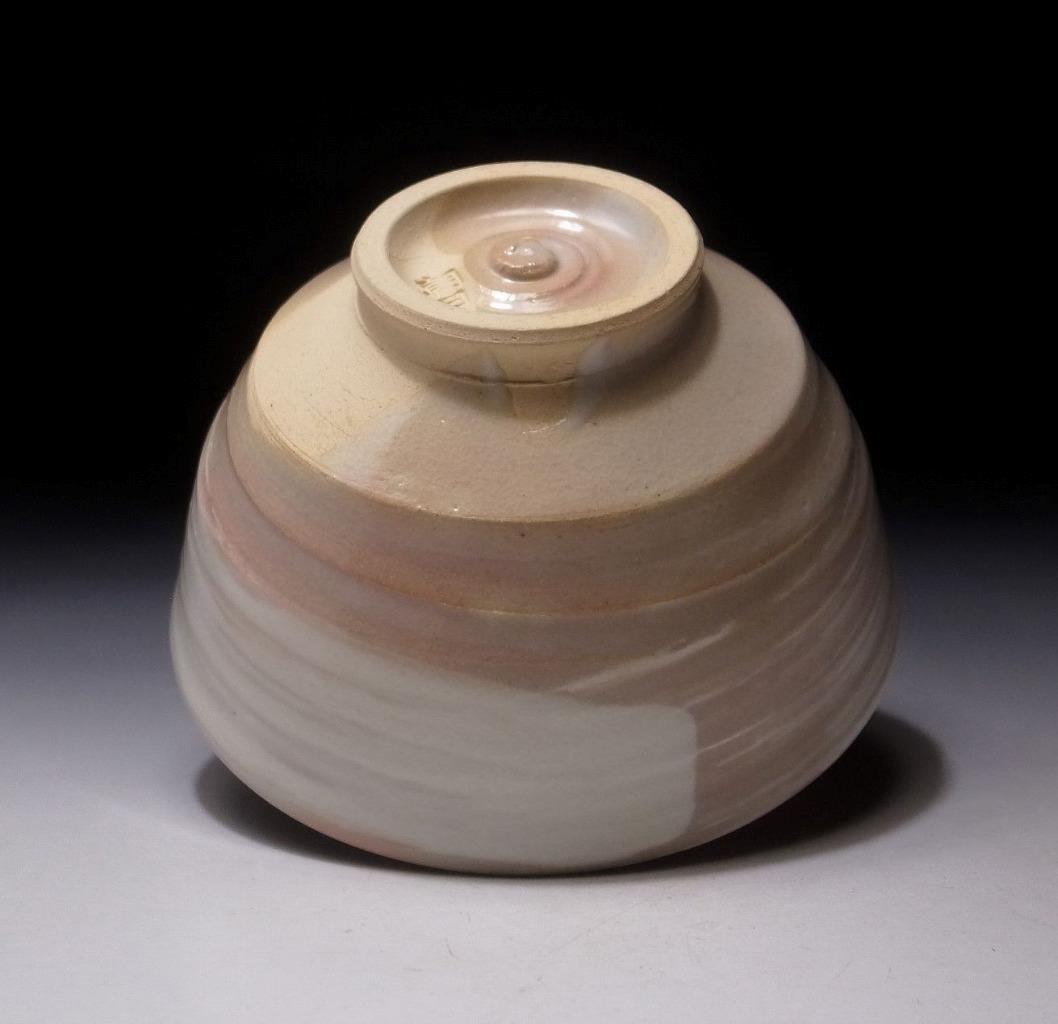
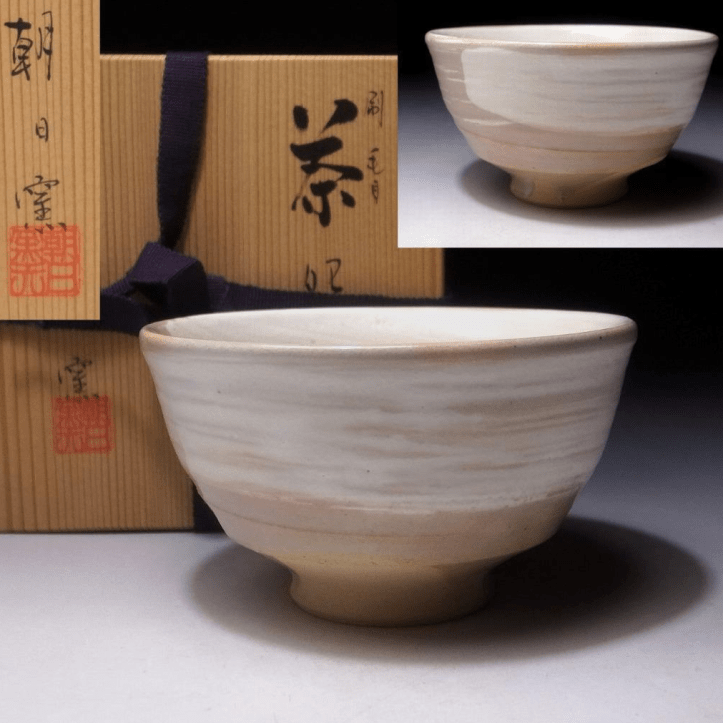
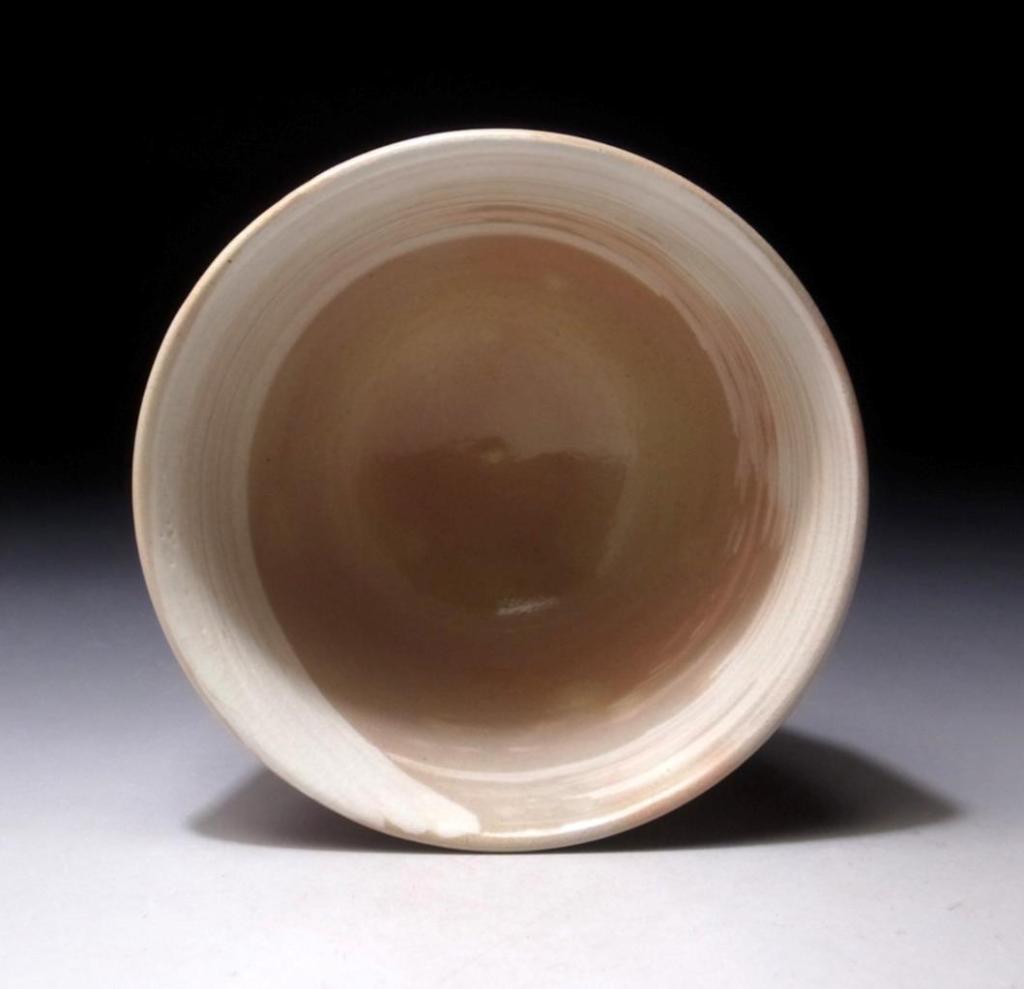
This is a simple chawan or ceremonial tea bowl of Asahi ware by the 14th generation Matsubayashi Hosai (1921-). This lineage is entirely devoted to the continuance of the traditional techniques and methods beholden to Asahi ware. The bowl features a white hakeme or brush stroke design over a base glaze of ash. Graduated from the ceramics department at Kyoto Daini High School. After high school he graduated from the Kyoto Ceramic Training Institute. Asahi ware is a type of Japanese pottery traditionally from the Uji region of Kyoto prefecture – known as the centre of tea culture. More specifically it is said to have originated across from Byodo-in Temple near Uji River, nestled at the foot of Mount Asahi.
Matsubayashi Hosai succeeded his father as the subsequent 14th generation after his father (who was the 13th generation), passed in 1947. Asahi yaki or ware bears the distinction of being one of Enshu’s seven famous kilns. Works focus on kasé and hanshi, honte, yohen effects (youhen), which are colour changes in the kiln during the firing stage using fern ash, my feeling is that this bowl is an example of fern ash glaze combinations. Best way I can describe the glaze is likening it to satin. There’s a soft, delicate quality evident in its outcome. The 14th generation Matsubayashi Hosai is known to be particularly skilled in the use of decorative patterns and textures such as amime (mesh patterning), kushime comb patterns and hakeme brush stroke decorations of which this is an example.
The pottery of Asahi has some additional interest because it is made in the center of the tea-growing district of Japan at Uji, in the province of Yamashiro in the Kyoto Ken. There in the tea-gardens, under “the hot sun of May,” crowds of women and girls, wearing kimonos and tall sun- bonnets, gather the leaves of the shrub which has been cultivated in Japan for centuries as a native plant of that country. The Japanese say native, but it was an exotic from China. The pottery has been in existence from the Shoho period (1644-1647).
Whether the name Asahi ware is derived from its colour or from the mountain to the east of Uji is a matter of opinion. The colour is said to resemble the morning light. As a matter of fact, it is a gray ware, covered with a greenish-grey glaze, belonging to the yaki class. The word yaki occurs frequently in this section. Asahi yaki, like all the other wares called yaki or yakimono, is pottery. The crackled wares are Hibi yaki; the celadon’s (whether native or Chinese), belong to the seiji class and stoneware is shaki.
Asahi was famous from the commencement for making vessels in which the ground tea was stored, but it also produced those objects which have been described as being related to the Tea ceremony. So famous were these vessels, that a noted chajin, leader of the ceremony, no less a man than Kobori Masakatsu, son of Kobori Totomi-no-Kami, the founder of one branch of these ceremonies, encouraged the potter by honouring him with a seal for marking his ware. The presentation of a seal for this purpose was a distinct recognition of merit. The tenth Zengoro received a gold seal from the Prince of Kii in 1827 and a silver seal inscribed Yeiraku.
The A B C of Japanese Art
At the present time the factory produces tea-jars, vases, etc., of every description. Close by, at Tawara is another factory which was founded around the same time. At that location their specialty was teapots. As a rule, the tea was ground and hot water poured upon it in the bowl from which it was drunk; but teapots of several forms were in use. One form had a pannier handle like a kettle, from the spout over the cover to the back, where the second form, like those we use has its handle. The third form has a hollow handle and the spout at a right angle to it towards the left. Though these are called teapots, many of them were used with small cups for sake drinking.
Matsubayashi Hosai has been selected for the Nitten Exhibition and the Japan Craft and Fine Art Exhibition. Held his very first private exhibition at the Mitsukoshi’s department store in Osaka in 1952 and three years after, his premiere exhibition at Mitsukoshi’s located in Nihombashi in 1955. Since then held over 30 private exhibitions at Takashimaya in Kyoto and other venues. He is an executive of the Kyoto Traditional Ceramic Society.
During Matsubayashi Hosai’s studies at the Kyoto Ceramic Training Institute he was specifically enticed by (or obsessed?), and involved in scientific research & analysis of the random and uncontrollable nature of yohen effects (which are colour changes that take place during and due to firing in specific ways in the kiln, also seen spelled ‘youhen’), of the traditional Gohonte ware. For this reason he pursued the minor changes in the clay and fire by building an ascending kiln in 1952, a down-draft level ground kiln and a mixed kiln with heavy oil and chopped pine wood in 1958. A shuttle LP kiln in 1965 and completed construction of an smokeless ascending kiln in 1971 and later added a smokeless cellar kiln to the ascending kiln as well, which was completed in 1975.
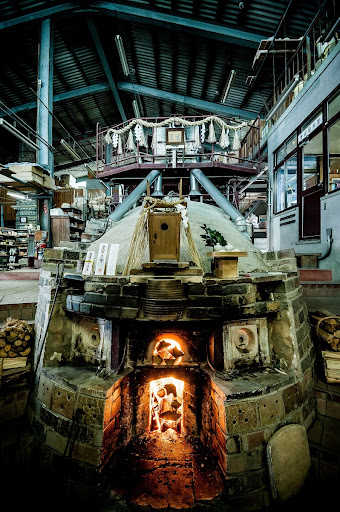
Despite the kiln being recognized as “marugi” qualified (an accreditation given by the Ministry of Commerce and Industry during WWII to people and establishments in order to preserve craft skills), for its ceramic production, operation of the kiln became extremely difficult. To overcome the harsh times, 14th generation potter Matsubayashi Hōsai built the world’s first smokeless ascending kiln in 1975. This Asahi kiln, named Gen’yō, has continued to produce ceramics into the present day.
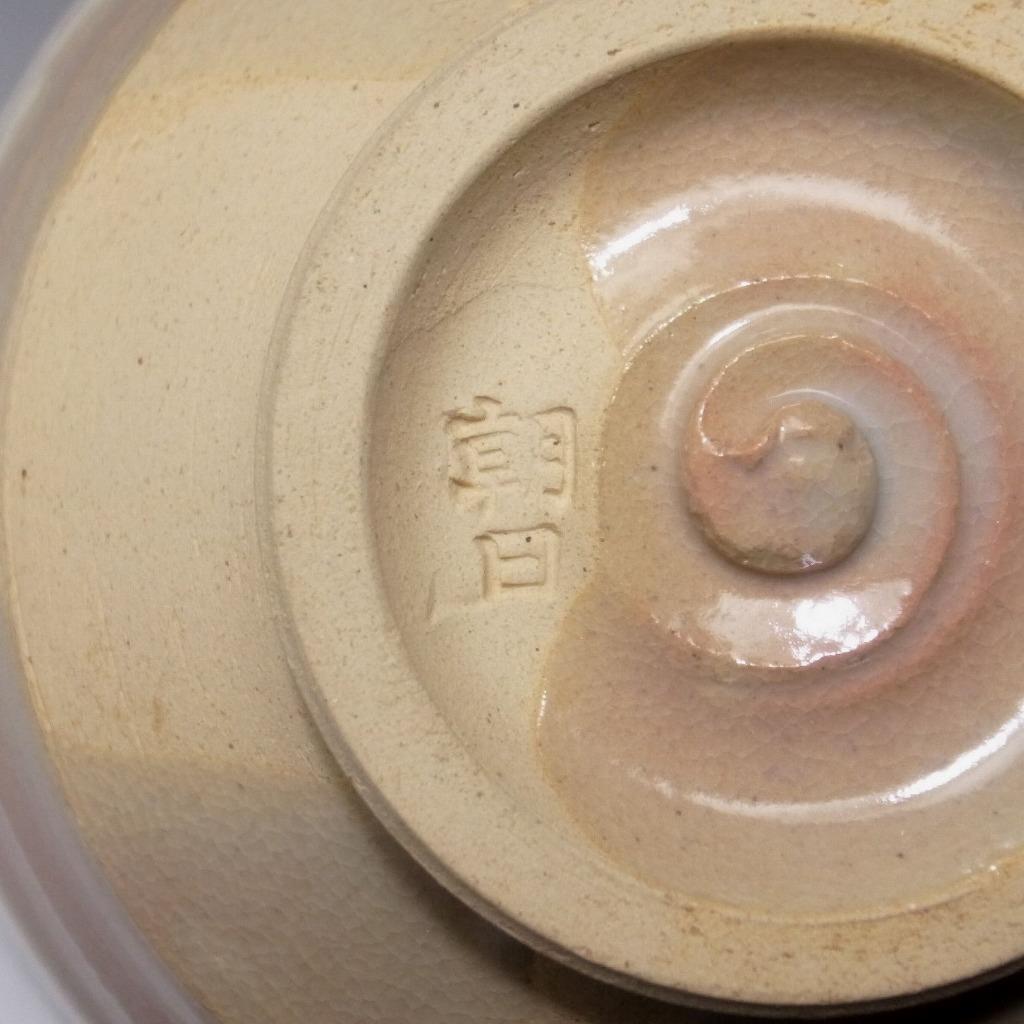
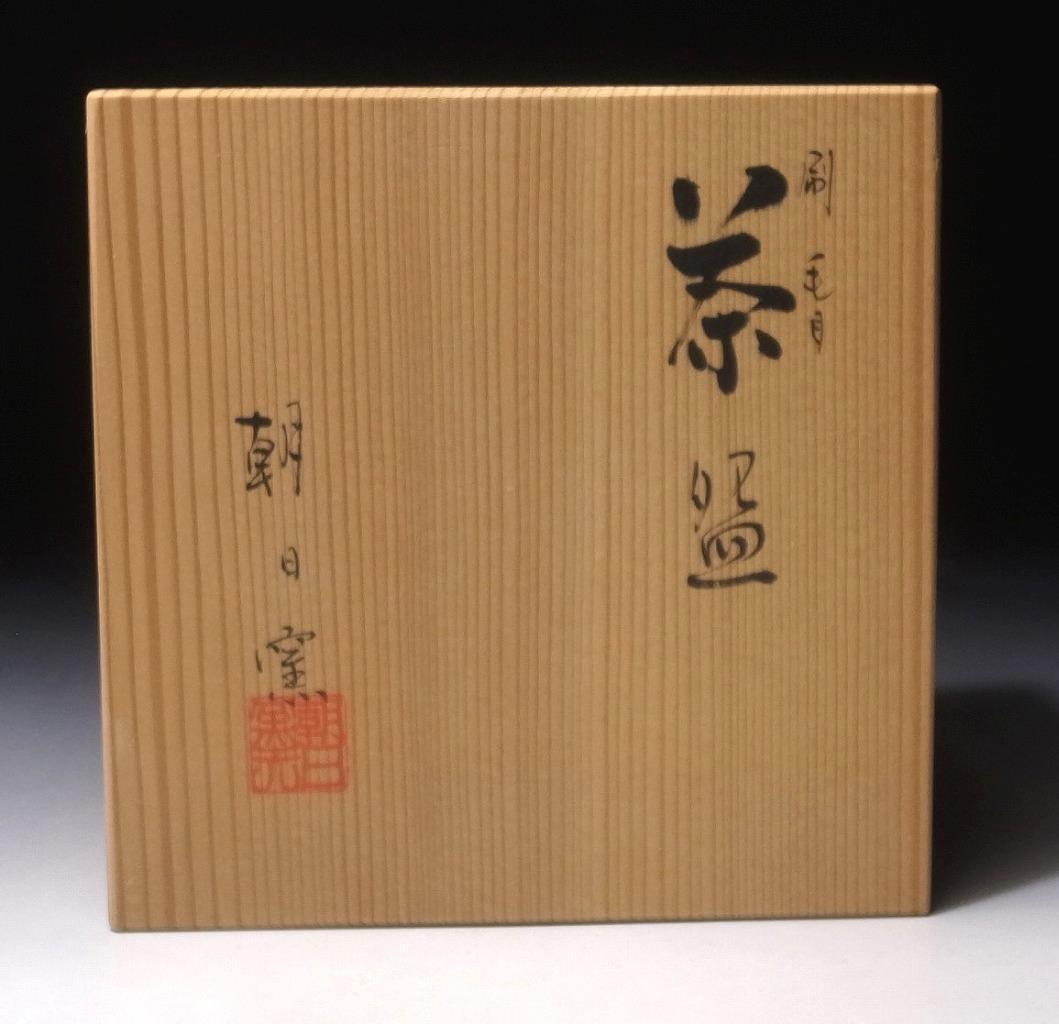
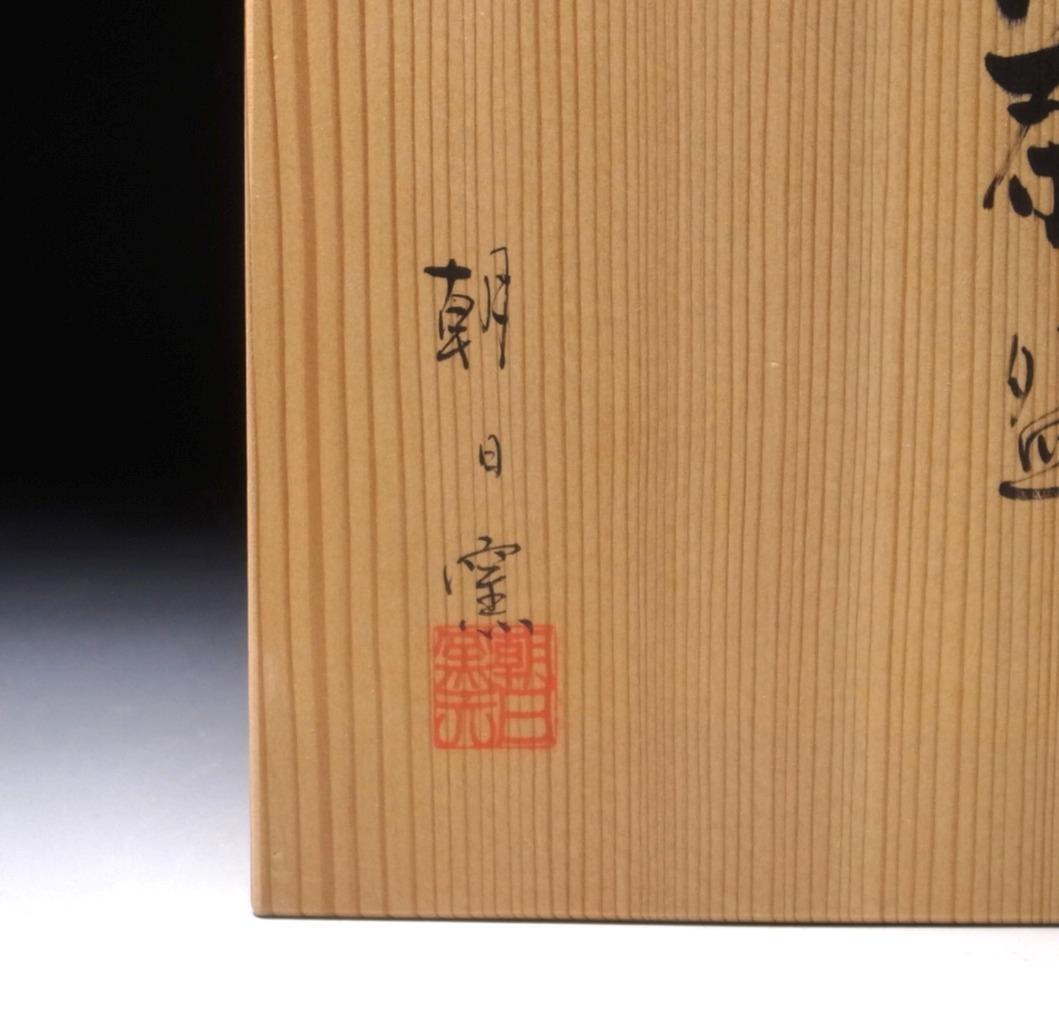
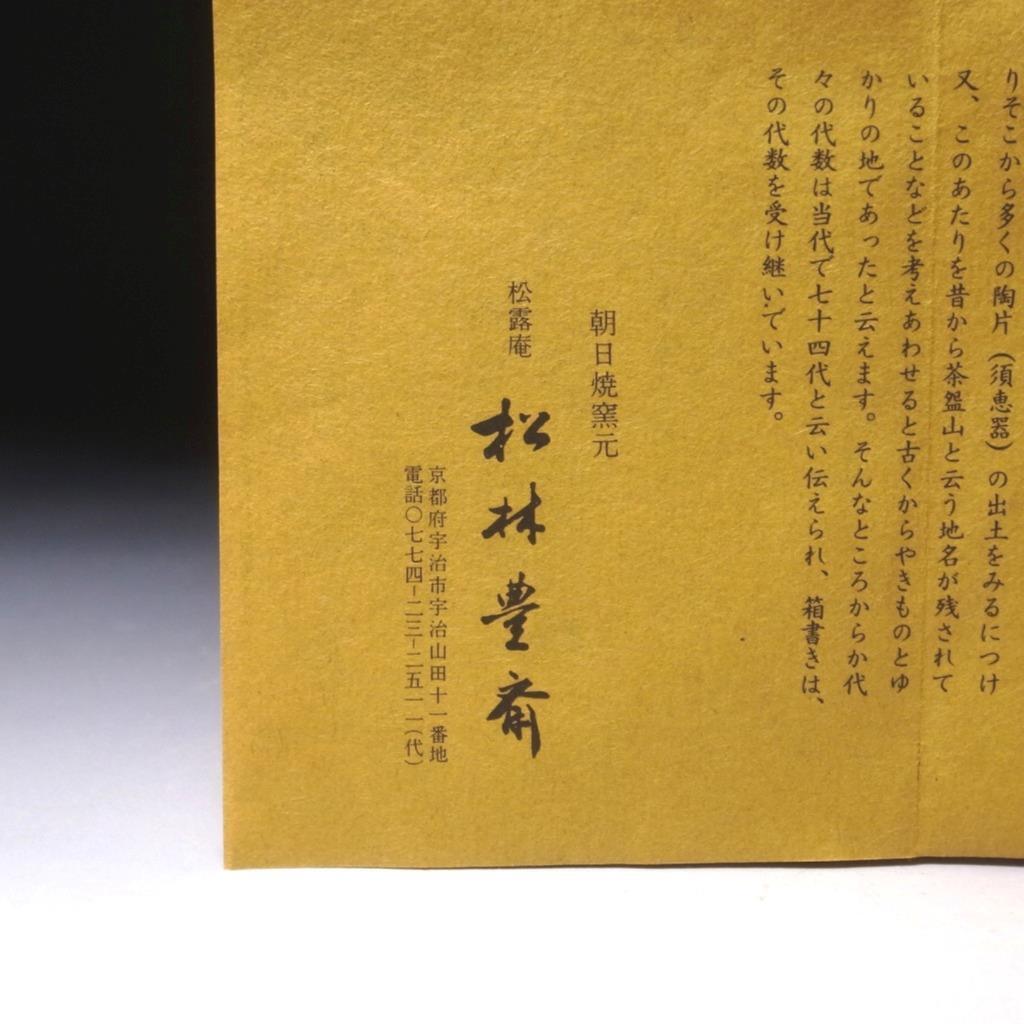
This chawan is stamped inside the koudai or foot-ring and appears to be unused and condition is mint. Comes accompanied by the original quality paulownia tomobako or wooden storage box of which the lid bears calligraphy and seals on both sides of the lid. Also includes an informational pamphlet about the potter.
€150 + shipping cost
Enshū favoured a number of Japanese tea utensils and discussed these at length with friends, connoisseurs of tea and lords of provinces which were home to the kilns. It is assumed that Enshū also had work made on commission which helped with establishing some of the newer kilns during that time. At the same time he also build long-term relationships with the older sites. A list in itself did not exist but was compiled after this death based on his correspondence and the knowledge which kilns he preferred to be a patron of. The earliest mention of his list is from a late Edo period book from 1857 called “Historical Investigation into Domestic Ceramics” (Honchō tōki kōshō).
Enshū’s Seven Kilns or Enshū chō (Enshū nana gama), is a list of Japanese pottery kilns which ware’s were considered favourites of Tea master Kobori Enshū (1579–1647).
The seven types of pottery Famous Tea Master Enshu favoured
Asahi ware from Buzen Province
Agano ware from Buzen Province
Akahada ware from Yamato Province
Kosobe ware from Settsu Province
Shitoro ware, later Tōtōmi Province
Takatori ware from Chikuzen Province
Zeze ware from Ōmi Province
