

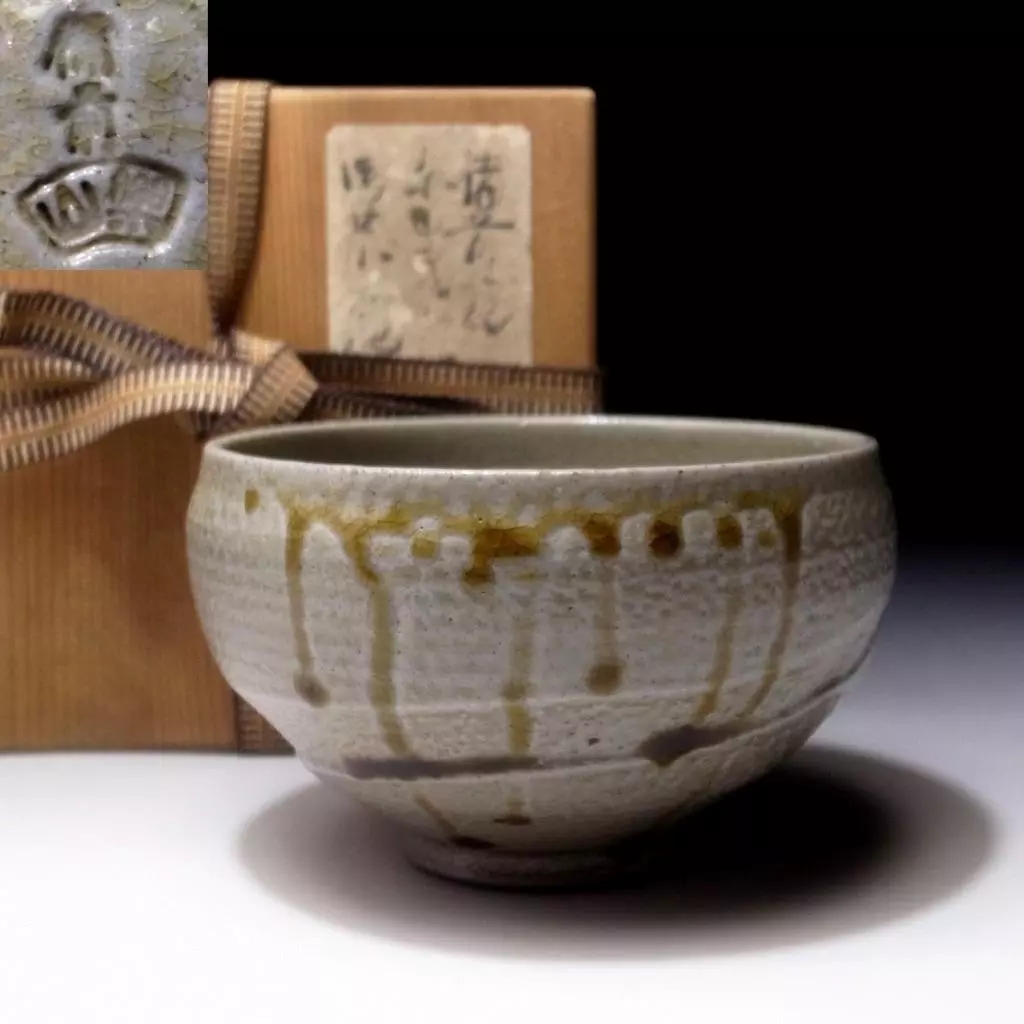
Potter: Nidai Rakuzan Fujiwara, 2nd generation
Approximate size: W4.8″ by H3.0″ or 12.3 by 7.7 cm
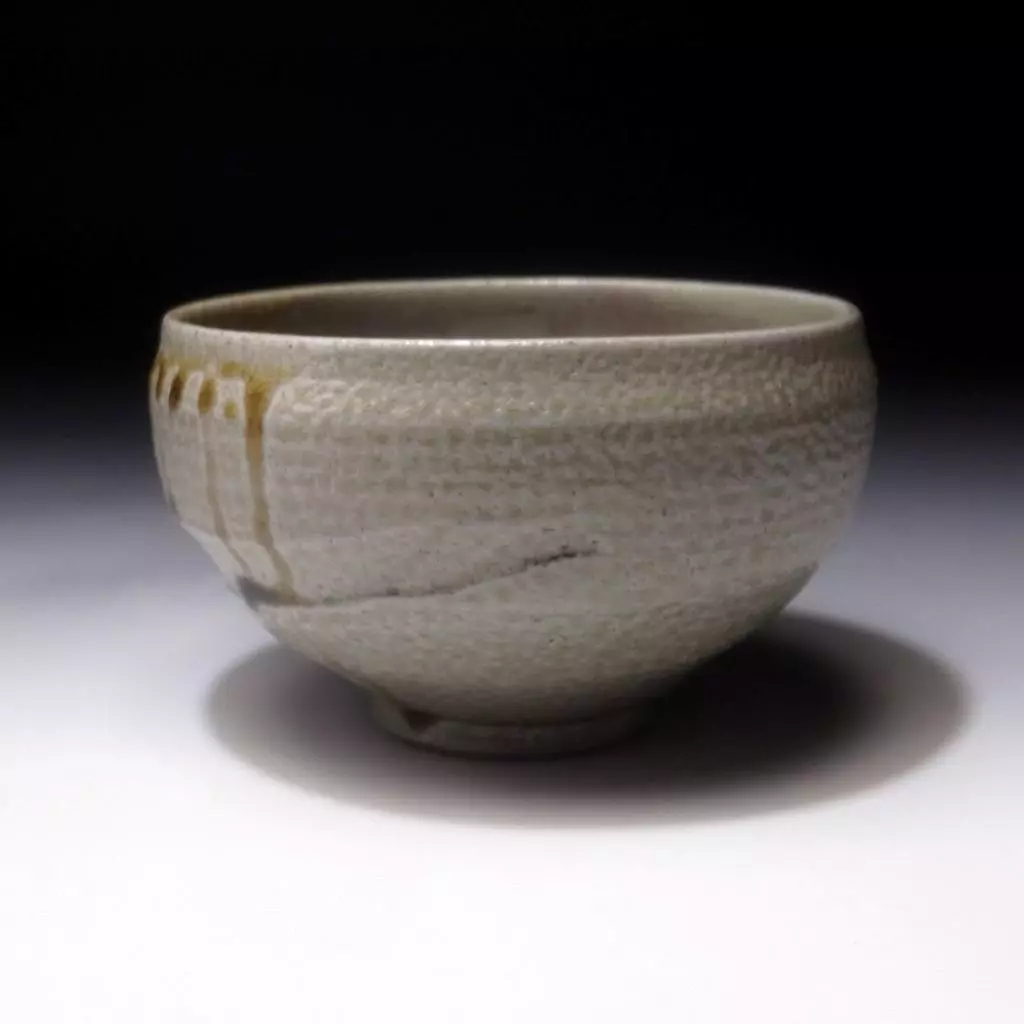
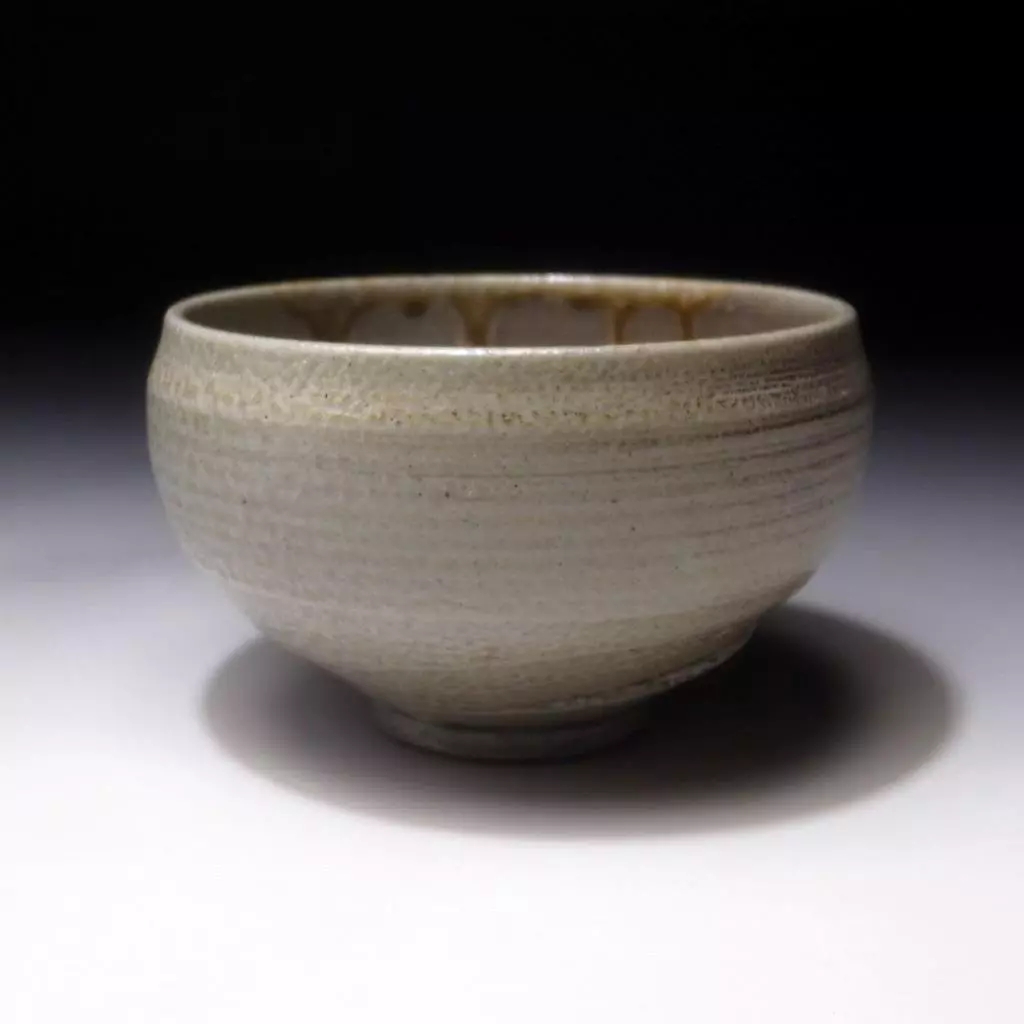
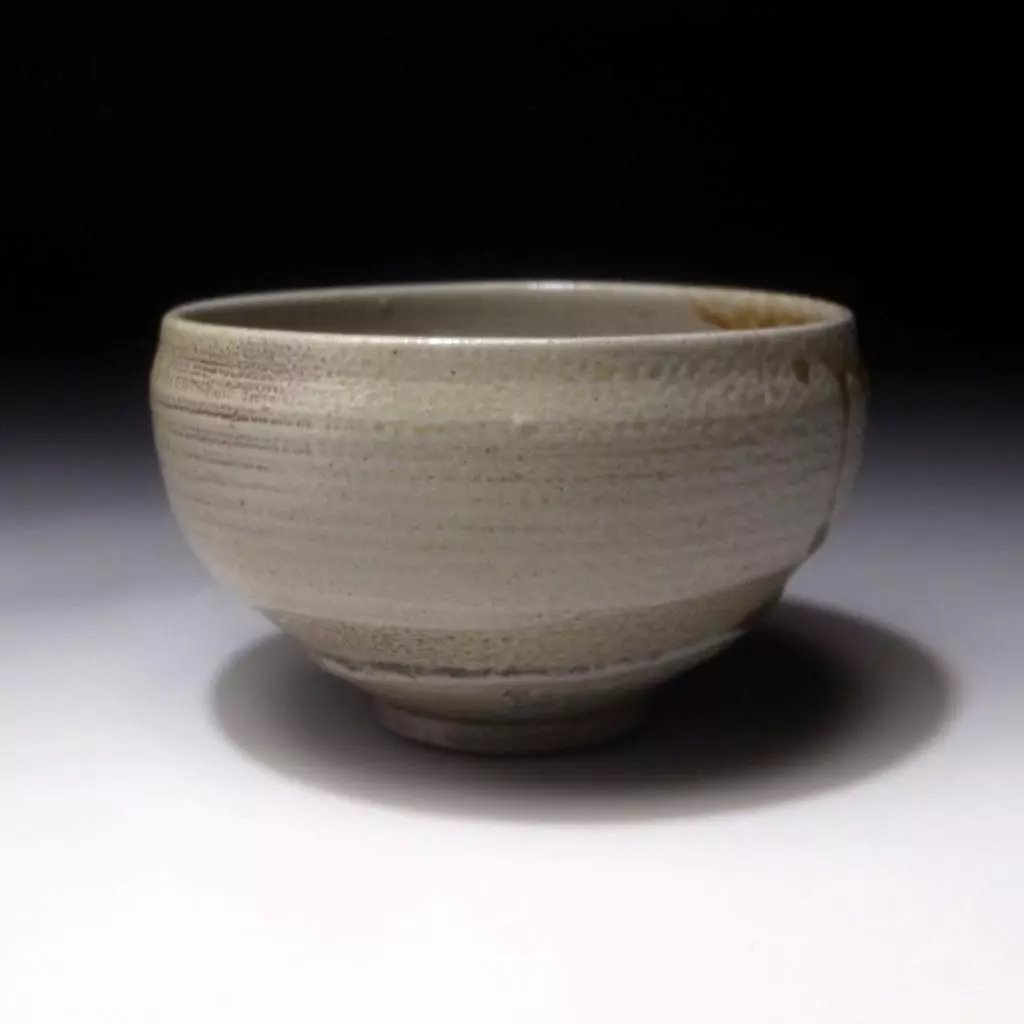
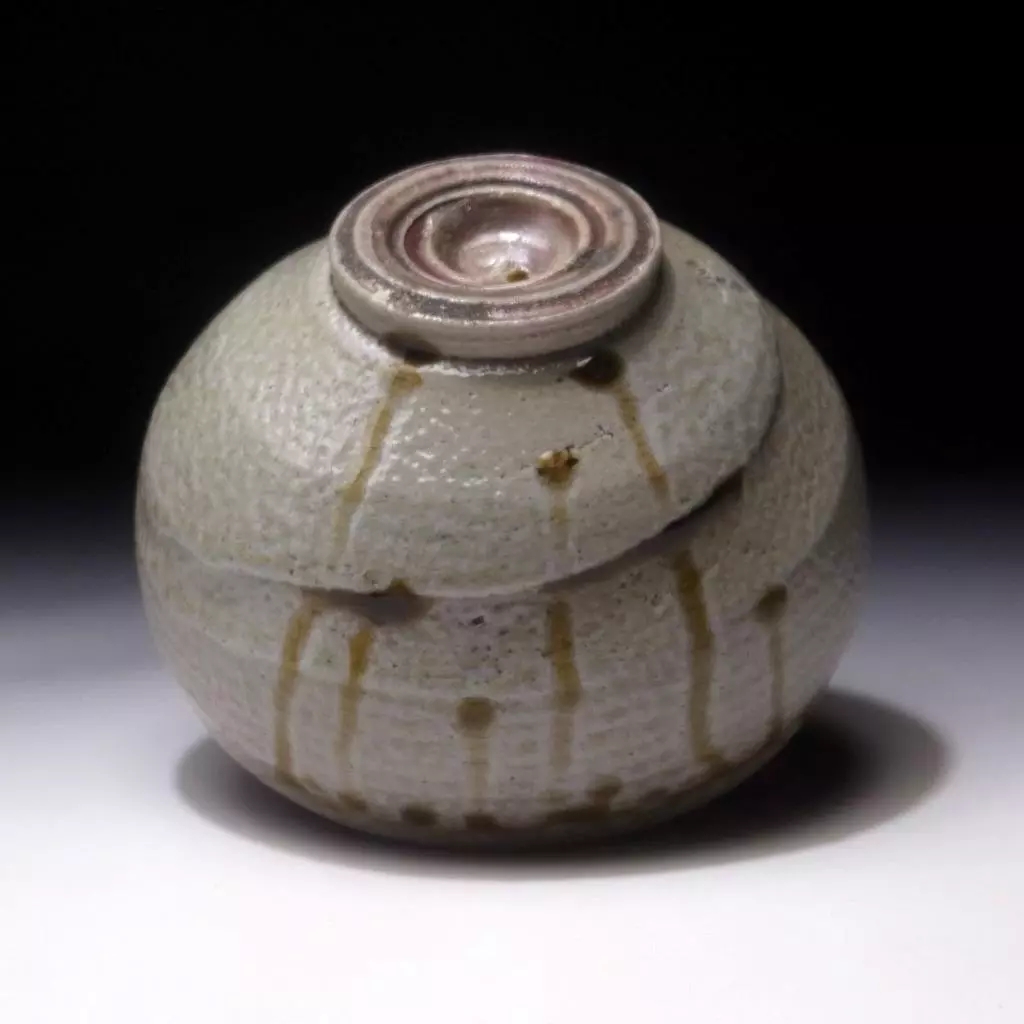
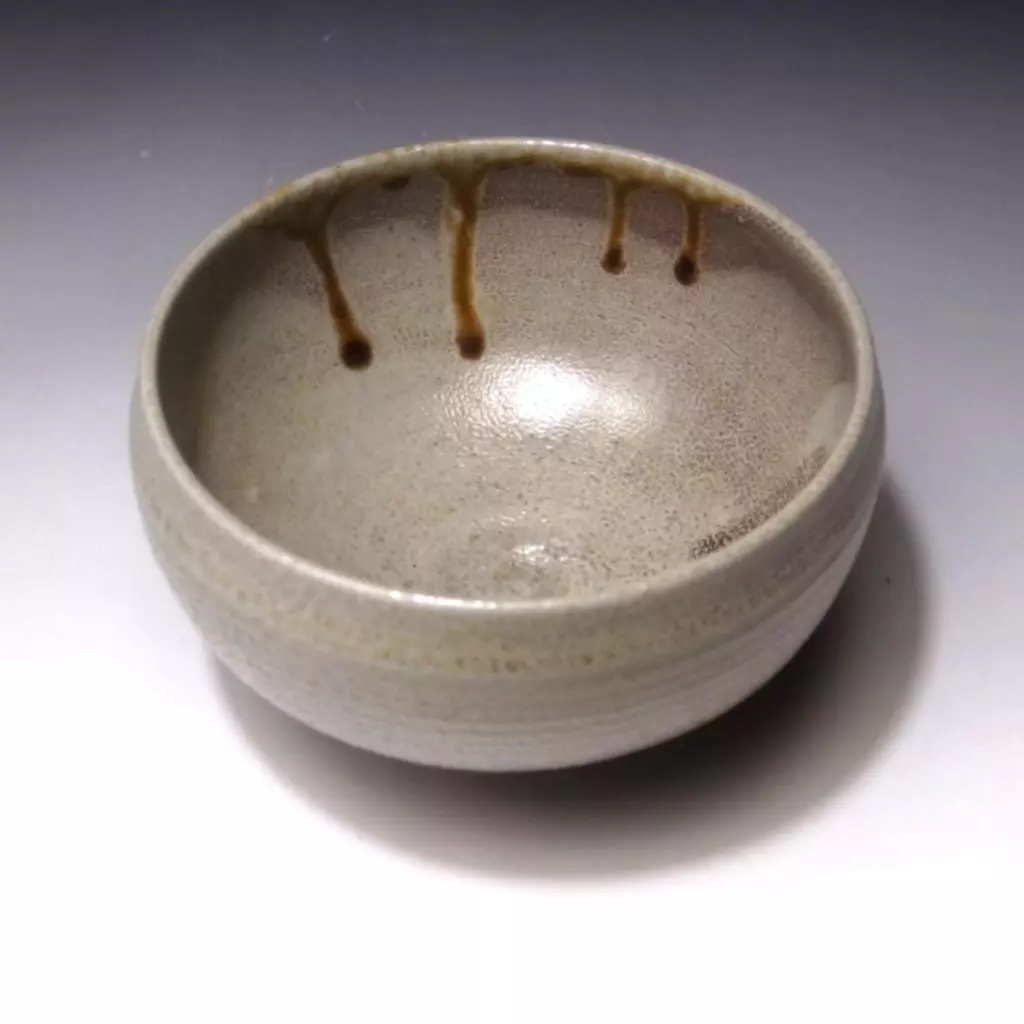
This is an exemplary ao Bizen chawan or ceremonial blue Bizen tea bowl by the second generation Fujiwara. Wheel-thrown and showing a single, strong carving spiralling from the foot towards the rim. The glaze it got through wood-firing is stunning with the entire bowl being covered by the blue gray glaze called ao-Bizen. On top of blue glaze are many pools of ashes that turned to glass going from the rim towards the koudai (foot-ring), and here the carving that spirals around the bowl plays a part as some of the ashes got caught by the ridges. An absolutely stunning and one of a kind work. Fujiwara Rakuzan II stands as one of the most distinguished masters of Bizen ware in the twentieth century. Born Rokuji Fujiwara, he was designated as a Holder of an Important Intangible Cultural Property of Okayama Prefecture in 1953, a recognition that affirms his exceptional contribution to Japanese ceramic art and the preservation of traditional craftsmanship.
As the third son of Fujiwara Rakuzan I, he faithfully continued the family lineage in Inbe, Bizen City, refining inherited techniques while elevating them through his own artistic vision. In 1930 he succeeded the first generation by taking up the name after his father’s passing. Widely praised as “Rakuzan of tea bowls and incense burners” (Chawan to kōro no Rakuzan), his work is marked by both technical mastery and refined aesthetic sensibility. He was especially celebrated for his command of Ao-Bizen, a rare and highly prized blue-gray expression of Bizen ware, achieved through a closely guarded family technique involving a uniquely constructed kiln and the use of salt water during firing. He received the Okayama Nichinichi Shimbun Arts & Culture Achievement Award in 1988 (an award that is given in recognition of significant contributions to arts and culture), before passing in 1996.
Main styles of Bizen pottery
Botamochi 牡丹餅 (rice ball)
round, often red spots created through surface masking, kiln placement and wood firing
Goma 胡麻 (sesame seed)
glaze produced by kiln placement and ashes melting in the heat of the kiln
Hidasuki 緋襷
a rice straw wrapping, containing salt, typically producing bands of red colour
Ao Bizen 青備前
acquires various blue hues due to wrapping with rice straw, kiln placement and reduction during wood firing
Sangiri 桟切り
shiny metallic blue sheen acquired, often randomly through reduction during wood firing
Kuro Bizen 黒備前 (black Bizen)
black colours achieved through use of clay and kiln placement, typically associated with ancient Bizen ware made in Imbe village during the 12th century
Ao-Bizen can be translated as “blue Bizen”. The ware acquires various blue hues according to the amount of reduction, from light blue (heavy reduction), to brownish (lighter reduction). The method is almost the same as that of “hidasuki”. But at the end of the firing, charcoal is placed on top of the saggars, completely covering them. The burning charcoal consumes the oxygen in the kiln creating a strong local reduction atmosphere. So the only difference between red (hidasuki), and blue is the oxygen concentration during the firing. It is very difficult to control all of the elements needed to create “blue Bizen” so this colour is very rare and prized by connoisseurs.
Bizen is characterised by significant hardness due to high temperature firing, its earthen-like, reddish-brown colour, absence of glaze, although it may contain traces of molten ash resembling glaze and markings resulting from wood-burning kiln firing. The clay found in Inbe is sticky and fine, with a high iron content and, traditionally, much organic matter that is not that receptive to glazing. For some potters this is an inadequate material, since it has weak characteristics such as high shrinkage and relatively low fire resistance. Most Bizen ware is not coated with a glaze because of this shrinkage since any applied glaze would peel off during the firing process. Due to its low fire resistance it cannot withstand rapid high-temperature changes, so the firing has to be done gradually. However, the soil also has beneficial properties such as a high degree of plasticity. The high strength of Inbe clay causes it to retain its form, making it tough even without glaze.
Fujiwara Rakuzan II’s oeuvre includes exemplary tea bowls, incense burners, sake flasks (tokkuri), sake cups or guinomi and flower vases, each distinguished by subtle natural ash glazes and harmonious blends of vermilion and blue-gray tones. These works reveal a profound understanding of clay, fire and chance, embodying the quiet strength and depth that define true Bizen aesthetics. Fujiwara Rakuzan II’s legacy endures through his son, Fujiwara Rakuzan III, and through works that continue to be revered for their dignity, balance, and timeless beauty.
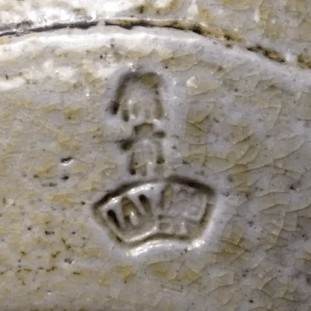
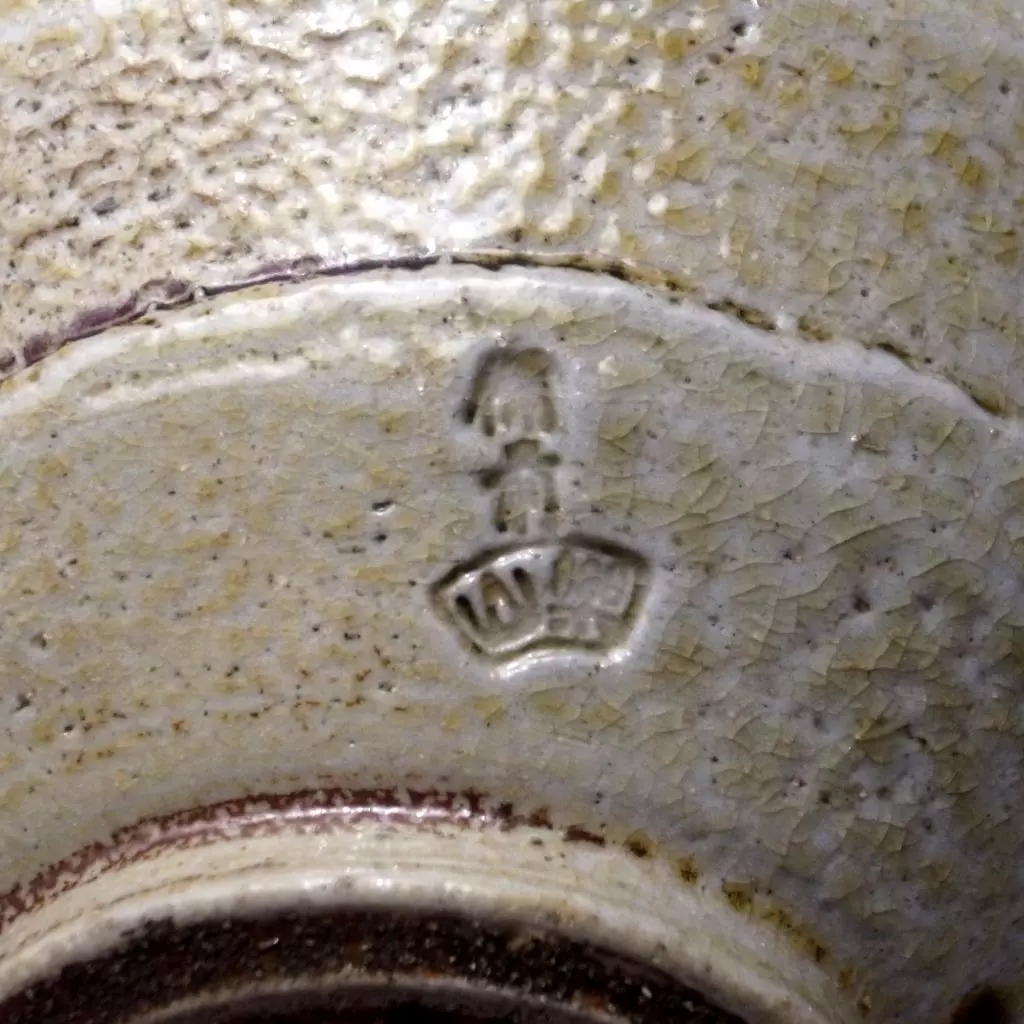
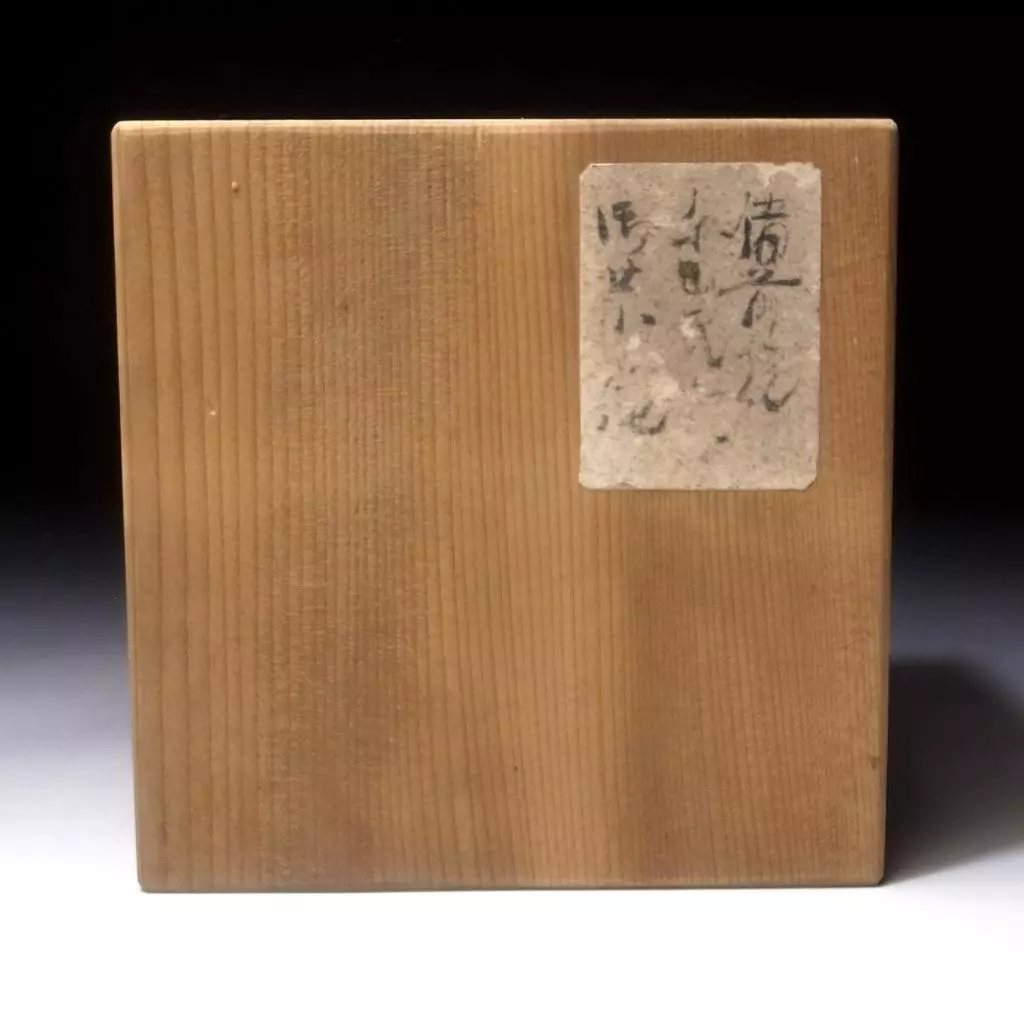
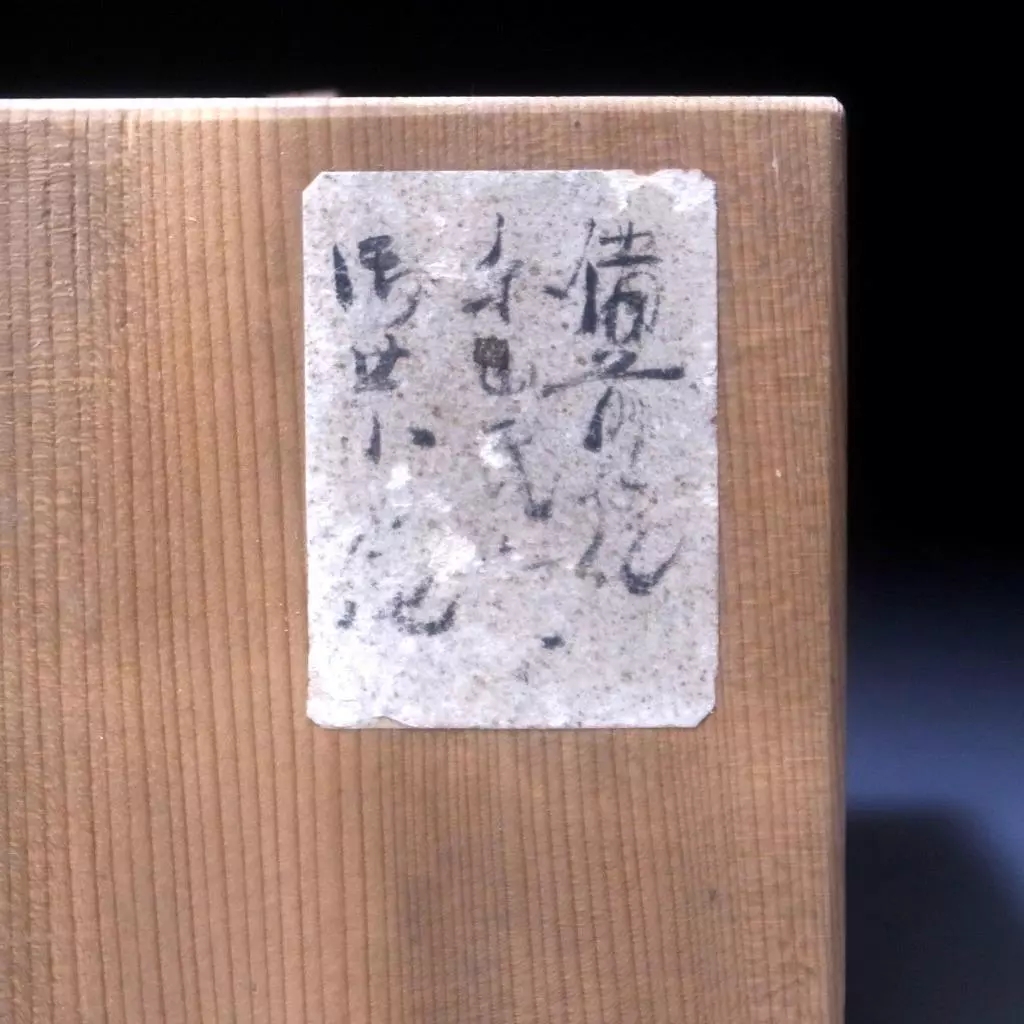
This tea bowl bears the 2nd Rakuzan Fujiwara’s stamp next to the koudai or foot-ring. There are no chips or cracks and condition is excellent. Comes in a high quality, old shiho-san paulownia tomobako or storage box.
€525 + shipping cost