


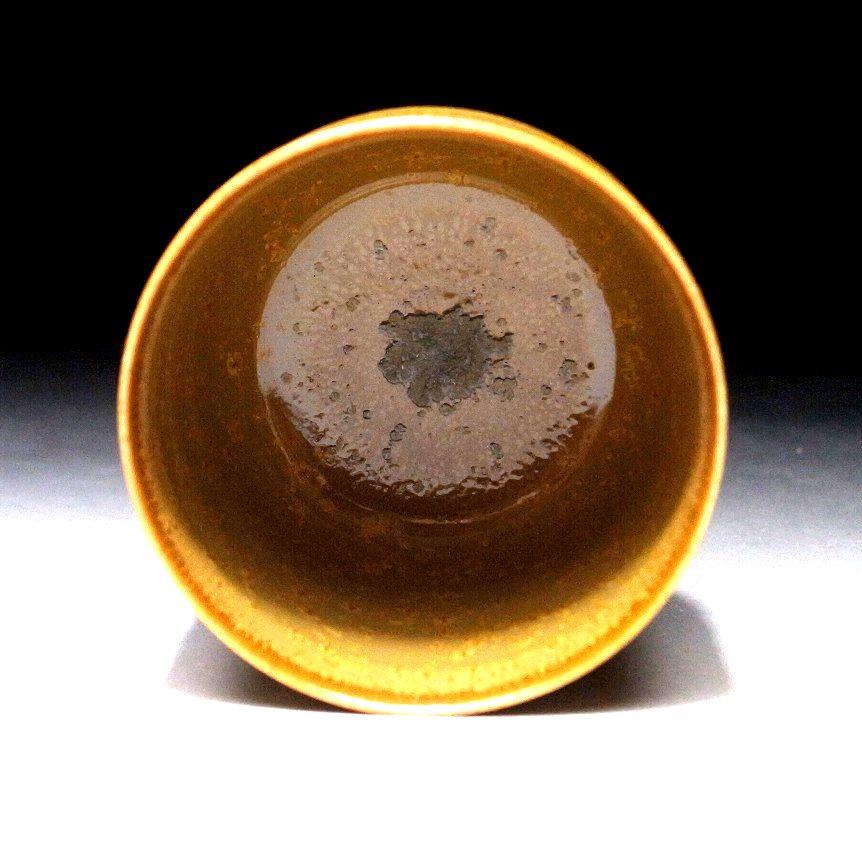


Potter: Masahiro Kisada
Approximate size: W2.4″ by H2.2″ or 6.0 by 5.6cm
This is a guinomi or sake cup by Masahiro Kisada (19436), who is a potter from Kyoto and a specialist of the shinsha glaze. This guinomi has a crystallised tenmoku glaze which is quite unique. Masahiro Kisada was recognised by the government as a Traditional Craftsman.
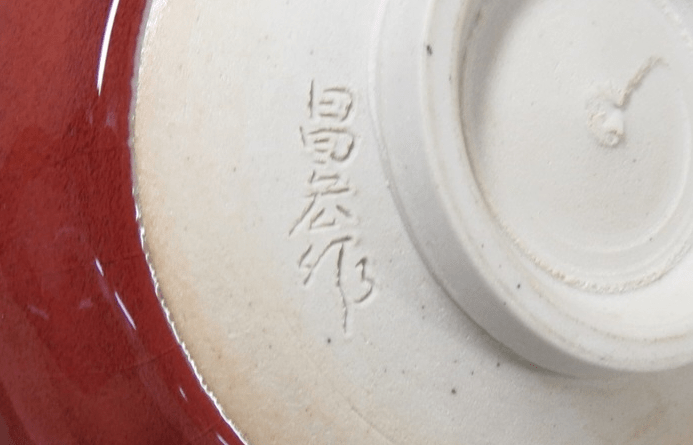
Formed by wheel throwing, from white porcelain, the body shows a unique colour glaze. The koudai or foot is signed with Masahiro’s scratch signature, which is nearly identical and guaranteed to come from the same hand as the Shinsa glazed chawan listed earlier.
Masahiro Kisada (1936-), studied under Miyashita Zenju before going solo. He was selected for the Japan Fine Arts Exhibition, Japan New Craft Art Exhibition, Modern Craft Art Exhibition, Modern Craft Art Kansai Exhibition, Kyoto Craft Art Exhibition, Kyoten Exhibition and other exhibitions. and won awards. He is also a long-time member of the Japan New Craft Art Kinki Association and Kyoto Prefecture’s Arts & Crafts Association. Works focus on Shinsha-yu glaze and colour changes in the kiln.

Kyo yaki or Kyo ware refers to a style of ceramics that spread from the Higashiyama area in Kyoto during the early Edo period of the Tokugawa rule (henceforth this family line continually ruled Japan for more than 250 years). It was around this time that the art of Chanoyu or the Tea ceremony became popular and widespread in Japan. By contrast, the pottery produced along Gojo-zaka, a street leading to Kiyomizu Temple, was called Kiyomizu yaki. Nowadays all pottery produced in Kyoto is commonly referred to as Kyo or Kiyomizu ware.
This guinomi has no chips or cracks and is in excellent condition and comes with the original quality paulownia tomobako, storage box of which the lid is signed and stamped.
SOLD
Thank you very much!

“Tenmoku (天目, also spelled “temmoku” and “temoku”), is a type of Japanese pottery and porcelain that originates in imitating Chinese stoneware Jian ware (建盏), of the southern Song dynasty (1127–1279), original examples of which are also called tenmoku in Japan”.
Even after the move from the Shoin Karamono style of tea ceremony to the Wabicha Soan style, there was still a place for Tenmoku tea bowls, alongside other East Asian and native Japanese works.
