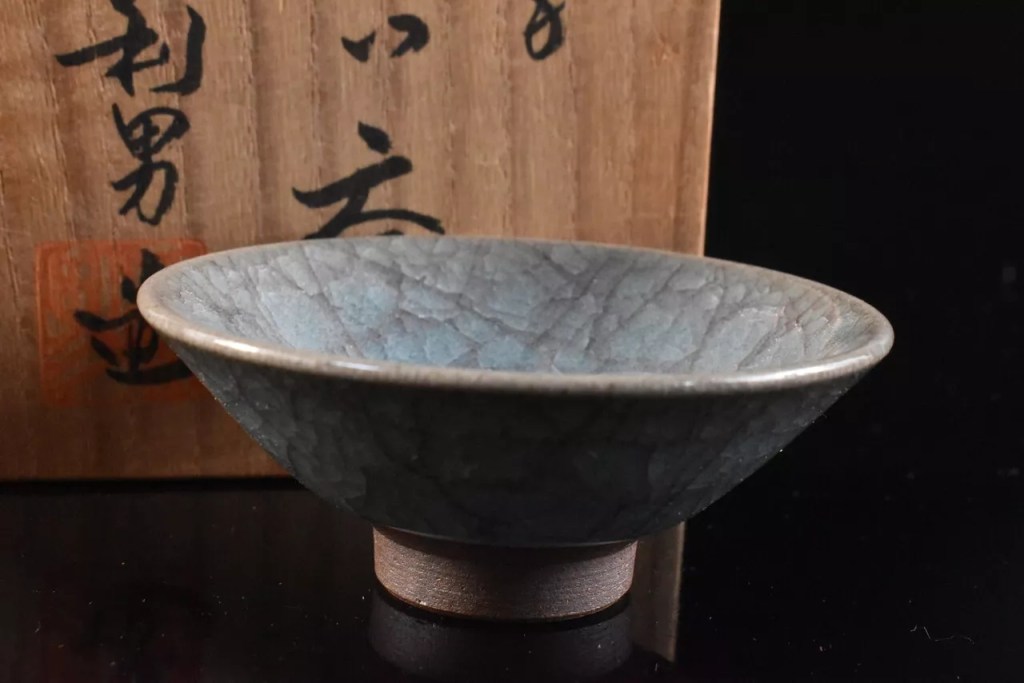
Potter: Toshio Furukawa
Approximate size: W3.3″ by H1.2″ or 8.5 by 3.0 cm
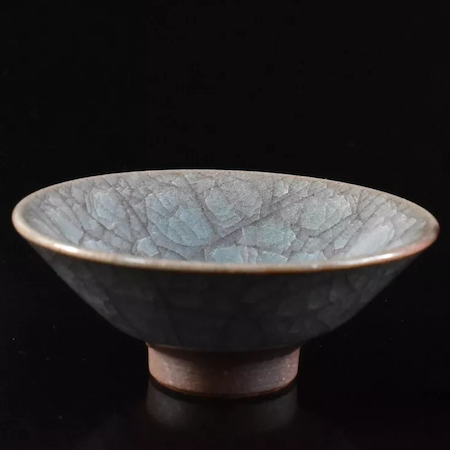
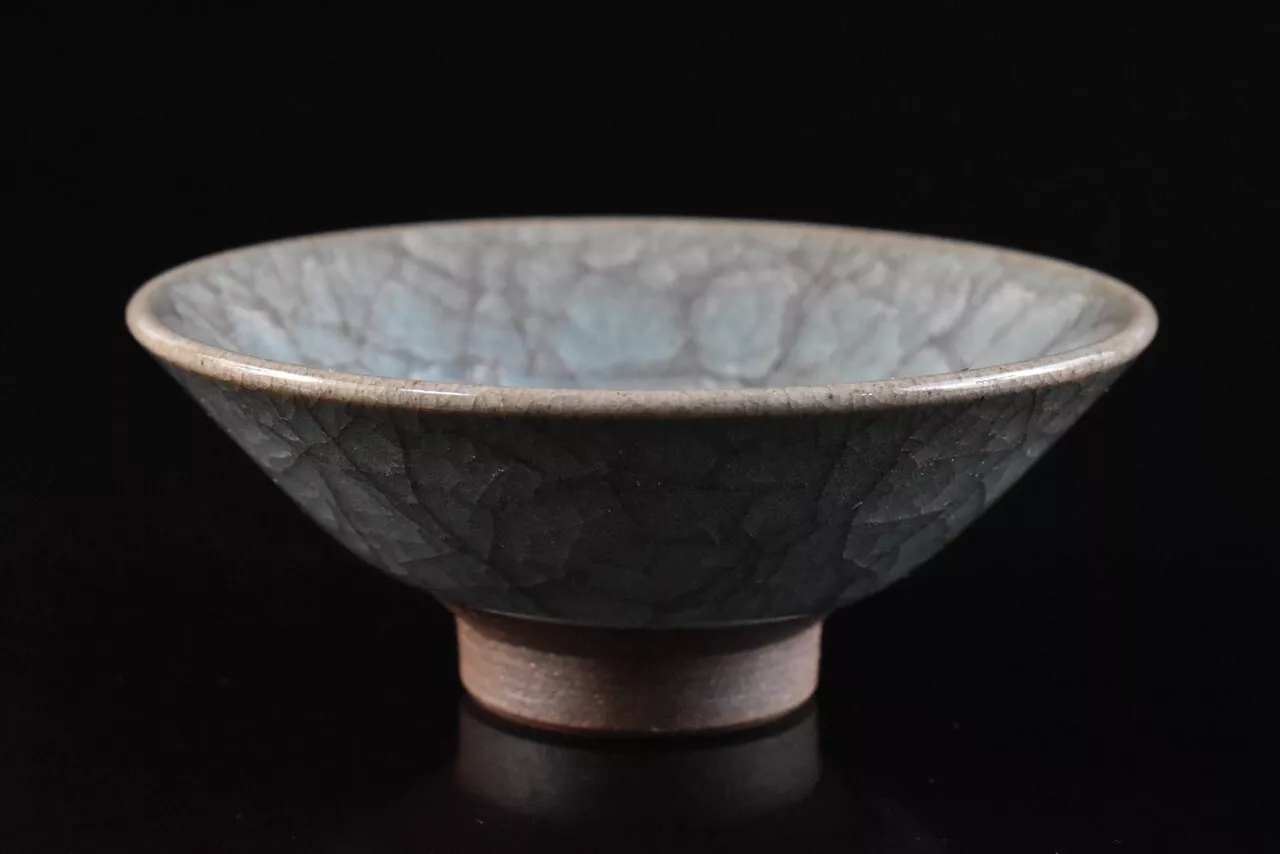
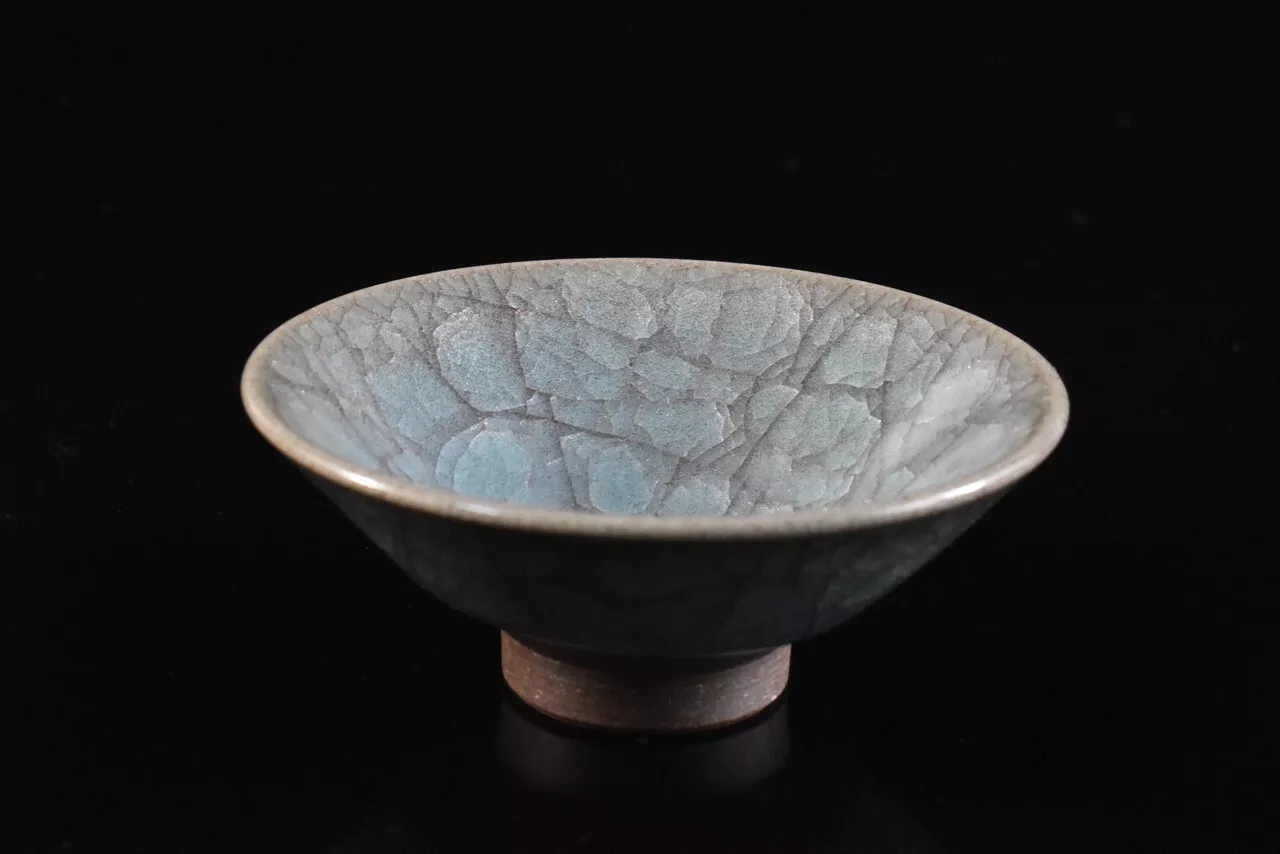
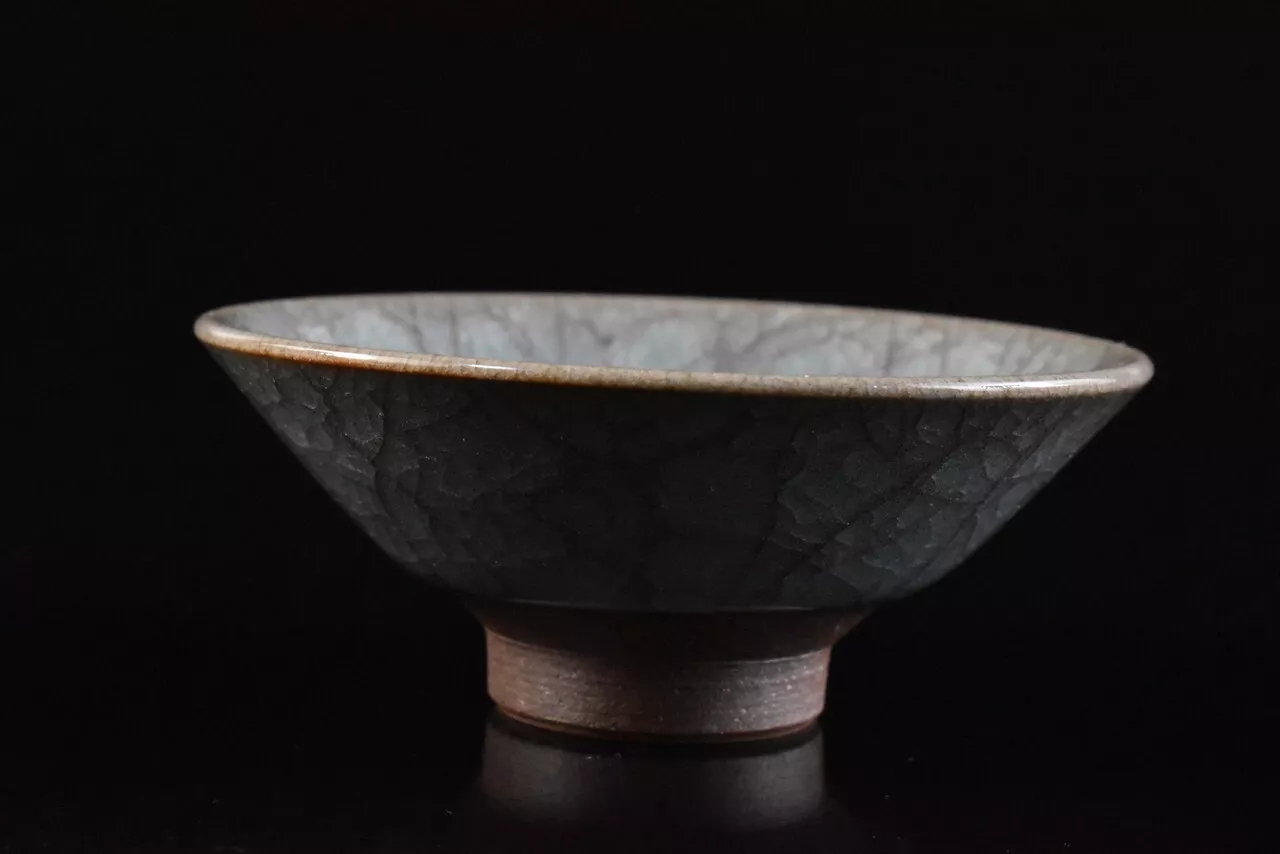
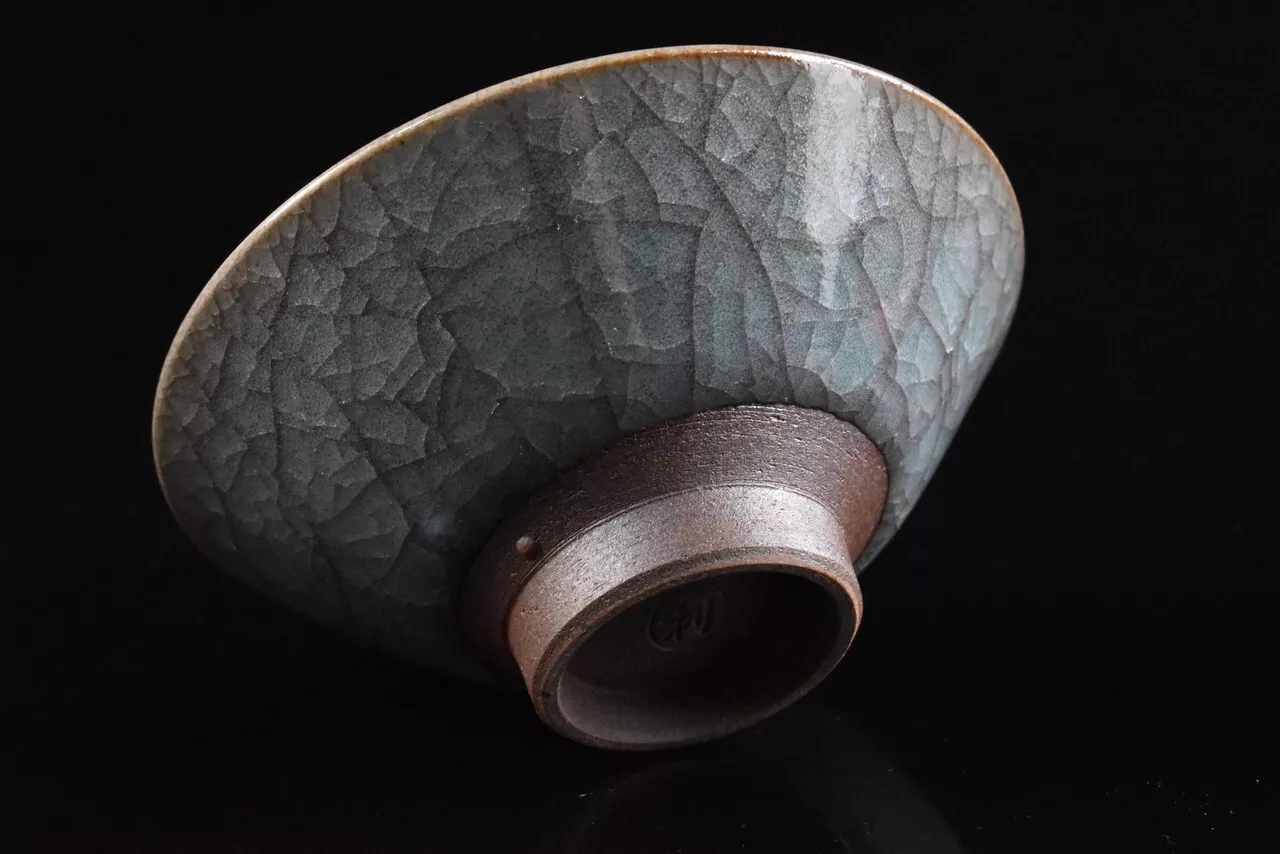
This exquisite seiji celadon or ice-crackle celadon guinomi or saké cup was made by the famous potter Toshio Furukawa (1949-). Born in Kyoto and known for his celadon works. Graduated the Craft Design department of the Osaka University of the Arts. After that completed the Kyoto prefectural training school and Industrial Research Institute. He went independent in 1975. He has spent decades perfecting his celadon glazes, specifically this difficult to achieve ‘ice-crack’ glaze. Modelled after ancient Song dynasty Chinese celadon pieces. This cup is wheel thrown and shows the classic conical tenmoku shape and glaze. A stunning crazed snowflake celadon. Unlike other crazed celadon glazes which only have one layer of cracks, snowflake celadon requires an especially thick application which allows the cracks to form layers, resulting in this striking effect.
Seiji or celadon is a glaze that usually turns to a jade green colour. The firing of the iron in the glaze produces its beautiful colour, which is brought out by reduction firings in a kiln at temperatures exceeding 1200°C. The origin of celadon stoneware lies in China where during the Tang Dynasty (±618 till ±907), production started and found a willing and wealthy client base amongst the elite and intellectuals. A little later during the Sung Dynasty (±960 till ±1279), the supply lines for the resources used in celadon wares became stable which caused export of celadon ceramics all through out eastern Asia and eventually to Japan around the 11th century.
Adding to its popularity was a widely believed superstition suggesting that a celadon dish would break or change colour if poisoned food were put into it.
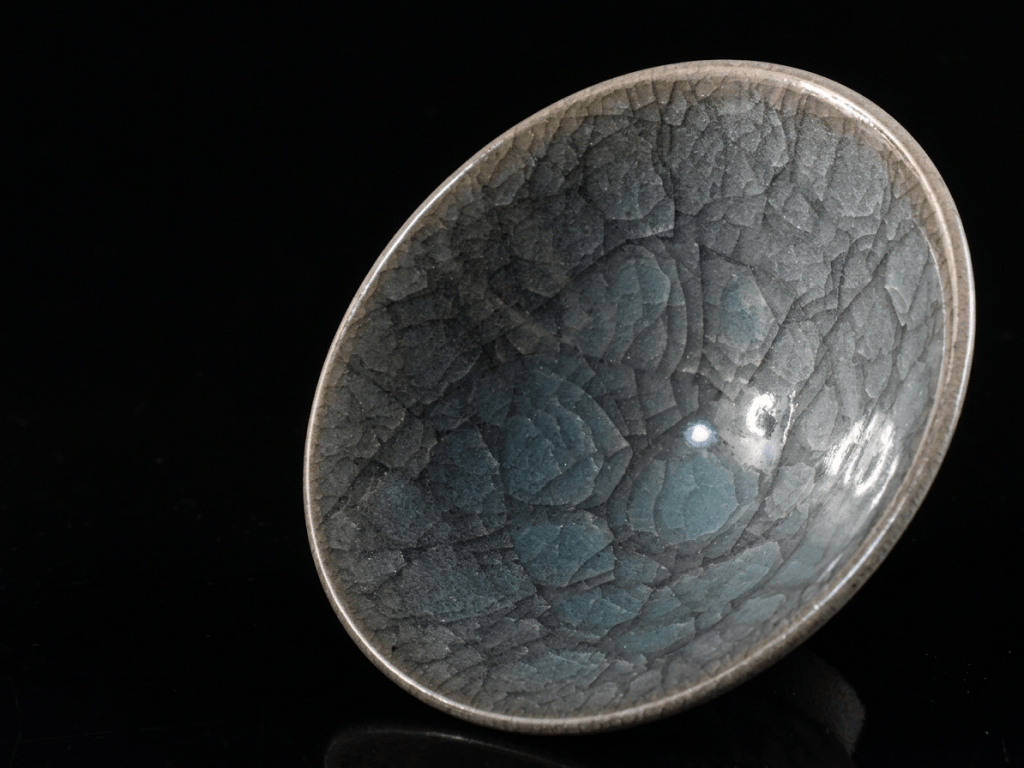
When viewing celadon pottery it is key to look at the area’s where the glaze runs thinnest as this is where you will see the most defects. Due to the difficulties of celadon production it has since its earliest appearance been a highly valued type of ceramic. The ware was immensely popular because of its beauty; the Chinese also valued it because it resembled jade. Its popularity stems not only from its striking visual beauty and translucent colouration but also from the Chinese reverence for its likeness to jade (a stone that embodies purity and moral integrity within their cultural context). This dual recognition of aesthetic and cultural significance has solidified the lasting legacy of celadon pottery throughout history.
Toshio Furukawa showcased his work at the prestigious Kyoten Exhibition, the Japan Traditional Art Crafts Association, the Kinki Branch Exhibition and Japan’s Traditional Art Crafts Exhibition. He also held successful solo exhibitions at renowned venues including Kanazawa Daiwa, Shinjuku Odakyu, Shingifu, Osaka Mitsukoshi, Nagoya Meitetsu, Ikebukuro, Otsu, Funabashi, Utsunomiya Seibu amongst others. His mastery lies in working with celadon porcelain, working in styles like beishokuji, yuurikin and ginsai, each medium allowing him to explore various textures and colours, ultimately leading to creations that not only capture the eye but also evoke emotion and appreciation for the art of pottery. Art enthusiasts and collectors admire the fine details and exquisite techniques he employs.
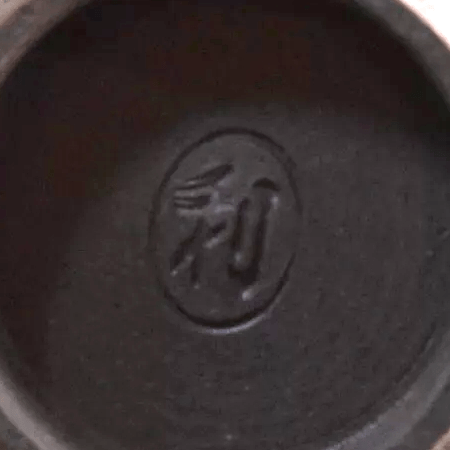
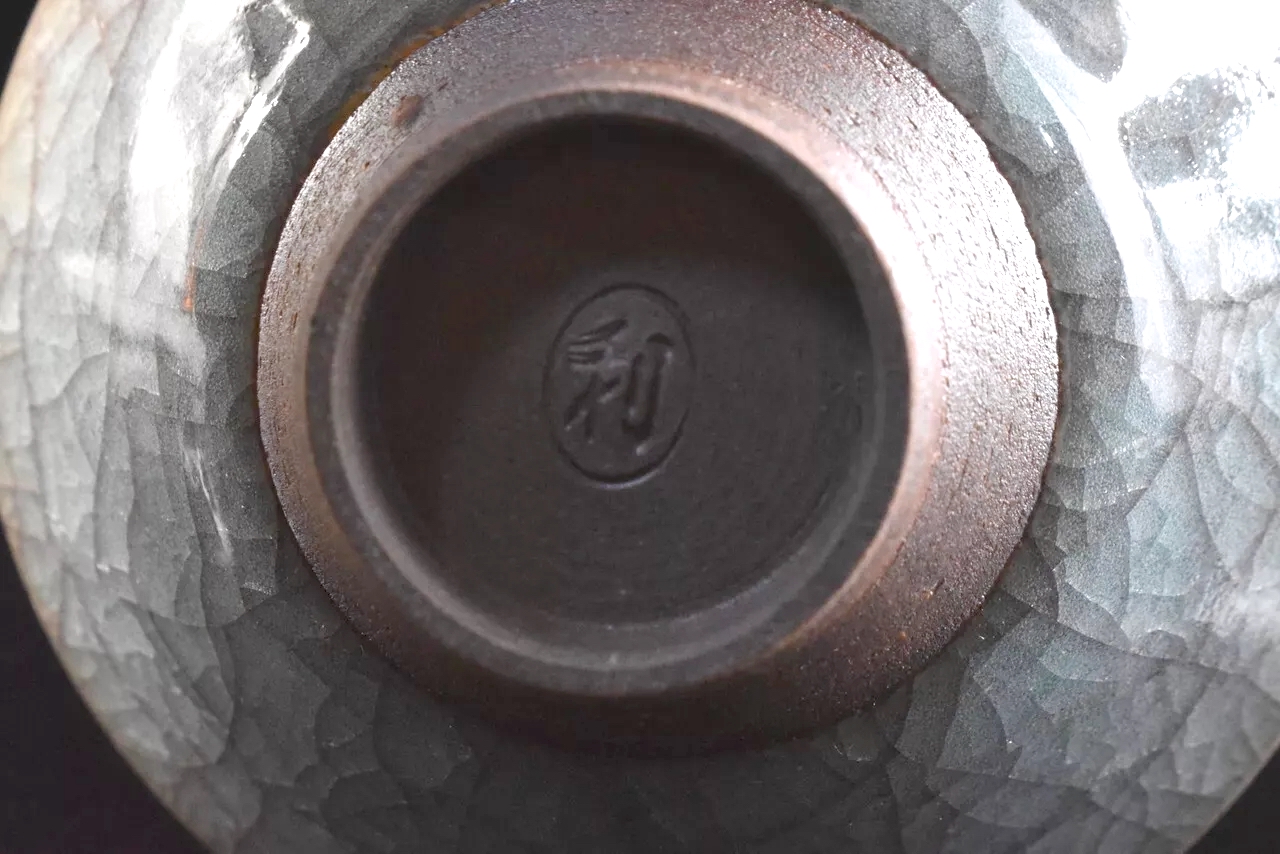
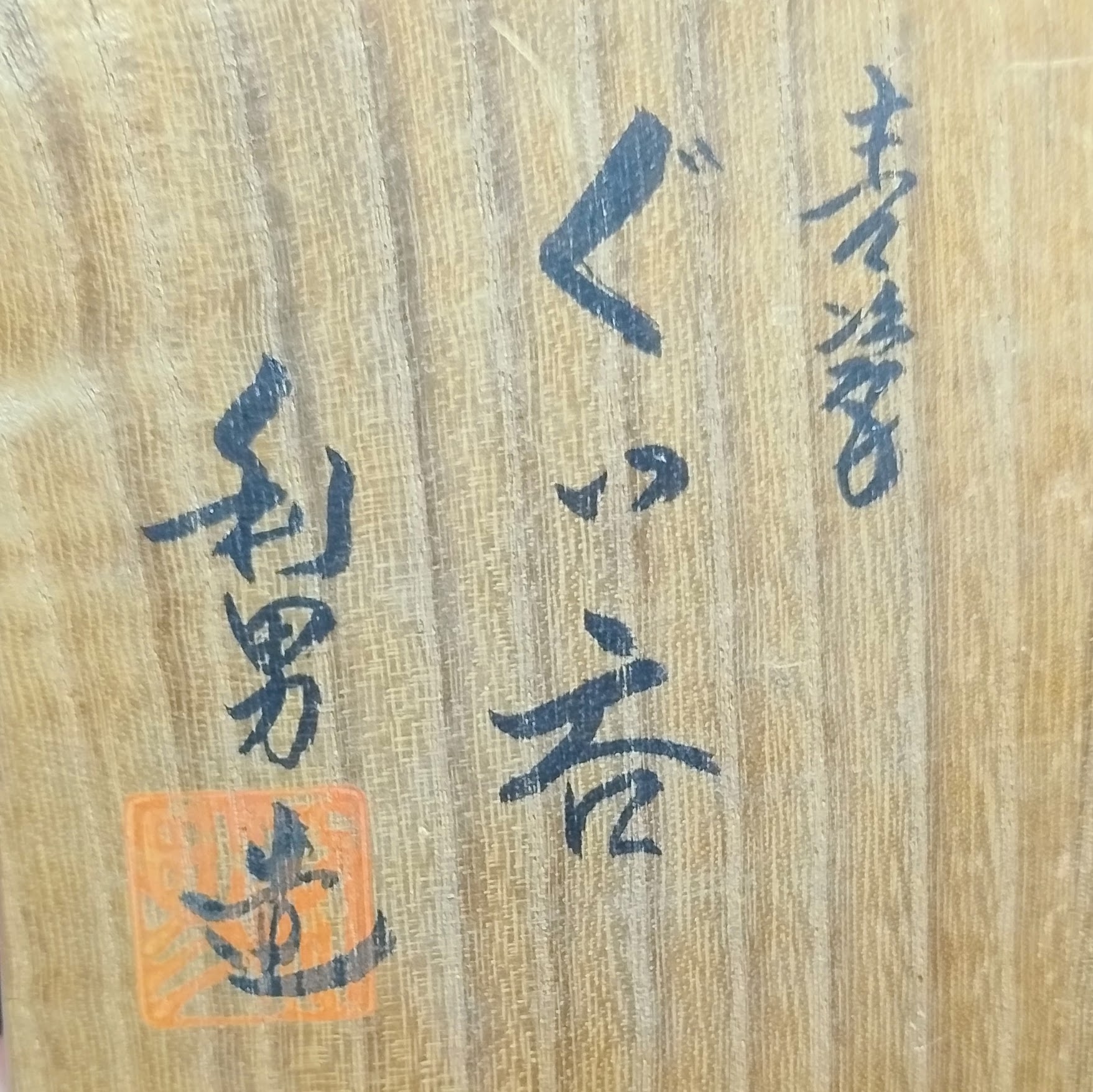
The guinomi bears the potter’s stamp inside the koudai or foot-ring. Void of chips or cracks, condition is mint. Comes with the original corded paulownia tomobako or storage box with the potter’s seal and calligraphy on the lid.
€160 + shipping