
1911 January 3rd Shimizu Kōshō (清水公焦), is born in the castle-town of Himeji
1927 Enters Tōdai-ji Temple in Nara
1933 Graduates in Buddhist studies from the Literary Department at Ryokoku University
Takes residence at the Tenryu-ji Temple for four years to study and practice Zen Buddhism under the guidance of the Abbot Seki Seisetsu (1877-1945)
1937 Appointed as Chief Priest of Tōdai-ji Temple, Ryuzoin and Joshoin
1946 Appointed as Chief Priest of Hogon-in Temple, the head of Tōdai-ji Temple
1947 Founded Seisei Junior High School (now called Tōdai-ji Gakuen), and becomes principal (and teaches Calligraphy)
1959 Appointed Director of the Tōdai-ji Kogakuin
1963 Appointed Directed of the Tōdai-ji Gakuen Kindergarten and Joshigakuin
It is around this time he created his famous Buddha statue called “Mud Buddha”
1969 Appointed as the head of the Huayan Sect, Head of Religious Affairs of the Kegon Tradition, president of Tōdai-ji Gakuen High School and assigned as deacon of Tōdai-ji Temple
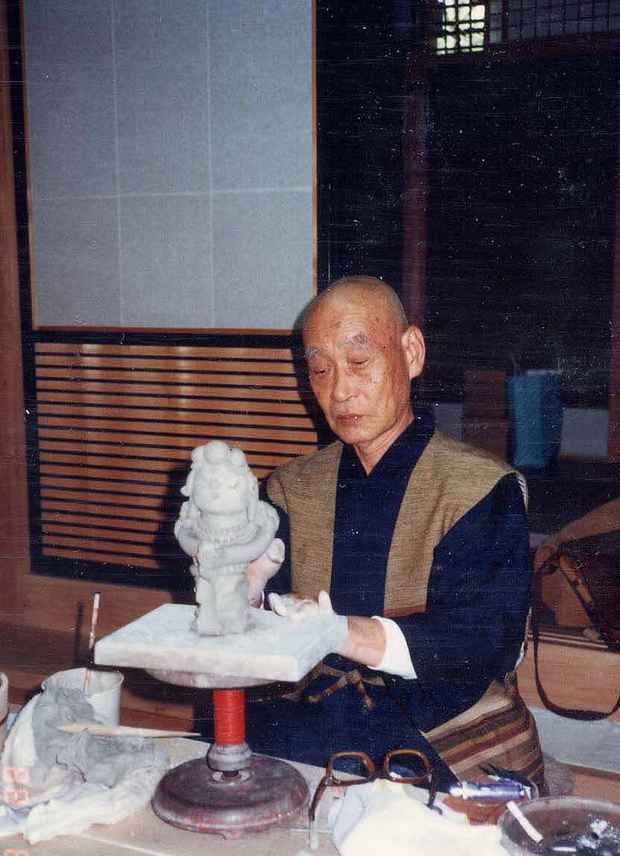
1971 Begins organising a massive repair project surrounding the Great Buddha Hall at Showa University
1975 Appointed as a Buddhist Priest and he succeeds the 206th Abbot Kamitsukasa Kaiun (1907-1975), as the 207th Abbot of Tōdai-ji
1978 Reappointed as Abbot of Tōdai-ji
1980 Repairs of the Great Buddha Hall at the Showa University are completed and he held a memorial service for Ochikei Daisho
1981 Appointed Elder of the Tōdai-ji Temple’s and resigning from position of Abbot of Tōdai-ji
1993 Received the Himeji City Arts and Culture Award
1994 Became Honorary Director of the newly opened Shosha Handicraft Museum in Himeji City for his donation of a large number of his artworks
1999 Passes on May 6th
Also interesting to note is that because of his heavy involvement of the repairs of the Great Buddha Hall, he served a double term as abbot of the Tōdai-ji Temple, which is not common practice
