Potter: Kenji Takenaka
Approximate size: W 4.7″ by 4.7″ by H 3.5″ or 12.0 by 11.8 by 8.9 cm
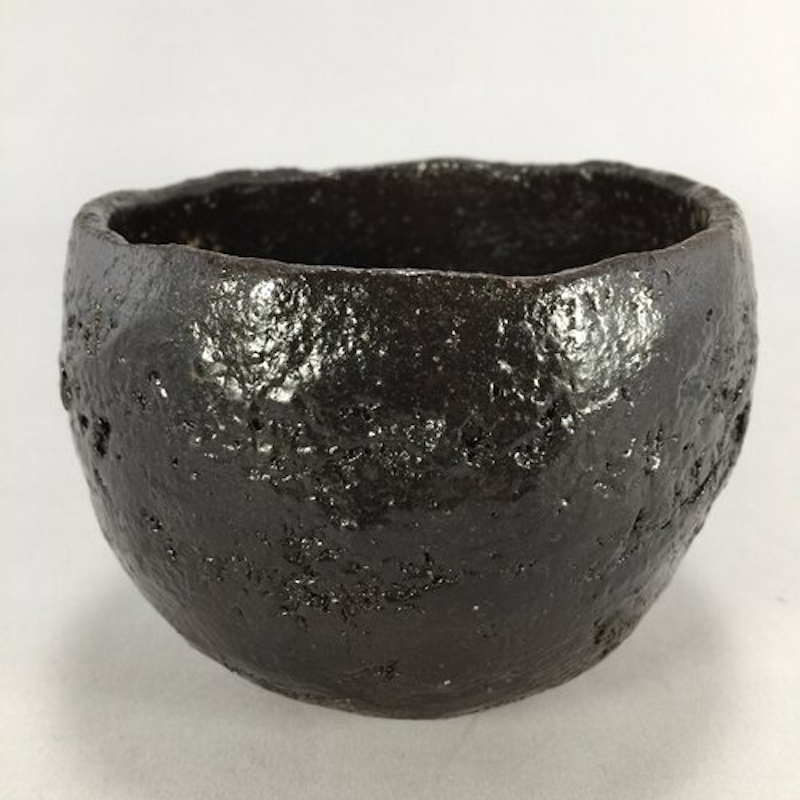
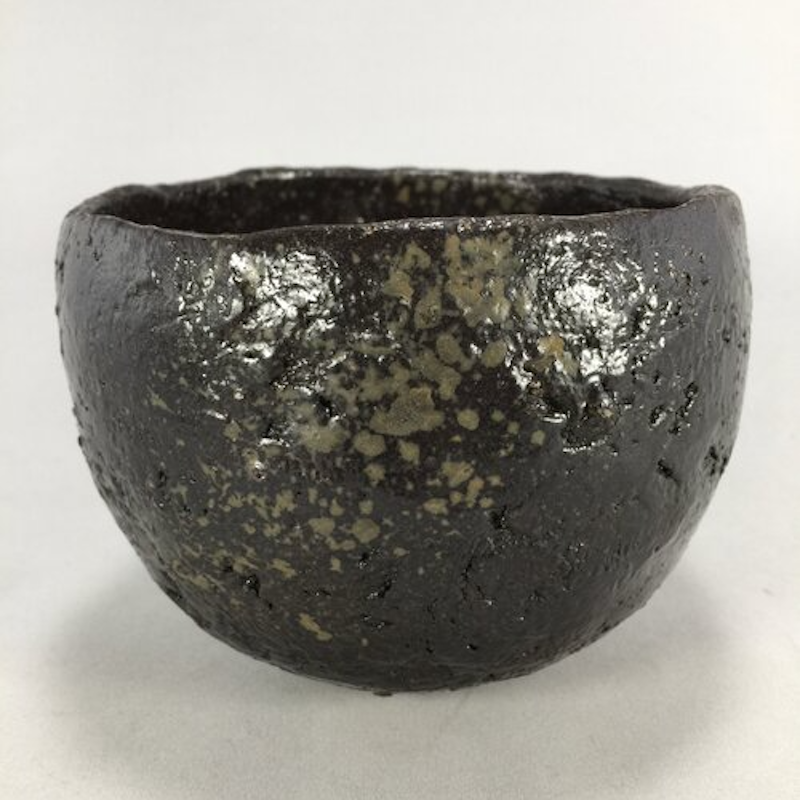
This is one of my most closely guarded vessels, of superb quality – a kuro or black Bizen chawan by esteemed potter Kenji Takenaka. This is a tea bowl meant for chanoyu or the tea Ceremony. A jeweller who, unorthodoxly switched to making pottery in the middle of his career. He studied with famed potter Jun Isezaki, who was one of the most renowned masters of Bizen pottery. Isezaki brought back the traditional anagama kiln form (a kiln that is dug into a hillside like a tunnel). He was the fifth artist of Bizen pottery to be designated a Living National Treasure by Japan’s Agency for Cultural Affairs. Sadly he passed this year, on the 11th of July.
Kenji Takenaka’s journey is a testament to the power of following one’s true calling. Bizen ware is is steeped in tradition and bolsters a rich history. The finishing of the ware involves firings sessions that can take multiple weeks! Bizen wares are fired slowly over a long period of time. Firings take place only once or twice a year. They require the kiln fire to be kept lit and burning for approximately 10 to 14 days involving long hours and literally tons of wood. Each piece is not just a creation but a story told through the clay, reflecting the beauty of imperfection and the natural elements that shape it. Holding this vessel makes me feel like curling up during winter with hot matcha as it feels just perfectly resting in one or two hands.
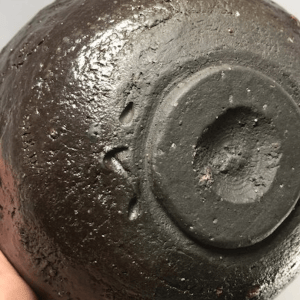
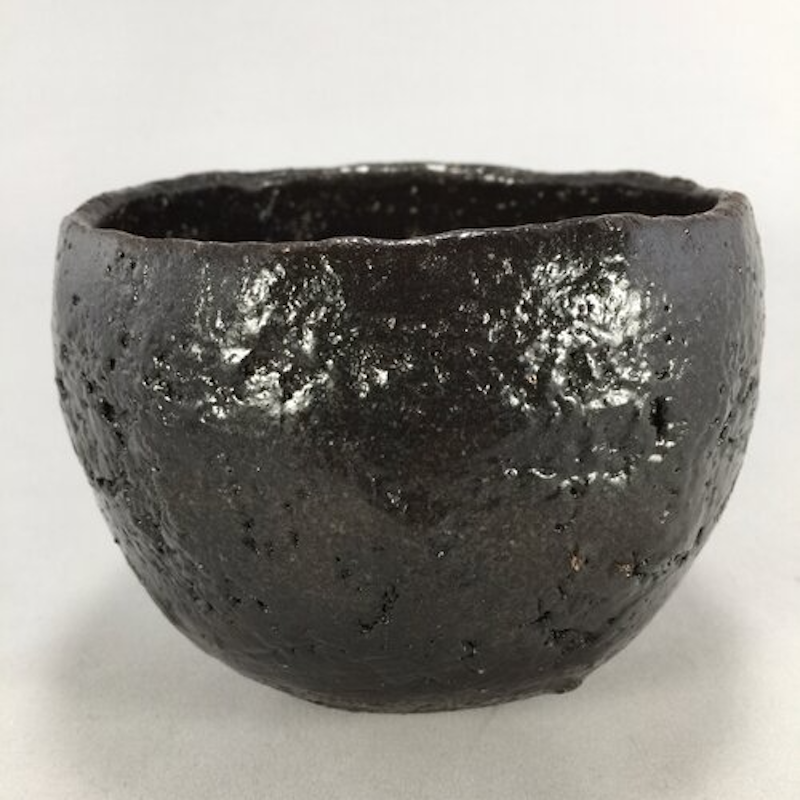
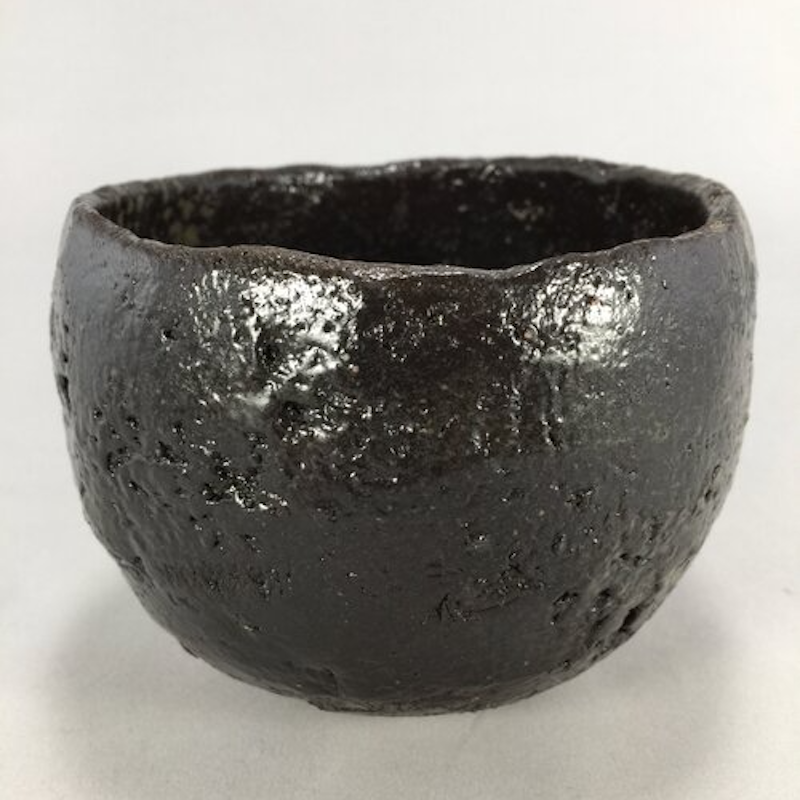
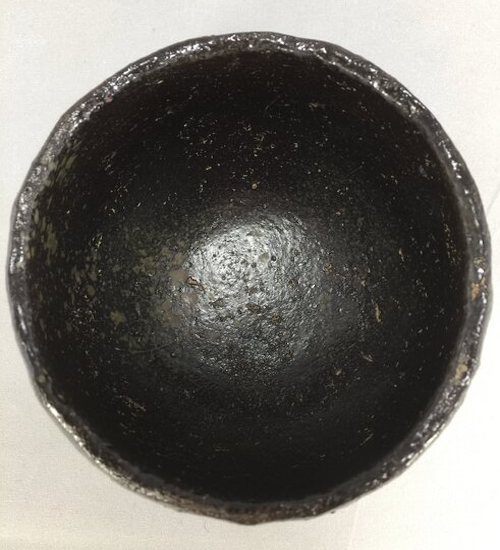
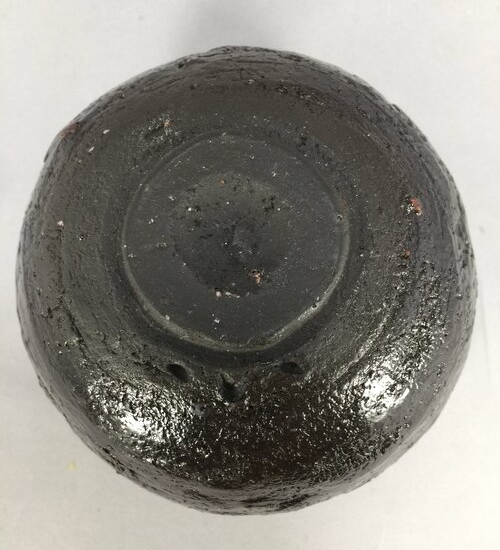
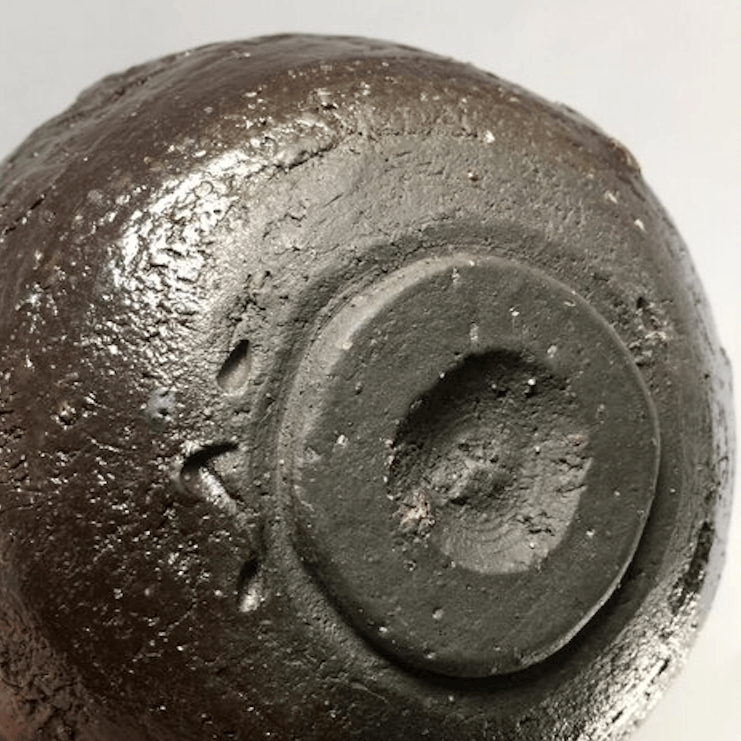
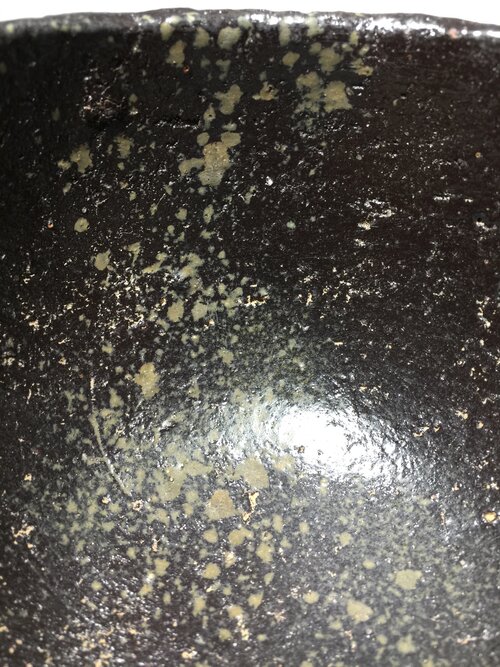
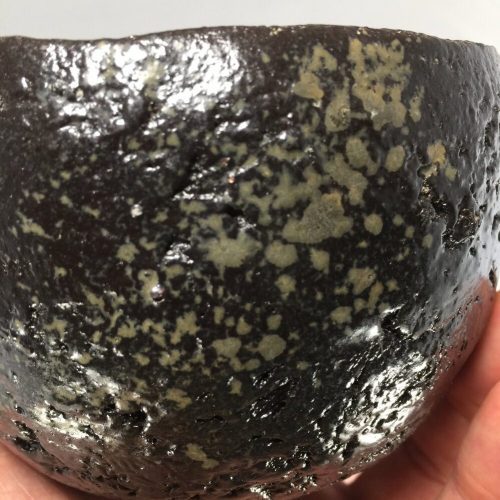
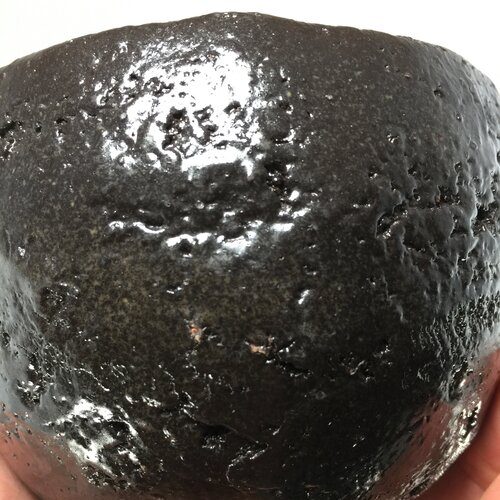
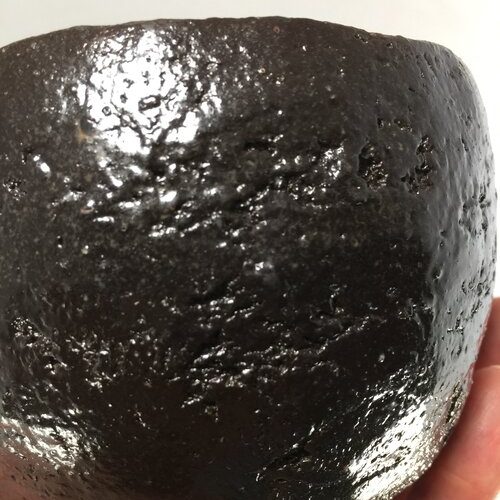
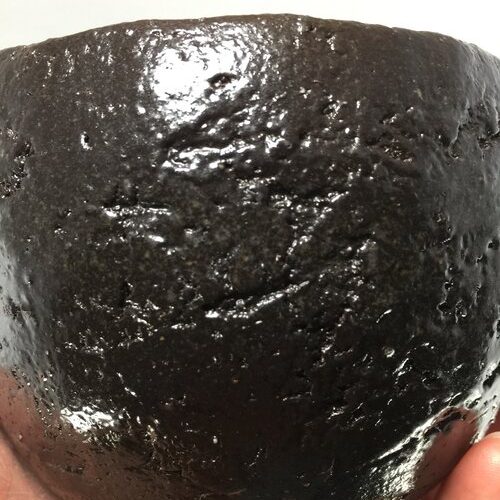
Potters achieve this deep black or dark violet finish by coating the unfired piece in a liquid slip made of local mud clay containing an exceptionally high iron content (such as Imbe clay mixed with iron or cobalt oxides). When wood-fired at extreme temperatures this iron coating melts ahead of the body, vitrifying into a smooth, lustrous dark sheen that mimics a rich glaze. The black surface of this bowl exhibits a curious texture, it adds depth and character to the overall aesthetic. The goma or sesame seed resembling patches, typically yellow here are delicate green hue, reminiscent of green tea. This interplay of colours invites closer inspection, revealing the intricacies of the craftsmanship involved. The dimensions and form of this chawan are meticulously designed for a secure grip, allowing for ease of use, even with a single hand. The low koudai makes it appear as if it is floating just above the ground.
Bizen ware is a type of Japanese pottery most identifiable by its iron-like hardness, reddish brown colour, absence of glaze and markings resulting from wood-burning kiln firing. The clay used for Bizen ware has a high iron content and traditionally has a lot of organic matter in it that is not receptive to glazing. The clay can take many forms while retaining its strength. The surface treatments of Bizen wares are traditionally entirely dependent on youhen or kiln/firing effects produced by the wood firing. Pine ash produces goma, or “sesame seed” glaze and rice straw wrapped around pieces creates red and brown scorch marks called hidasuki. The placement of pieces in a kiln causes them to be fired under different conditions, with a variety of different results. Considering that one clay body and type of firing is used, the variety of results is remarkable.
1957 Born in Okayama city
1988 He studied under Jun Isezaki who was designated as Living National Treasure
Received a prize in the Issuikai exhibition
1989 Received a prize in the molding exhibition of the tea ceremony at the Tanabe Museum of Art
Subsequently awarded the prize 4 more times
Received a prize in the Asahi ceramic art exhibition
Received the Encouragement Prize in the Okayama art exhibition
Subsequently awarded the Encouragement Prize twice more
Received Sanyo Newspaper Publisher Prize in the Japanese Traditional Art Crafts Exhibition, Chugoku Area
1990 Received a Prize of Prefecture in Okayama art exhibition
Subsequently awarded the Prize of Prefecture twice more
Received a prize in the Japanese Traditional Art Crafts Exhibition at Chugoku Area
Subsequently awarded the prize 5 more times
1991 Received a prize in Okayama art exhibition
Subsequently awarded the prize 6 more times
Received a prize in Yakishime Pottery exhibition
1993 He build a hole and semi-underground type kiln in Kibi chuo-cho, Okayama
1994 Fired his kiln for the first time
1995 He received a Mayor Okayama Prize in Okayama art exhibition
He held a private exhibition at Kurodatouen Ginza
Subsequently awarded the prize 6 more times
Bizen is one of the six oldest remaining Japanese pottery traditions. In that area and town, for more than a thousand years, potters have been producing a sober yet strong looking wood fired ceramic. This rustic pottery whose age gives it a noble air is still popular today in Japanese homes and restaurants alike.
While Bizen pottery typically holds strongly to tradition Kenji Takenaka works have something that is unique and palpable through his vessels.
Main styles of Bizen pottery
Botamochi 牡丹餅 (rice ball)
round, often red spots created through surface masking, kiln placement and wood firing
Goma 胡麻 (sesame seed)
glaze produced by kiln placement and ashes melting in the heat of the kiln
Hidasuki 緋襷
a rice straw wrapping, containing salt, typically producing bands of red colour
Ao Bizen 青備前
acquires various blue hues due to wrapping with rice straw, kiln placement and reduction during wood firing
Sangiri 桟切り
shiny metallic blue sheen acquired, often randomly through reduction during wood firing
Kuro Bizen 黒備前 (black Bizen)
black colours achieved through use of clay and kiln placement, typically associated with ancient Bizen ware made in Imbe village during the 12th century
1997 He held a private exhibition in studio Ikuko
Held a follow-up exhibition at studio Ikuko
Received a prize in the Japanese Traditional Art Crafts Exhibition
After that he was awarded the prize once more
1998 He held a private exhibition at the Tenmaya in Okayama
2000 He held a private exhibition at the Bizen Gallery Aoyama
After that it was held 4 more times
2005 He submitted to the Japan and France modern Ceramic Art Exhibition
2006 He held a private exhibition at Bunkindo
2007 He held a private exhibition at the Gallery Tosei
Held private exhibition at the same venue twice more
2008 He held a private exhibition at the Gallery Matsuyama
2010 He held a private exhibition at Mitsukoshi in Nagoya
2011 Received a Sanyo Newspaper Publisher Prize in the Japanese Traditional Art Crafts Exhibition of the Chugoku Area
Received a special award of Prefecture in Okayama Art Exhibition
2012 Received a Mayor Okayama Prize in the Japanese Traditional Art Crafts Exhibition of the Chugoku Area
2013 He joined in the Japanese Traditional Art Crafts Exhibition of the Chugoku Area and numerous private exhibitions all over Japan
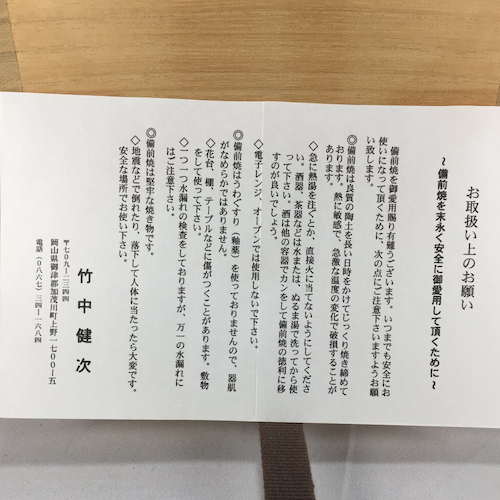
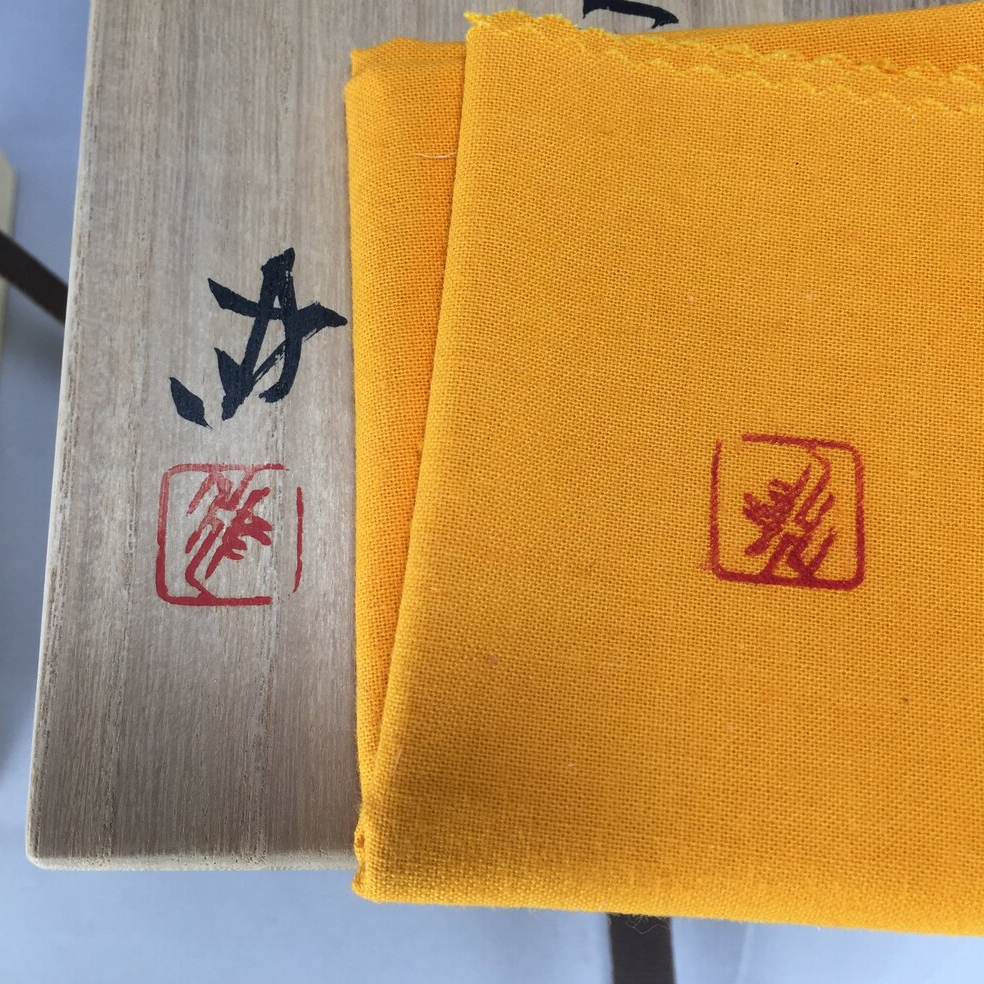
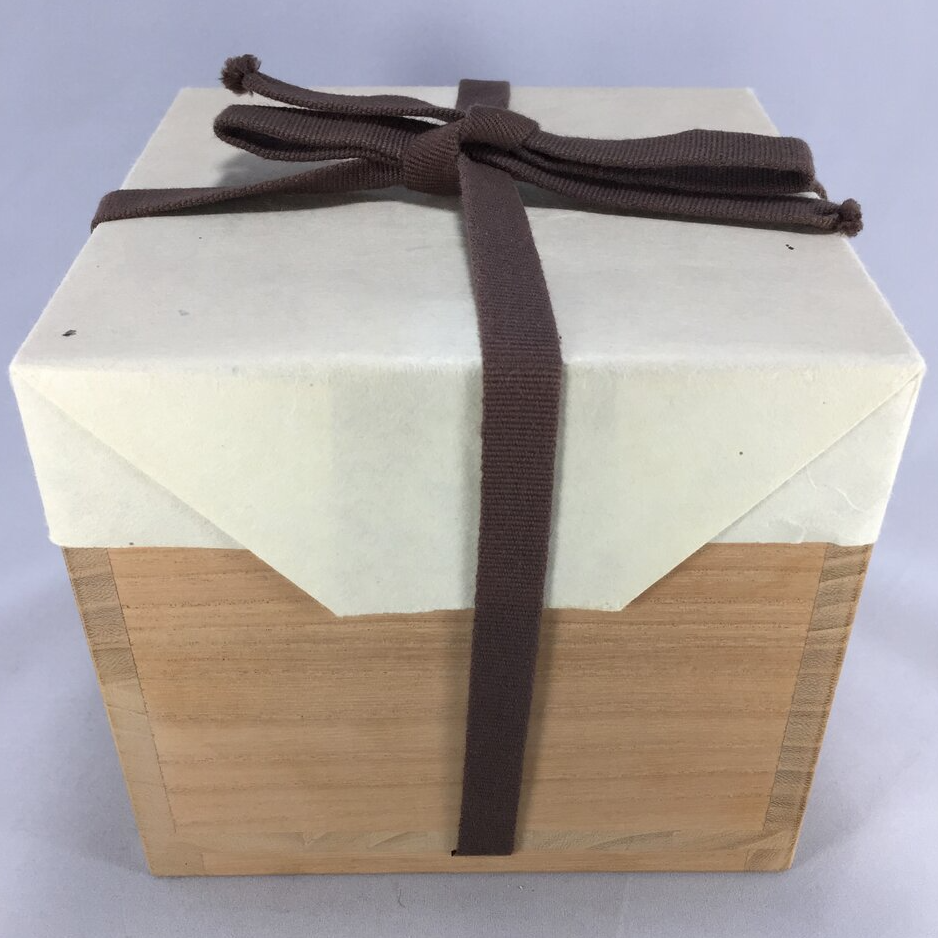
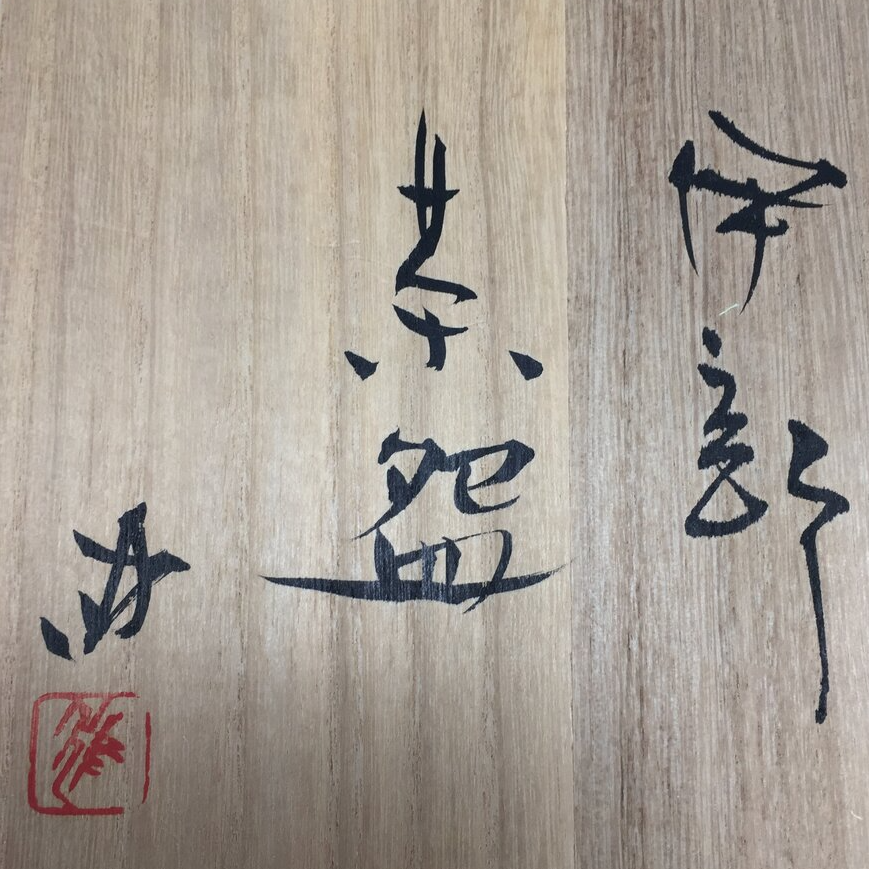
This chawan, signed by the potter has no chips or cracks and condition is mint. Comes with the original high quality paulownia tomobako or storage box. The lid of the box bears the potter’s kiln stamp and calligraphy. Includes a dedicated tomonunu or tea cloth. There are 2 informational pamphlets too, one about the potter and the other about Bizen ware.
€1050 + shipping cost