

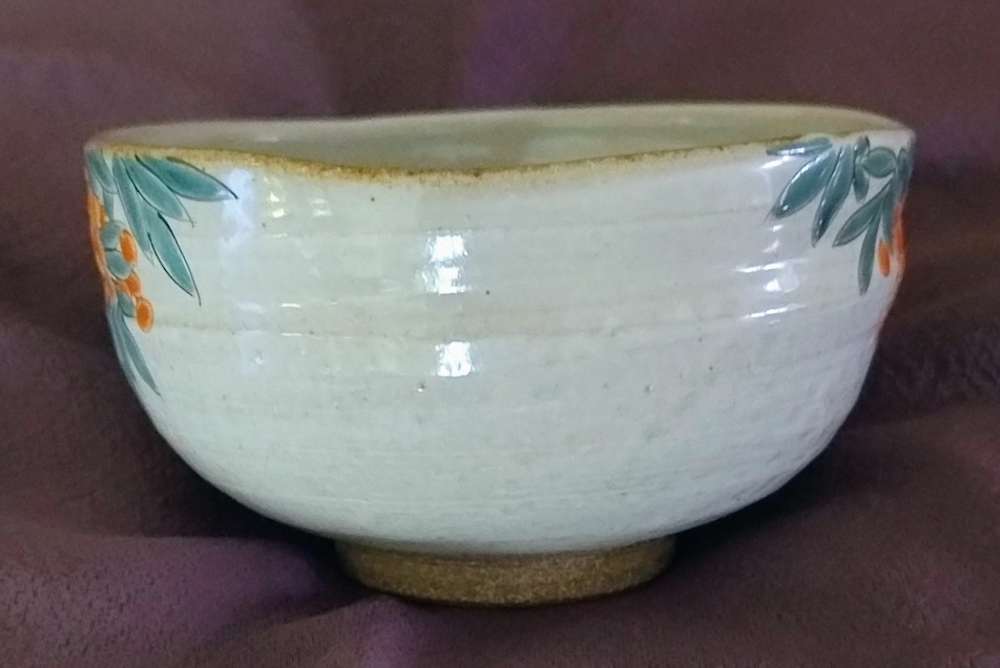
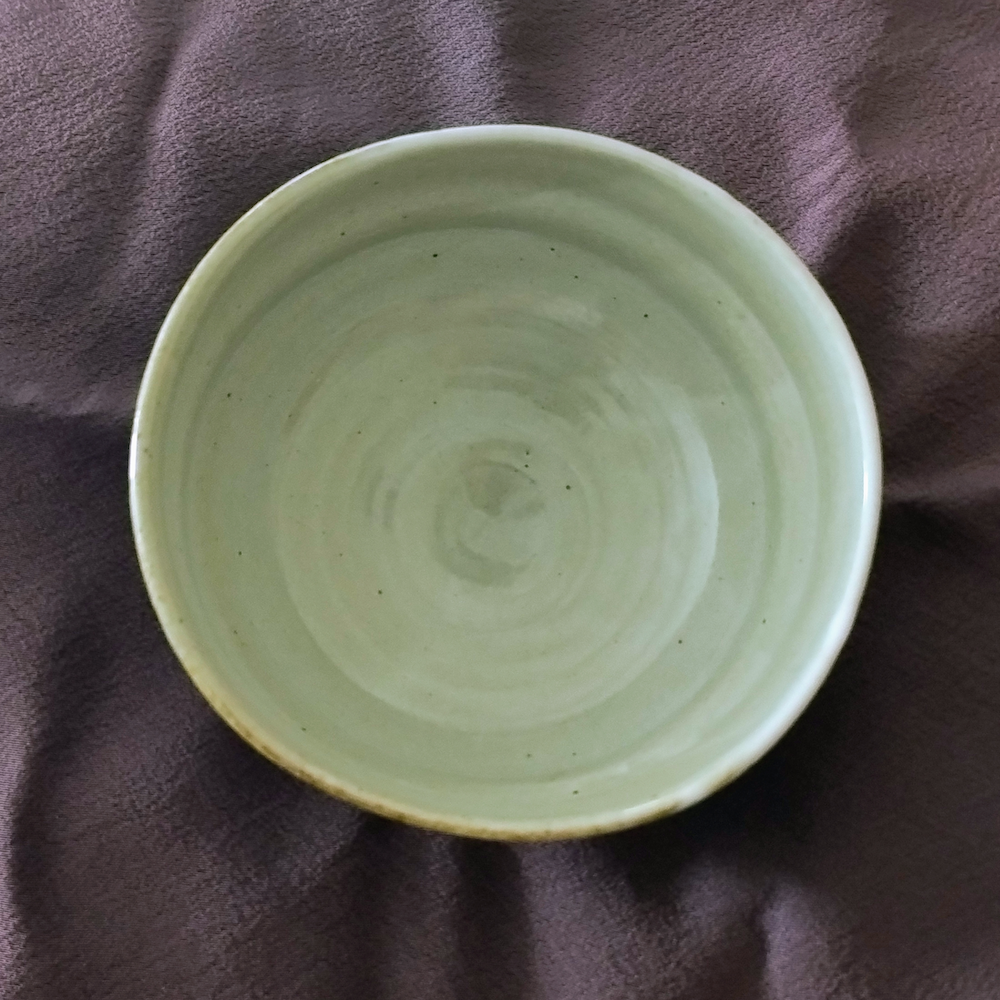

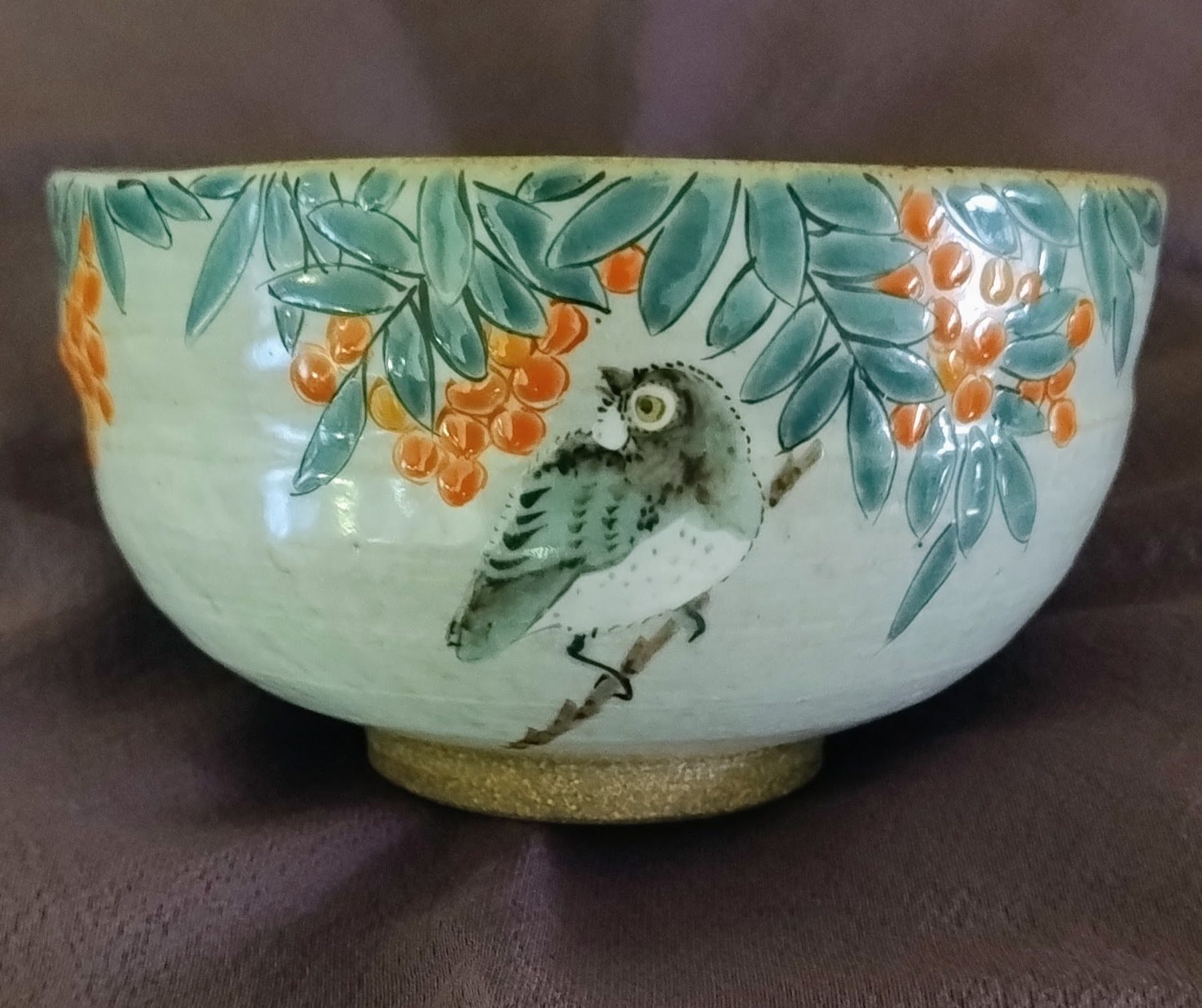
Potter: Yoshinori Fukuda
Approximate size: W4.5″ by H3.4″ or 11.5 by 8.6 cm
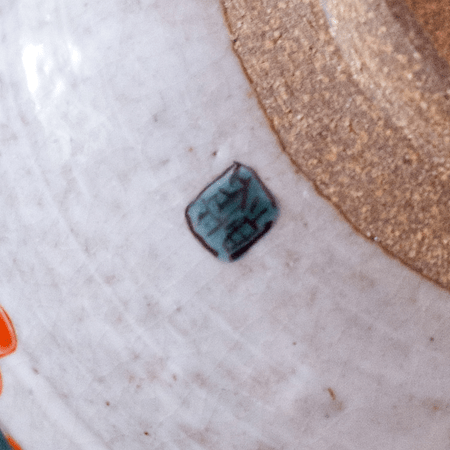
This Kutani chawan or ceremonial tea bowl was made by master potter Yoshinori Fukuda (1952-). Yoshinori Fukuda is a certified master of Japanese traditional crafts, celebrated for his exceptional command over the complex painting styles of Kutani ware. He operates his personal studio called the Shoryu kiln (or Shoryu-gama). The kiln is located in Nomi City, Ishikawa Prefecture—the historic heartland of Kutani porcelain. Rather than confining himself to a single methodology, Fukuda seamlessly bridges the historical eras of the art form. He is highly proficient in Aka-e, a technique requiring microscopic, painstaking red-line brushwork as well as the bold, opaque green and yellow enamel glazes of the Yoshidaya style. His work also honours Ko-Kutani, the rugged expressive 17th-century origin style of the craft. By balancing these historic traditions. His pieces serve as a physical timeline of Kutani porcelain evolution.
Auspicious motifs and ceramic forms – Yoshinori Fukuda’s portfolio features natural, spiritual and highly auspicious folklore motifs that carry deep cultural meaning. He frequently illustrates brocade phoenixes (akae), powerful rising dragons, blooming cherry blossoms with birds and carp climbing waterfalls. These intricate designs are adapted across a wide variety of form factors. His artistic output spans both highly accessible, functional dinnerware—such as shochu cups, guinomi sake cups, elegant tea sets and grand exhibition pieces (including monumental flower vases and framed ceramic wall plaques, although these are mainly meant for high-end galleries).
Kutani ware is a style of Japanese porcelain traditionally assumed to be from Kutani which is currently a part of Kaga province. Kaga province is a part of Ishikawa prefecture located on Honshu island. The history of Kutani ware is divided into two phases: ko-Kutani (old Kutani), from the 17th and early 18th century and Saikō-Kutani from the revived production in the 19th century. The more prestigious Ko-Kutani wares are recognised by scholars to be a complex and much misrepresented group of which pieces curiously often stem not from Kutani at all.
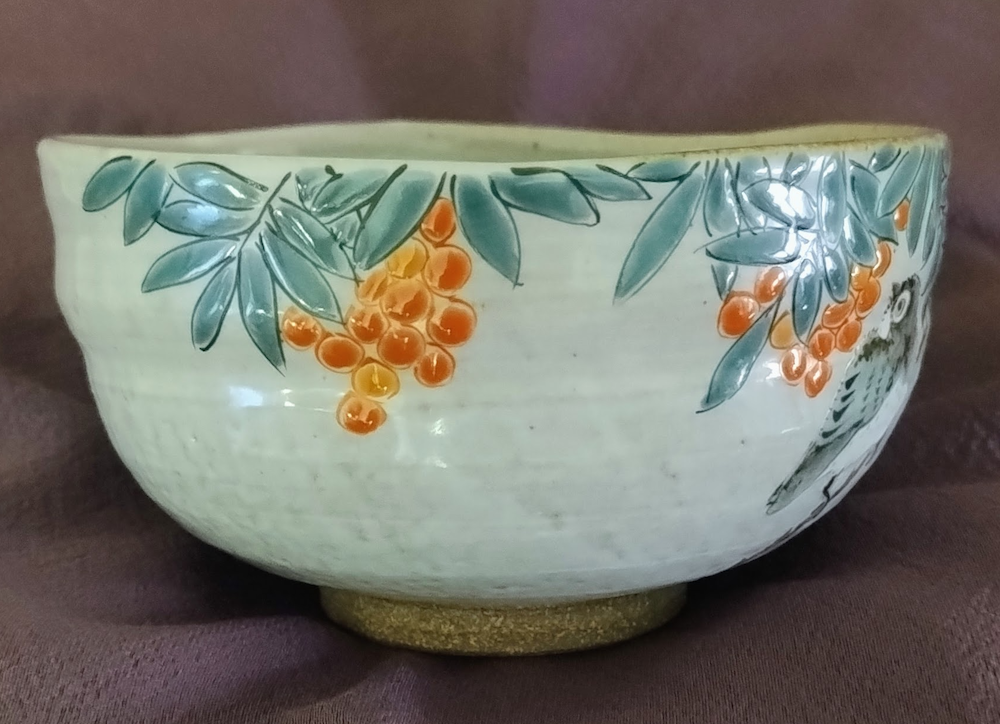
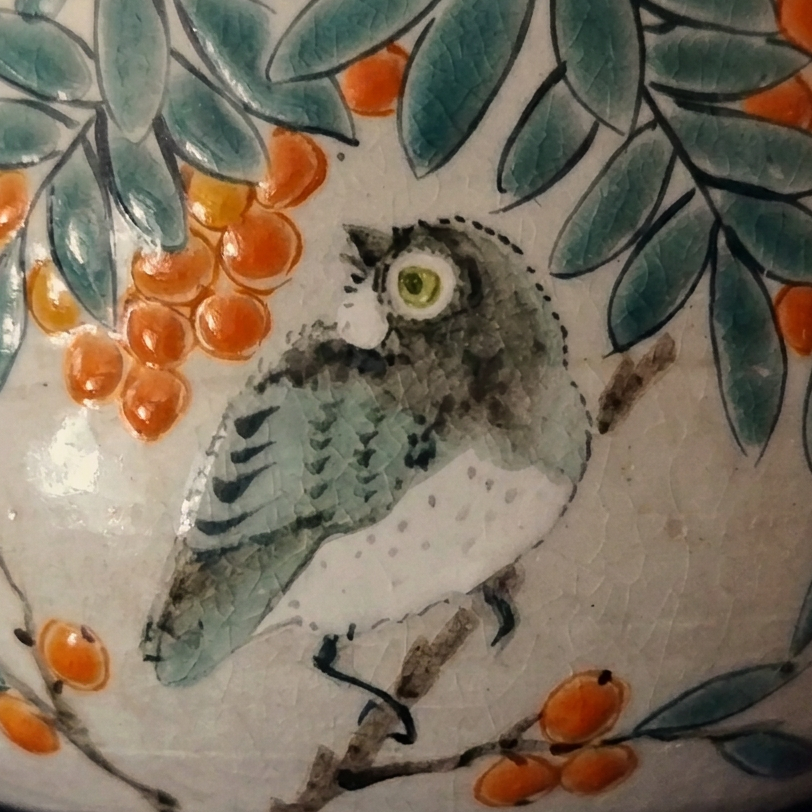
The bird shown on this chawan is the Japanese white-eye or Mejiro. It is a tiny olive-green songbird famous for the striking white ring around its eyes. Deeply woven into Japanese spring tradition, its arrival among blooming cherry blossoms beautifully signals winter’s end. Beneath their high-energy acrobatic antics lies a deeply romantic heart. Mejiro form fierce, lifelong monogamous bonds, working together to weave delicate nests out of spiderwebs and moss. They are highly affectionate partners, frequently seen huddling tightly on branches to tenderly preen each other’s feathers. This perfect blend of vibrant energy and devoted love has made them a cherished motif in Japanese art and poetry for centuries.
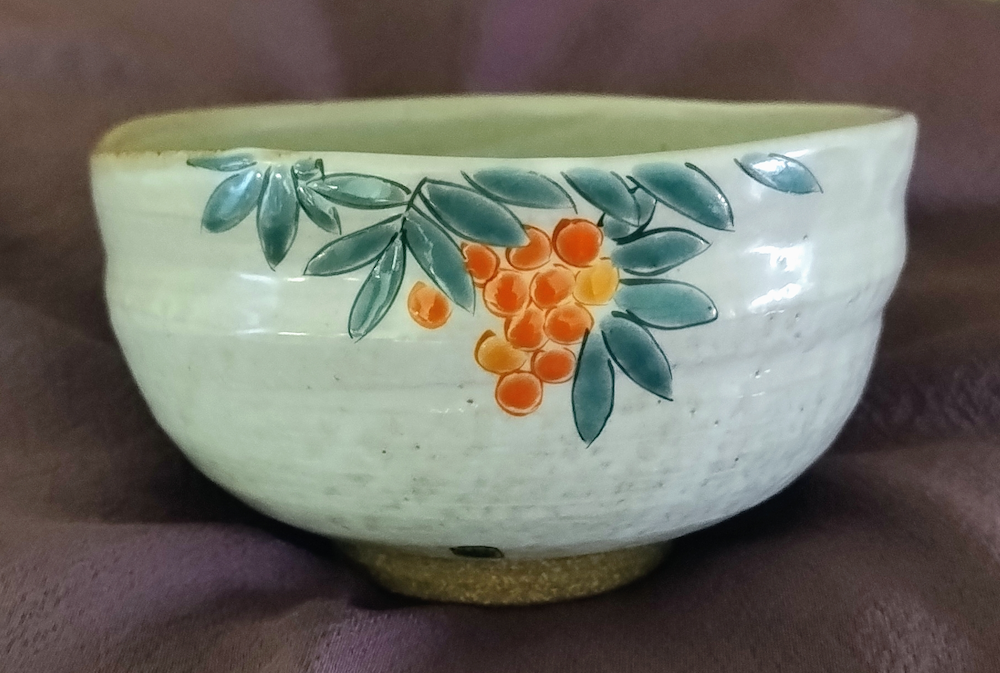
In Japanese tea culture a design of a lone Mejiro among Nanakamado or Japanese rowan branches captures the profound aesthetic of wabi-sabi—finding beauty in imperfections, solitude and transience. The exquisite fine-line underglaze brushwork rendering the single bird’s delicate white eye-ring, perched quietly amidst the rich textured crimson glazes of the autumn berries. While the fire-resistant Nanakamado wood traditionally signifies indestructible resilience, isolating a single Mejiro changes the usual theme of romantic partnership with one of elegant, poetic longing. As a guest turns the bowl in their hands during a tea ceremony, the design serves as a quiet meditation on seasonal change, inner strength and the beautiful solace found in nature’s fleeting moments.
Kutani ware is a traditional handcrafts designated by the Ministry of Economics, Trade and Industry with a history of 360 years it is one of the famous porcelains representing Japan!
Kutani ware, especially in the ko-Kutani period, is marked by vivid dark colours that epitomise lavish aesthetics. It is theorised but unproven; that the long, harsh and grey winters of the Hokuriku region led to a desire among people living there for ceramic ware to show strong and bold uplifting colours. The classical five colours style is known as gosai-de which includes green, blue, yellow, purple and red. The designs are bold and normally depict landscapes, the beauty of nature, people and cover most of the surface of each piece.
In recognition of the modern understanding that much, if not most, of the ko-Kutani production was located around Arita, the wares are now sometimes grouped with Imari ware (thrown in as correct or incorrect “ko-Kutani type”), or the wider groupings of Arita ware or Hizen ware.
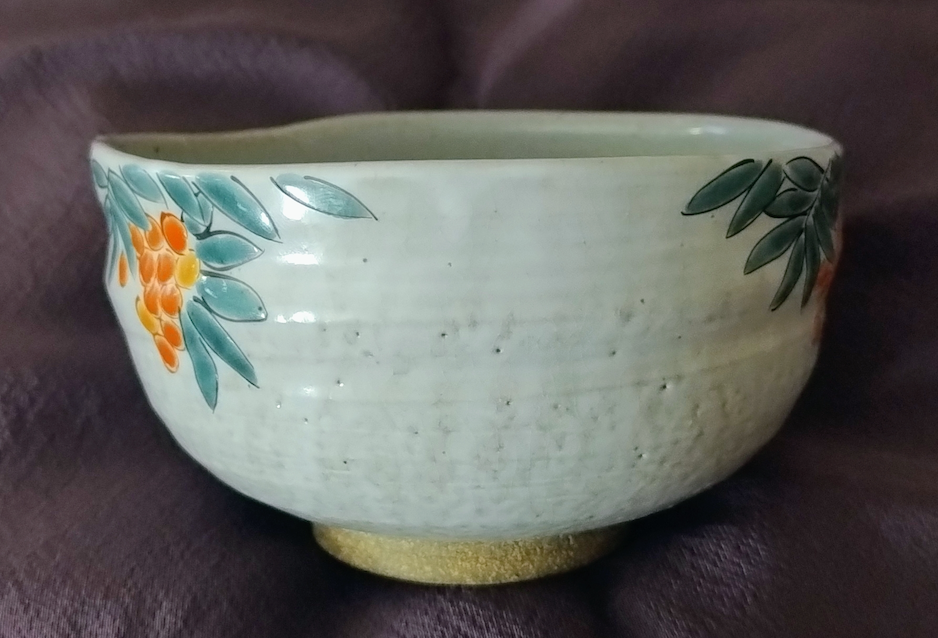
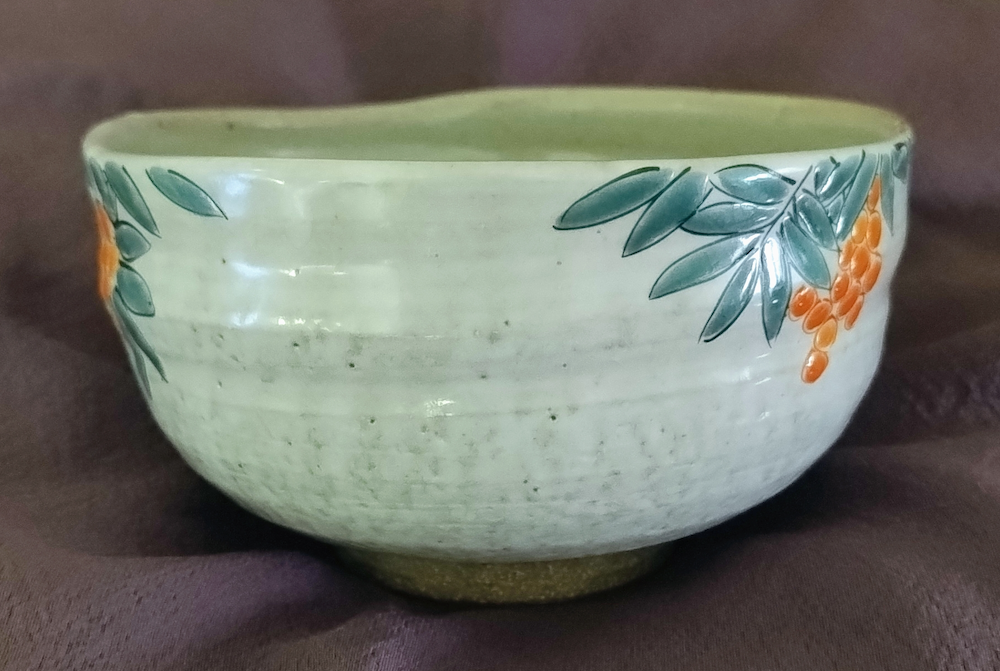
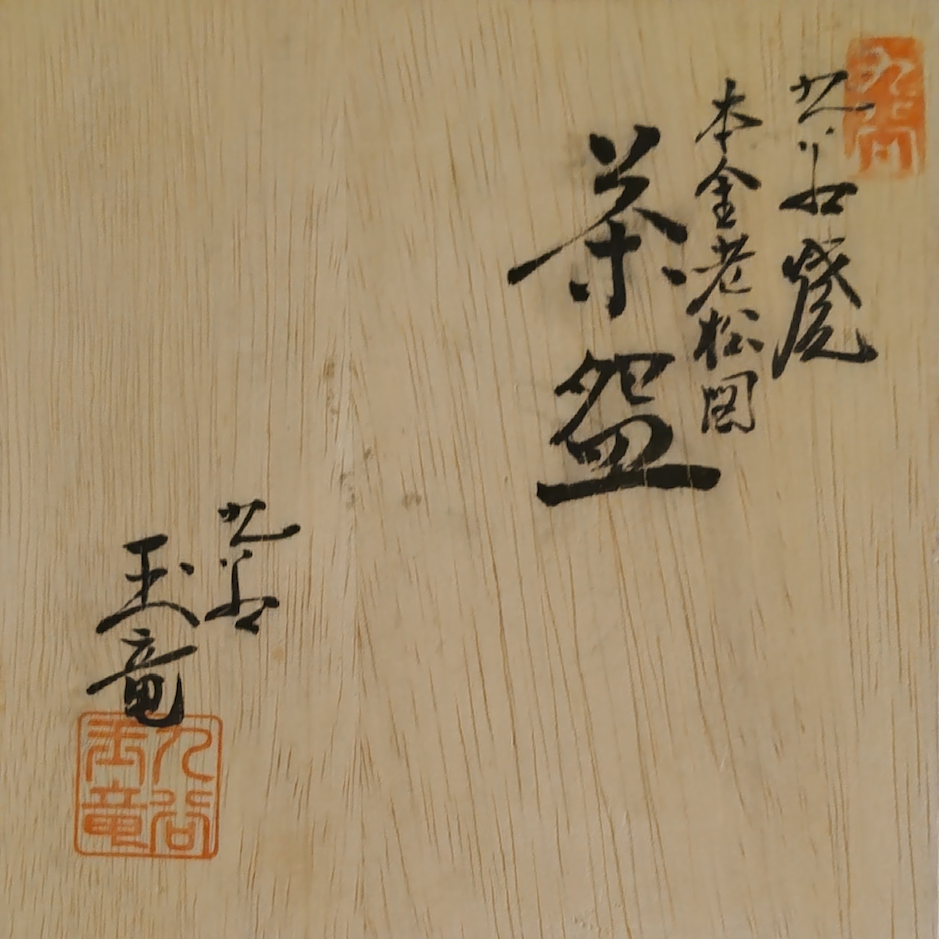
The chawan is unused and in mint condition. There are no chips, cracks or flaws to speak of. Comes with the original paulownia tomobako or storage box with potter’s stamp and calligraphy on the lid. This charming chawan speaks for itself.
€225 + shipping cost


Ko-Kutani (old Kutani), of early stage progressed under the support of the Daishoji clan around 1655. After the discovery of potter’s clay at a mine near Kutani village, Saijiro Goto was sent to Arita in Kyushu district to master ceramics and brought back the techniques he learned during his journey. Though the ko-Kutani kilns developed a bold, colourful and loved style, they disappeared suddenly in about 1700. The exact reason or this is still unknown.
About eighty years later, the Kaga clan started a kiln titled ‘Kasugayama” at Kanazawa which breathed new life into Kutani as a distinct style of pottery. This is considered as the moment of restoration. From here on many kilns were build such as the Mokubei kiln, the Yoshida-ya and during the Meiji period, Shoza Kutani developed his own style here as well. Shoza Kutani became quite successful with his paintings of ‘saishiki-kinrande’ with red as ground and gold showing refined designs. These became famous as an export product and quite an influence on the improvement of the industry.
