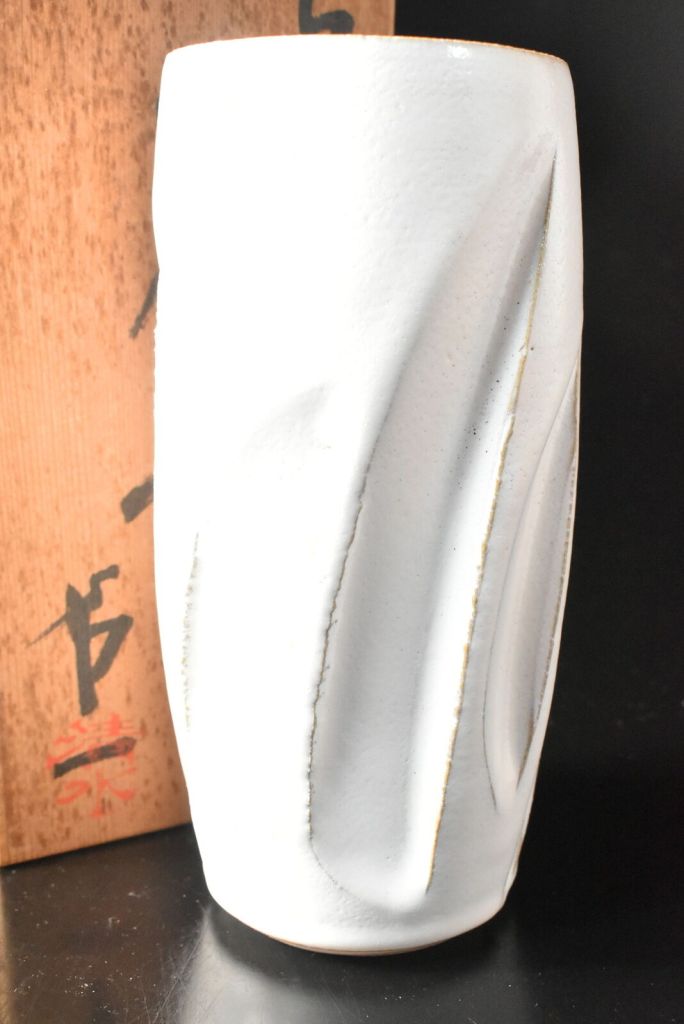
Potter: Shimizu Uichi
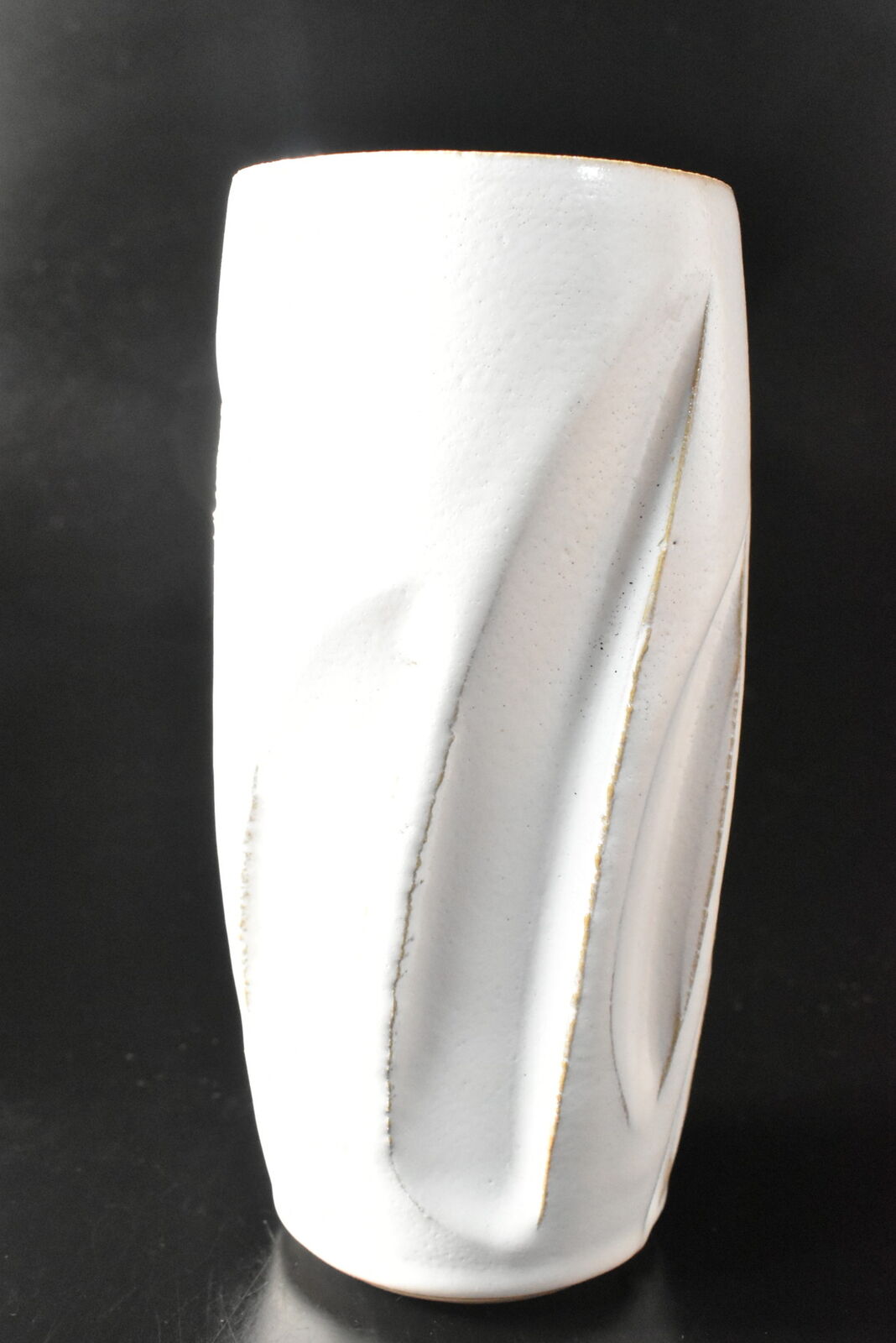
Approximate size: W3.7″ by H8.2″ or 9.5 by 21.0 cm
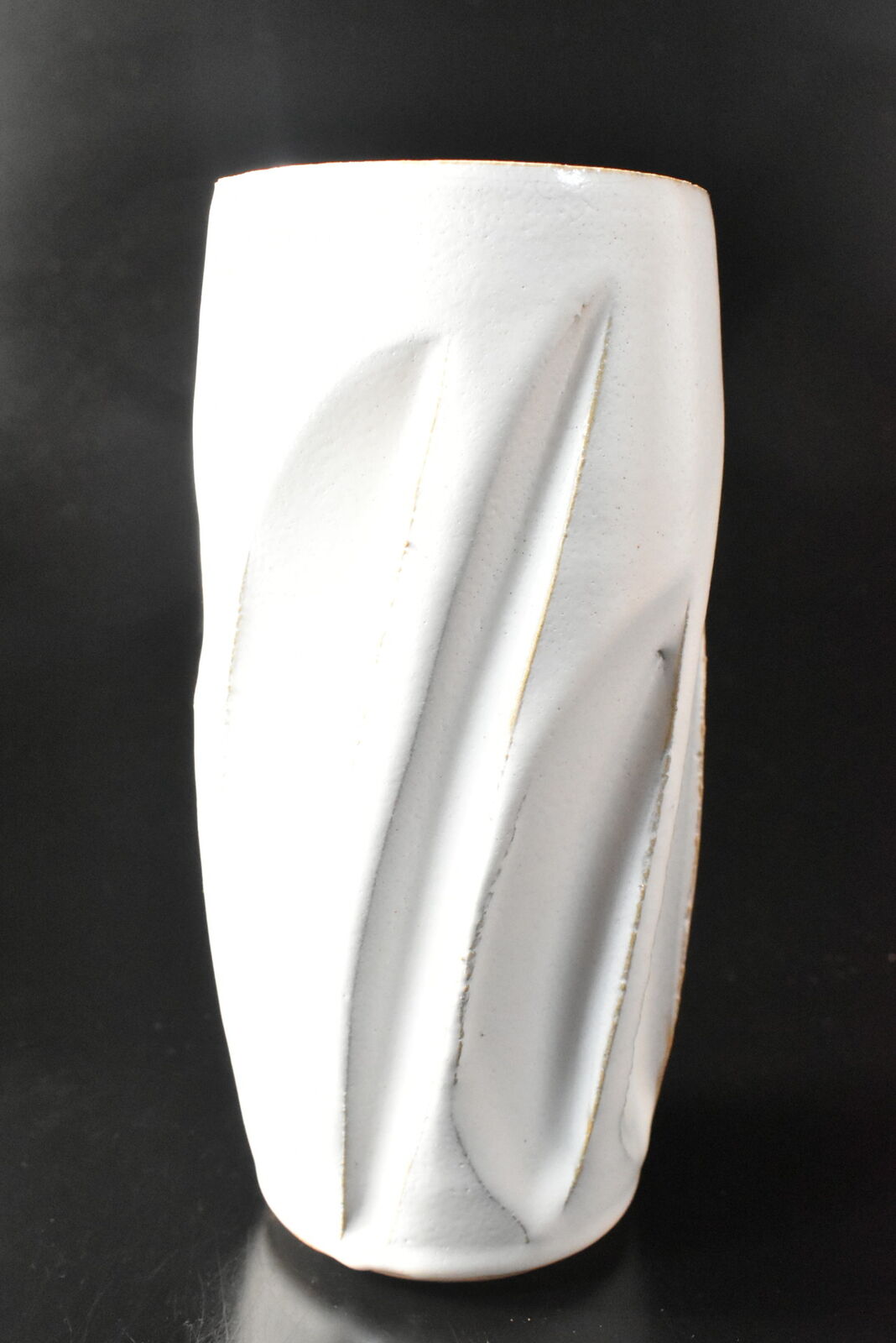
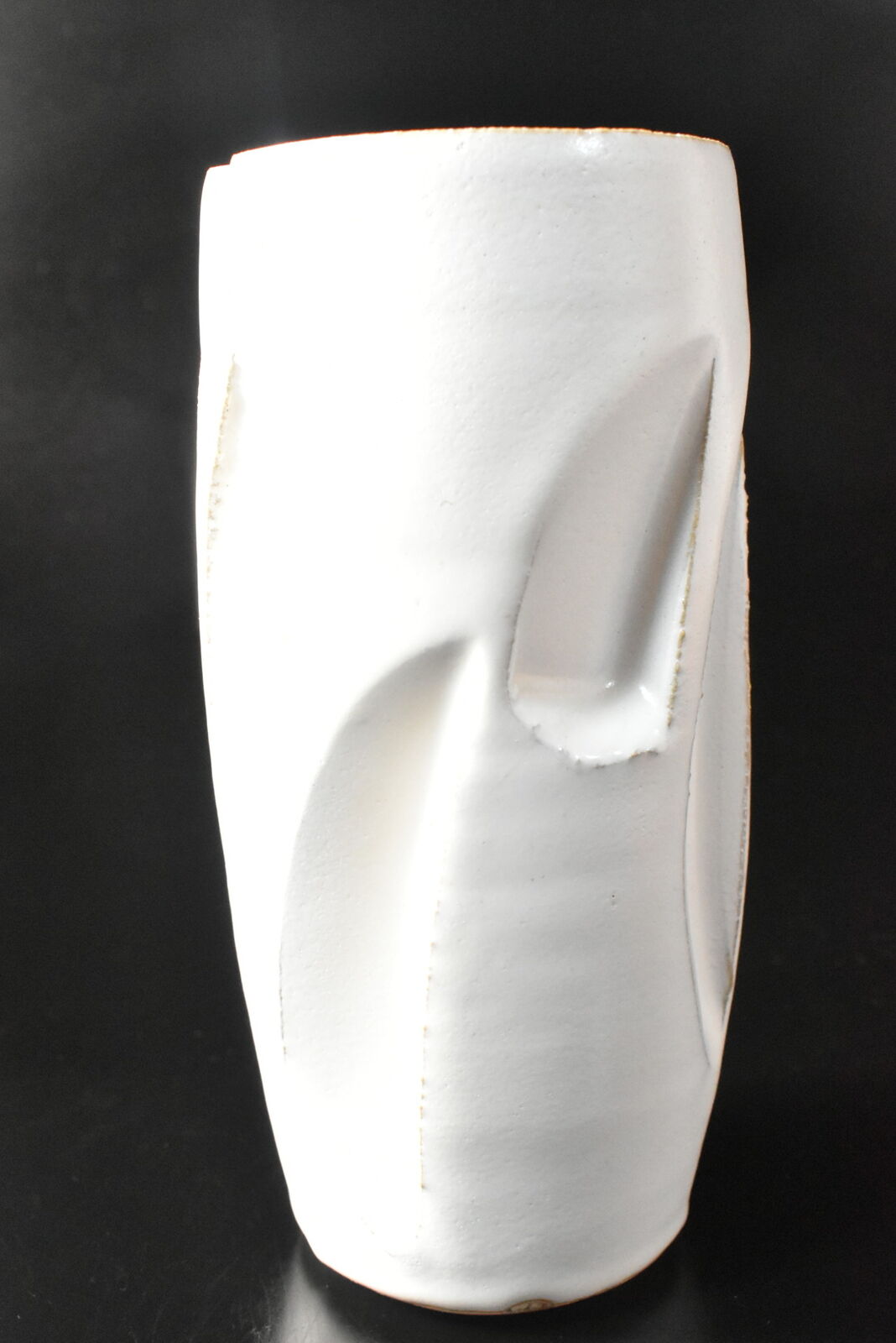
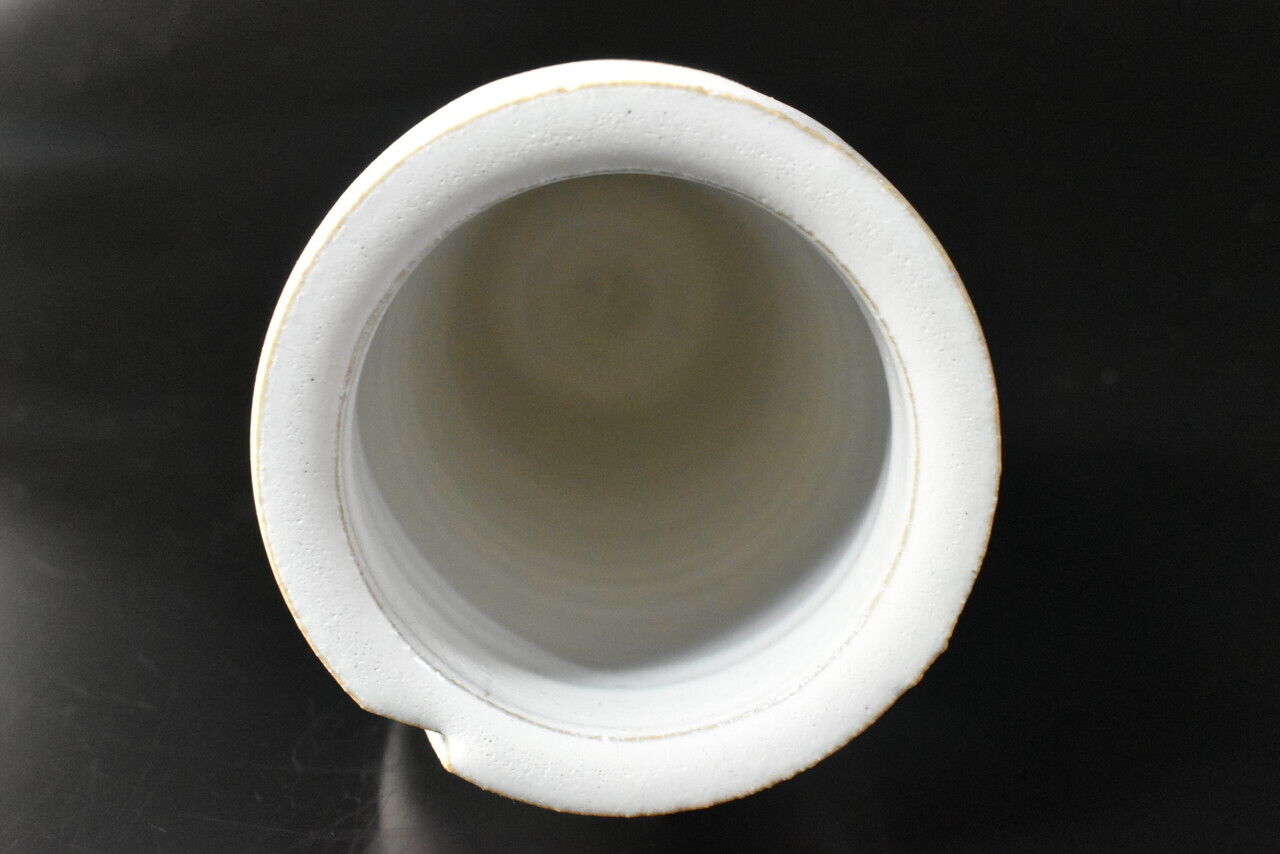
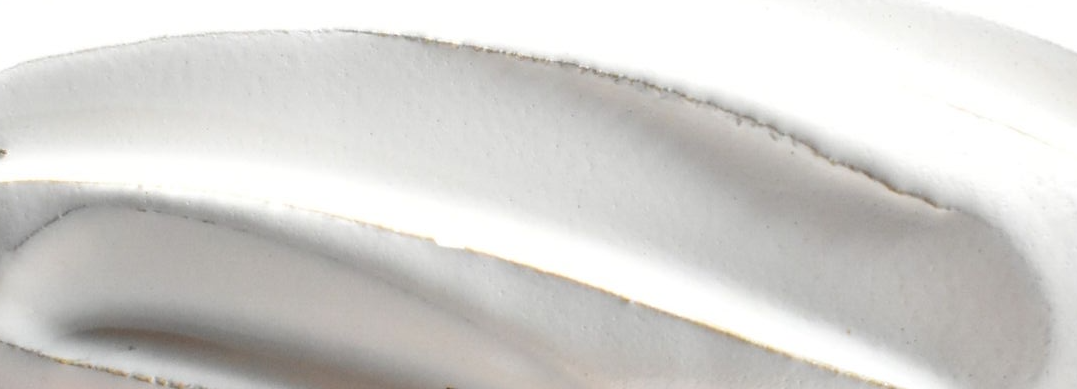
This powerful stoneware hanaire or flower vase by Living National Treasure Shimizu Uichi (1926–2004), showcases a dramatic – sculptural departure from his traditional forms. Shimizu Uichi was a celebrated Japanese ceramic artist who was designated a Living National Treasure in 1985. He received this high honour for his absolute mastery of iron glazes known as tetsu-yū. Globally recognised for mixing old Chinese glaze traditions with a modern Japanese style, this particular vase is a bold departure from his usual shapes. The vessel features a thick, heavy body covered in a milky hakuyū or white glaze. Most striking are the series of deep, heavy slices cut directly into the wet clay. These broad grooves create a beautiful contrast of light and texture across the surface.
For the first half of his career, Uichi worked in the busy city of Kyoto. However, the cramped city spaces and pre-made materials limited his creative growth. Seeking complete artistic freedom, he moved his life and studio in 1970 to the base of Mount Hōrai near Lake Biwa in Shiga Prefecture. At this new countryside home, he built his historic multi-chambered climbing kiln (noborigama), known as the Horai Kiln. This location turned out to be a natural goldmine for Uichi. He spent days exploring the rugged mountains, digging up his own raw clay, stones and iron-rich minerals. Living close to nature allowed him to break free from rigid city traditions, directly inspiring his famous green “horai celadon” and his deeply textured white and iron glazes.
1926 Born in Gojo-bashi, Higashiyama
Kyoto as a first son of Unosuke and Moto Shimizu who were wholesaler of Kyo-ware ceramics
1940 Dropped out from Ritsumeikan Commercial School
Studied under Souma Ishiguro
1941 Entered National Ceramics Laboratory as a trainee in Kyoto
1943 Became an assistant of the Department pottery of Kyoto Municipal Crafts Laboratory
1945 Set a pottery wheels at home, Gojozaka, Kyoto where became his base for creation
1951 Selected to the 7th Nitten for the first time
1957 Became an official member of Japan Craft Association
1958 Received the Grand Prix at Bruxelles World Expo
1960 President Takamatsumiya prize at the 7th Japan Traditional Crafts Exhibition
1962 Grand Prix at the 3rd Prague International Pottery Exhibition (Czech)
1964 Became a Board Chairman of the Japan Crafts Association
1970 Opened Horai Kiln at the bottom of Horai Mountain In Shiga-cho, Shiga Prefecture (located east of Kyoto)
1977 Grand Prix of Japan Ceramics Association
1985 Designated as Living National Treasure
possessing the important intangible cultural property “Iron-glaze Ceramic”
1986 Medal with Purple Ribbon
1988 Kyoto the Cultural Achievement Award
1992 Shiga Cultural Award
Kyoto Person of cultural Merit
1994 Medal with Dark blue Ribbon
1998 Kyoto Cultural Award and Special Merit of Culture Prize
The fourth class the Order of the Rising Sun
2004 Passed away at the age of 77
Upbringing and the road to ceramics
Shimizu Uichi was born in 1926 in the historic Gojōzaka district of Higashiyama, Kyoto. He grew up immersed in the business of clay, born as the eldest son of a prominent Kyo ware ceramic wholesaler. While his family expected him to follow a commercial path, Uichi felt a deeper calling toward the physical creation of pottery.
In 1940, he made the pivotal decision to leave the Ritsumeikan Commercial School. He sought out an elite apprenticeship under Ishiguro Munemaro (1893-1968), who would later become Japan’s very first Living National Treasure for Chinese-style ceramics. Under Munemaro’s strict guidance, Uichi did not just learn technique; he absorbed a philosophy of absolute dedication to understanding the chemical and spiritual properties of natural glazes.
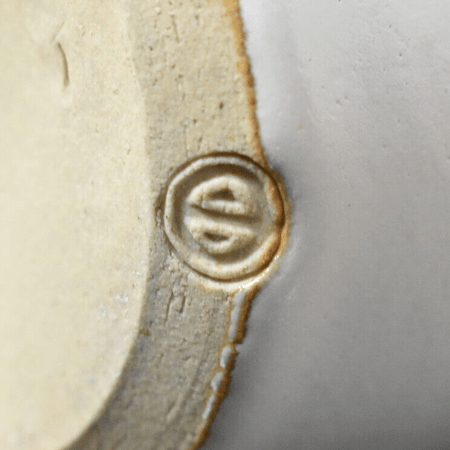
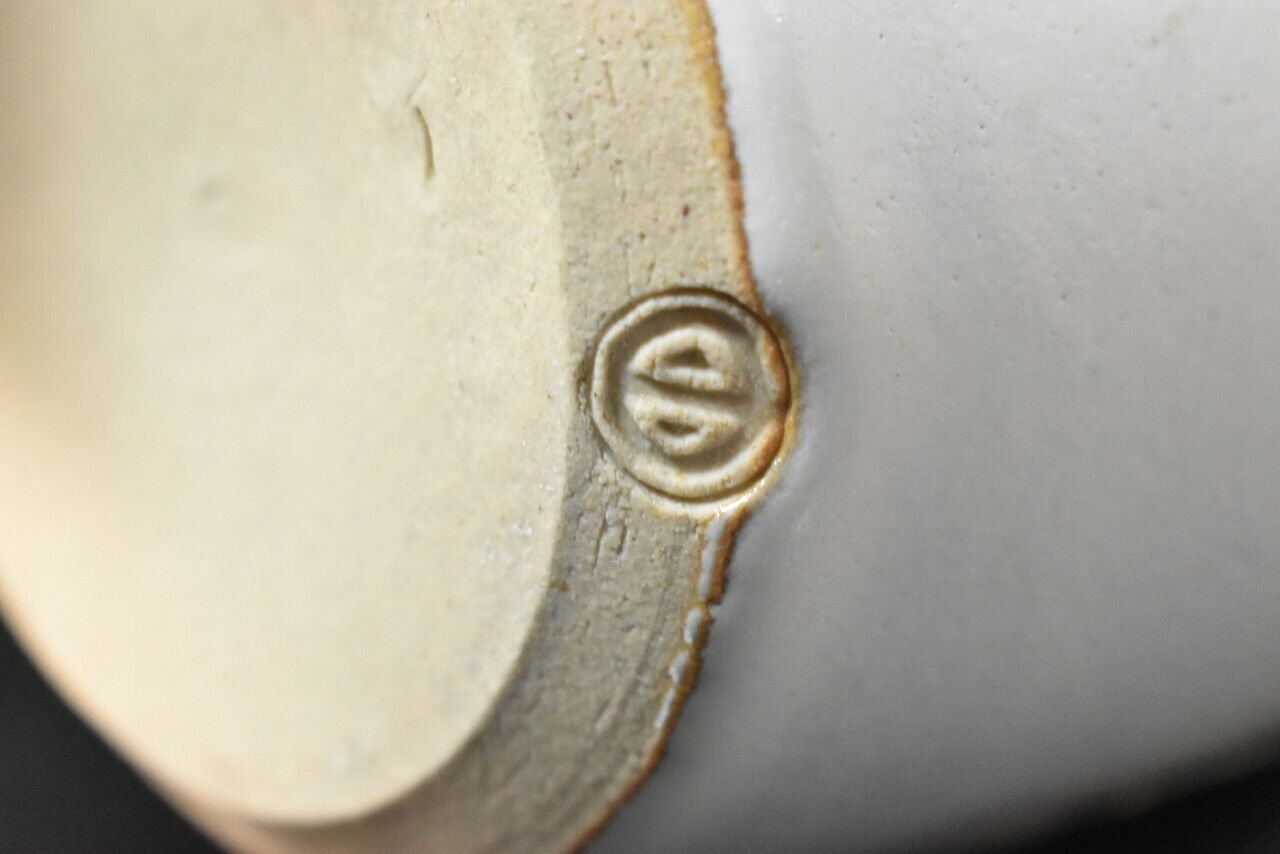
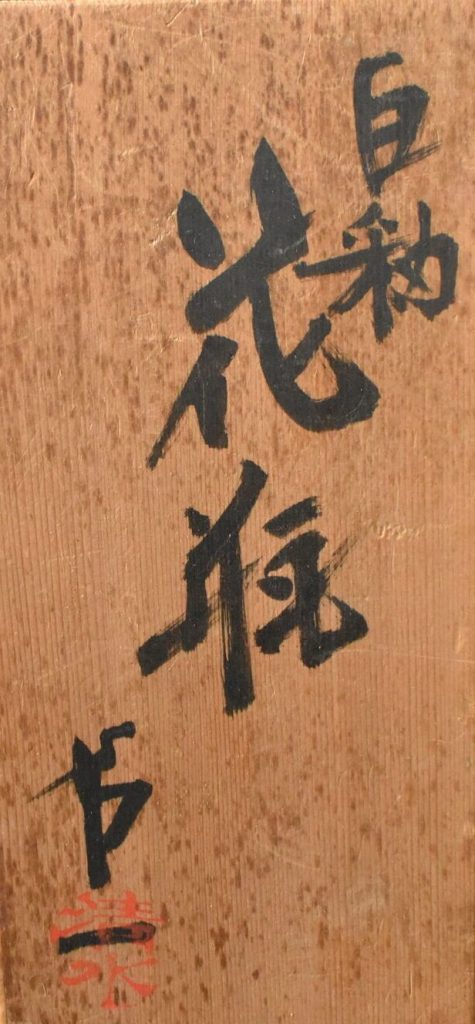
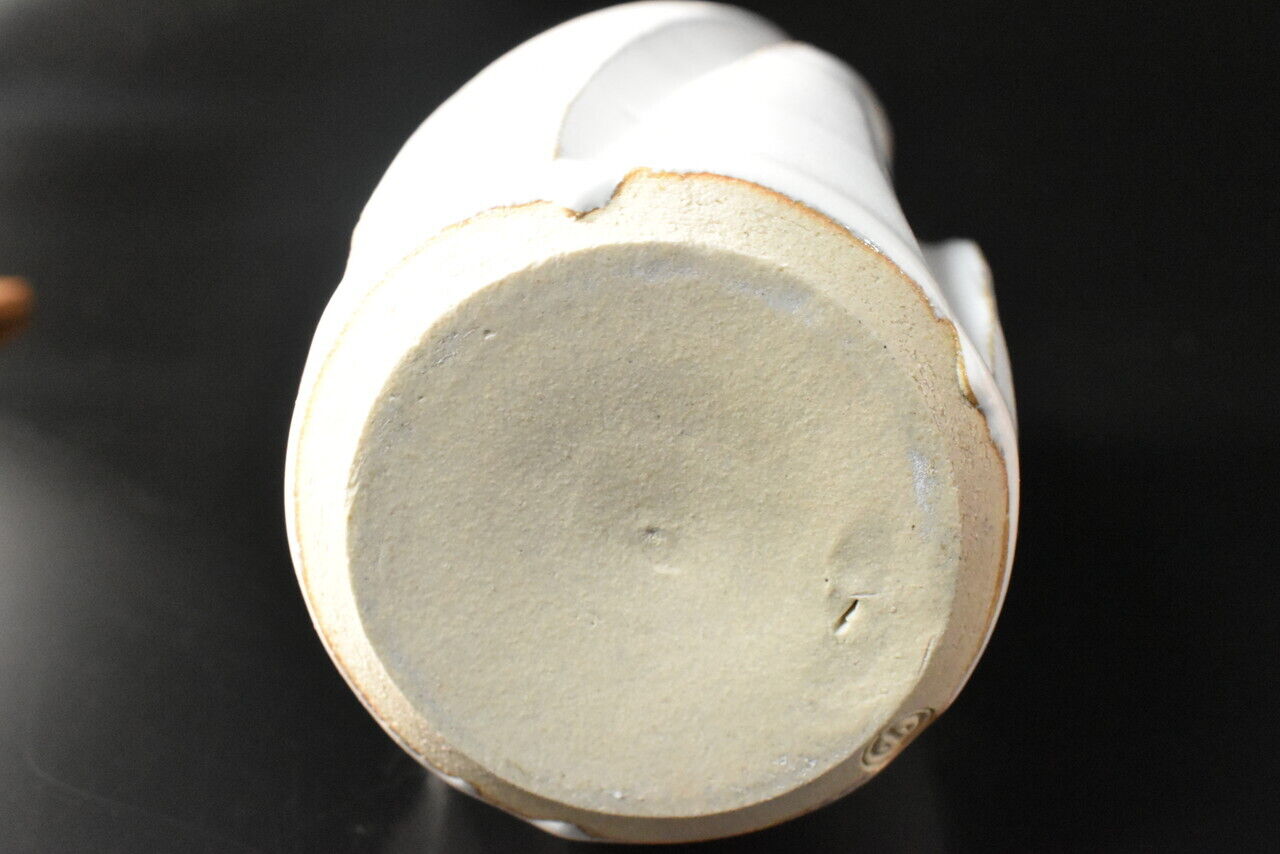
The vase is stamped on the bottom’s side and is free of chips or cracks. I don’t think this vase has ever been used, as such condition is mint. Comes with the original quality, aged paulownia tomobako or storage box with the potter’s calligraphy and seal on the lid.