Potter: unsigned
Approximate size: W5.7″ by H9.6″ or 14.5 by 24.5 cm
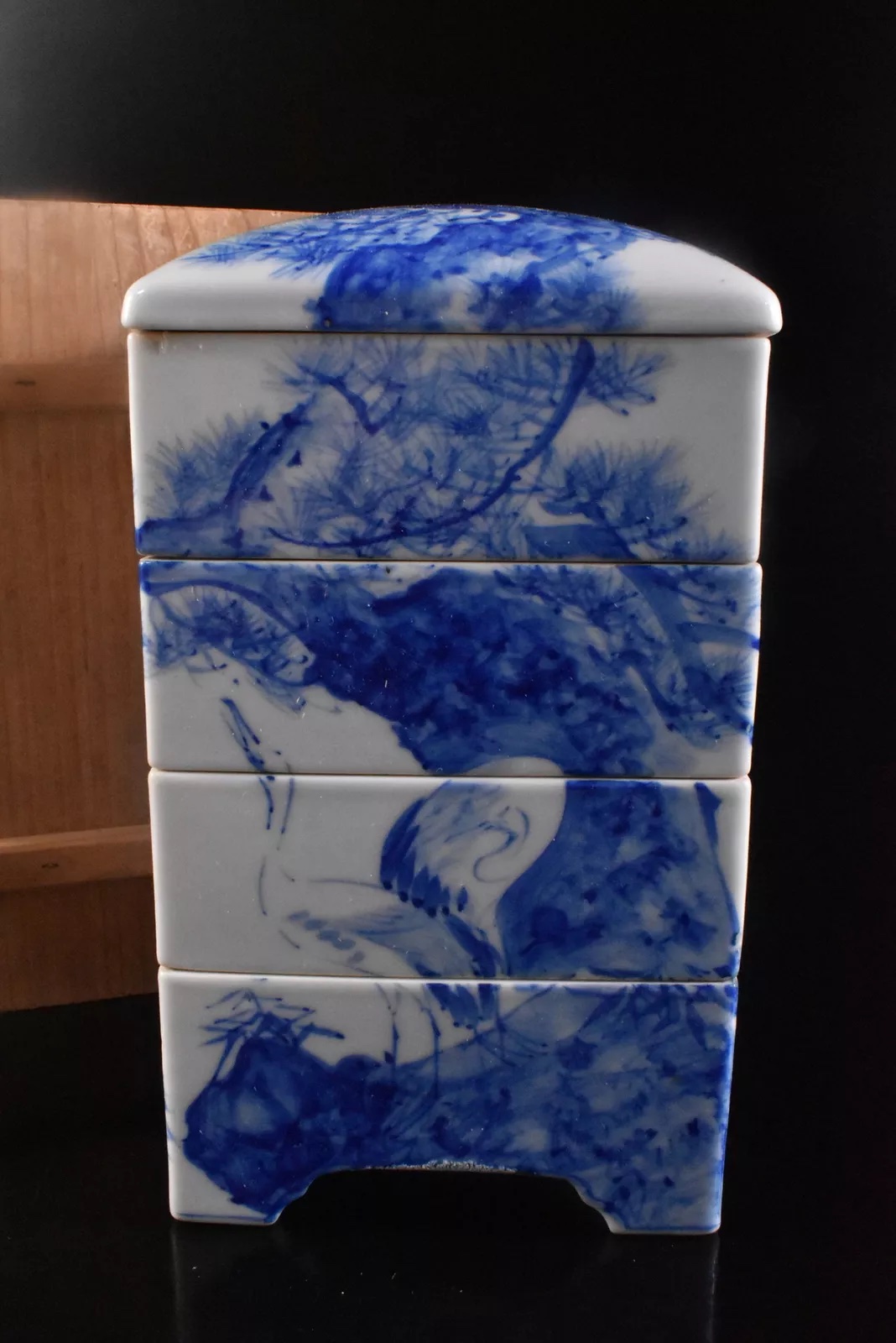
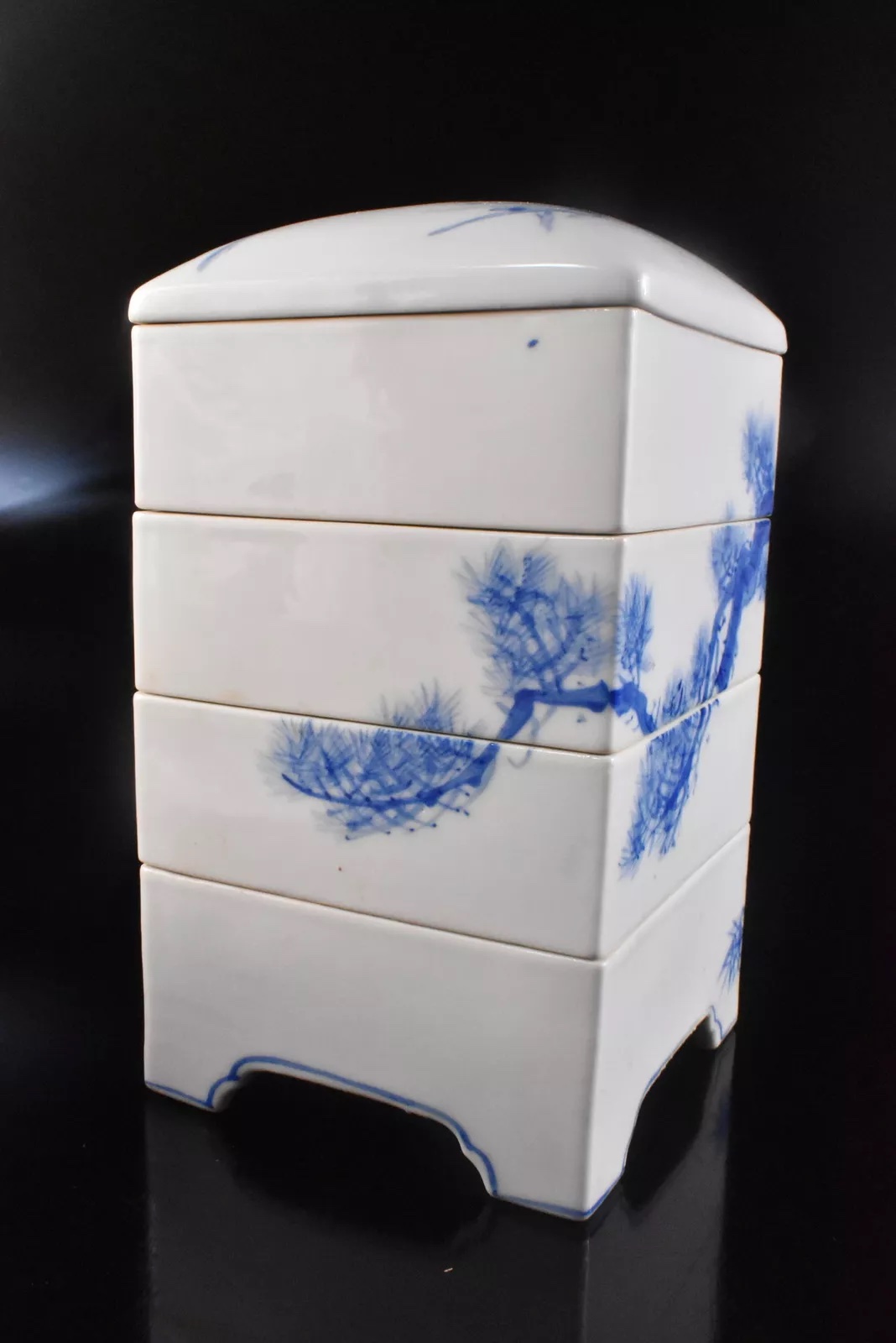
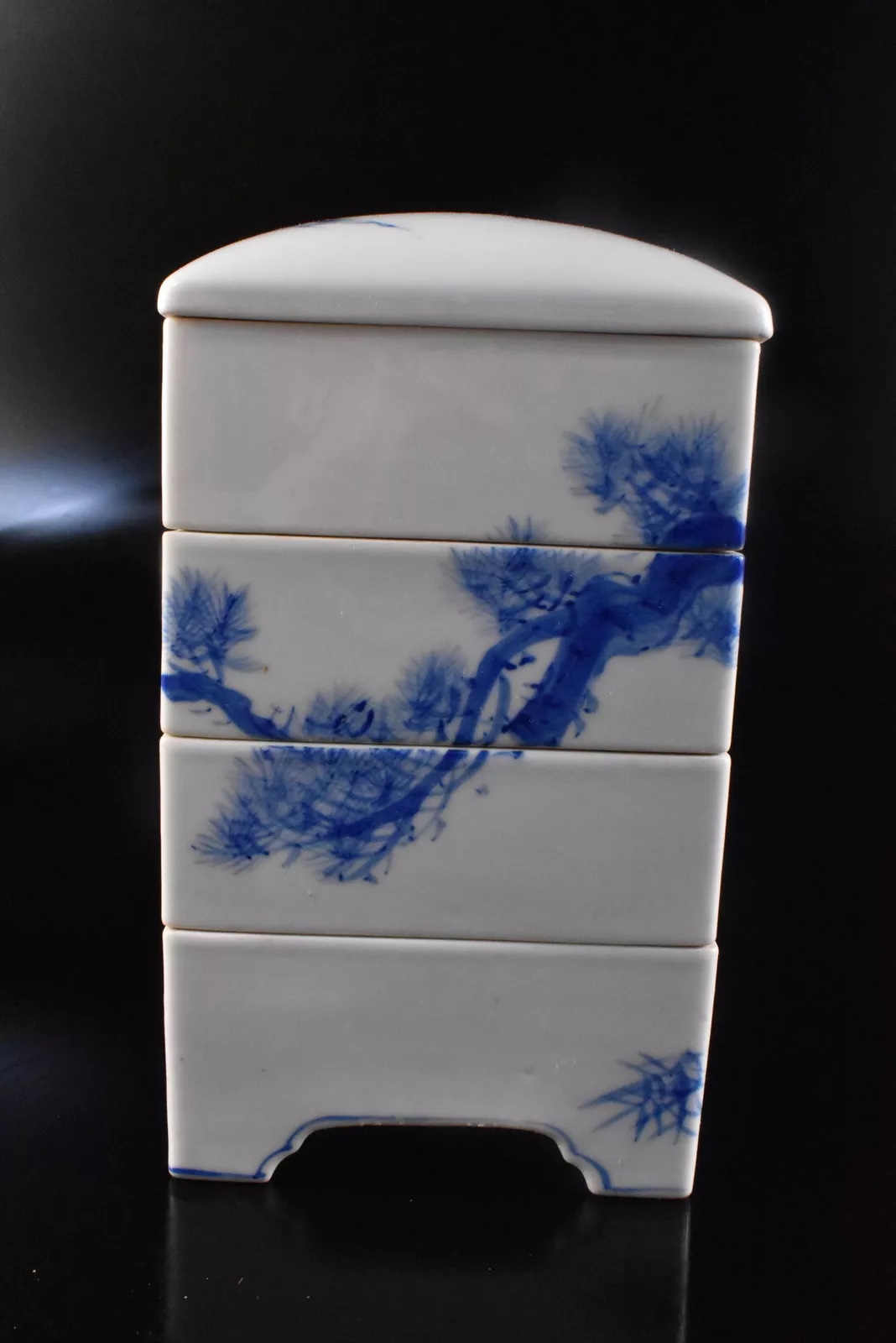
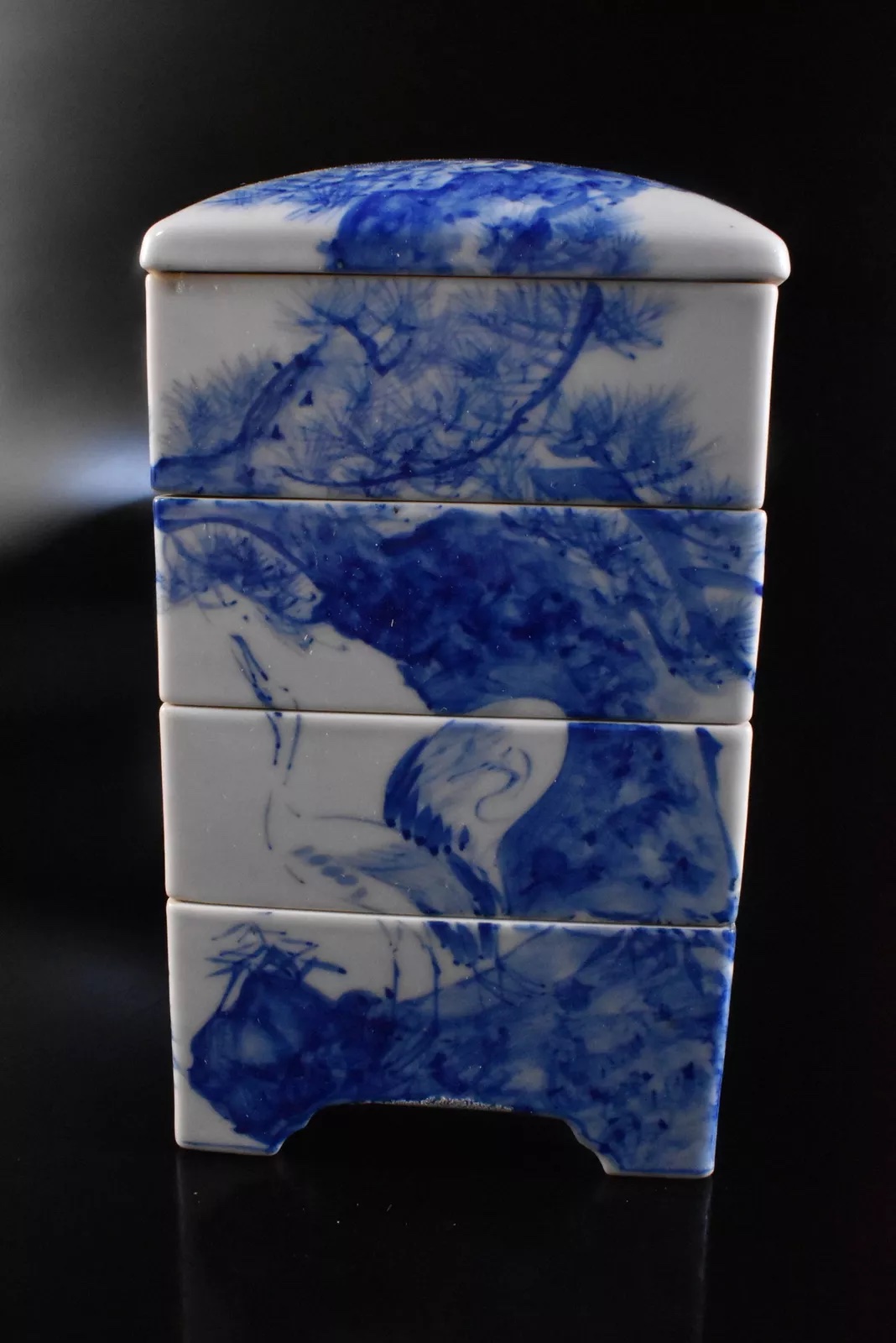
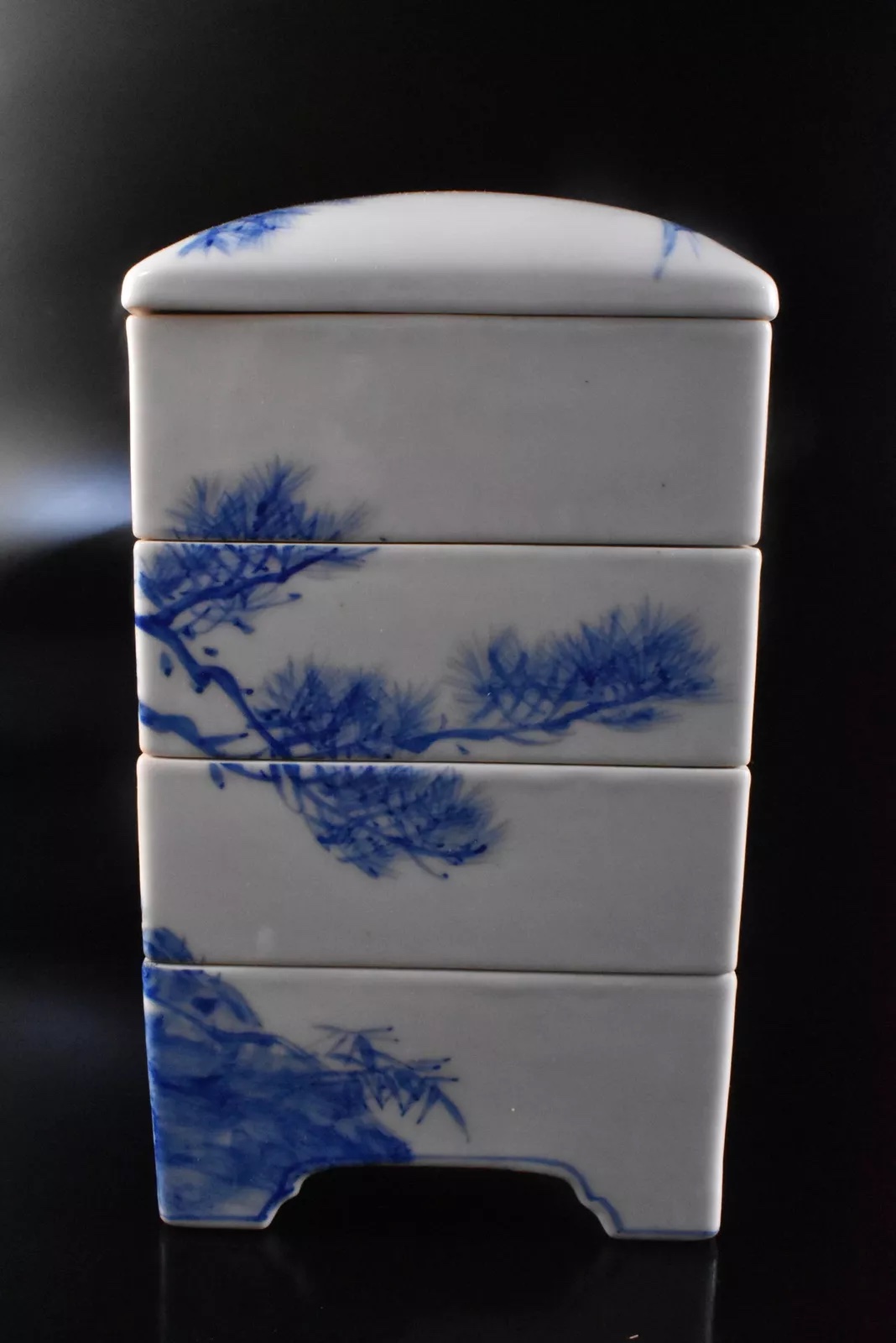
Slab-constructed, precisely squared and hand-painted. This four-tiered jubako, with matching lid is a masterful example of late Edo to early Meiji period sometsuke, or underglaze blue and white porcelain. Rather than displaying independent geometric patterns on each tier, this piece uses the entire vertical surface of its 24.5 cm column as a continuous canvas for a unified, dramatic scene. Weighing a substantial 4025 grams, the dense clay body is covered in a thick, slightly soft glaze with a distinct soft white tone characteristic of multi-fired late 19th-century Japanese kilns, giving the layers of cobalt blue exceptional visual depth.
Firing a square porcelain jubako or stacked boxes requires a level of kiln mastery far beyond standard round vessels. Because square porcelain corners pull and shrink unevenly during high-temperature firings, getting four separate slab-built square tiers and a lid to sit flat without warping, rocking, or gaps is exceptionally rare. At over 4 kilograms, managing the structural weight of the thick porcelain walls during drying and firing without collapse is a testament to the artisan’s skill.
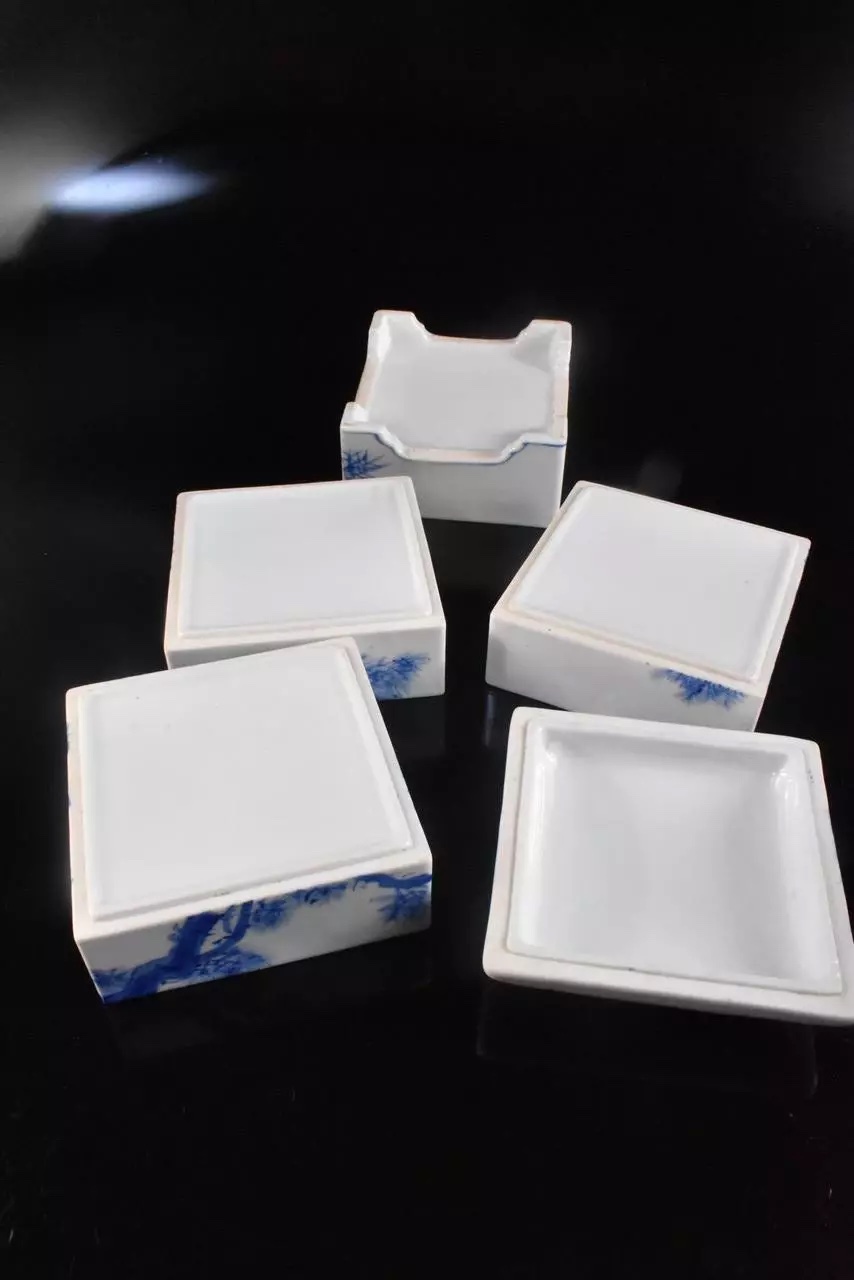
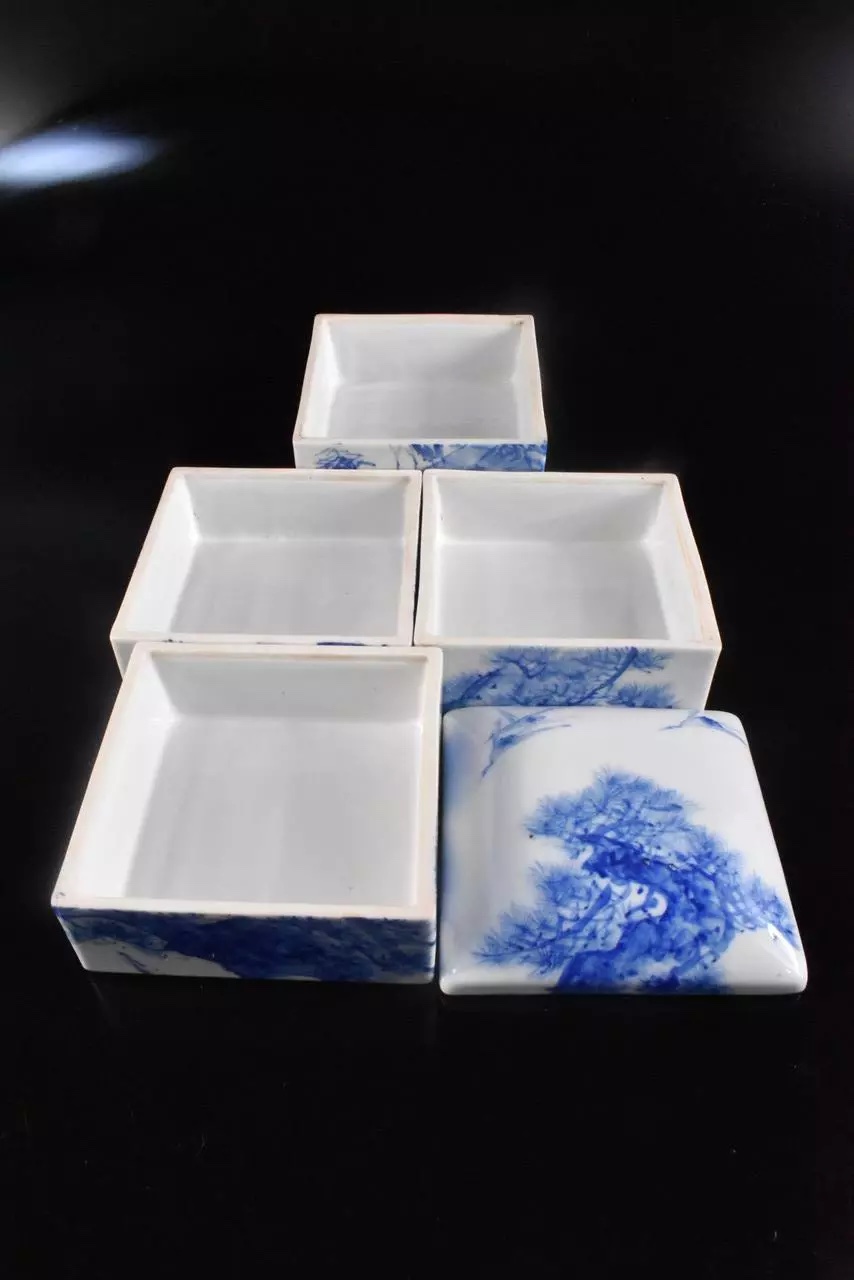
The bottom tier features integrated corner feet to elevate the column, adding structural stability. The inner lips and square foot-rims of each container are meticulously left unglazed to keep the sections from fusing together in the kiln. This reveals the highly refined, dense gray-white clay body underneath.
Arita ware – Japan’s oldest porcelain, was created in the early 17th century by Korean craftsman Yi Sam-Pyeong (known in Japan as Le Sanpei or Ri Sanpei). He was brought to Arita by the lord of Saga Nabeshima Naoshige. In 1610, Yi Sam-Pyeong discovered high quality porcelain stone in the hills of Izumiyama (located in what in modern time is Saga prefecture). In 1616, he successfully fired porcelain and presented it to Lord Nabeshima, roughly marking the beginning of Arita ware.
Sometsuke is a blue-and-white product which is produced by using a underglaze colouring technique using oxide cobalt called “gosu” on a white surface and a high firing temperature. It was initially modelled after Chinese blue-and-white porcelain, particularly the styles developed in Jingdezhen during the late Yuan Dynasty (1271–1368). Early Japanese sometsuke closely imitated Chinese designs that often covered the entire surface with intricate decorations. Over time though, Japanese artisans began to favour a more restrained aesthetic, leaving areas of blank white porcelain.
As porcelain became more widely used in everyday life, especially during the Edo period (1603–1868), sometsuke patterns grew simpler and more practical. Geometric motifs and repeated brushwork became common, offering a quiet elegance suited to both daily meals and formal settings. Its vivid blue continues to shine against soft white porcelain. A timeless expression of Japanese craftsmanship and aesthetic sensibility.
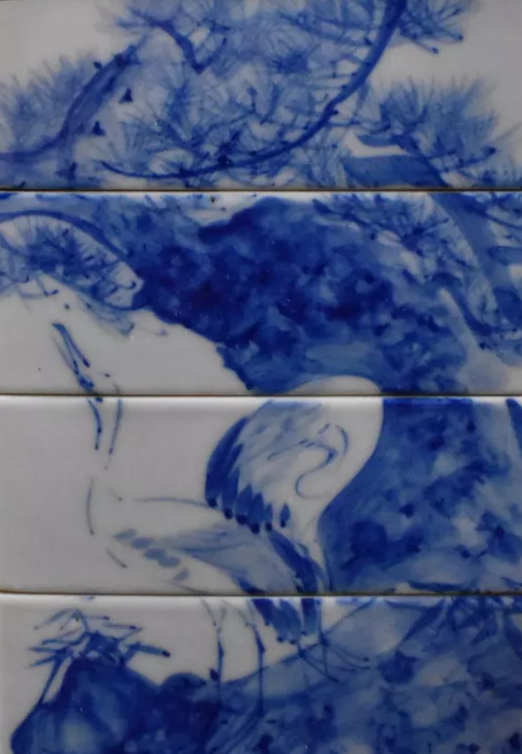
The Symbology of the matsu and tsuru landscape
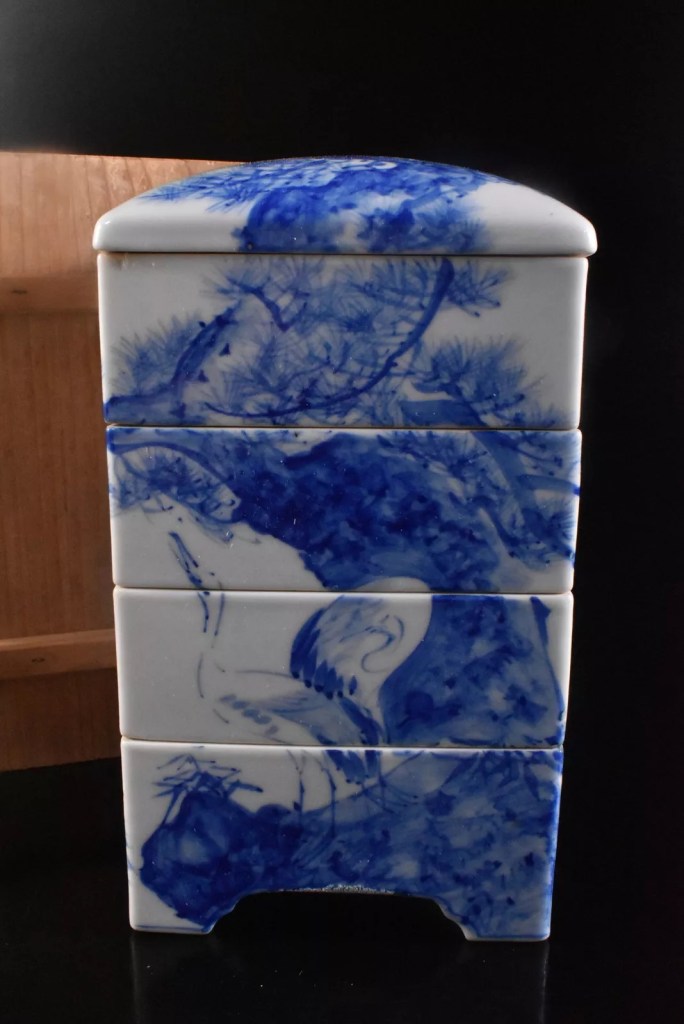
The exterior painting features a classic Japanese landscape composition known as matsu-to-tsuru (pine and crane), a pairing deeply rooted in auspicious meaning. The top tiers and the lid are covered with a massive, ancient pine-tree (matsu), twists downwards. The needles are rendered with delicate, sweeping brushstrokes that showcase the painter’s speed and control over the liquid cobalt. The bottom tiers show a serene Japanese crane (tsuru), that rests near the base, sheltered by the thick branches.
Both the crane and the pine tree are profound cultural symbols of longevity, steadfastness and good fortune, making this vessel a luxury item intended for celebratory seasonal events or chaji – specialised tea gatherings.
This piece is in incredible condition for an antique utility item designed to be separated and stacked. As shown in the photographs, the unglazed square rims and interior surfaces are exceptionally clean, free of structural cracks or chips along the outer rims, keeping the artwork completely intact. The unglazed lips show minor, honest shelf-wear and light colouration consistent with genuine aged porcelain. Comes with a original paulownia tomobako or storage box to keep the porcelain safe for generations.
€350 + shipping cost