Potter: Takuo Kato, sixth generation, National Important Intangible Cultural Property Holder (Living National Treasure)
Approximate size: W4.7″ by H3.1″ or 12.4 by 12.0 by 8.0 cm
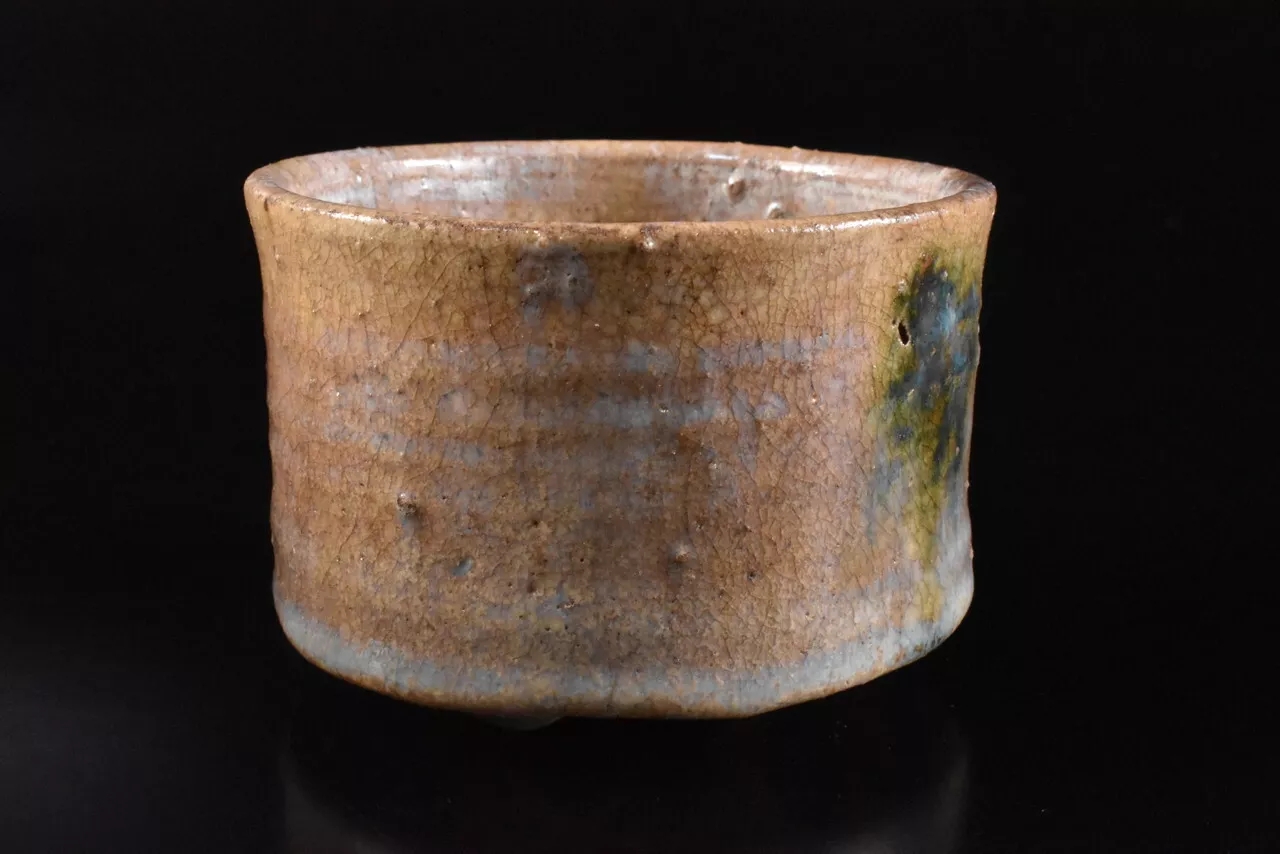
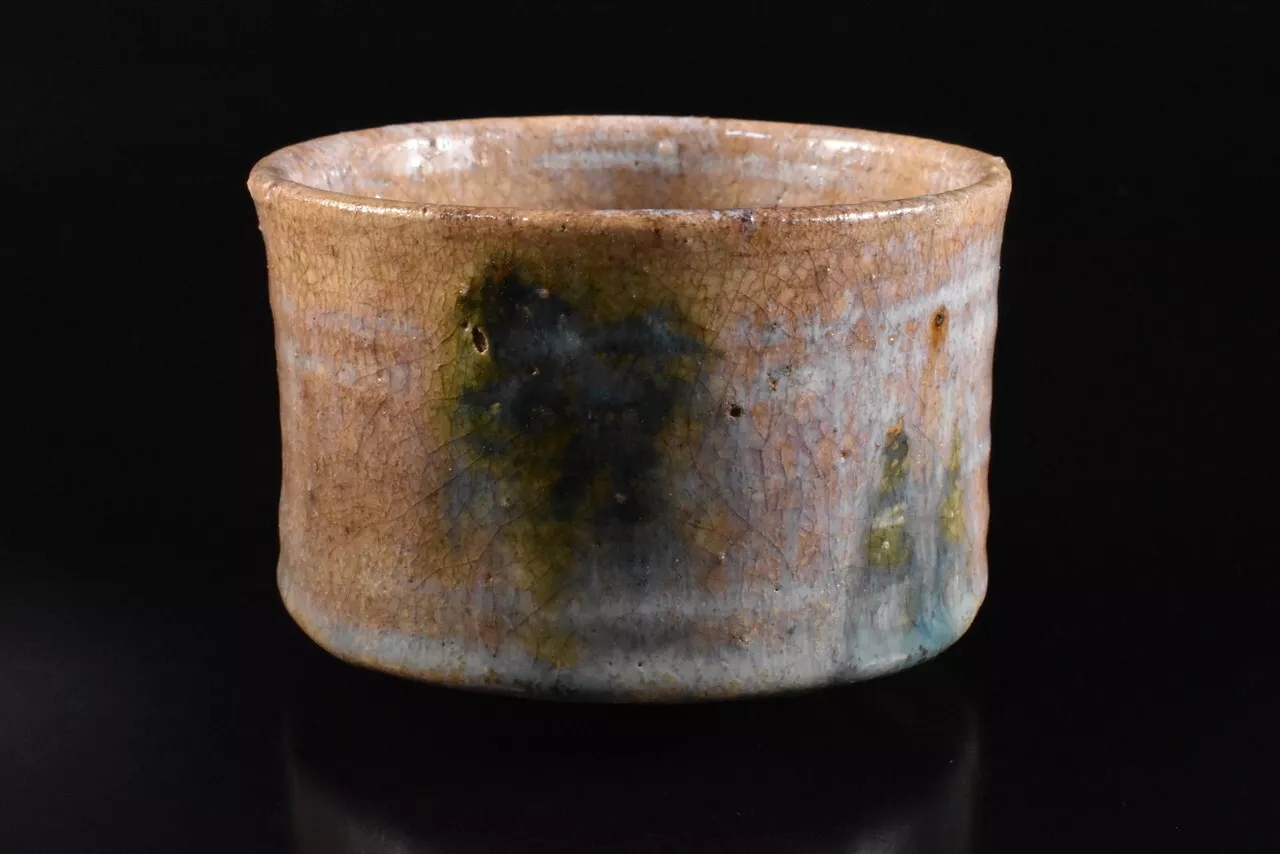
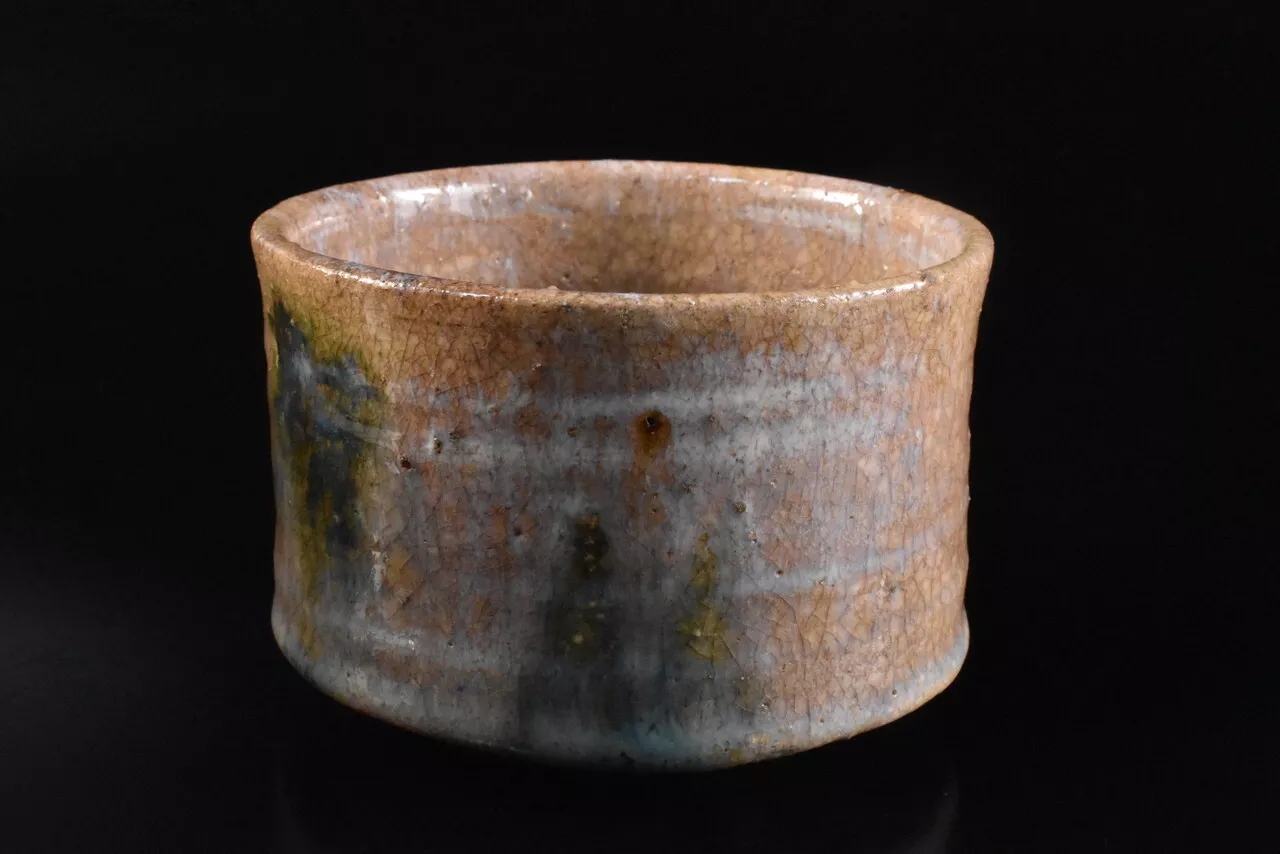
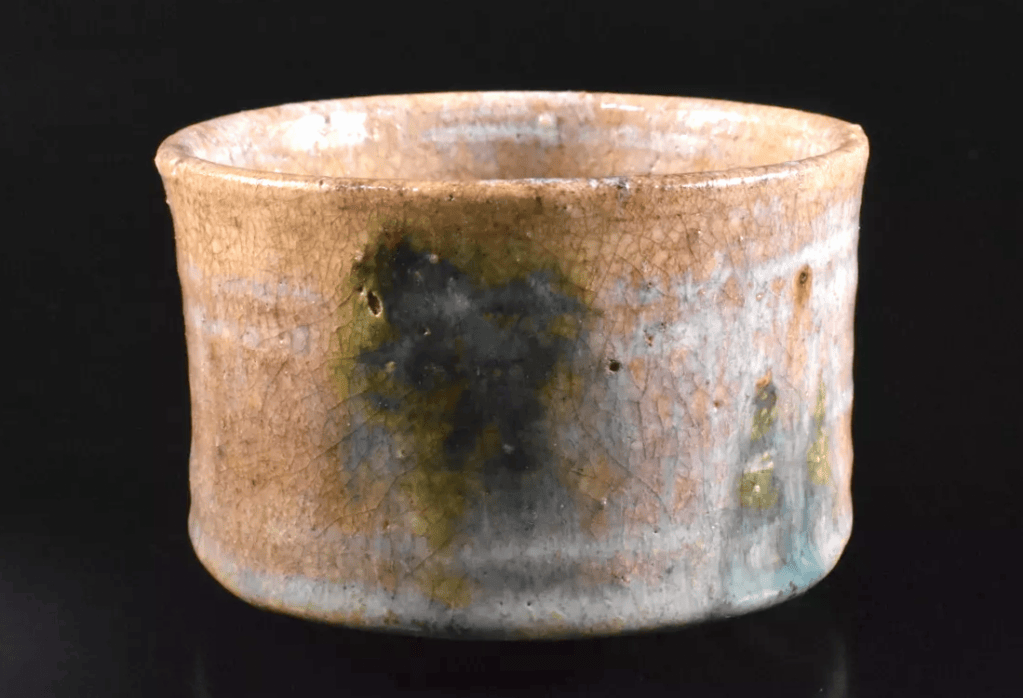
This is a one of a kind and highly collectable ki-Seto utsushi – a faithful Momoyama-style replication of ki-Seto ware by Living National Treasure Takuo Kato (1917-2005). There are barely any ki-Seto works by this master thus making this chawan very valuable. Born the eldest son of the fifth-generation master Kato Kobei, Kato Takuo was born into a heavy lineage bound to the historic pottery heartland of Mino ware in Gifu Prefecture. He trained rigorously at the Tajimi Technical School and at the Kyoto Ceramic Research Center to establish complete technical mastery over traditional wheel-throwing and fire dynamics. His career path was severely altered by World War II, during which he was drafted and became a survivor of the atomic bombing of Hiroshima. The devastating radiation sickness he suffered completely sidelined his career for a decade. It was not until 1955 that he finally staged a dramatic artistic comeback. Over the next four decades, Takuo went on to win the highest honours in global studio ceramics, including the Japan Fine Arts Exhibition (Nitten) Hokuto Award and the Japan Ceramic Society Gold Prize. In 1995, the Japanese government officially designated him a Living National Treasure due to his monumental revival of extinct glaze formulations.
The origins of ki-Seto are not entirely clear. Several sources state it started with a Seto potter who relocated to Mino province (current Gifu prefecture), during the end of the Momoyama period (16th century). However, bowls and decorative plates with the distinctive styles of Seto ware, such as Oribe, Shino and ki-Seto have also been unearthed in the remains of Mino kilns dating as far back as the Muromachi period.
Takuo Kato was thoroughly fascinated by ancient Persian pottery and eventually succeeded in restoring the famous Lustreware pottery after many years of excavation and research. He produced works that fused Persian and Japanese culture including seiji (celadon), sansai or three colour glazing, and Persian colour paintings. He was commissioned by the Imperial Household Agency to restore the Shosoin Sansai, which after nine years of research, he delivered the Sansai Tsuzumi-Do and Nisai-Bachi. In 1995, he was designated as a National important intangible cultural property (also known as living national treasure).
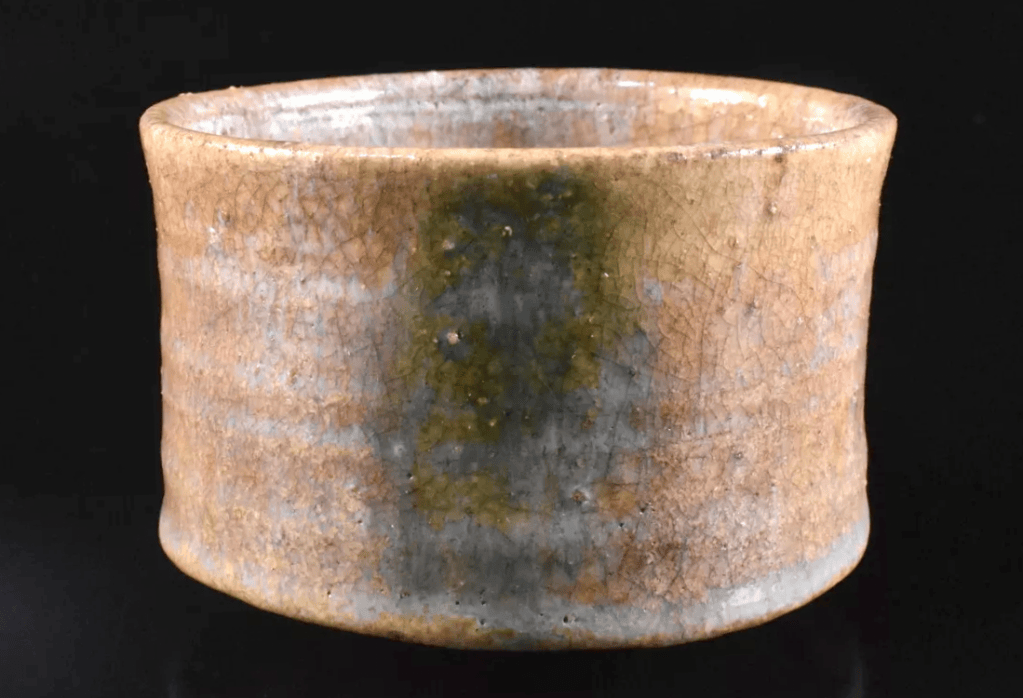
Classical ki-Seto or yellow Seto represents the height of 16th-century Momoyama tea culture and is celebrated for its warm golden glaze, subtle surface variation and quiet—refined presence. Difficult to fire, it requires great skill and care, as slight changes in temperature, atmosphere or glaze application can dramatically affect the final result. Takuo used his scientific knowledge and deep respect for his ancestors’ land to craft a faithful replica of these ancient forms, combining careful research with a sensitive understanding of the materials and traditions that shaped them.
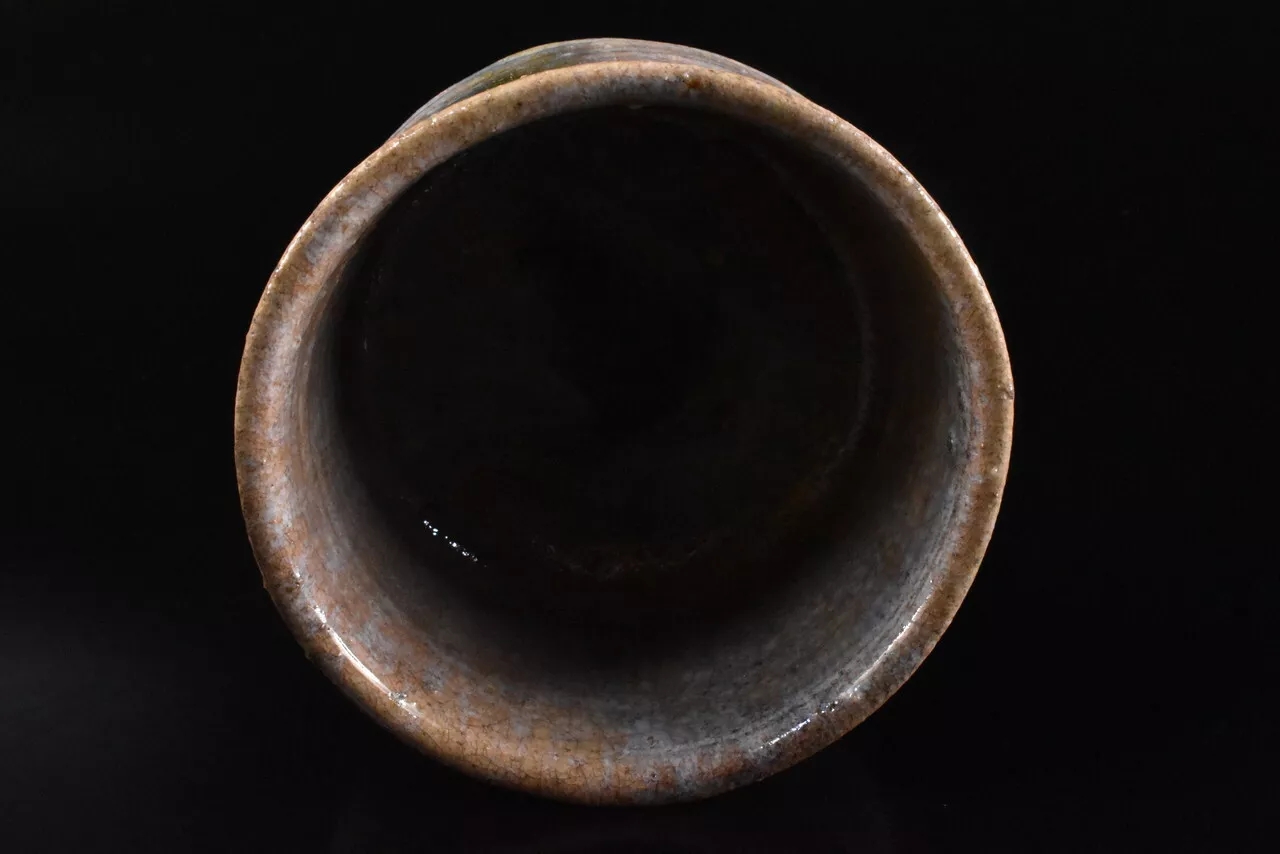
The authentic matte skin called aburaya-hada is a key aspect of Momoyama period works and rather than looking like a glassy glaze, this bowl possesses a characteristic “waxy oil skin” texture. This highly prized surface sheen can only be achieved by firing raw wood ashes of an anagama kiln. The olive-yellow background breaks on the side into a bleeding, moss-green splash. This effect is called tanpan and is caused by applying copper oxide powder to the raw glaze. Under intense reductive wood firing it melts unevenly down the clay wall, mimicking natural decay. Tanpan are highly admired and another desirable characteristic in ki-Seto
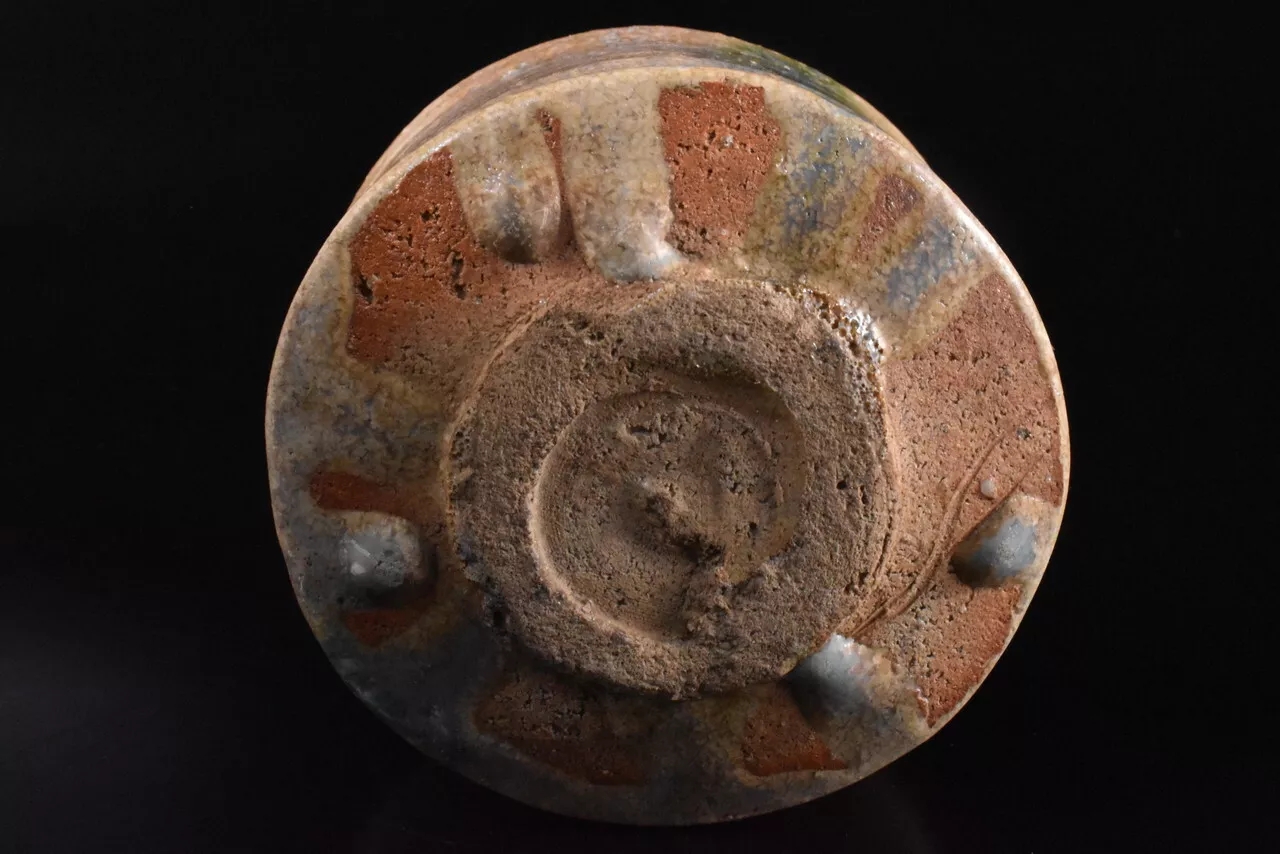
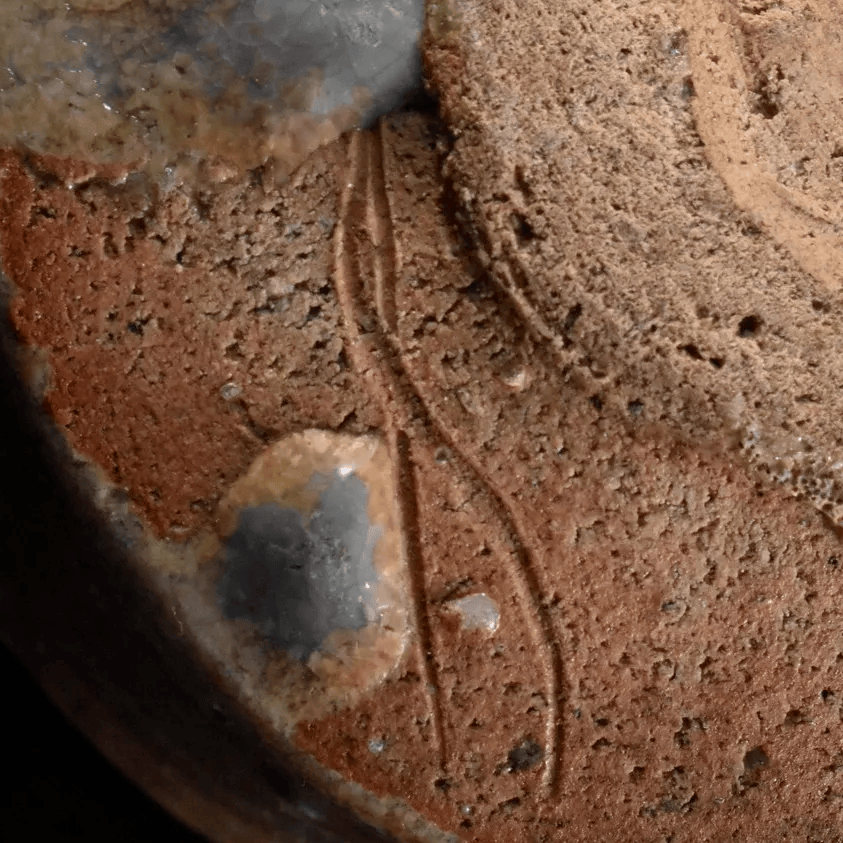
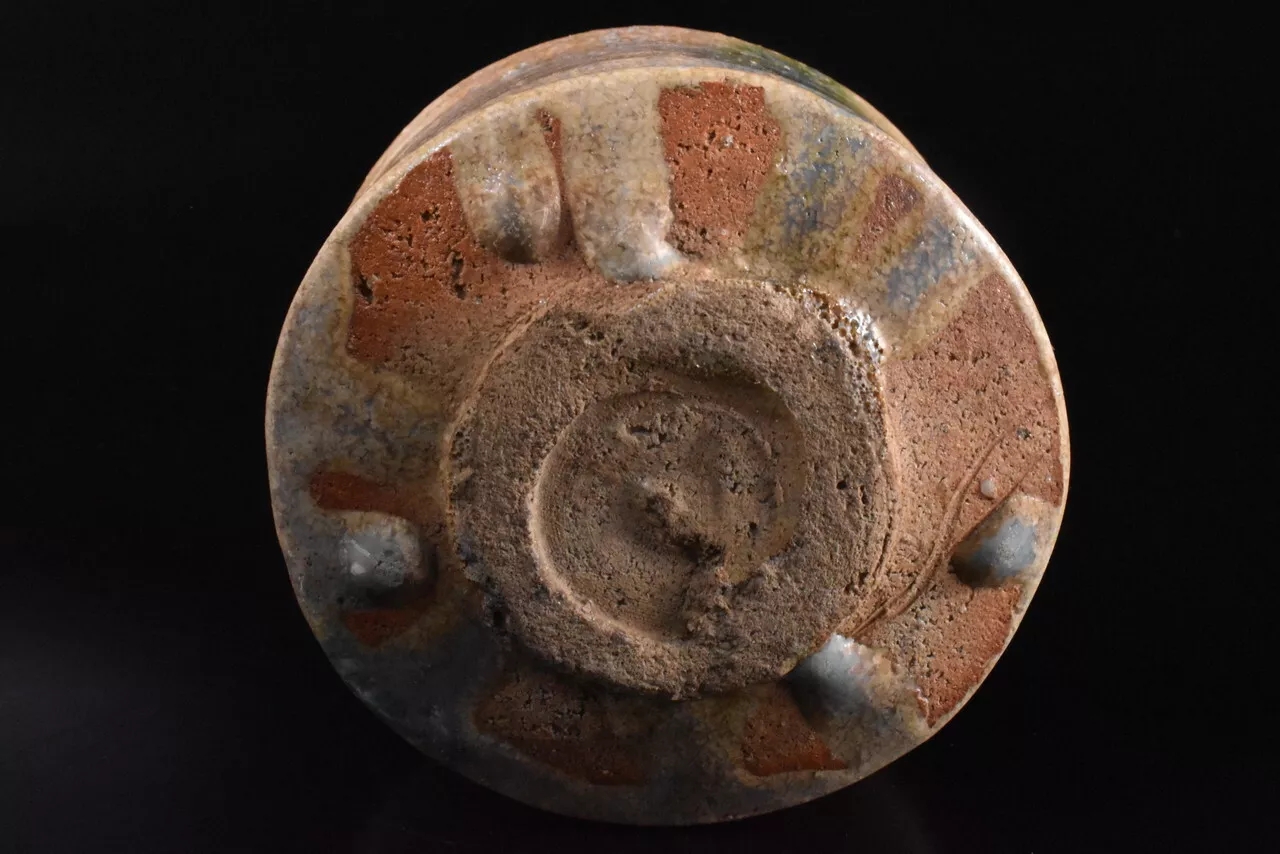
The unglazed base reveals the underlying clay body, which has fired to a rich iron-red-orange hue. Takuo deliberately used rough wooden hand tools to create rapid, incised grooves, or herame, on the bowl’s foot, evoking the humble, unadorned marks associated with ancient peasant potters. These irregular impressions preserve the directness of the making process, allowing the texture of the clay and the movement of the artist’s hand to remain clearly visible. The kōdai emphasises restraint, material honesty and the quiet dignity of purposeful imperfection. Together the exposed clay, warm colouration and spontaneous tooling establish a strong connection between the vessel and the traditional ideals of Momoyama Japanese pottery.
1917 Born as the eldest son of Kobei Kato V
1961 Graduated from the Finland School of Arts and Crafts
1963 Awarded for the special Hokuto Prize at the 6th Nitten
1973 Studied at the Institute of Asian Studies, Royal University of Pahlevi, Iran
Participated in the excavation and research of ancient Persian ceramics
1980 Commissioned by the Imperial Household Agency to restore the Shosoin Sansai
1983 Assigned as an important intangible cultural property of Gifu Prefecture
1986 Solo exhibition at the Topkapi Palace Museum, Turkey
1988 Honoured with the Medal with Purple Ribbon
1992 Worked on the sacred treasure of the Grand Shrine of Ise, the ink-stone in the shape of a monkey’s head
1995 Designated as a National important intangible cultural property (living national treasure)
1996 Assigned the title of honorary citizen of Gifu Prefecture
2005 Passed away
Published literary works
- “Luster-Stained Pottery” Shogakukan- “Mino Ceramics” Tankosha Publishing
- “Oribe’s pattern” Mitsumura Suiko Shoin
- “Mino” Nursery company
- “Persian Ceramics” Nursery Company
- “The Way of the Three Colours” Student council
- “The Silk Road of Pottery” Chunichi Shimbun (newspaper)
- “The Luster Chronicles: A Desert Guide” Nihon Keizai Shimbun
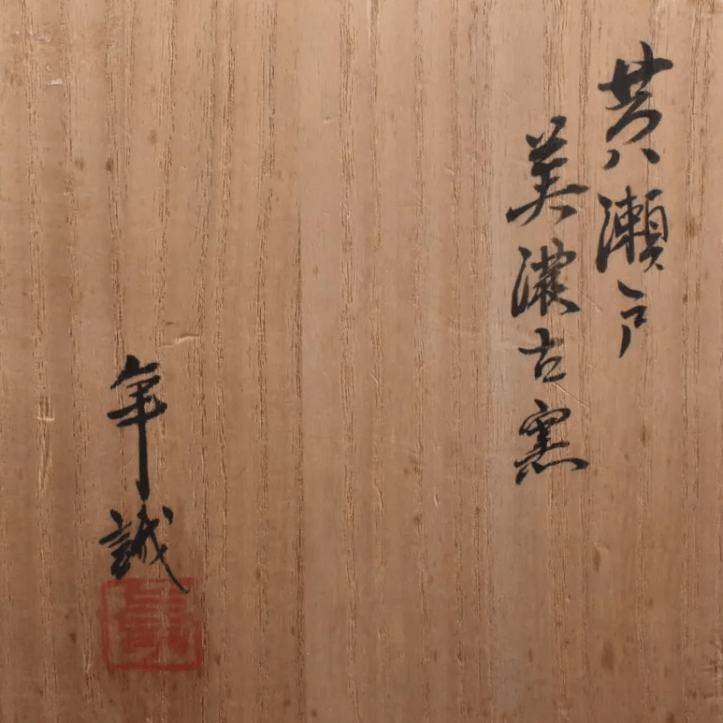
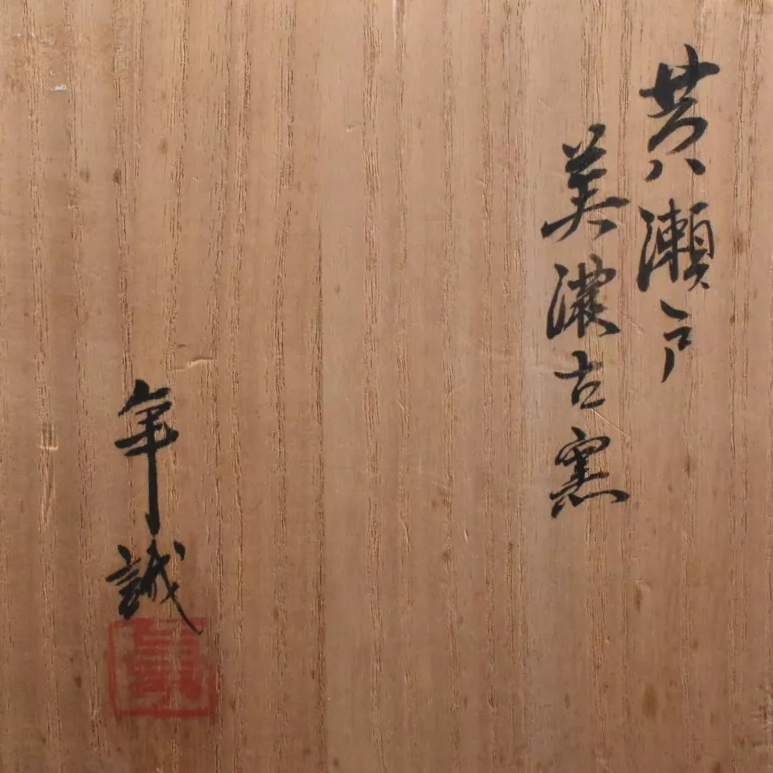
黄瀬戸 美濃古窯
Ki-Seto Mino Koyō
卓男造
Takuo zō
卓
Rakkan
Yellow Seto ware,
Ancient Mino kiln
Made by Takuo
Artist seal,
Taku
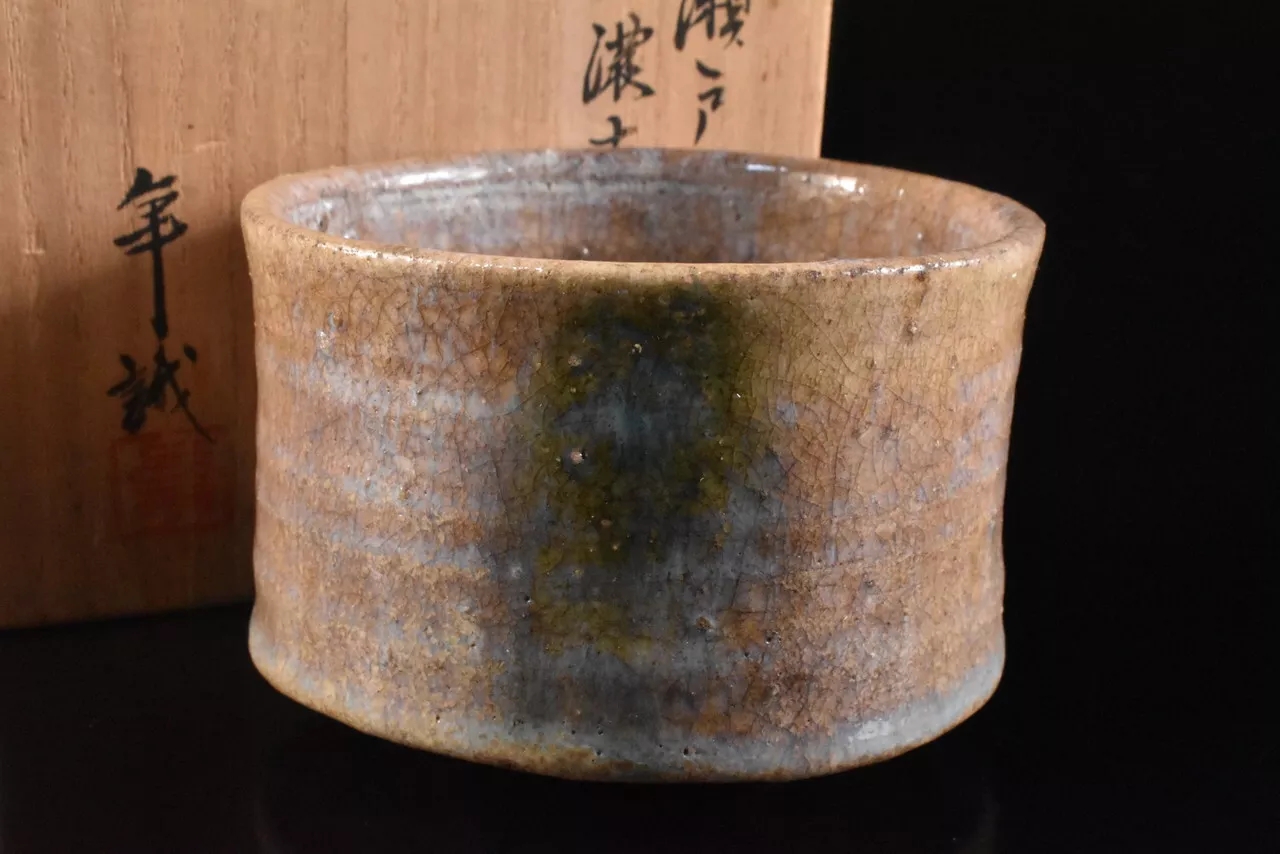
The chawan is in excellent condition. As this was created as a faithful – one of a kind reproduction of ko-Seto as produced during the Edo period the work is not signed with his usual signature but instead is given a mark similar to ancient works in museums. Comes with the original high quality paulownia tomobako or wooden storage box of which the lid bears calligraphy and the artist’s seal. The calligraphy describing him as the creator is more extensive than it usually is. A truly one of a kind work by one of the most famous artists in history.
During the Meiji period, Seto ware adapted Western techniques, gaining great popularity. In addition to plain Seto, the Mino kilns also produced several types of Seto wares from the mid 16th century, including Seto-guro (black Seto), and Ki-Seto (yellow Seto). Ki-seto, fired at the same kilns as Shino and Seto-guro wares during the Momoyama period, featured “fried bean-curd” glaze, Aburagede (油揚げ abura-age or aburage), developed in emulation of Chinese celadons. It utilises an iron-rich wood-ash glaze and is reduction fired at a high temperature to produce a texture and bone colour alike celadon; in an oxygen-rich kiln, the minerals in the clay and glaze create a distinctive opaque yellow glaze.
