



Potter: Hayashi Ryoji, third generation
Approximate size: W4.7″ by H3.2″ or 12.0 by 8.3 cm
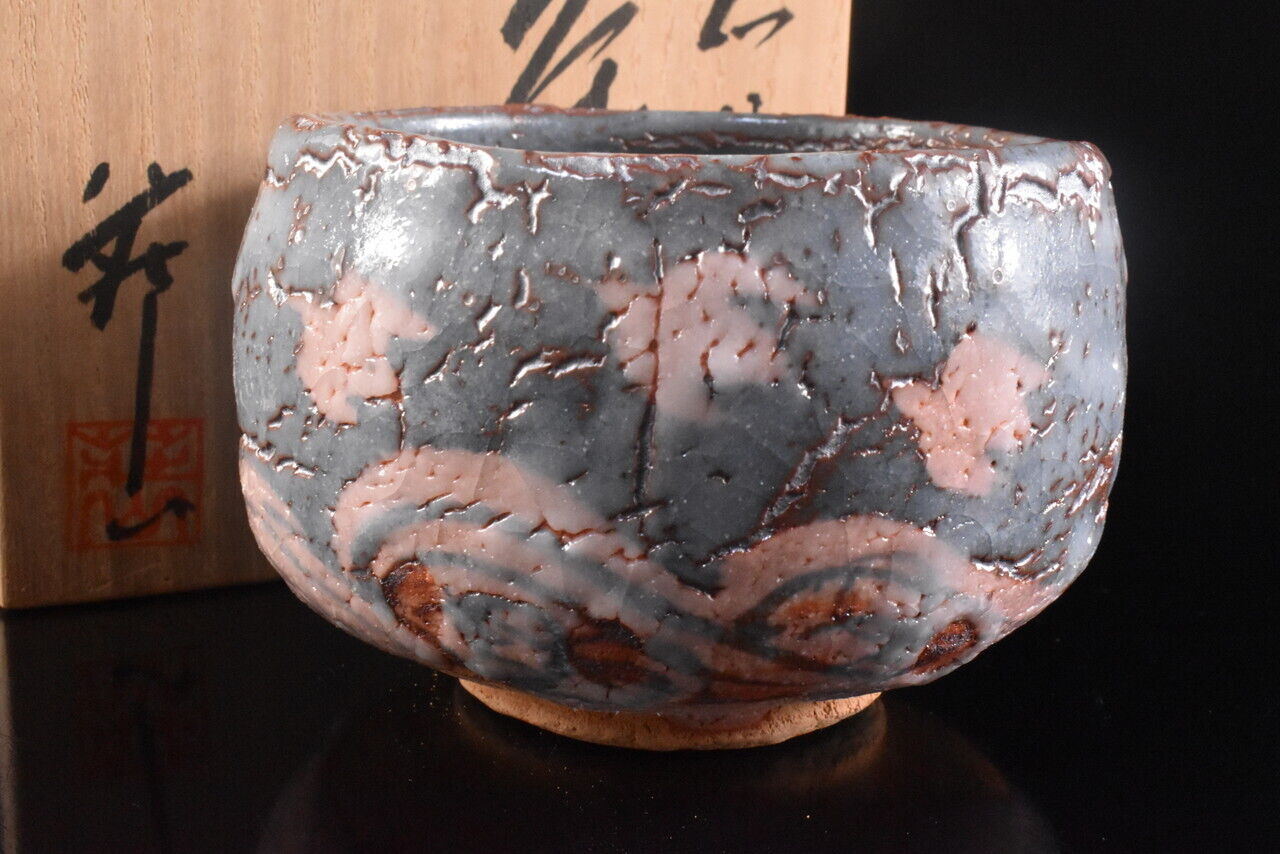
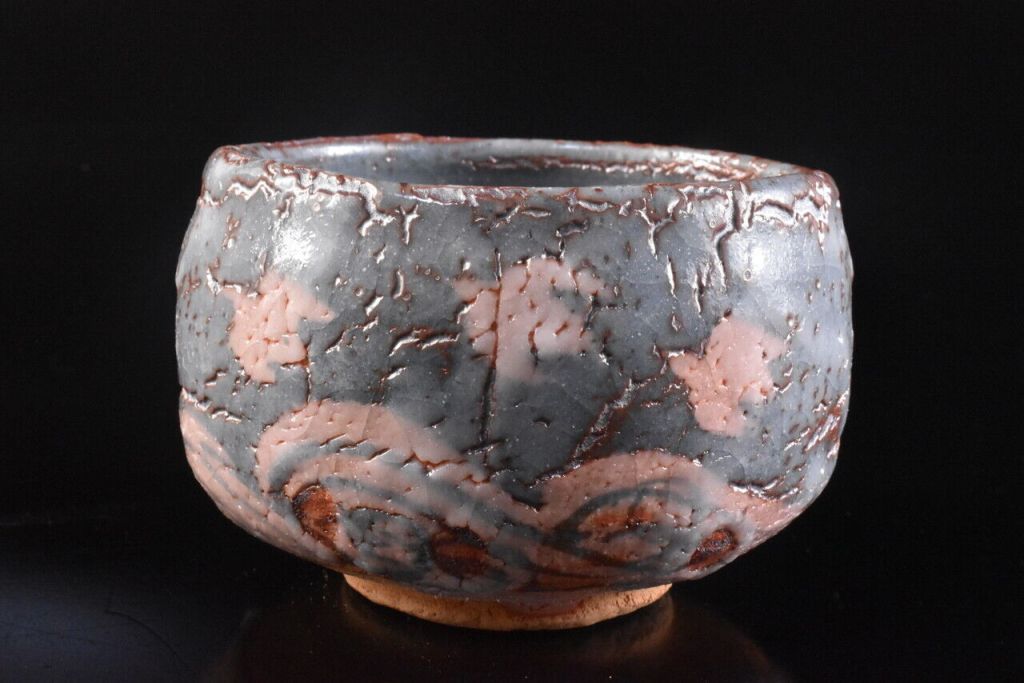
This is a fine blue Shino chawan, ceremonial tea bowl with a motif of birds & waves. The design of birds as they fly over the waves is quite quaint and gives the chawan a warm, inviting atmosphere. The work, atmosphere and finish strongly remind me of Toshisada Wakao’s works. Hopefully the photos do right to the bowl as it is a very good work.
June 20th, 2026
I always try to be as precise as possible with the lineage and marks on the pieces I post but here I made a mistake. I previously listed this chawan with an attribution to Living National Treasure Takuo Kato. However after taking a closer look at the kao (stylised signature), and the calligraphy on lid of the tomobako, confirming it’s actually the work of veteran Mino potter Hayashi Ryoji.
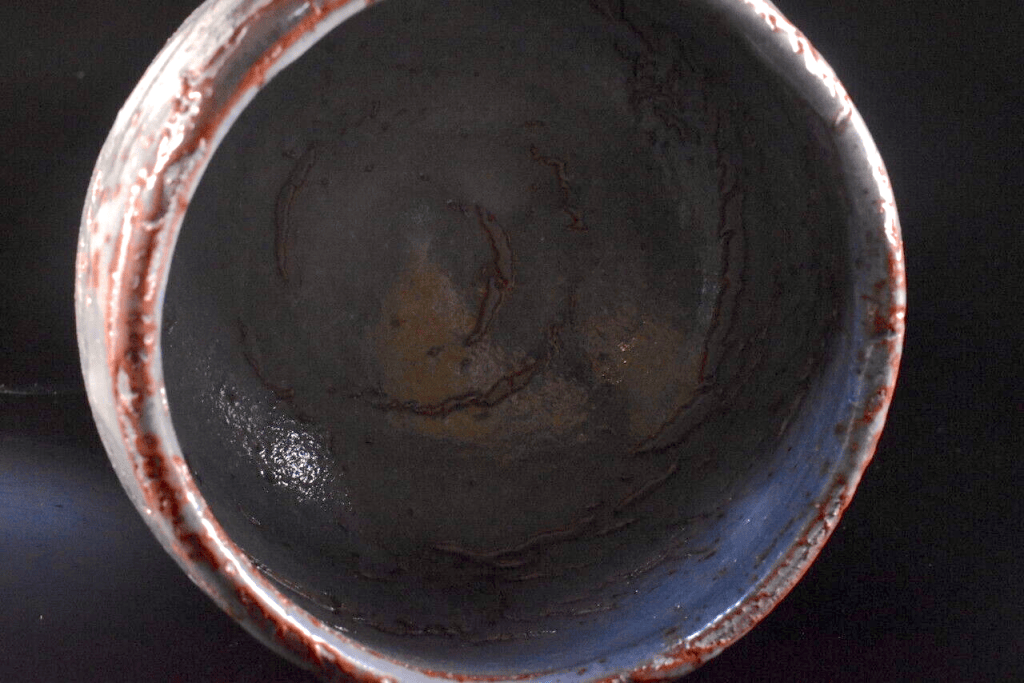
Ryoji Hayashi is a renowned Japanese master potter born in 1940 in Toki City, Gifu Prefecture. As a third-generation artisan from the historic Shozan Kiln. This chawan or ceremonial tea bowl features a hand-pinched, softly asymmetrical rim characteristic of high-end chanoyu utensils. Such bowls are built to feel grounding and balanced when held in two hands. What looks like a slate blue or gray base is an iron-rich underglaze slip that has interacted with his signature thick, milky-white and blue Shino feldspar glaze. The combination forms a beautiful, muted contrast where the fiery red hi-iro (scorch marks), break through around the edges. You can see the classic yuzu-hada or citron peel skin with pitting and pinholes, alongside natural glaze crawling known as kairagi. These are the exact technical hallmarks that earned him his official Traditional Craftsman status from the Japanese government.
Ryoji Hayashi‘s work is characterised by a deep adherence to the rustic wabi-sabi aesthetic and he is celebrated for a high volume of competitive awards and more for his elite institutional selections and official state accreditation. In traditional Japanese pottery, continuous selection into the country’s most restricted premier exhibitions functions as the highest tier of peer recognition. He has exhibited extensively at prominent events like the Japan Traditional Art Crafts Exhibition and the Asahi Ceramic Exhibition. As each piece is unique, his work regularly appears in select international galleries.
1940 Born in Toki City, Gifu Prefecture, the heartland of Mino ware ceramics
1961 Starts his professional exhibition career, securing his first official selections to enter major competitive art circuits
Achieved recurring selected entry statuses (nyusen), across several of Japan’s prestigious annual craft exhibitions including (but not limited to), the Asahi Ceramic Art Exhibition, the Japan Traditional Crafts Exhibition and the Tokai Traditional Art Crafts Exhibition
From 1960 to 1980 Achieved multiple successful selections into the Nitten (Japan Fine Arts Exhibition) and the New Craft Exhibition
Expanded his national presence by initiating highly successful solo commercial gallery exhibitions (koten), across Japan’s leading galleries such as Keio Department Store located in Tokyo, Hanshin Department Store in Osaka, Tenmaya in Hiroshima and Kintetsu Department Store (Gifu)
1991 – 1992 Officially Certified as a Traditional Craftsman by the Japanese government (an official state designation that honoured his masterful preservation and execution of ancestral Mino Shino glaze techniques
1994 Introduced his son Taketo Hayashi into the Shozan Kiln
Begins passing down the kiln’s multi-generational secret techniques to ensure the continuation of the lineage to its fourth generation

Pottery has been produced in the Mino area of Gifu prefecture since the Kamakura period (the end of the 12th century). The main names synonymous with Mino are Oribe, Shino and ki-Seto. It is said that Shino was the first ware to decorate its pieces with brush-drawn designs as shown on this example. Before the use of brush-drawn decorations potters had been carving, incising or were appliquéing their ideas and fantasies.
The first Shino ware was developed during the Momoyama period (1568–1600), in kilns in the Mino and Seto areas. The glaze, composed primarily of ground local feldspar and a small amount of local clay, produced a satiny white colour. It was the first white glaze used in Japanese ceramics. Wares decorated with Shino were fired in the anagama kilns used at that time. Anagama kilns were single-chambered kilns made from a trench in a hillside that was covered with an earthen roof. As the anagama kilns were replaced by the multi-chambered noborigama kilns during the first decade of the 17th century, Shino was supplanted by the Oribe ware glazes used in the newer kilns. Shino enjoyed a brief revival in the 19th century but then seemingly faded into obscurity.
The chawan is signed next to the koudai or foot-ring and is devoid of chips or cracks. Condition is mint. Comes with the original high quality shiho san paulownia tomobako or storage box with the potter’s calligraphy and seal on the lid. There is a signed tomonunu or tea cloth as well.